Start with the games you want to play
The best format depends less on how formal you want the evening to feel and more on what needs to happen before a game can begin. A long strategy game may require everyone to hear the same rules explanation and stay until the end. A short party game can often absorb a new player between rounds. Before you set an invitation time, picture the games you hope to put on the table and ask how easily someone could join or leave.
A fixed start time works well when players need a shared setup, a stable group or an uninterrupted stretch of play. A drop-in night works well when guests mainly want to socialize and choose from quick, flexible activities. Neither format is inherently more welcoming. Clear expectations matter more than the label: people are more comfortable when they know whether arriving an hour late will mean missing the main game.
When a fixed start time helps
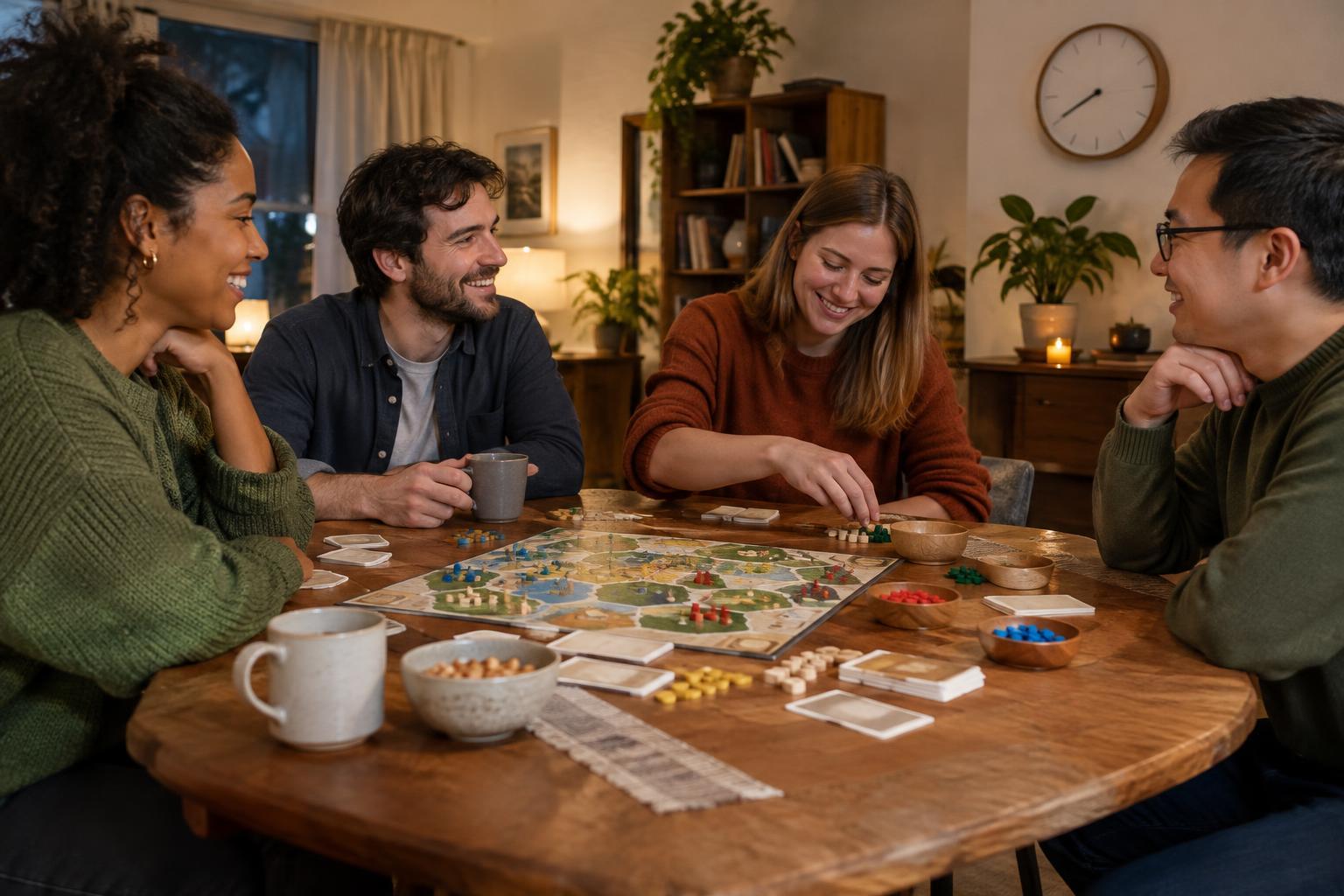
Choose a fixed start if the evening centers on one game, especially one with a substantial rules explanation or a set player count. Tell guests both when to arrive and when play will begin. For example, you might allow time for snacks and conversation before starting the rules at a stated hour. That small distinction gives people room to settle in without making punctual guests wait indefinitely.
This structure also helps the host plan a sensible finish. If everyone knows the main game starts promptly, they can decide whether they have enough time to stay. The trade-off is reduced flexibility: a late guest may have to watch, play something else or wait for the next game. Avoid solving that problem by repeatedly restarting the explanation. Instead, mention the plan in advance and, if space allows, keep a simple solo puzzle or short side game available.
When drop-in works better
A drop-in format suits an open-ended gathering where guests may arrive after work, bring friends or leave at different times. It pairs naturally with games that have short rounds, easy resets and rules that can be explained in a few minutes. Word games, drawing prompts, collaborative puzzles and light card games can give newcomers a way to participate without interrupting a table already in progress.
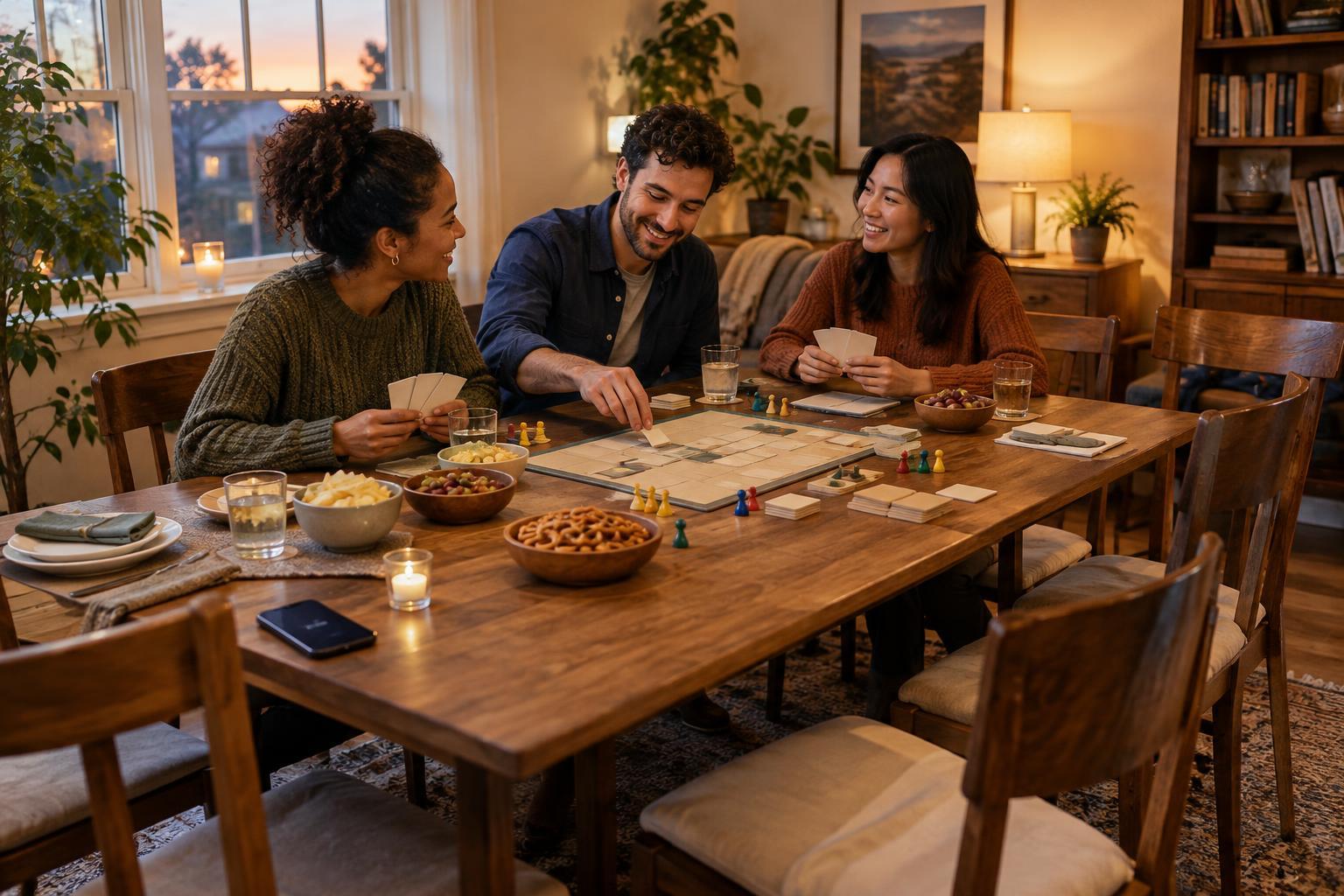
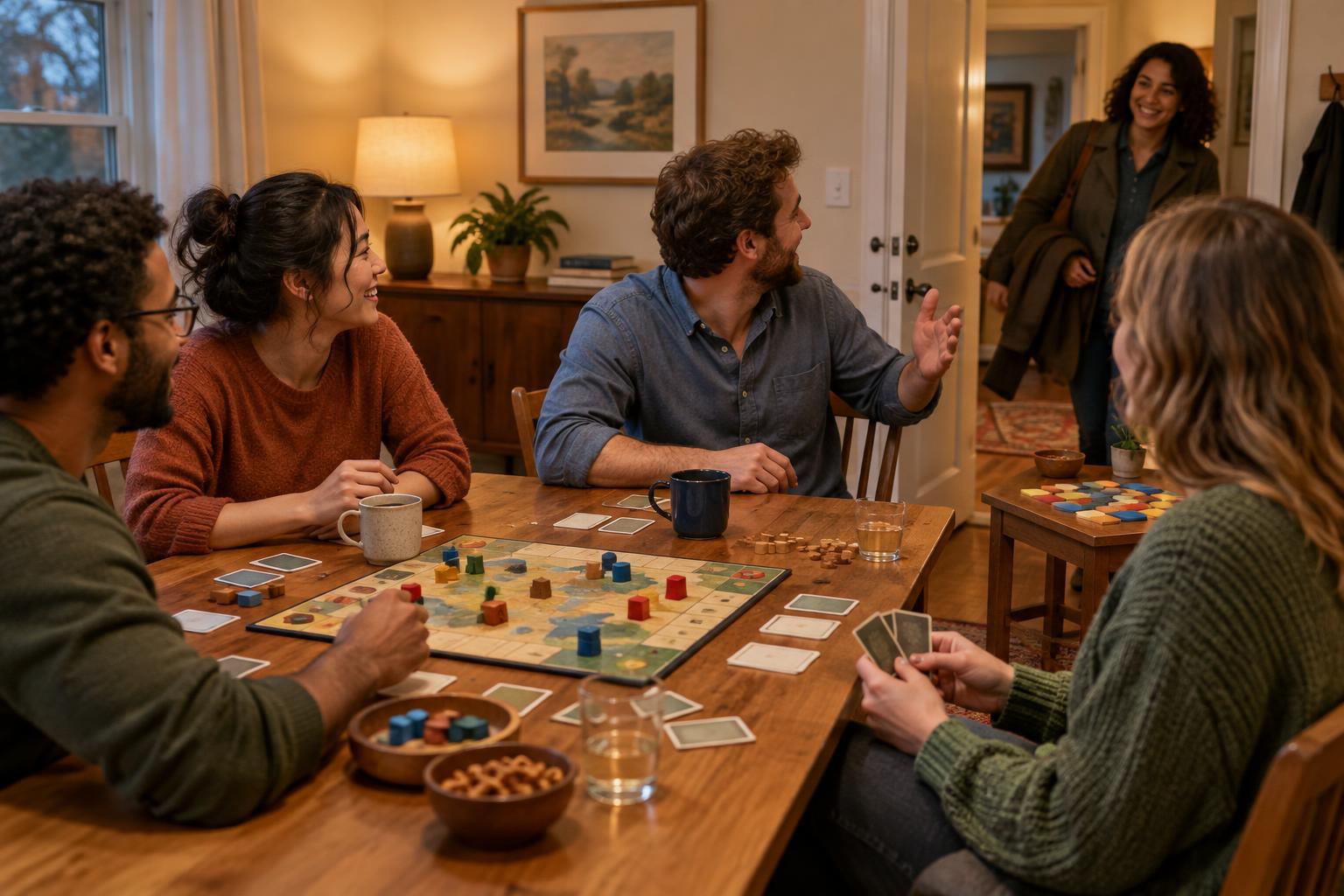
Drop-in does not have to mean unstructured. Set out a few choices rather than an entire collection, and make it obvious which activities are open to new players. You might designate one table for short games and another for a longer game whose players commit to finishing. A host or willing regular can greet arrivals, explain what is happening and help them find a place. Without that small welcome, a flexible night can feel surprisingly hard to enter.
Compare your group’s needs
Think about attendance patterns before choosing. If the same four friends are eager to learn a particular game, a fixed start protects the experience they came for. If attendance changes from week to week, drop-in activities reduce the pressure of finding an exact player count. Consider the space, too: one dining table favors a coordinated session, while separate surfaces make it easier to run several short activities at once.
Pay attention to energy as well as numbers. Some groups enjoy a focused challenge and the satisfaction of reaching a conclusion together. Others prefer conversation with a game in the background. You can ask regular guests what they would actually like to play, but leave room to adjust after trying a format. If people often arrive late despite a stated start time, that may be useful information about their schedules rather than a problem to correct.
Try a hybrid—and make the invitation precise
A hybrid can offer the best of both formats if you define its boundaries. Begin with a drop-in period for short games, then start one planned game at a fixed time. Or run a fixed-start main table alongside an open table for guests who prefer to come and go. Keep the plan modest enough that you can host it comfortably; you do not need to manage every player’s evening.
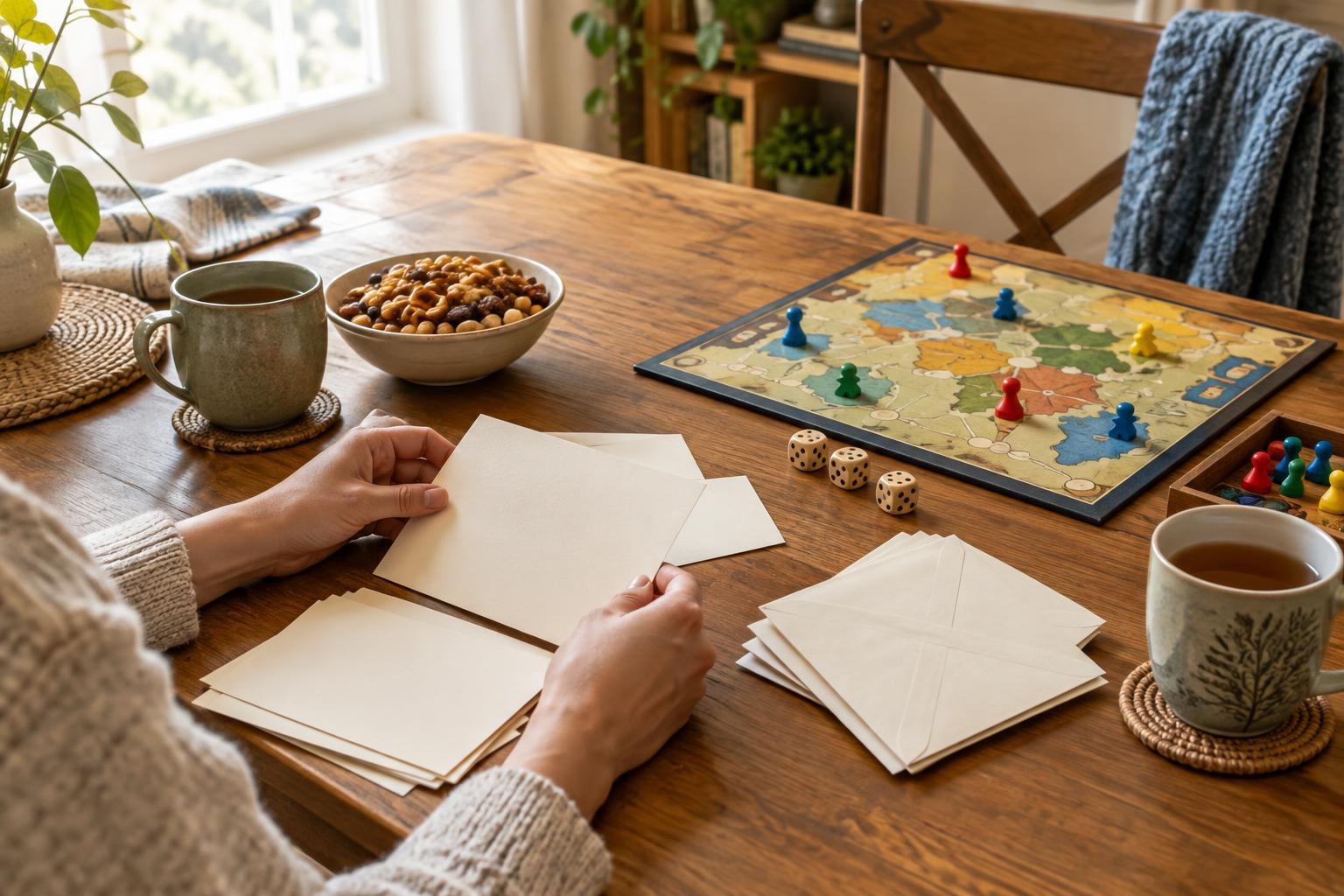
In the invitation, state the arrival window, the main game’s start time if there is one, and what late arrivals can expect. Include an approximate end time if guests need to plan around it. For a drop-in night, say whether someone can join a game at any point or between rounds. For a fixed-start night, explain that the group will begin on time. A few direct sentences prevent more confusion than an elaborate set of house rules, and they let guests choose the night that sounds fun to them.