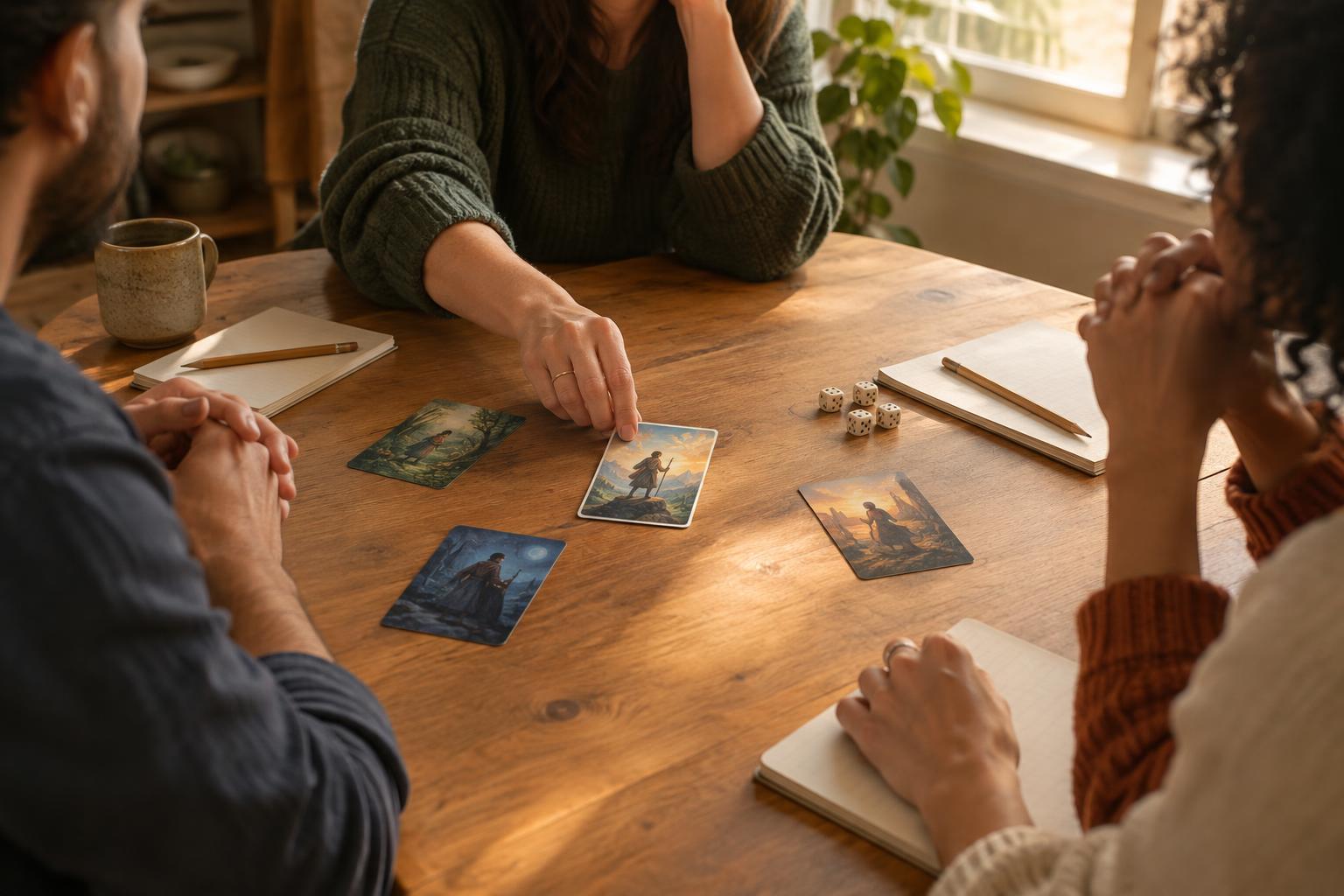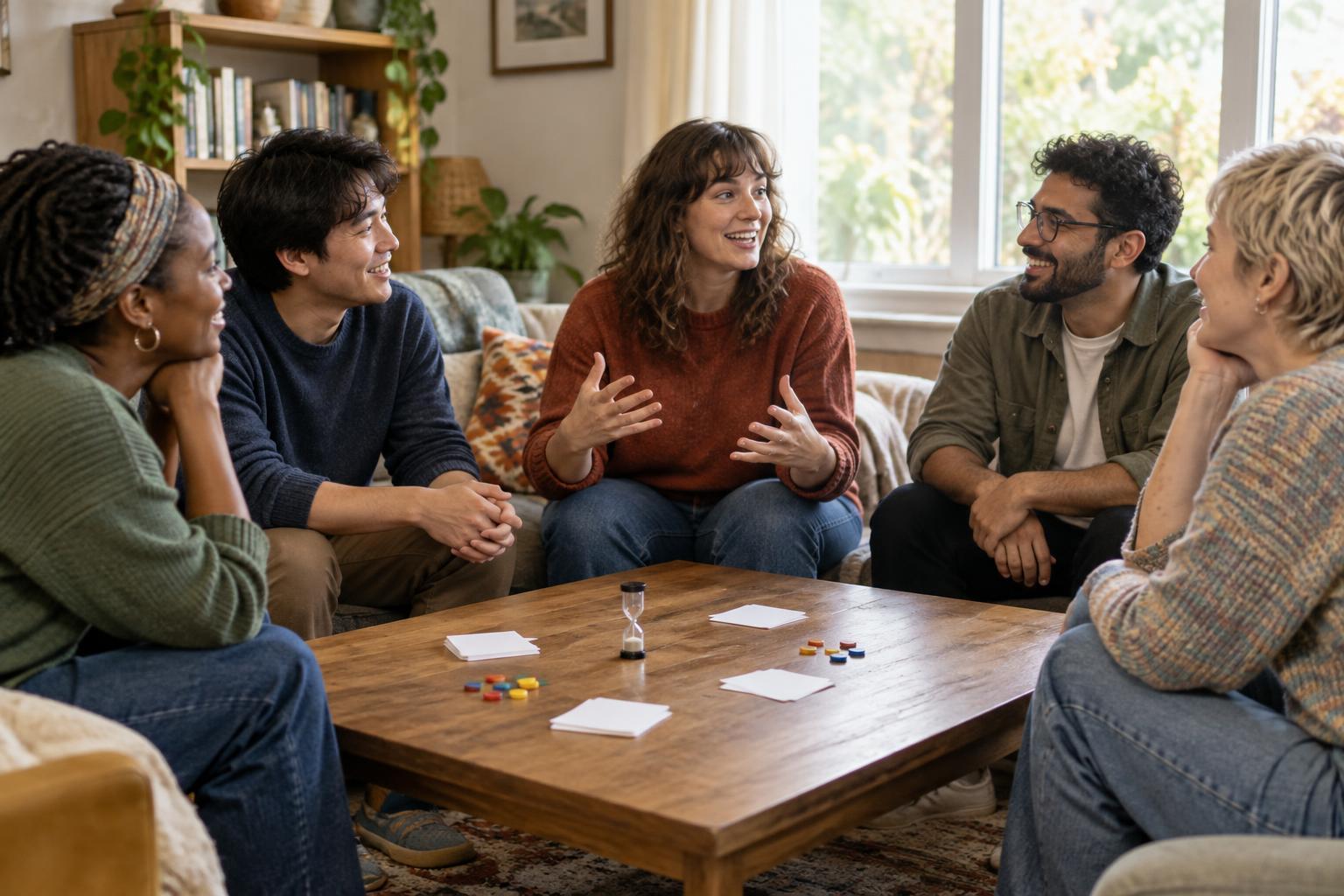
Start with a prompt everyone can enter
A good mixed-age prompt offers a clear starting point but leaves room for many answers. “Invent a place where a tiny creature could live” is more flexible than “Draw a realistic castle.” Someone might sketch a leaf shelter, build one from scrap paper or describe a home inside a clock. The group is exploring the same idea, even though the results look different.
Keep the first instruction short enough to say aloud once. Then offer a few optional questions: What is the place like? What does its resident need? What surprising object might be inside? These questions help anyone who wants direction without turning the activity into a test. Avoid prompts that depend on a particular book, film or specialist skill unless you provide a simple way in for people who do not know it.
Let people choose how to respond
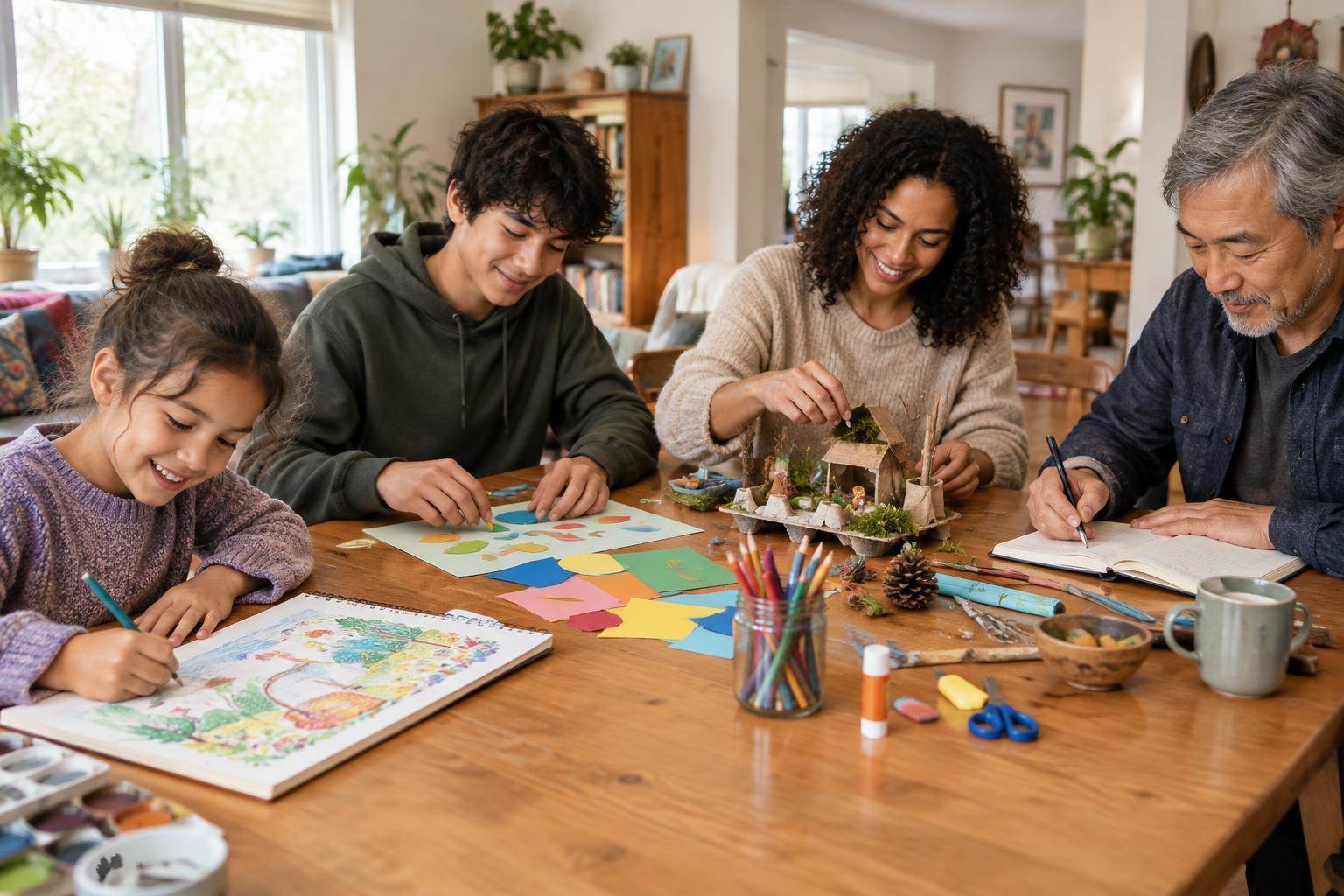
The easiest adaptation is often a choice of format rather than a separate task for each age. For a prompt about an imaginary vehicle, participants could draw it, build a paper model, name its features or tell a short story about its first trip. Set out basic materials and make clear that words, pictures and objects are equally welcome. A person who does not enjoy drawing still has a way to join in.
Choices should be manageable, not overwhelming. Offer two or three routes and let participants switch if an idea stalls. If the group includes people who find writing difficult or tiring, invite spoken descriptions that someone else can jot down only with permission. The aim is to make the shared prompt accessible while allowing each person to keep ownership of their idea.
Add challenge in layers
Instead of assigning “easy” and “hard” versions by age, create optional layers anyone can try. Begin with a core task: invent a friendly monster. A second layer might ask what it eats or where it sleeps. A further layer could add a constraint: give it a useful talent that causes an unexpected problem. Younger participants can stop after naming and drawing their monster; older participants can explore its habits or write a scene.
Constraints are most useful when they spark ideas rather than reward speed. “Use one color you would not normally choose” or “include an object from this table” can be fun across ages. If a rule frustrates someone, treat it as optional. You can also let participants invent a constraint for themselves, which gives keen creators more to do without changing the activity for everyone else.
Make collaboration an invitation
Mixed-age activities can be especially lively when ideas connect. One person might invent a character, another design its home and a third add a mystery for it to solve. Keep roles flexible: an adult can make sound effects while a child decides the plot, or two people can trade sketches and add one detail at a time. Ask before adding to someone else’s work so collaboration feels playful rather than intrusive.
Small groups may benefit from a shared goal, such as filling a map with invented locations. Give each person a space to contribute, then look for connections between the places. Avoid making the most confident participant the default leader. If someone prefers to work alone, their piece can still become part of the shared map at the end.
Leave room for different endings
A short, visible time limit can help a group begin, but creative work does not need to be finished to count. Offer a gentle midpoint reminder and a chance to add one final detail. Someone who completes a piece early can make a title card or start a second idea; someone still thinking can share a rough concept. This keeps the session moving without treating speed as success.
When it is time to share, invite descriptions rather than scores. Try questions such as “What part did you enjoy making?” or “What would you add next?” Participants can show their work, talk about it or simply listen. A closing display, brief story circle or collection of creations gives the group a common ending while respecting the many ways people chose to take part.