Treat limits as prompts, not tests
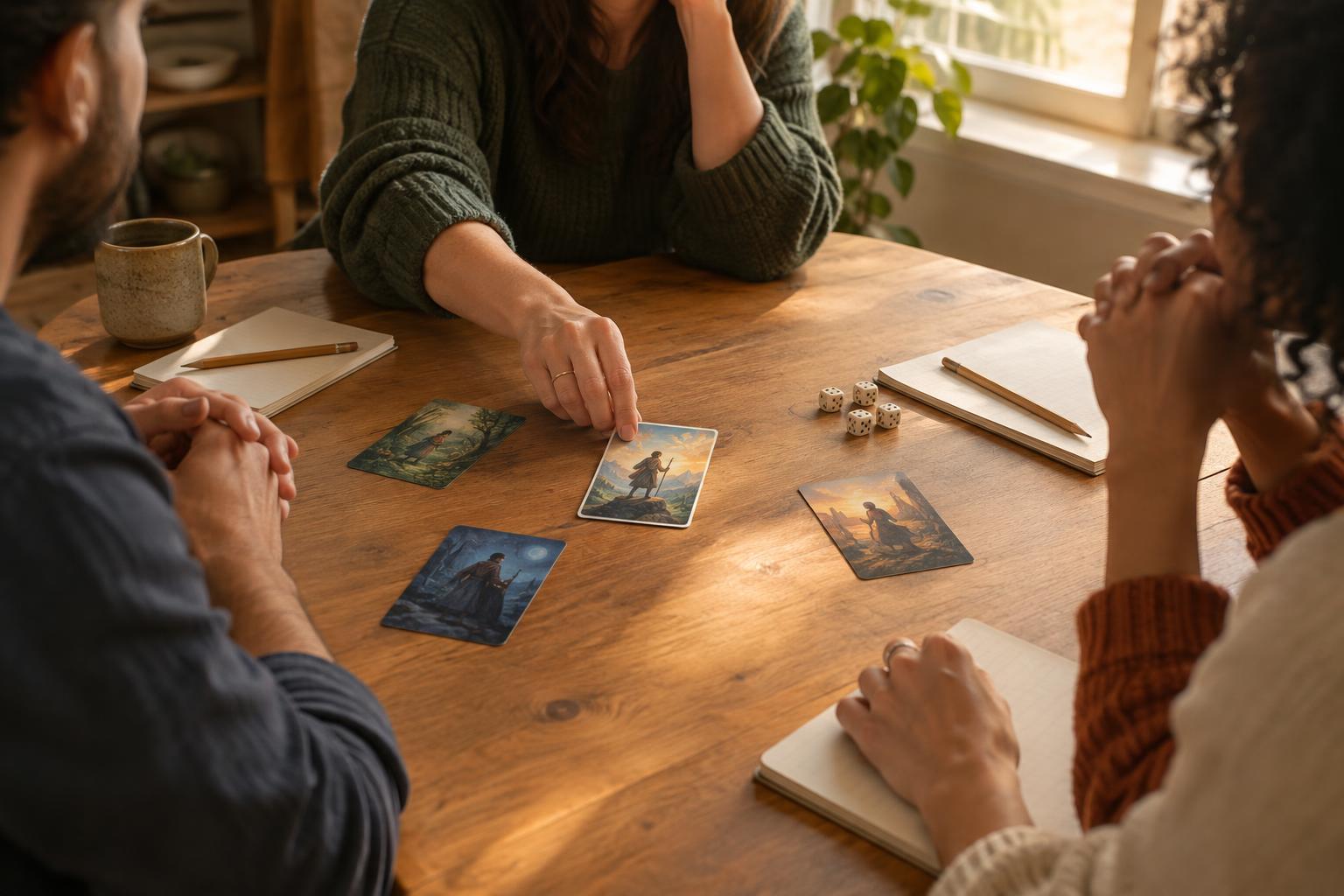
A limit can give an improv scene a useful shape. Thirty seconds to invent a character, or five words to answer a question, narrows an enormous field of possibilities. Players no longer have to search for the perfect idea; they can offer one that fits the moment. The aim is not to prove who thinks fastest or speaks most cleverly. It is to make starting easier.
Before play begins, tell the group what the limit is meant to do. A timer might keep turns moving so everyone gets a chance. A word limit might encourage simple, surprising responses. Make clear that awkward pauses, unfinished thoughts, and silly answers are welcome. When a restriction feels like an invitation to experiment, players are more likely to take creative risks.
Start with limits people can comfortably meet
Begin with enough time for players to understand the prompt and respond. For a quick character introduction, a minute may feel friendlier than an immediate countdown. For a collaborative scene, try a few minutes before asking the group to wrap up. Once everyone knows the game, shorter rounds can add energy. If people repeatedly run out of time before getting started, lengthen the round rather than urging them to hurry.
Word limits work best when they are easy to hear and remember. Try a one-sentence answer, a three-word character motto, or a scene in which each speaker gets no more than ten words per turn. Choose one restriction at a time for a new group. Combining a tight clock, a strict word count, and a complicated premise can leave players focused on rule-checking instead of listening to one another.
Give every restriction a creative purpose
Match the limit to the experience you want. Short turns can help a group build a story together because nobody has to carry it alone. A five-word reply can make characters sound mysterious, decisive, or comically blunt. A longer timed scene gives players room to notice details and develop a relationship between characters. The same restriction can be helpful in one game and distracting in another.
For a simple exercise, ask players to describe an imaginary object in exactly six words. The next player says what it is used for, also in six words. After a few turns, remove the word limit and let the group act out a short scene involving the object. The first constraint supplies details; the open scene gives those details room to grow. Alternating restricted and unrestricted rounds keeps the limit from becoming the whole game.
Keep the rules flexible during play
Explain how you will handle a missed limit before it happens. You might let a player finish a sentence when the timer sounds, allow a quick restart after an accidental extra word, or simply keep the scene going. Gentle handling protects momentum. Stopping to count every word can be funny if that is the game everyone agreed to play, but it can also interrupt a good exchange.
Offer a way to pass or take a quieter role, such as suggesting a setting while others perform. Players may need different amounts of thinking time, and a lively game does not require identical contributions. Watch whether the limit is producing ideas or making the group hesitant. If several people seem stuck, pause and ask whether they would prefer more time, a simpler prompt, or no limit for the next round.
End by opening things up
A useful limit should leave players wanting to explore what they made. After a fast round, invite the group to return to a favorite character or setting without a clock. After a word-limited exchange, ask what the characters meant but could not say. These follow-ups turn quick inventions into material for fuller scenes and show that an idea does not expire when a turn ends.
Keep the closing conversation as light as the game. Ask which restriction sparked an unexpected idea and which one got in the way. Use the answers to tune the next session rather than declaring a winning format. Time and word limits are adjustable tools: set them clearly, loosen them when needed, and remove them once the players have something they are excited to build together.