Start with the people, not the purchases
Before deciding what to buy, decide whom you want to invite and how long you want to play. A small group can often fit around a kitchen table, while a larger group may need games that split people into teams or let some players join between rounds. Give guests a start time and a rough finish time so the evening feels easy to commit to.
Ask whether anyone can bring a favorite board game, a deck of cards, or a puzzle. You do not need every guest to contribute, but borrowing from your own circle gives the group more options without creating a shopping list. If guests bring games, ask them to choose ones they can explain comfortably. A familiar game that starts quickly is often a better opener than a complicated new one.
Choose games that work with what you have
Take stock of the games already in your home. Check that they have the pieces and instructions you need, then pick two or three that suit your expected group size. Variety helps: one quick game to break the ice, one longer game for the main part of the evening, and a flexible option for anyone who wants another round.
A standard deck of cards can support many games, and paper and pencils are enough for word games, drawing prompts, or simple trivia written by the group. You can also invite guests to invent categories, clues, or puzzle challenges together. Keep any homemade rules short and settle them before play begins. That prevents a free activity from turning into a long debate about how it works.
Think about the experience as well as the cost. A game that leaves one person watching for an hour may not suit a casual gathering, even if it is already on the shelf. For mixed experience levels, favor games with short turns, clear goals, and room for conversation.
Make food and drinks simple
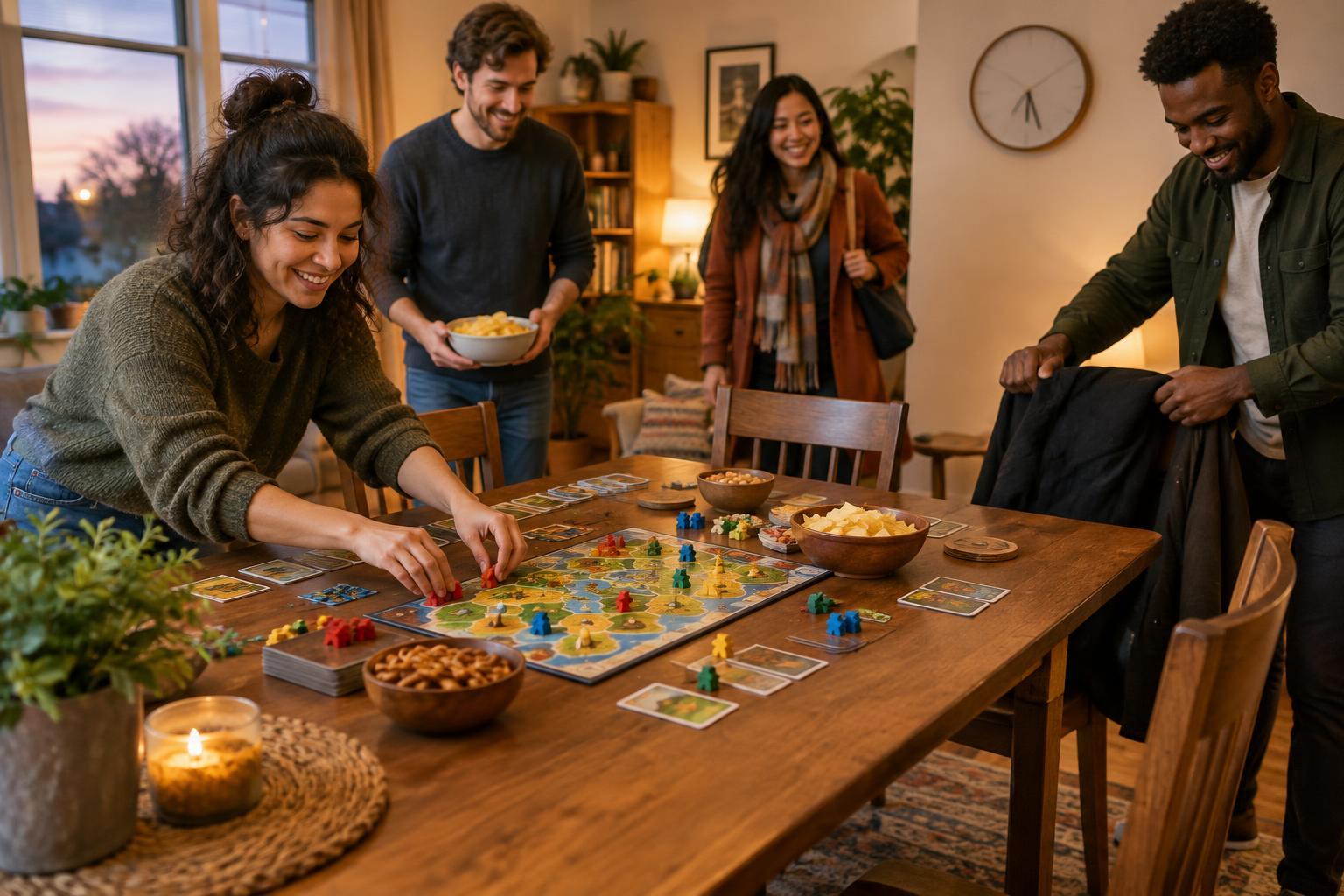
You do not need to serve dinner to be a good host. Set expectations in the invitation: call it a game night with snacks, for example, and suggest that guests eat beforehand. That lets you plan a modest spread rather than trying to feed everyone a full meal.
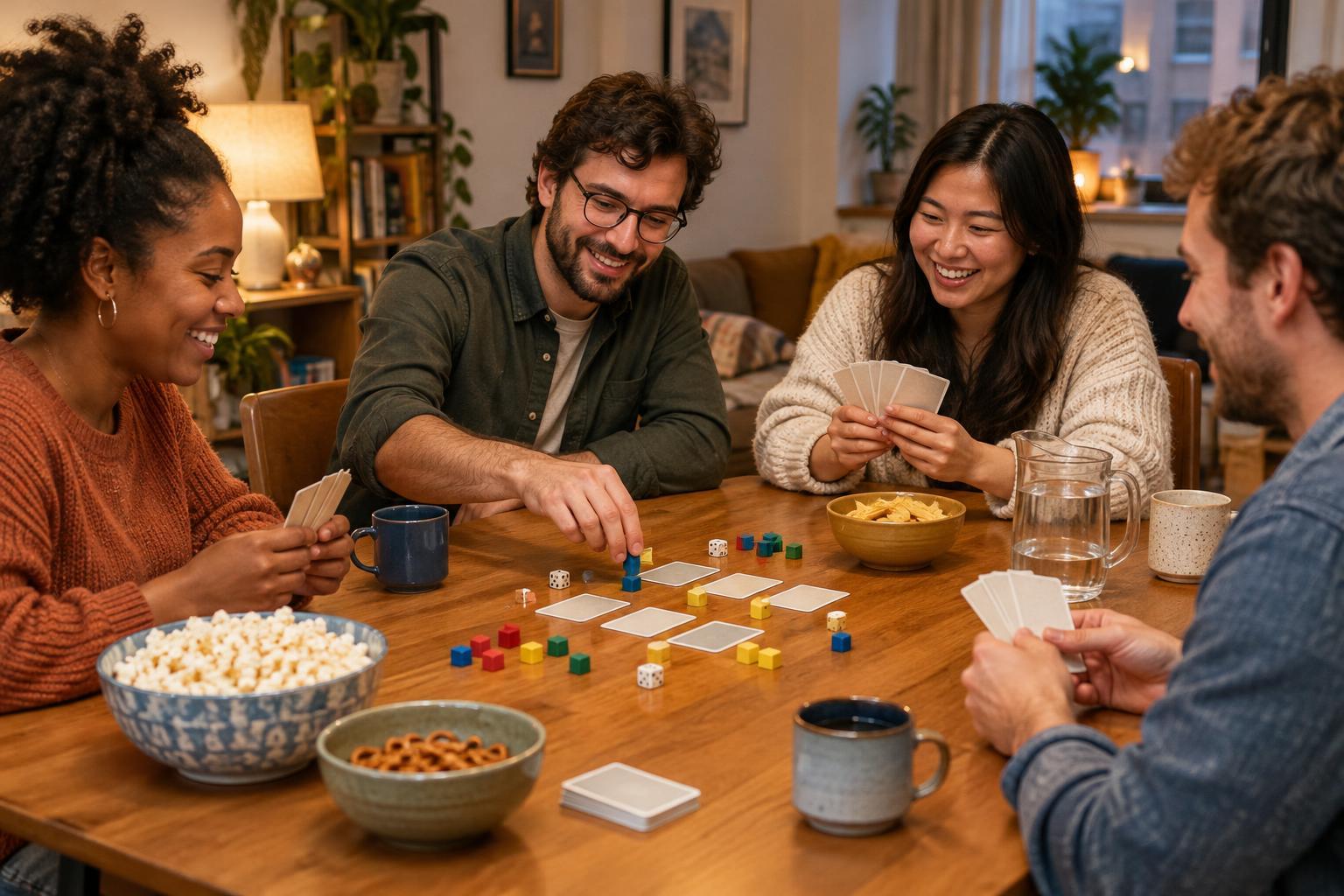
Choose foods that are easy to portion and unlikely to leave residue on cards or game pieces. Popcorn, cut vegetables, crackers, and fruit are straightforward options, depending on your guests’ preferences. Put snacks on a side table if you can, and keep napkins nearby. Water is enough as a basic drink; guests can bring something else they like.
If a shared-snack approach suits your group, make it optional and specific. Asking someone to bring a dip and another person to bring a drink is clearer than asking everyone to bring “something.” Check for dietary needs without making anyone explain them in front of the group. A few suitable choices are more useful than a large spread that some guests cannot enjoy.
Set up the room for comfortable play
A tidy table, enough chairs, and good lighting matter more than decorations. Clear away items that could get in the way of a game board, and leave space for player areas, drinks, and a discard pile if the game needs one. If your table is small, choose compact games rather than trying to squeeze in a sprawling setup.
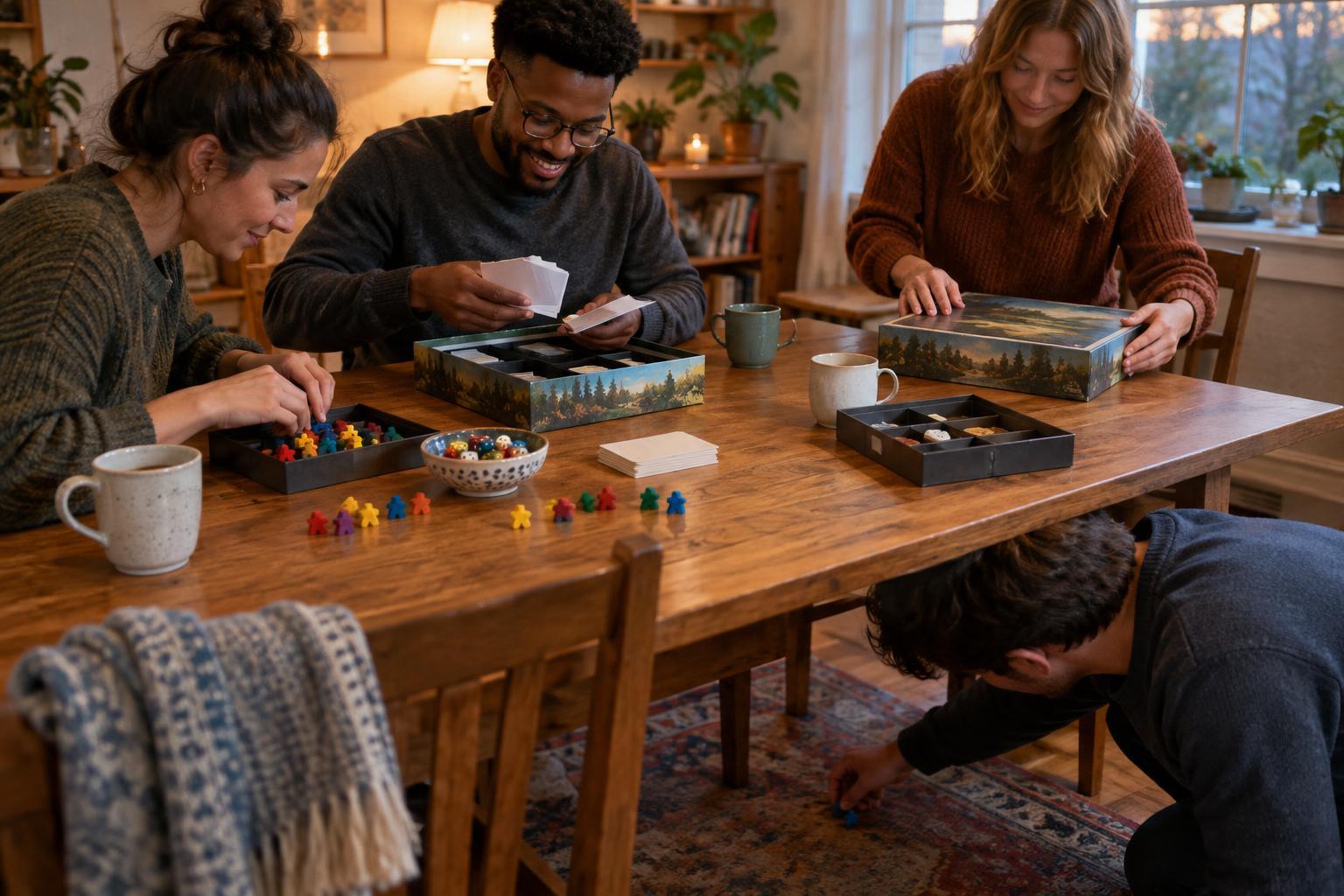
Before guests arrive, open the games you plan to offer and make sure the pieces are ready. Reading the main rules in advance can save time, but you do not need to memorize every exception. When it is time to teach, explain the goal, what happens on a turn, and how the game ends. Then let people begin and clarify details as they come up.
Keep the evening flexible
A simple plan gives the night shape without turning it into a schedule. Start with a short game while everyone settles in, offer a main game once the group is ready, and leave time for a final quick round. If a game is not landing, it is fine to stop after a round and choose another. The aim is a pleasant shared activity, not completing a checklist.
Pay attention to guests who have not played before. Pairing them with a patient teammate or choosing a cooperative activity can help them participate without pressure. Give people a chance to opt out of a particular game, too; conversation and watching a round can be part of a relaxed night.
When you wrap up, ask what people enjoyed. Their answers can guide the next gathering and help you reuse the games and supplies that worked best. A repeatable game night is usually built from small, comfortable choices—not from spending more each time.