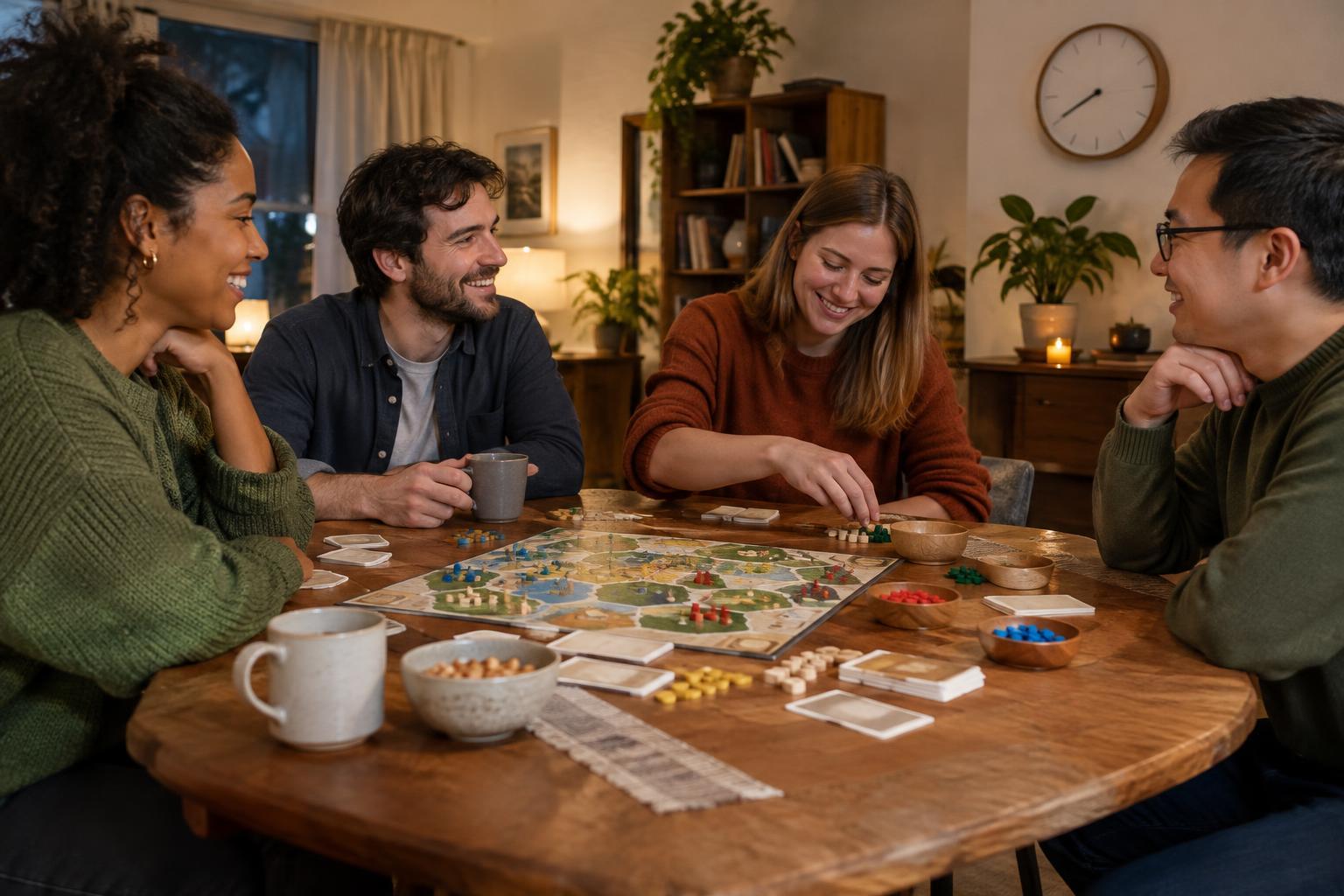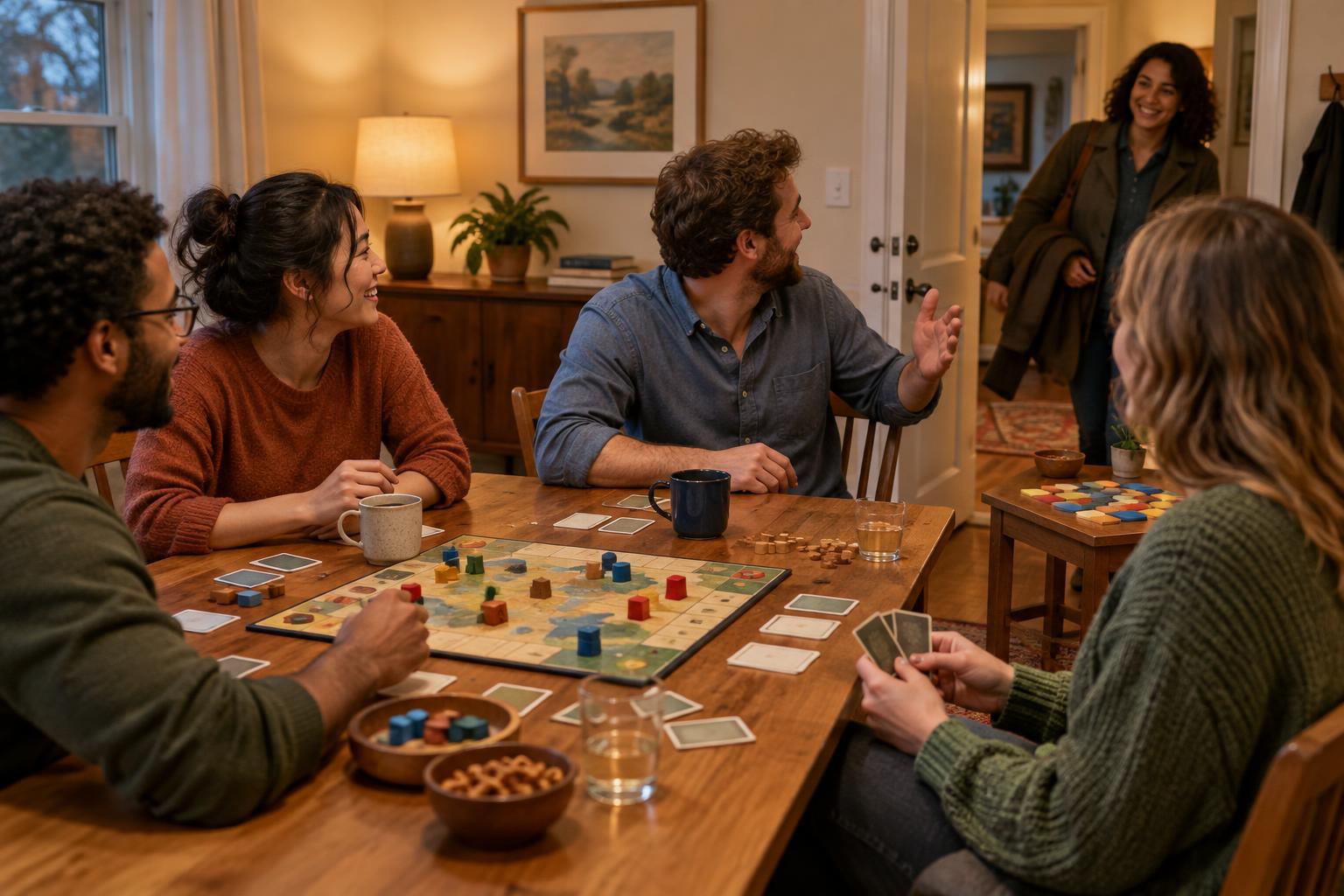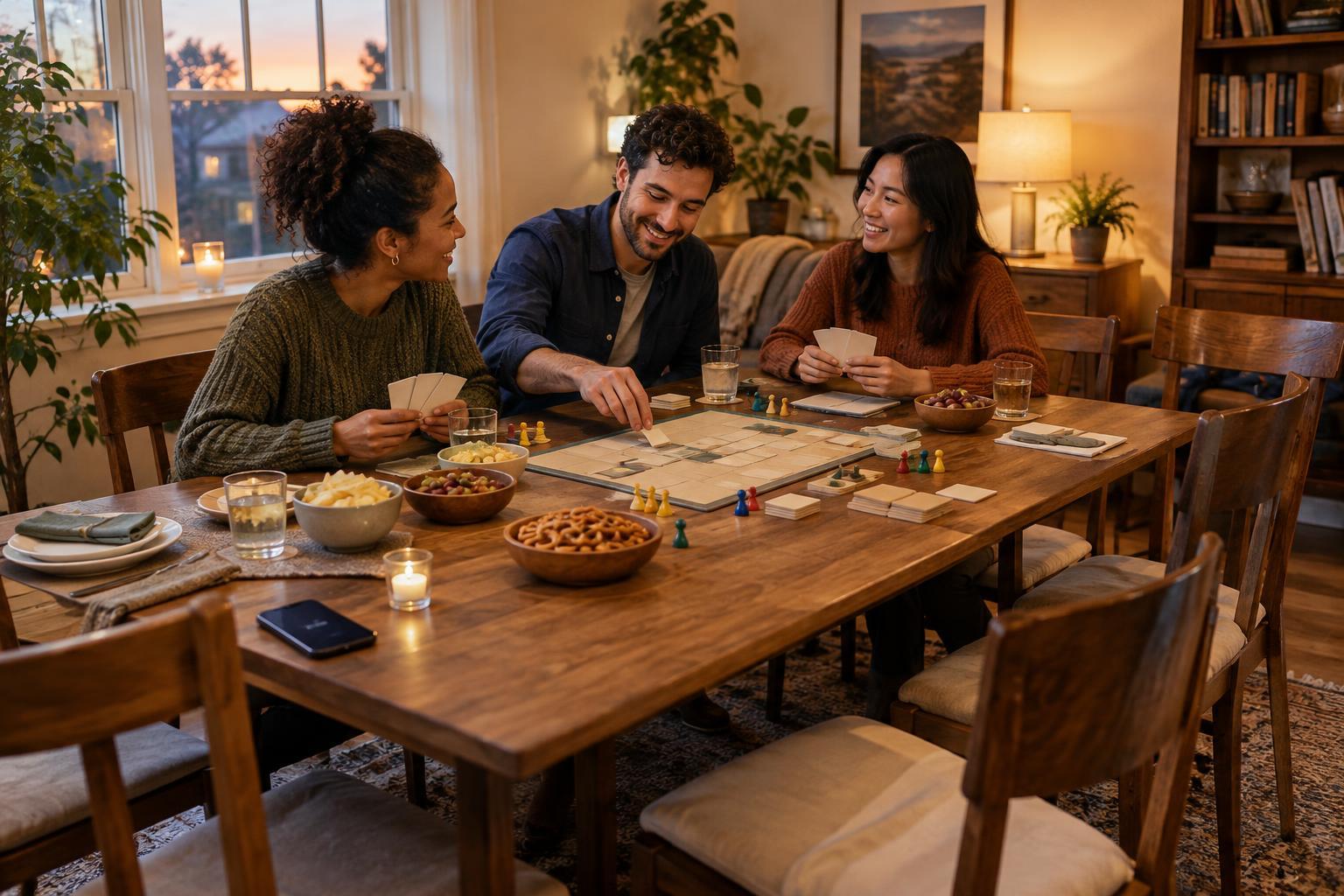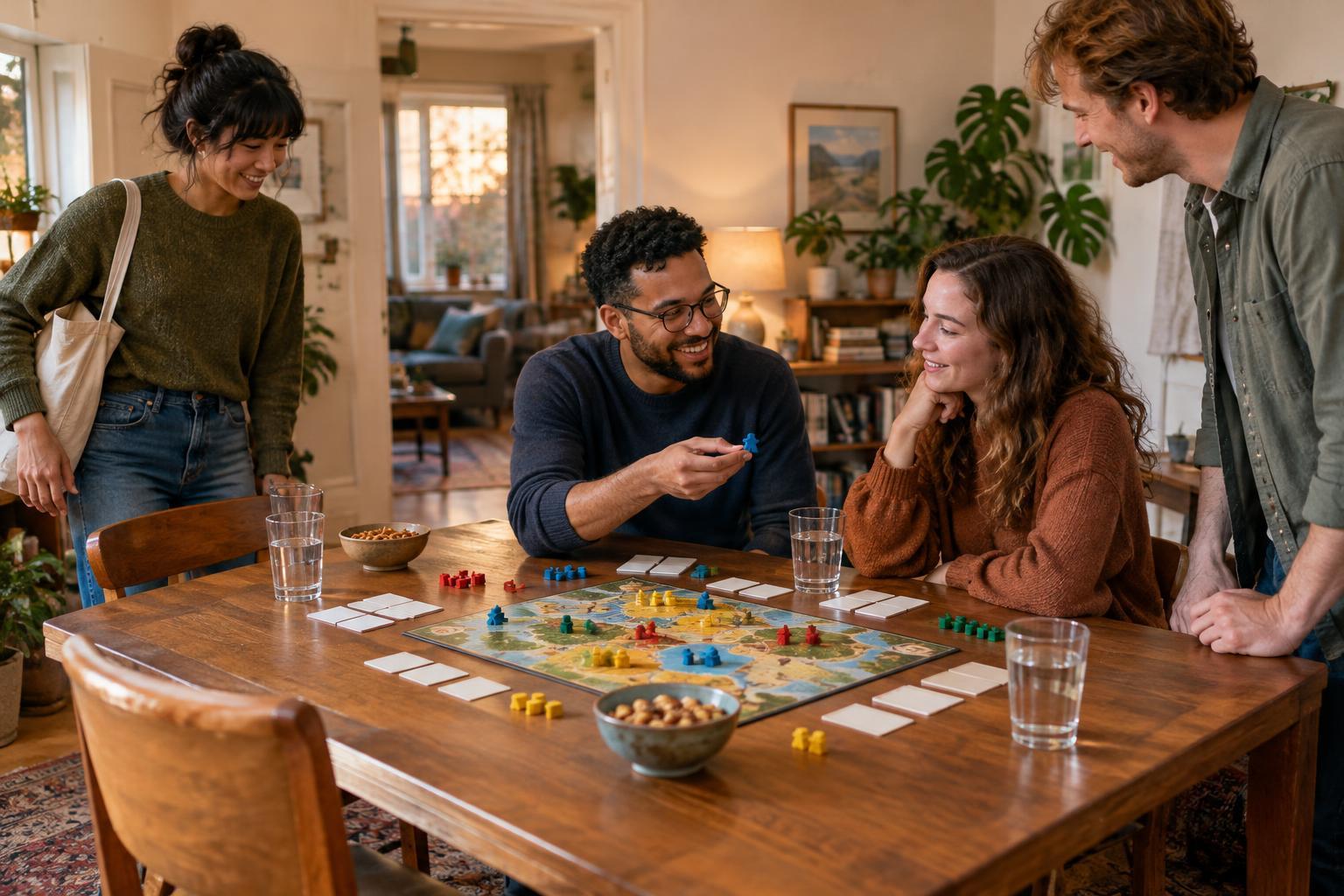
One to two weeks before: Set the shape of the night
Start with a small guest list and a clear invitation. Tell people when to arrive, roughly when the night will end, and whether they need to bring anything. Ask if they are new to tabletop games and whether they have any seating, lighting or other access needs you can plan around. A little information now prevents awkward decisions when everyone is at the door.
Choose one main game that fits your group size and the time available. For a first gathering, a game you can teach confidently is often a better choice than a complicated favorite you have not played yet. Check the box for its player count and estimated play time, but leave extra room for learning the rules and conversation. Have a shorter backup game ready in case someone arrives late, leaves early or simply wants a change of pace.
Keep the invitation low-pressure. Let guests know that learning together is part of the plan and that taking a break is fine. If your group is likely to enjoy it, you can ask about preferred styles—cooperative, word-based, strategic or silly—without turning the evening into a vote on every detail.
A few days before: Prepare the games and the room
Read the main game's rules and set it up once before guests arrive. You do not need to memorize every exception, but you should be able to explain the goal, what happens on a turn and how the game ends. Sort cards, tokens and player pieces into simple groups so setup will not consume the first half hour. If a rule seems unclear, mark the relevant page for quick reference rather than improvising an answer with confidence.
Look at your playing space from a guest's point of view. Is there enough table room for the board and everyone's hands or player areas? Can players read cards and see the shared space? Add a lamp if needed, clear a spot for coats, and make sure people can reach the table comfortably. If your chosen game needs an app, check it in advance; otherwise, keeping phones optional can make the table feel less cluttered.
Plan easy refreshments that can sit away from game components. Drinks with lids or a separate drinks surface may help protect cards and boards. Ask about food preferences or allergies when relevant, and make it clear that guests do not need to eat or drink anything to join in. The aim is comfort, not a catered event.
On the day: Leave room for real life
Before guests arrive, set out the first game and place its rulebook nearby. Put the backup game within reach but out of the way. Check that chairs, snacks, water and any needed pencils or paper are ready. A quick reset of the table matters more than decorating the entire room.
Give yourself a buffer before the stated start time. If you are still reading rules or hunting for missing pieces when the doorbell rings, the evening may feel rushed before it begins. It can help to have a simple opening activity, such as a short puzzle or a light conversation prompt, for guests who arrive while others are still on their way. Avoid starting the main game until everyone who is playing can hear the introduction.
When everyone arrives: Teach just enough to begin
Welcome people, point out refreshments and explain the loose plan: a short rules introduction, a first game, then a break or a choice about what comes next. If some guests do not know one another, make introductions before asking them to make teams or take seats. You can also offer a choice of where to sit, especially if one position has a clearer view of the board.
For the rules explanation, begin with the objective. Then show the pieces and walk through a typical turn using the actual board or cards. Explain how a round ends and what players should pay attention to on their first turn. Save rare exceptions until they come up, unless one would seriously affect an early decision. Invite questions, and check whether everyone is ready before starting.
During play, make space for different speeds. Some people like to think aloud; others need a quiet moment to choose. A gentle reminder of available options is more helpful than taking someone else's turn for them. If the game runs longer than expected, pause between rounds to ask whether the group wants to continue, take a break or finish at a natural stopping point.
At the end: Close without squeezing in too much
Set a rough stopping time and treat it as a guide, not a challenge to fit in one more full game. A short final round or a quick, familiar game may work if everyone has energy, but conversation can be an equally good ending. Give guests time to collect their things without feeling they must stay until every component is packed away.
Afterward, note what worked: Was the game easy to teach? Did the group have enough time? Was the table comfortable? Use those observations to make your next gathering simpler, not grander. A successful first game night is one where people feel welcome and have a chance to play together; it does not have to follow the plan perfectly.