Ask early, and leave room for different answers
Accessibility is not one checklist that works for everyone. A guest may need a clear route through the room, a quieter place to sit, more time to read a card, or simply a chance to learn the rules before play begins. The most useful first step is to ask rather than guess. In an invitation, briefly describe the plan: where you will play, when you expect to start and finish, how many people may attend, and which games you are considering. Then invite guests to tell you what would make the evening easier for them.
Keep the question open and low-pressure: “Is there anything about the space or games that would help you feel comfortable?” Guests should not have to explain a diagnosis or justify a preference. If someone asks for an adjustment, discuss what you can offer without sharing their request with the group unless they want you to. If a particular feature of your home cannot be changed, say so before the event so the guest can decide what works for them.
Make the space easy to navigate and comfortable to use
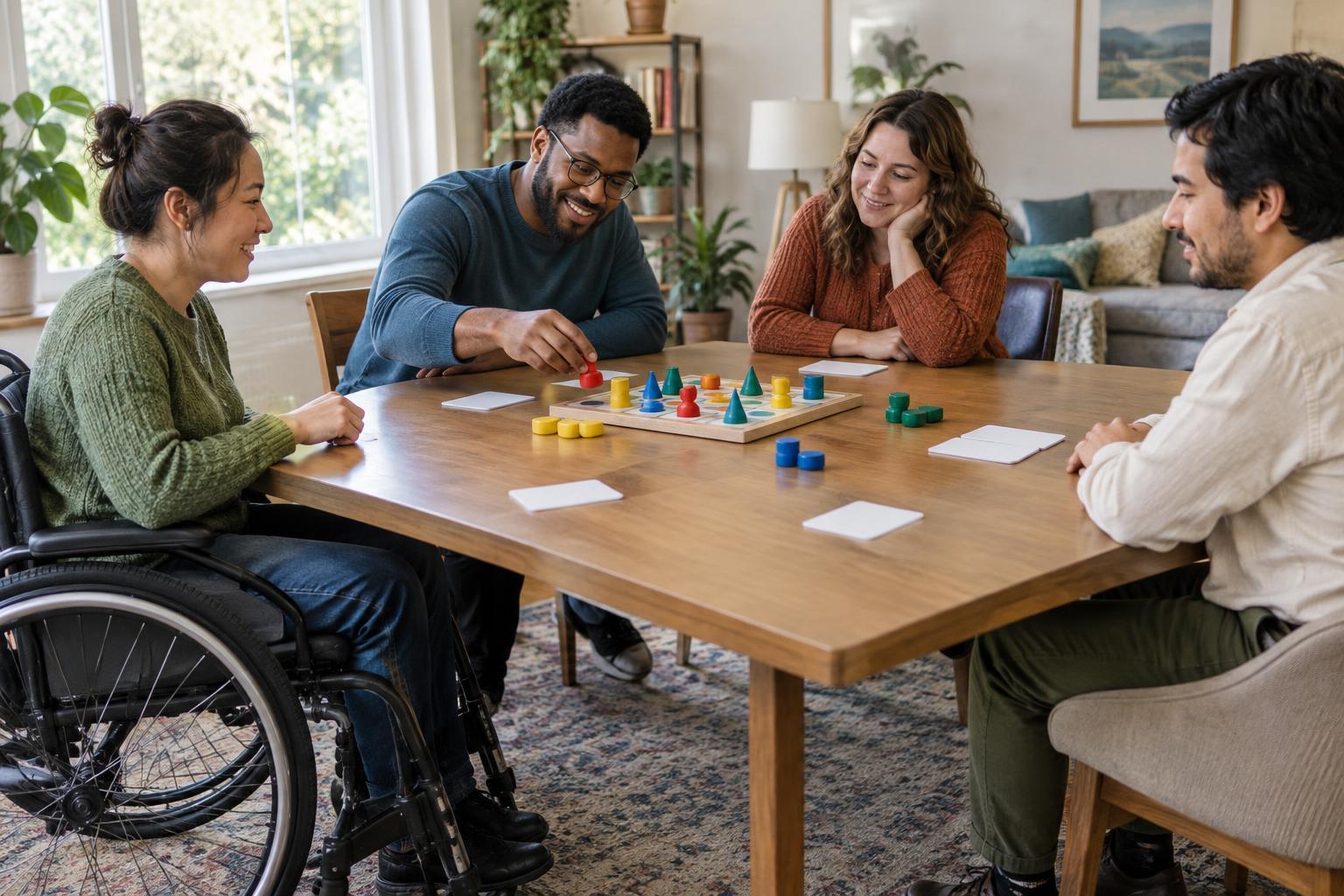
Before guests arrive, walk through the evening as they might. Is the entrance easy to find? Are bags, shoes, and spare chairs blocking a route to the table or bathroom? Can people pull up a chair without squeezing past others? A sturdy table with enough space for cards, components, drinks, and hands is often more useful than an elaborate setup. Keep commonly used pieces within easy reach, and ask before moving a guest’s belongings or mobility equipment.
Comfort also includes light, sound, and breaks. Aim for lighting that makes text and colors easier to distinguish without creating strong glare on glossy cards. Consider turning off background music during rules explanations and offering a quieter seat if the room is lively. Let guests know where they can get water or take a break. A relaxed host can make these ordinary choices feel normal, rather than treating a pause as an interruption.
Choose games with flexibility in mind
Pick games for the people attending, not just for the shelf. Shorter rounds, clear turns, readable components, and simple ways to rejoin after a break can make an evening easier for many guests. Have two or three options ready, including one that does not rely heavily on speed, tiny text, color alone, or rapid conversation. You do not need to rule out every complex or energetic game; the point is to offer a real choice rather than assume everyone enjoys the same pace.
Look at a game’s physical and social demands as well as its theme. Does it require players to stand, reach across a large table, hold many cards, or identify pieces by subtle color differences? Does it put someone on the spot to perform or answer immediately? Some barriers have easy workarounds: use a card holder, place shared information in the center, name a color aloud, or allow a player to pass without explanation. For games with hidden information, check with everyone before using a helper who might see another player’s cards.
Teach the rules in more than one way
A long spoken explanation can be hard to follow, even for experienced players. Start with the goal of the game, then show what a turn looks like using visible pieces. Explain exceptions when they become relevant instead of listing every edge case at the start. If guests want them, make the written rules or a short turn summary available at the table. Speak at a conversational pace, face the group when explaining, and pause for questions without making anyone feel they are holding up play.
Consider a practice round that does not count. It gives everyone a chance to try an action, notice what is confusing, and reset before the game begins. During play, be consistent about announcing whose turn it is and what has changed on the board. Offer reminders to the whole table rather than singling someone out. Guests who prefer to read quietly, hear an example, or learn by doing can then use the approach that suits them best.
Let participation stay flexible
A good game night does not require everyone to play every game. Someone may enjoy watching a round, teaming up by agreement, stepping away between turns, or leaving before the final game. Tell guests these options are welcome from the start. If a player wants help handling pieces or tracking information, ask how they would like that help given; assistance should support their decisions, not take over their turn.
Check in as the evening goes on, especially when changing games or raising the noise level. A simple group question such as “Do we want another round, a break, or a different game?” gives everyone a way to express a preference without being singled out. Not every adjustment will be possible in every space or game. What matters is being honest, receptive, and willing to adapt the plan so guests can enjoy being together.