Choose the shape of the hunt
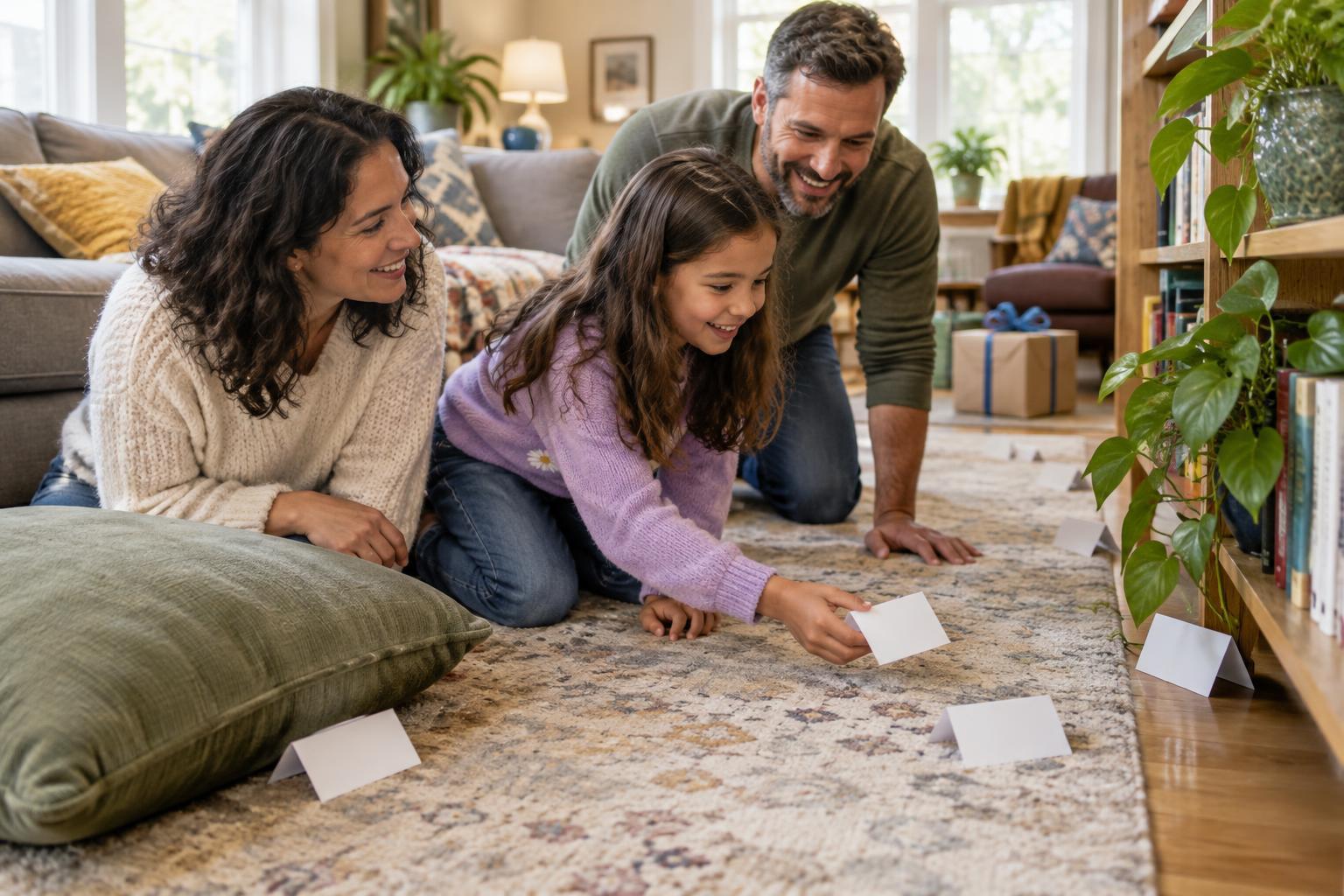
An at-home scavenger hunt needs little more than paper, a pencil and a few places to tuck clues. Start by deciding who will play and how long you want the activity to feel. A short hunt with five or six stops can be more satisfying than a long one that repeatedly sends players across the same room. For younger players, choose obvious household objects. For experienced puzzlers, let the clues require an extra step of reasoning without making them dependent on obscure facts.
Pick a simple goal before writing anything: finding a small prize, assembling pieces of a message or discovering where a shared activity begins. The ending need not be a purchased reward. A note offering players the choice of the next board game, a drawing to complete together or the ingredients for a snack can give the route a cheerful finish.
Plan the route backward
List safe, distinct destinations that players are allowed to visit, such as a bookshelf, coat rack, sofa cushion and dining table. Avoid medicine cabinets, breakable displays, electrical equipment and places that require climbing. If several objects fit the same clue, narrow the answer with a detail: “the shelf with the cookbooks” is clearer than “a shelf.” Keep every hiding spot reachable without moving heavy furniture or opening private belongings.
Now work backward from the finish. Put the final surprise at the last destination, then write a clue pointing there and place it at the previous stop. Continue until you have a first clue to hand directly to the players. Number the backs of the papers for your own reference, and keep a separate route list. This prevents a common setup mistake: hiding a clue at the place it describes rather than at the place before it.
Write clues that sound like your home
Original clues work best when they describe familiar details from an unexpected angle. A riddle for a shoe rack might read, “I hold the pairs that take you outside, but I never take a step.” For a bookshelf: “Many adventures stand here quietly, each with a spine but no bones.” These lines give players something to infer while still pointing toward an answer they can find. Read each clue aloud and ask whether more than one spot in your home could reasonably fit.
Vary the clue style to keep the trail lively. A short rhyme can point to the next object; a drawing can highlight its shape; a simple word puzzle can reveal its name. You might write “Look where coats wait to go out” for a coat rack, then use a sketch of stacked cushions for the sofa. If a clue uses a code or pattern, provide an example of how to solve it. The challenge should be finding the destination, not guessing which rules the host had in mind.
Make room for every player
Think about how the group will move through the space. For a cooperative hunt, have one person read each clue aloud and invite everyone to suggest an answer before moving on. For mixed ages, give younger players the job of spotting objects while older players work through wordplay. If players are searching in teams, make separate routes or stagger their starting points so one group does not accidentally reveal another group’s clue.
Clues should be easy to handle and read. Use large writing, good contrast and clear language, and offer a spoken version or picture clue when useful. Set boundaries before starting: name any rooms that are off-limits and explain that clues will never be hidden inside fragile or personal items. If someone gets stuck, a gentle hint such as “Think about what you wear outdoors” keeps the game moving without simply giving away the shoe rack.
Test the trail and enjoy the finish
Before inviting players in, walk the entire route with your list. Check that every clue is in the correct location, visible enough to be found after its riddle is solved and unlikely to be shifted by someone using the room. Make sure the first clue clearly begins the game and the last one clearly ends it. A quick test also catches clues that point to several objects or send players somewhere you did not intend.
At the finish, let the players celebrate the discovery rather than rushing to tidy up. Ask which clue was their favorite or invite them to write one new clue for someone else to solve. That final exchange turns a one-time search into a creative activity: once players see how everyday objects can become riddles, they can build a fresh hunt using the same rooms and entirely different ideas.