What is a comic-strip drawing relay?
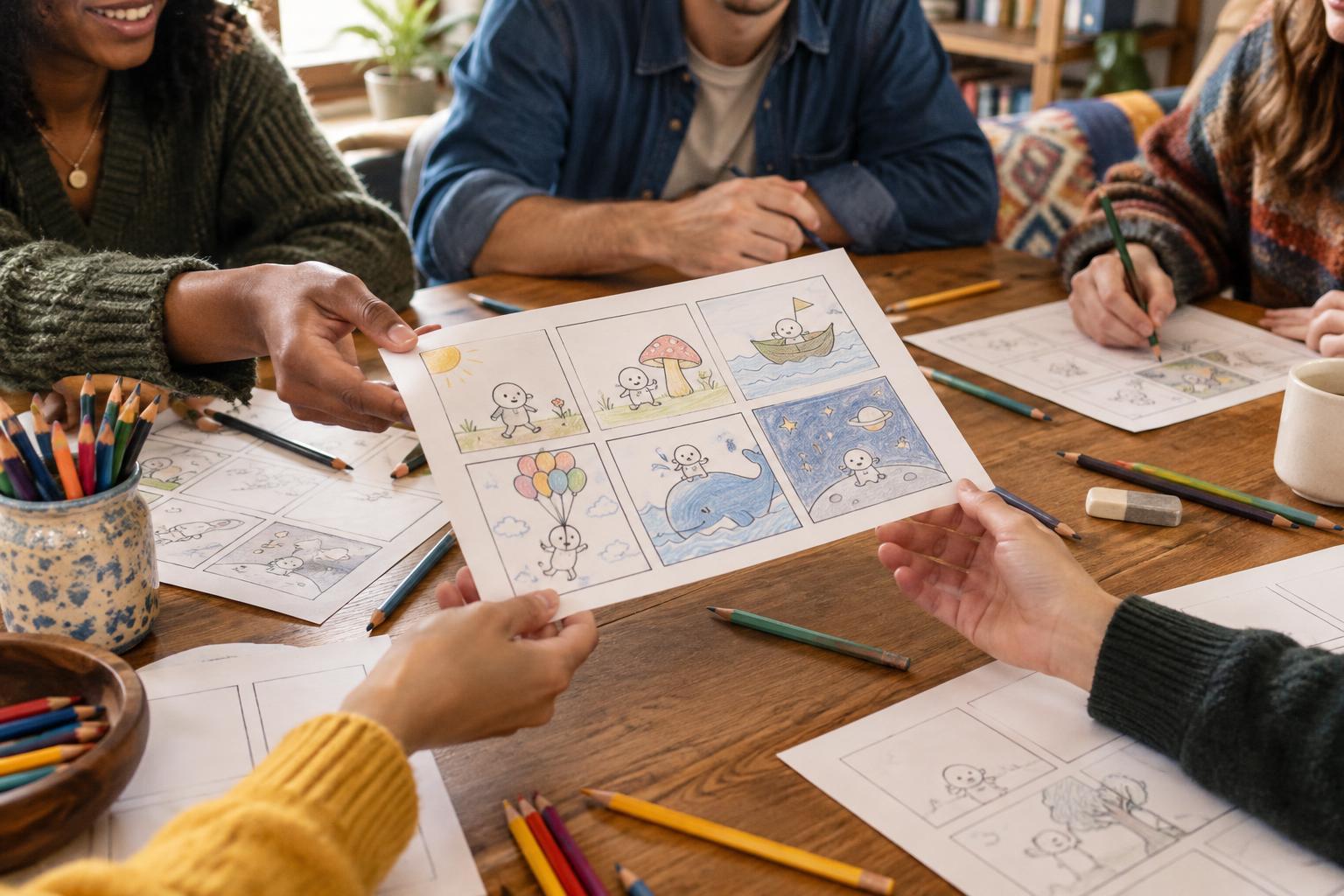
A collaborative comic-strip drawing relay is a group activity in which each person creates one panel, then passes the unfinished story to someone else. The next person continues from what they can see, adding a new action, discovery or complication. By the end, the group has made a comic that no one could have planned alone.
The aim is to build on one another’s ideas, not to produce polished art. Simple shapes, speech bubbles and labels are welcome. A wobbly drawing of a spaceship can become part of the joke, while a carefully drawn character can reappear in a surprising setting. Four to eight people can make a lively relay, but a smaller group can play by taking more than one turn each.
Gather supplies and set up the panels
Give each player a pen or pencil and a sheet divided into comic panels. Six panels per sheet is a manageable starting point. Leave enough space inside each box for a drawing and a short caption or speech bubble. If you have several players, prepare one sheet per person so multiple comics can travel around the table at once. Scrap paper works well; erasers and colored pencils are optional.
Before starting, agree on a few shared boundaries. Decide whether stories should be suitable for everyone at the table, whether words are allowed and how long each turn will last. Two or three minutes per panel keeps the relay moving without demanding quick drawing skills. For a gentler pace, skip the timer and ask players to pass their sheets when most people have finished.
Play one panel, then pass
Each player begins a comic by drawing its first panel. A strong opening gives the next person something to use: a character with a clear goal, an unusual object or a question left unanswered. For example, a tiny robot might find a door in the side of a teapot. The opening does not need to explain where the robot came from or what is behind the door.
When the turn ends, everyone passes their sheet in the same direction. Each player looks at the panels already drawn, fills the next empty panel and passes the sheet again. Continue until every sheet is full. The new panel should connect to at least one visible detail, but it can change the direction of the story. The door might lead to a garden, or the teapot might begin to speak.
Keep earlier panels visible during this basic version. That lets players follow the whole story and bring back characters or objects. If someone gets stuck, they can ask, “What changes next?” A character can make a choice, an object can behave unexpectedly, or a new problem can appear. Captions can clarify a drawing, but try not to use them to erase or contradict someone else’s contribution.
Read the finished comics together
Once the last panels are complete, return each sheet to its starting player. Take turns showing the comics to the group. You can read speech bubbles aloud, narrate the action or simply let people look. If a panel has several possible interpretations, invite its artist to explain it only after others have had a chance to enjoy their own reading.
There is no need to choose a winner. Instead, ask which detail someone enjoyed carrying forward or which turn changed the story in an interesting way. Thanking people for specific contributions helps keep the activity welcoming, especially for players who feel unsure about drawing. Before displaying or sharing a finished comic beyond the group, check that all its contributors are comfortable with it.
Try a variation for your next round
For a more surprising relay, fold the paper so each player sees only the previous panel. The result will usually have less continuity, so treat unexpected changes as part of the fun. If your group prefers a clearer story, keep every panel visible and give each comic a prompt such as “a misplaced invitation” or “a journey across the kitchen.” Prompts work best when they suggest a starting point without prescribing an ending.
You can also adjust the format to suit the table. Use four larger panels for younger players or anyone who wants more drawing room. Invite players to dictate a caption to a partner if writing is a barrier, or allow simple symbols and labels in place of detailed pictures. Whatever version you choose, keep the central rule: accept what the previous player made, add one idea of your own and leave something inviting for the next person.