Role-playing is about choices, not performance
A tabletop role-playing activity asks participants to imagine a situation and decide what their characters do. Someone describes a setting or challenge, the players respond, and the group finds out what happens next. Dialogue can be part of that process, but it is not the only way to take part. You do not need an accent, a costume, a dramatic speech or a quick answer to every question.
Think of your character as a point of view you can use to make decisions. If the group finds a locked garden gate, you might say, “My character checks whether it can be opened from the other side.” That gives everyone something to work with. It moves the shared story forward just as effectively as acting out a conversation with the gatekeeper.
Describe what your character says
If speaking as a character feels awkward, summarize their words instead. “I ask the librarian whether anyone has borrowed the map” is a complete contribution. You can also describe the tone or purpose: “I thank the librarian and try to sound reassuring.” The person guiding the activity can then respond, ask a follow-up question or explain what your character learns.
You can mix styles whenever you like. Perhaps you describe most conversations but occasionally say a short line aloud when one comes naturally. There is no need to stay consistent for the sake of an audience. A useful phrase to keep handy is, “My character explains that…” It leaves room for a clever idea without requiring you to invent polished dialogue on the spot.
Build a character you can make decisions for
A long backstory is optional. For a first activity, try giving your character a simple goal, one thing they care about and one habit that helps you choose what to do. For example, a curious messenger wants to deliver a parcel, cares about keeping promises and asks questions before taking risks. Those three details are enough to guide many small decisions.
You also do not have to choose a personality that demands constant attention. A thoughtful observer, a practical helper or a cautious explorer can contribute by noticing clues, offering supplies and checking plans. If the group’s activity uses rules or character abilities, ask which options are straightforward for a beginner. Understanding a few useful choices is often more helpful than trying to memorize everything before you begin.
Make participation comfortable for the whole group
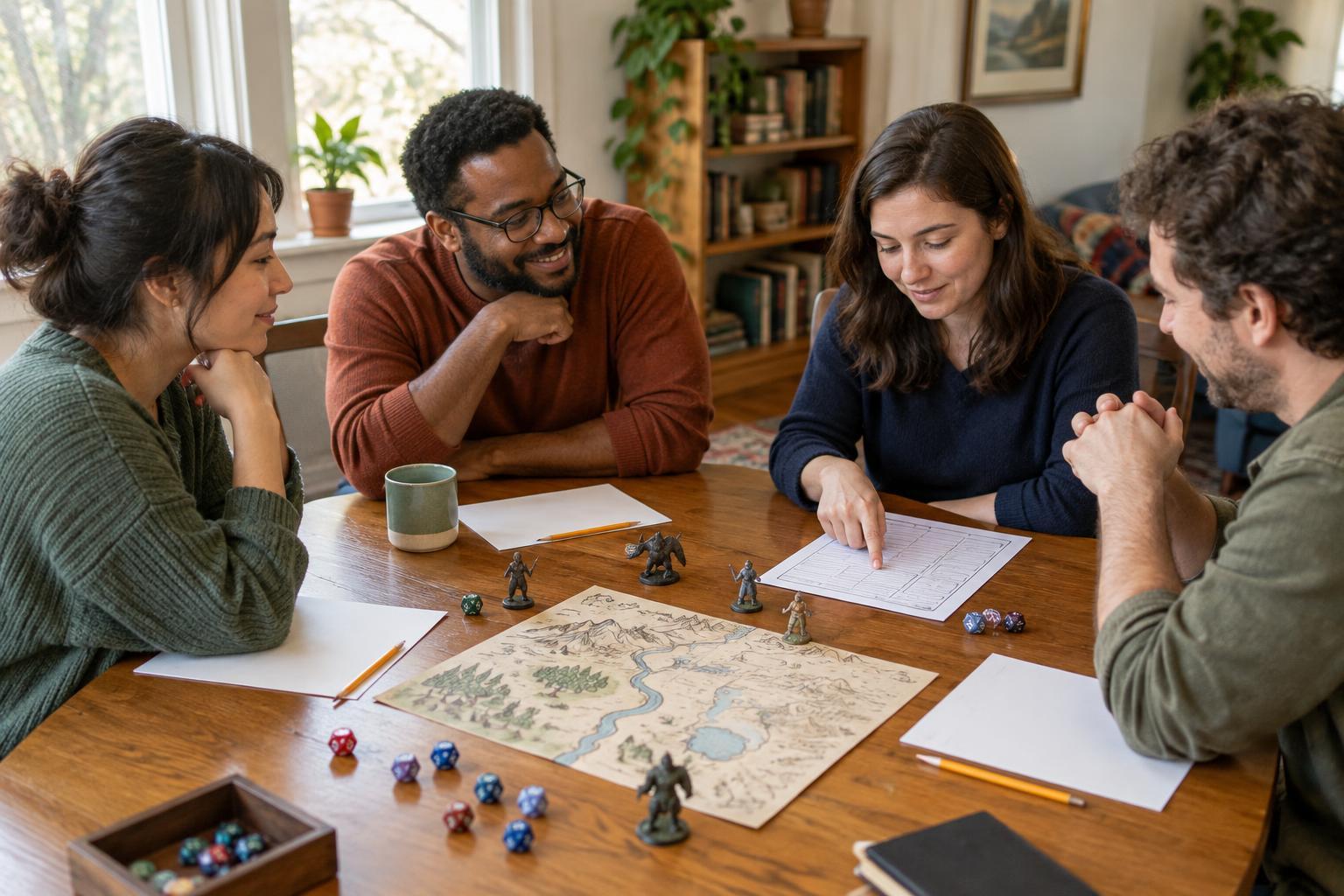
Before play, tell the host or facilitator how you prefer to participate: “I’d like to describe my character’s actions rather than act out dialogue.” You can also ask how the group handles turns and whether it is fine to pause to think. A welcoming table can give everyone a chance to speak without putting anyone on the spot for a performance.
It helps to talk briefly about the kind of story everyone wants to create. Some people enjoy tense mysteries; others prefer light adventures. If a scene becomes uncomfortable, you can ask to skip a detail, change direction or take a break. You do not need to explain a personal reason. Agreeing that anyone can make such a request keeps the focus on enjoyable shared play.
Start small and let the story do some of the work
In your first scene, aim for one clear action rather than a perfect response. Ask a question about the setting, offer to help another character or state what your character is trying to achieve. If you are unsure what is possible, ask, “What can I see from here?” or “Would my character know anything about this?” These questions give you information you can use for your next choice.
It is also fine to think out loud: “I want to help, but I’m deciding whether to search the room or talk to the caretaker.” Other players may suggest ideas, and you can choose the one that suits your character. Role-playing works through that exchange of descriptions, questions and decisions. Acting in character is an option, not an entry requirement.