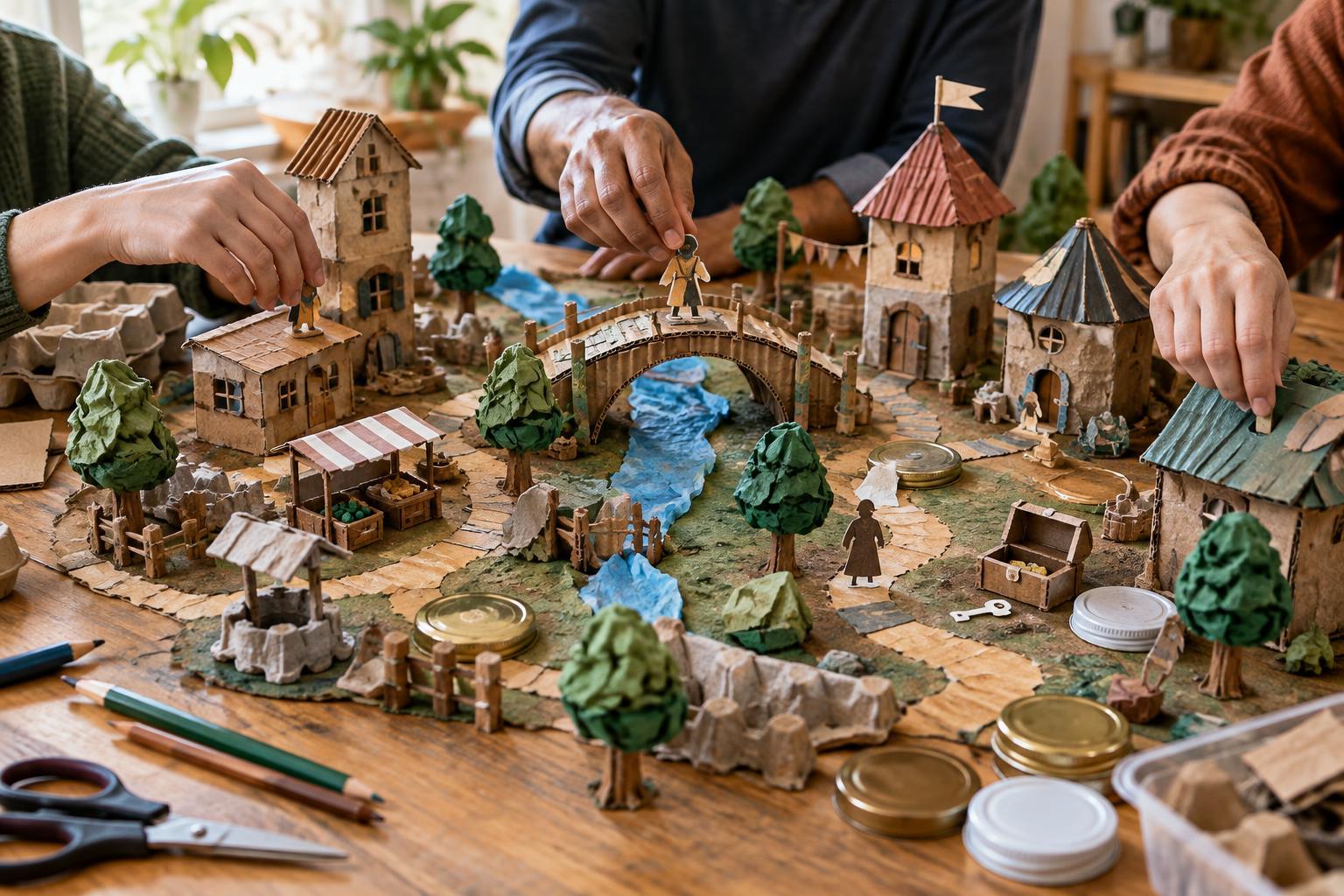
Start with a place that invites a story
A tabletop setting does not need a detailed map or a shelf of miniature buildings. A few recognizable features can give players somewhere to explore, make choices and invent what happens next. Before collecting materials, choose one compact location: a market beside a canal, a research station in the woods or a village built around an old tower. A small area is easier to build and leaves room for the story to grow.
Write down three questions about the place. Who uses it? What has changed recently? Where might someone find a surprise? For a canal market, the answers might be traders, a newly closed bridge and a boat tied up at an empty dock. These details give the setting purpose without deciding the plot in advance. If you are building for a particular game, check how much space its pieces need before making anything permanent.
Gather materials by the roles they can play
Look for clean, dry materials you can cut, fold or move around: cereal boxes, delivery cardboard, paper bags, magazines, bottle caps, egg cartons and small cartons. A box lid makes a sturdy base, while its cardboard sides can become walls, signs or bridges. Scrap paper is useful for labels and removable details. Keep a pencil, ruler, glue stick and tape nearby; paint is optional.
Sort what you have into broad uses rather than trying to make every object look realistic. Flat pieces can mark roads and water. Short boxes can stand for buildings. Caps and folded card can mark stalls, trees or doors. Wash and dry containers before using them, and skip anything with sharp edges or residue. If children are helping, set aside any cutting that needs a craft knife for an adult and offer pre-cut shapes instead.
Build for movement, not just appearance
Lay out the main paths on the base before attaching scenery. Ask whether game pieces can reach important spots and whether players can see the areas where choices are likely to happen. A wide strip of brown paper can be a road; a blue wrapper turned printed-side down can suggest a canal. Leave openings between structures so characters can pass through rather than treating the setting as a static picture.
Make the most useful features movable. A folded cardboard building can sit on the base without glue, and a paper bridge can be lifted away if the story calls for it. You can make simple stand-up scenery by folding a strip of card into an L shape and drawing a door, tree or fence on its upright side. For structures that need to hold game pieces, test their stability on the table before play. A sturdy, readable layout matters more than tiny decoration.
Add clues and choices with small details
Once the routes are clear, add details that suggest activity. A noticeboard made from a scrap of card might carry a missing-item notice. Bottle caps can become market baskets or sealed crates. A torn-paper roof might show which building has been repaired. Keep labels short and legible, especially if players will view the setting from across a table.
Try placing two or three details that players can interact with rather than filling every empty space. A locked gate offers a choice of route, a loose sign can be turned over, and an unmarked package invites questions. You do not need to decide exactly what each detail means. Let players propose explanations, then use the ideas that fit the tone of your story. This makes the setting feel shared instead of presenting it as a model they must admire but cannot change.
Use it, revise it and store it for another night
Before the first session, move a few tokens through the setting as a quick test. Can players tell one area from another? Are any walls blocking a useful view? Can they reach pieces without knocking over scenery? Adjust the layout with those practical questions in mind. During play, keep a few blank cards and scraps nearby so a newly invented shop, shortcut or landmark can join the setting immediately.
Afterward, take the setting apart only as much as storage requires. Flat roads and signs can go in an envelope, while buildings can fit inside the box lid used as the base. Note which pieces were important to the story, and save room for changes next time. A recycled-material setting works best when it is treated as a flexible play space: familiar enough to return to, but open to whatever the group imagines next.