What “abstract strategy” means
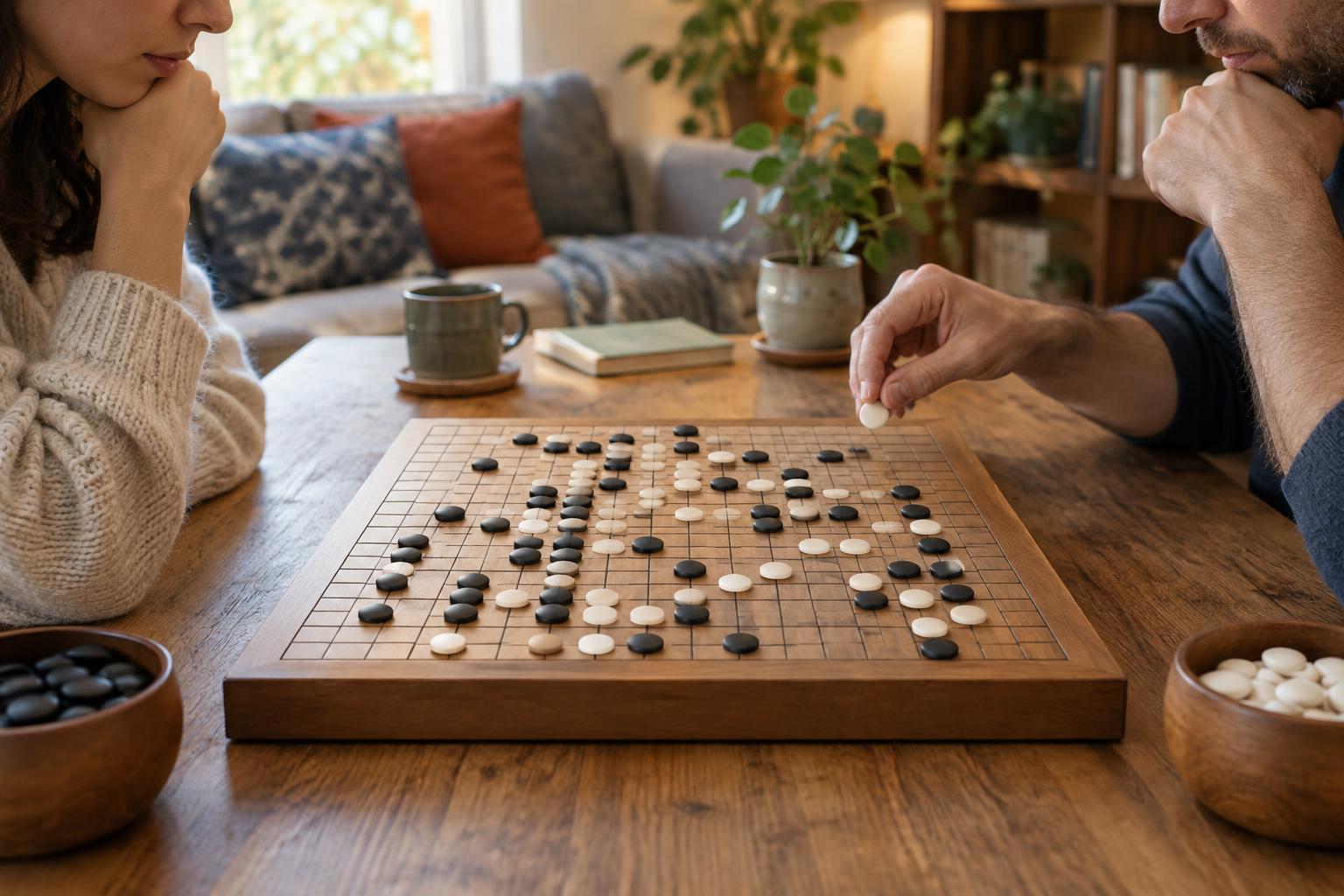
An abstract strategy board game asks players to compete mainly through decisions about positions, patterns, and future moves. The board and pieces may represent armies, stones, paths, or nothing in particular, but the story is usually less important than what each move does. Chess, checkers, Go, and Hex show how different these games can look while sharing that emphasis.
There is no single checklist that settles every borderline case. Many abstract strategy games have little or no random input, and players can see the information they need to make a move. Some have a theme or an unusual component that complicates the label. A useful question is: if you set the artwork and story aside, is the central challenge still a contest of visible choices? If so, you are probably looking at an abstract strategy game.
Open information changes the challenge
In many board games, players draw cards, roll dice, or conceal their plans. Those elements can create suspense and call for their own kinds of skill. In a typical abstract strategy game, the board state is open instead. You can inspect your opponent’s pieces and consider their legal responses before you act. The surprise comes not from a hidden card but from a move you overlooked or underestimated.
That visibility makes planning especially important, but it does not make planning easy. A single move may improve your position while giving your opponent an opening elsewhere. Players often have to weigh an immediate gain against longer-term control of space, mobility, or threats. They may also need to change plans when an opponent refuses to respond as expected.
Limited luck can make a loss feel direct: there may be no unlucky draw to blame. It can also make improvement easier to notice. After a game, players can return to a turning point and ask what other moves were available. This is most useful as a shared puzzle, not a search for someone’s mistake.
Simple rules can produce difficult decisions
Some abstract games can be explained in minutes. In Hex, for example, players take turns placing pieces on a grid, each trying to connect their own two sides. The objective is easy to grasp; judging which placement helps most is harder. Other games, such as chess, require more piece rules before a newcomer can play, yet the same gap remains between knowing a legal move and choosing a strong one.
This depth comes from interaction. A piece or space can matter because of what it supports, blocks, threatens, or might enable several turns later. An apparently quiet move may force a difficult reply. A tempting attack may weaken your own position. As the board changes, so does the meaning of earlier plans.
That does not mean every game requires serious study. Players can enjoy experimenting, spotting patterns, and gradually learning from repeat plays. The appeal is that the rules provide a stable framework: once you know them, you can spend more attention on decisions rather than on learning new procedures each turn.
How to choose and teach one
For a first game, consider the experience your group wants. A small board and short play time make it easy to try again immediately. A familiar grid and straightforward goal may help players who prefer to learn by doing. If your group enjoys a longer contest with many possible plans, a larger board or more varied pieces may be a better fit. Check a game’s player count and typical pace rather than assuming all abstract games suit the same gathering.
When teaching, start with the objective: what ends the game, and how does someone win? Then explain what a player may do on a turn and demonstrate a few moves. Let newcomers play a practice round in which they can ask questions or take back an accidental illegal move. Save detailed tactics for later, when everyone has seen the rules in action.
If players have different experience levels, agree on a welcoming format before starting. Experienced players can explain their thinking after the game, play a shorter match, or try an unfamiliar game alongside everyone else. The aim is not to remove competition but to give each player room to make meaningful choices.
A different kind of game-night tension
Abstract strategy games often create a quiet, focused rhythm: look at the board, imagine a few possibilities, choose, and see what changes. They can be compact enough for a café table or absorbing enough to anchor an evening. Because the information is usually shared, spectators can often follow the shape of a contest even if they would choose a different move.
Their defining pleasure is not the absence of theme or luck on its own. It is the way a clear set of rules turns each decision into part of an evolving conversation between players. Start with a game whose goal sounds interesting, play more than once, and notice how quickly a familiar board begins to offer new questions.