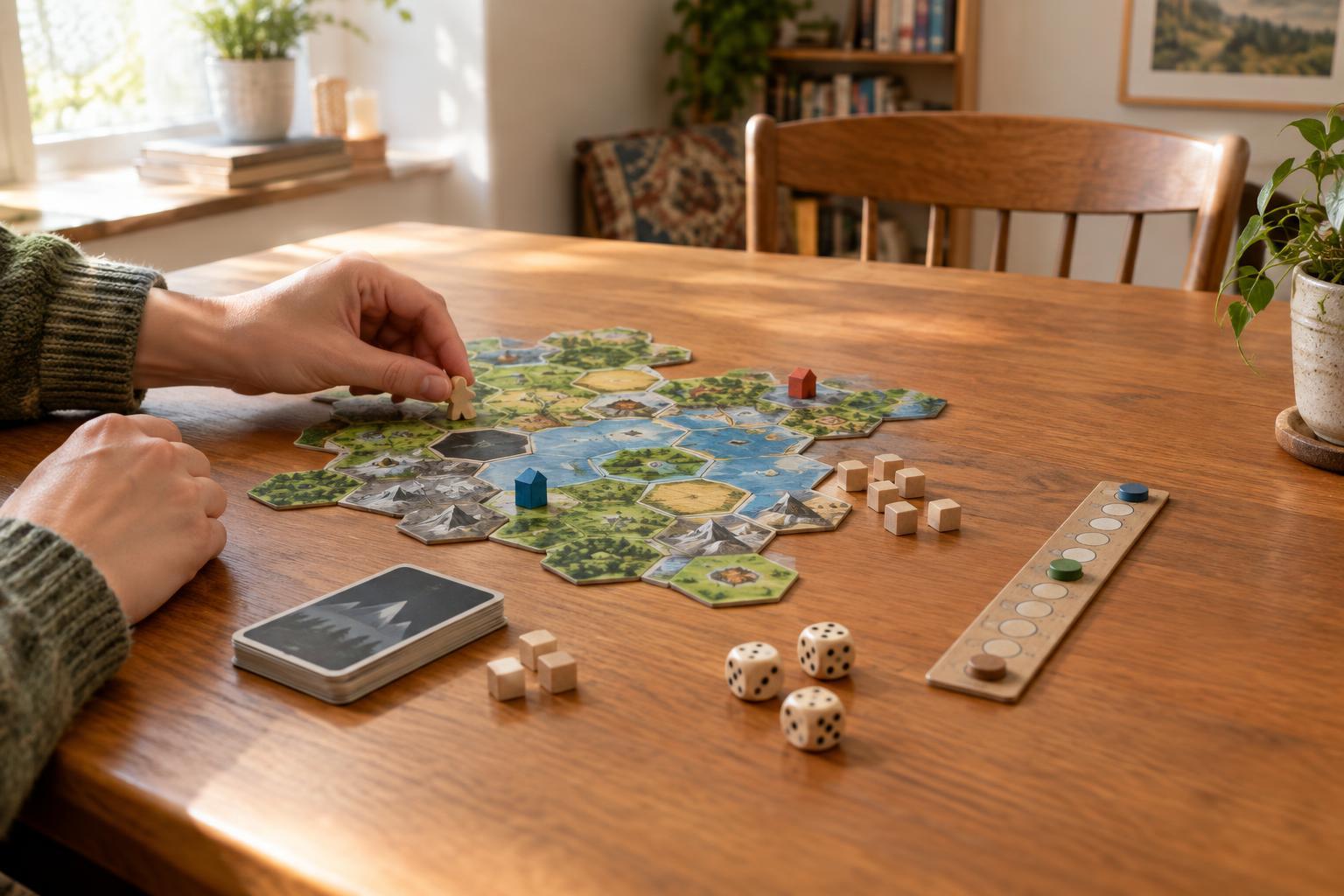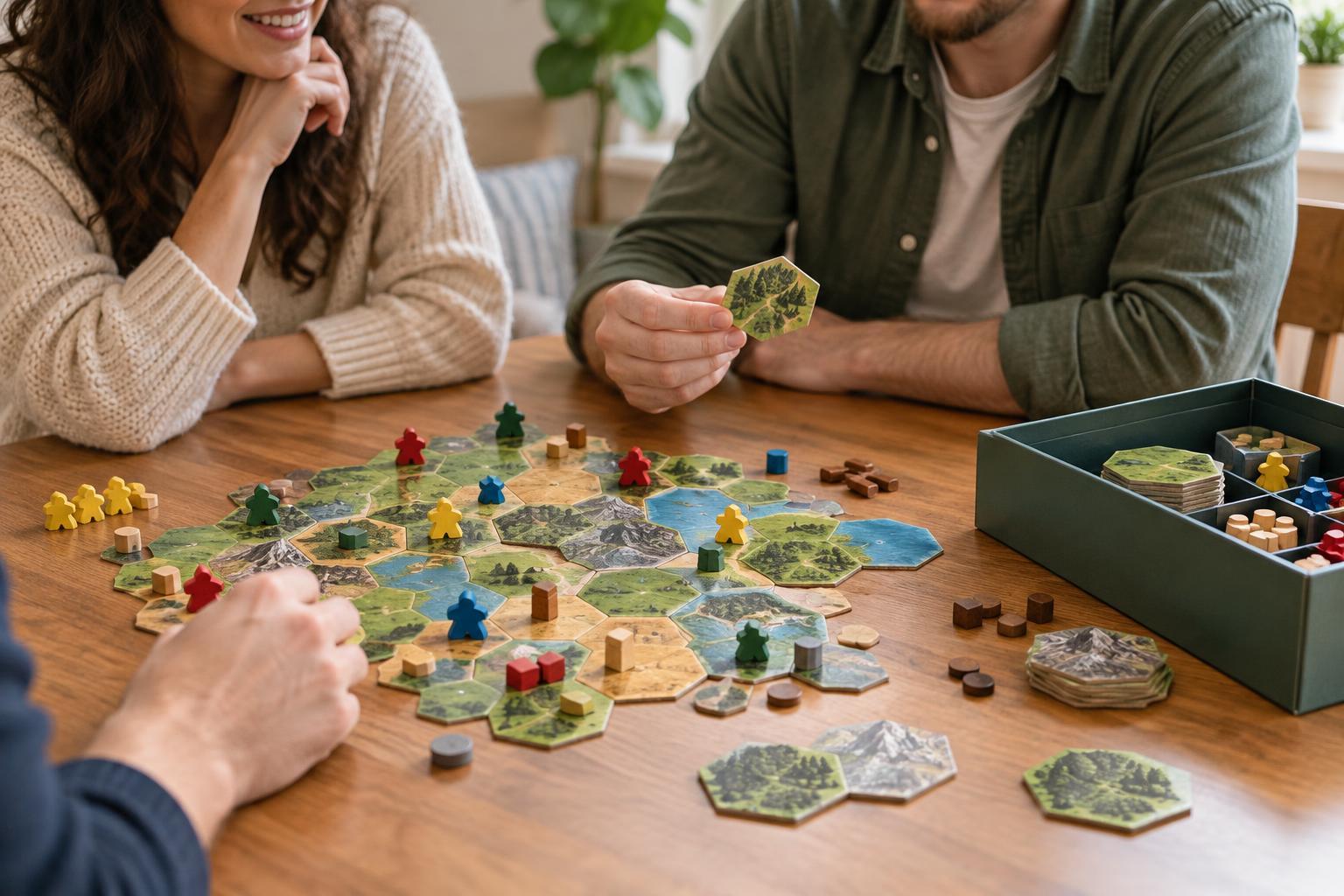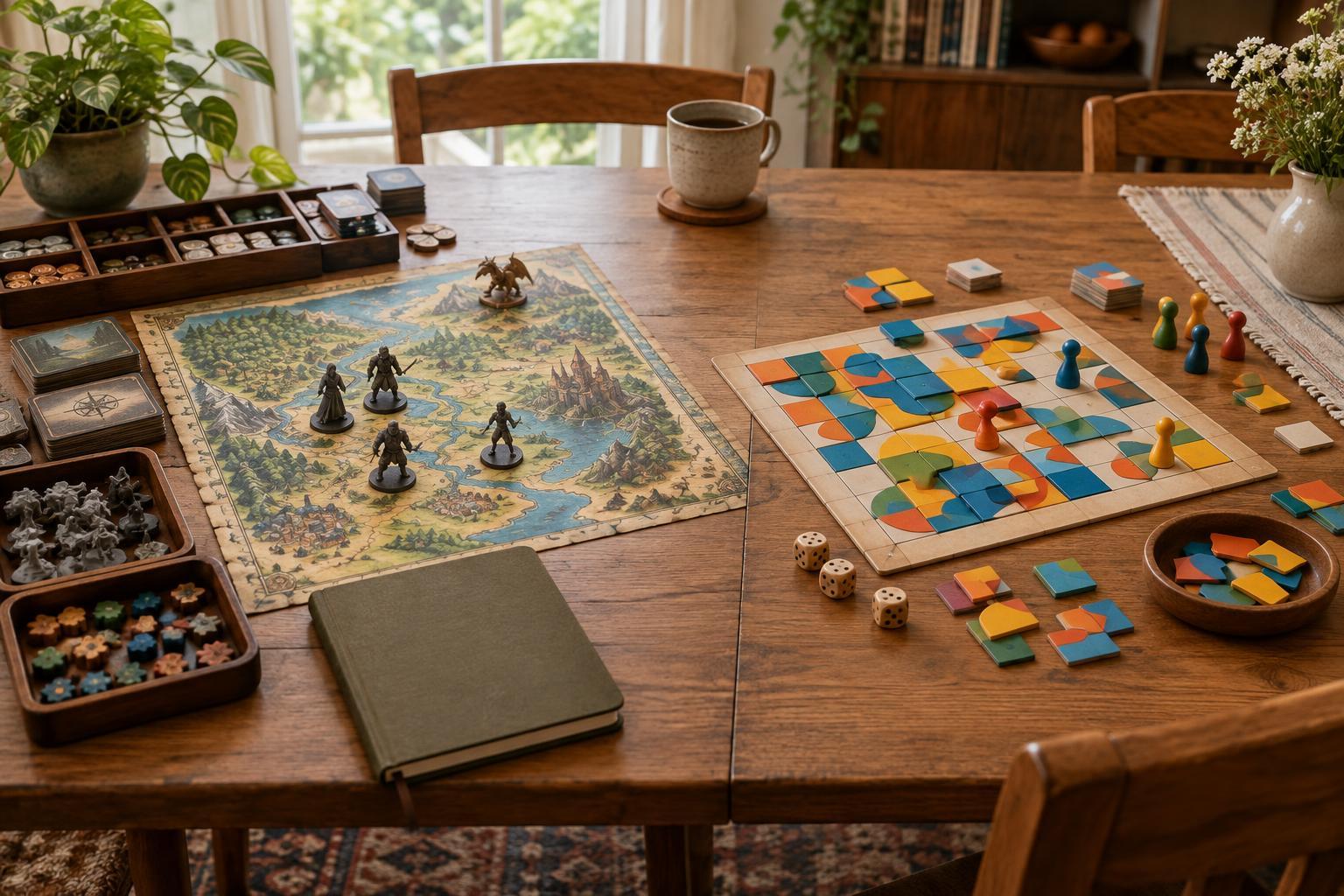
Start with the games you actually play
A collection does not need a perfect storage system to become easier to use. Start with one game that regularly slows you down at setup. Open the box, lay out its contents, and notice what takes the most time: finding player pieces, separating decks, sorting tokens, or locating the rules. Solving that specific problem is more useful than buying containers for every game at once.
Before changing the packaging, check what already works. A cardboard insert may hold the board securely even if it leaves smaller pieces loose. Keep the useful parts and replace only what gets in the way. If you often carry a game to another home, include portability in the decision: pieces should remain separated when the box is lifted, tilted, and returned to a shelf.
Sort components by how they are used
The best groups usually follow the order of setup rather than the shape of the pieces. Keep each player’s starting materials together, then separate shared supplies, decks, and components used only in certain modes. For a game with several scenarios, label the optional pieces so you do not have to sort through them every time you play the basic version.
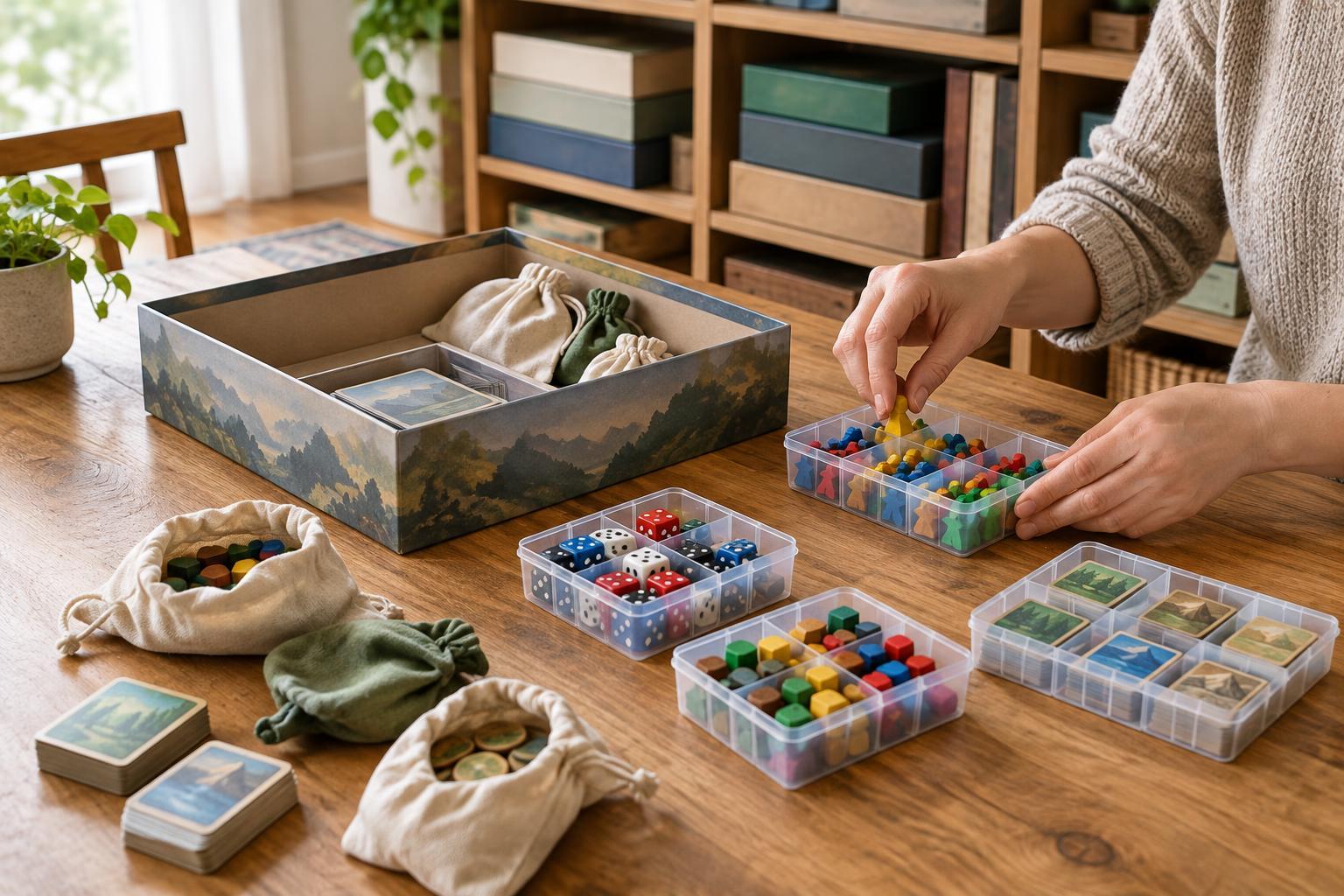
Small resealable bags are a simple starting point for tokens and player sets. Shallow containers or trays can be useful when pieces are drawn or spent repeatedly during play: open the lid, place the container beside the board, and use it as a supply. Avoid dividing every token into its own bag if opening all those bags would take longer than sorting a mixed pile.
Label groups in plain language, such as “blue player,” “shared coins,” or “advanced cards.” A short note inside the box can show where each group belongs and which groups to take out first. This is especially helpful when someone who did not organize the game is setting it up. Keep the rulebook accessible rather than burying it beneath the board or an insert.
Choose packaging that fits the game
Any organizer should pass two tests: it must fit inside the closed box, and it must make the game easier to put away. Measure the available space before choosing trays, boxes, or card holders, allowing room for boards, rulebooks, and any components that may sit above the insert. A container that looks tidy on the table is less helpful if the box lid no longer closes comfortably.
For cards, check whether a deck fits its compartment after any sleeves you use are added. Keep decks separate when their order or identity matters, but consider storing cards together if separating them creates unnecessary work. Protect fragile pieces from being pressed under heavy boards or tightly packed containers. If an original insert holds components in place, adding a few labeled bags may be enough.
Try a complete practice cycle after reorganizing: close the box, move it as you normally would, open it, and set up the game. Then pack it away. If components have migrated or a container is awkward to use, adjust the layout. A modest system that survives ordinary handling is better than an elaborate one that only works when the box stays flat.
Arrange shelves for access, not just appearance
Store frequently played games where they are easy to reach. Heavier boxes are generally easier to handle from lower shelves, while smaller games can fill gaps or sit together in a basket. Whether you stack boxes flat or stand them upright depends on their contents. Upright storage can make titles easier to spot, but loose pieces may shift unless they are secured inside.
Leave enough space to remove a box without pulling out its neighbors. Keep games away from places where moisture, direct sun, or frequent temperature swings could affect cardboard and paper. If a box is worn, a simple band around it may help keep the lid in place during storage or transport, provided it does not press too tightly on the contents.
Make pack-up part of the system
The easiest time to preserve an organization system is at the end of each game. Before everyone leaves the table, return pieces to their labeled groups and check the play area for stray tokens. Give each player their own components to gather while one person handles shared supplies and cards. A brief look under the table can prevent a missing piece from becoming a surprise next time.
Keep the system flexible. After a few plays, you may find that two bags should be combined or that one tray belongs closer to the board during play. The goal is not a perfectly arranged box; it is a game that can move from shelf to table and back without a long search. Small adjustments based on how your group actually plays will do more for game night than a storage scheme that is difficult to maintain.