Start with the exact letter set
An anagram rearranges the letters of a word or phrase to make another word or phrase. Before hunting for an answer, decide what the puzzle allows. Some puzzles ask for one word using every letter; others accept shorter words, multiple words or only answers that fit a clue. That distinction matters: NOTES uses all five letters of STONE, while NOTE leaves one unused.
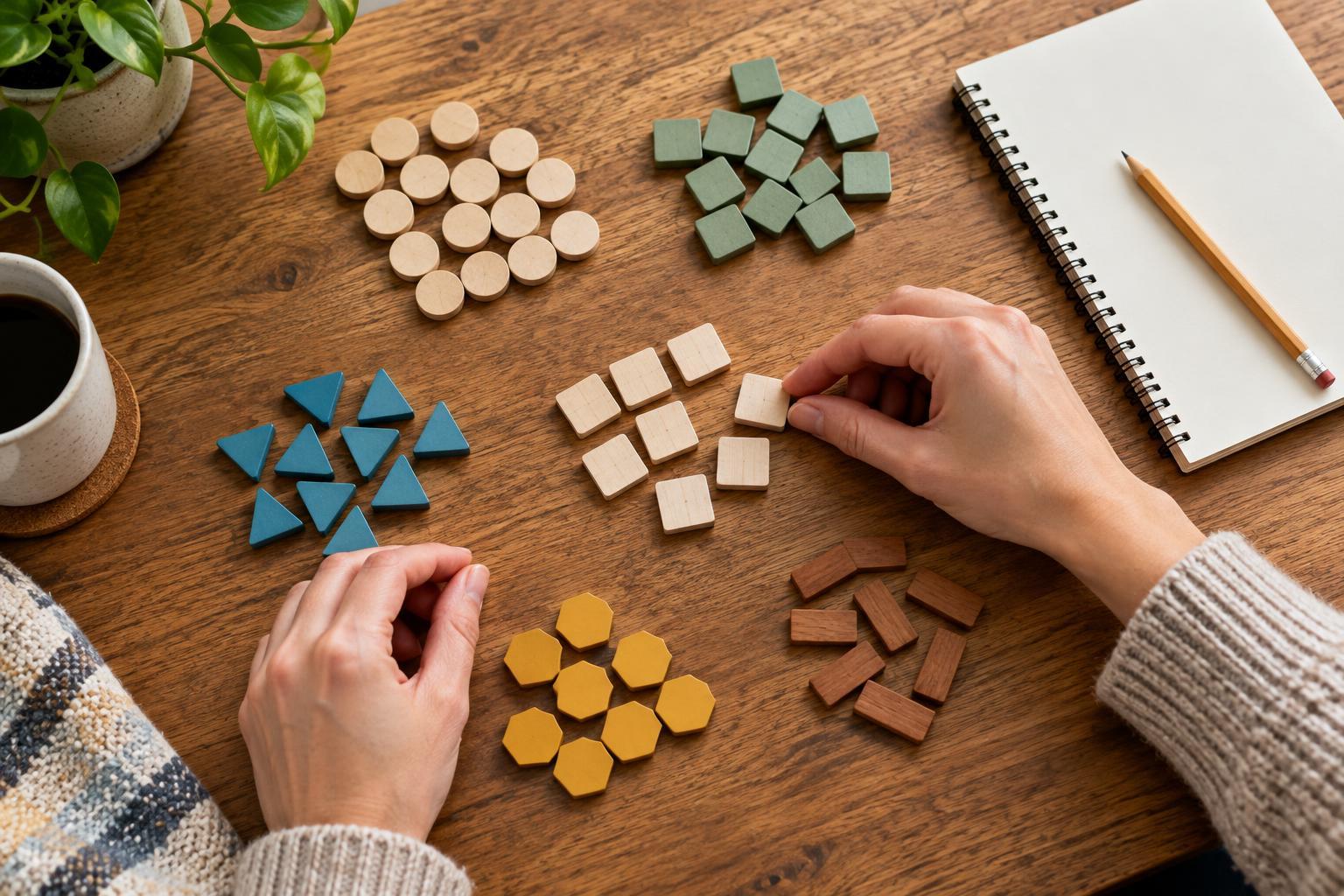
Write the letters separately, or place letter tiles where you can move them. Count repeated letters before you begin. If a puzzle gives you three A’s, a possible answer must use three A’s—not two or four. Keeping a small tally beside the puzzle can save you from getting attached to an answer that looks right but cannot be made from the supplied letters.
If you are solving a phrase anagram, ignore spaces only if the rules permit it. A phrase can hide a different grouping of words, so the original word breaks may be a distraction. For a single-word puzzle, it often helps to cover the printed word after copying its letters. This reduces the urge to keep reading the letters in their original order.
Use letter patterns as starting points
Rather than testing random arrangements, look for combinations that commonly occur together. Pairs such as TH, SH and CH may suggest a beginning or an ending. Endings such as -ED, -ER and -ING can also give you a useful structure, provided the necessary letters are present. Treat these as experiments, not commitments: a plausible ending may use letters needed elsewhere.
Next, separate vowels from consonants. Try placing a vowel between consonant groups that seem difficult to pronounce, then read the result aloud. This is not a guarantee—words can have unusual spellings—but it can make promising arrangements easier to notice. With STONE, for example, you might try an S at the end and find NOTES, or start with N and arrive at NOSE before noticing that a T remains.
Longer anagrams can be easier if you build a small, reliable piece first. Find a likely short word or syllable, set its letters aside, and inspect what remains. If the leftovers look awkward, undo that choice and try another. Moving back and forth between a partial answer and the remaining letters is usually more productive than insisting that your first guess must be correct.
Break the grip of the original word
A familiar word can be surprisingly hard to rearrange because your eye keeps recognizing it. Change its appearance: write the letters in alphabetical order, make two loose groups, or arrange tiles in a circle. For LISTEN, sorting the letters to E, I, L, N, S, T removes the original sequence; a fresh arrangement reveals SILENT. The sorted list also makes it easy to compare the letters in the two words.
Try working from different ends of a possible answer. If you have been searching for beginnings, look for a likely final letter instead. If you have been building left to right, place a strong pair in the middle and add letters around it. These small changes interrupt a repeated guess without requiring you to start over.
For a themed puzzle, let the clue guide your search after you have explored the letters. A clue about quietness could make SILENT more noticeable among arrangements of LISTEN. Avoid forcing the theme too early, though. A clever-sounding answer is still wrong if it adds, drops or changes a letter.
Check the answer and know when to reset
When you find a candidate, compare its letters with the original one by one. Crossing off each used letter is a simple way to catch mistakes, especially when letters repeat. For phrase answers, check the entire phrase rather than each word separately. Spaces may move, but the required letter counts must still match.
If you stall, make a deliberate reset. Put all the tiles back, alphabetize the letters again, and try a different pattern or starting letter. A short break can also help you return without seeing only the same failed arrangement. When several answers are possible, the puzzle’s clue or rules should decide which one fits; the letters alone may not identify a unique solution.
To practice, begin with short words and aim to find more than one arrangement where possible, such as STONE, NOTES and TONES. Then try longer words or phrase puzzles. The useful habit is not memorizing answers: it is learning to switch between letter counts, word patterns and fresh layouts while checking every result carefully.