Start with the game, not the furniture
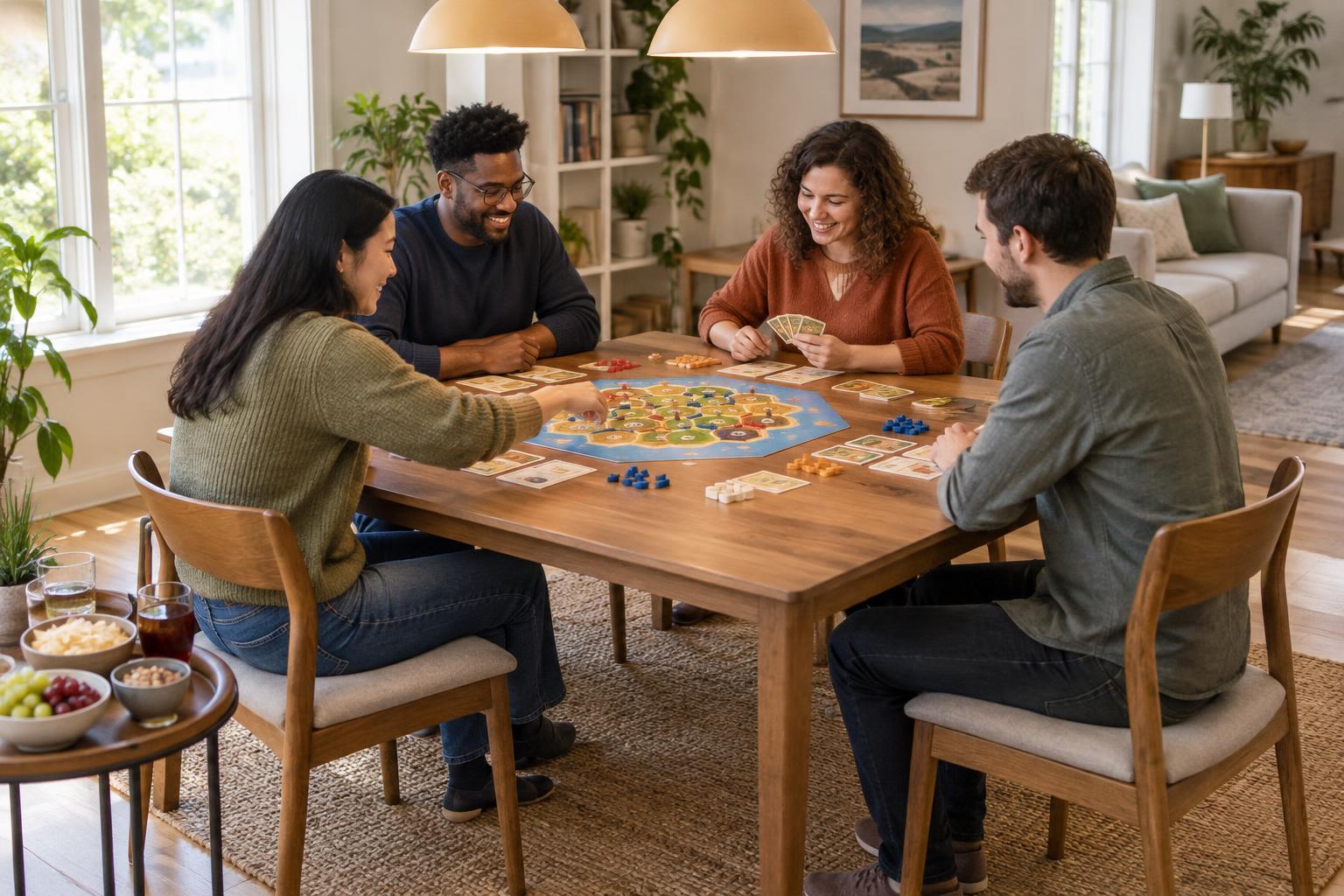
Before guests arrive, lay out the largest game you expect to play. Include player boards, card hands, shared supplies, and room for discarded pieces. A table can look spacious when empty but feel crowded once everyone has a drink and a place to rest their arms. If several games are planned, arrange for the one that needs the most space; a smaller game will be easy to fit afterward.
Seat someone at each intended spot and check what they can see and reach. A shared board belongs where every player can read it without repeatedly standing up. Put frequently used pieces within comfortable reach, and leave a clear area in front of each seat for cards or personal components. If a game calls for private information, give players enough separation to hold a hand of cards without feeling watched.
Choose a seating shape that includes everyone
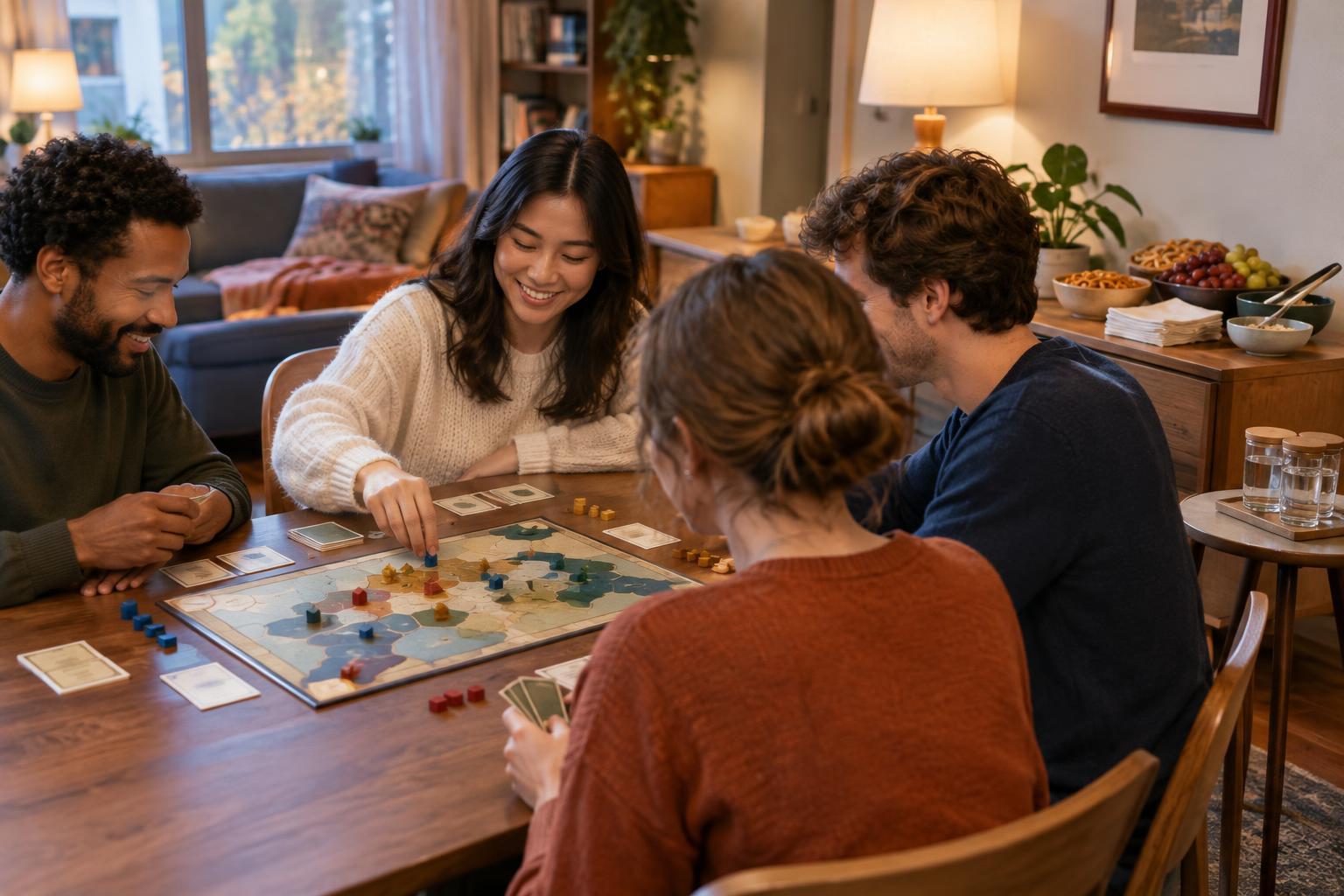
A round or square table often works well for a small group because no one sits far from the center. At a rectangular table, place shared components along its length rather than clustering everything at one end. Check the end seats in particular: they may be convenient for a host managing supplies, but awkward for a player who needs to read small text across the table.
Comfort also depends on whether guests can settle in for the length of a game. Chairs with stable seats and supportive backs are usually more useful than extra chairs squeezed tightly together. Leave enough room to pull each chair back and get up without asking neighbors to move. Ask guests about seating needs when you can, and keep an easy-to-access place available rather than assuming every chair or route works equally well for everyone.
Keep routes and surfaces clear
Picture the moments when someone gets up for water, answers the door, or takes a break. Make a clear route around the playing area, with bags, spare chairs, and game boxes out of the walkway. A crowded path can jostle the table just as a delicate arrangement of pieces is taking shape. If the table has a folding leaf or extension, check that it is secure before play begins.
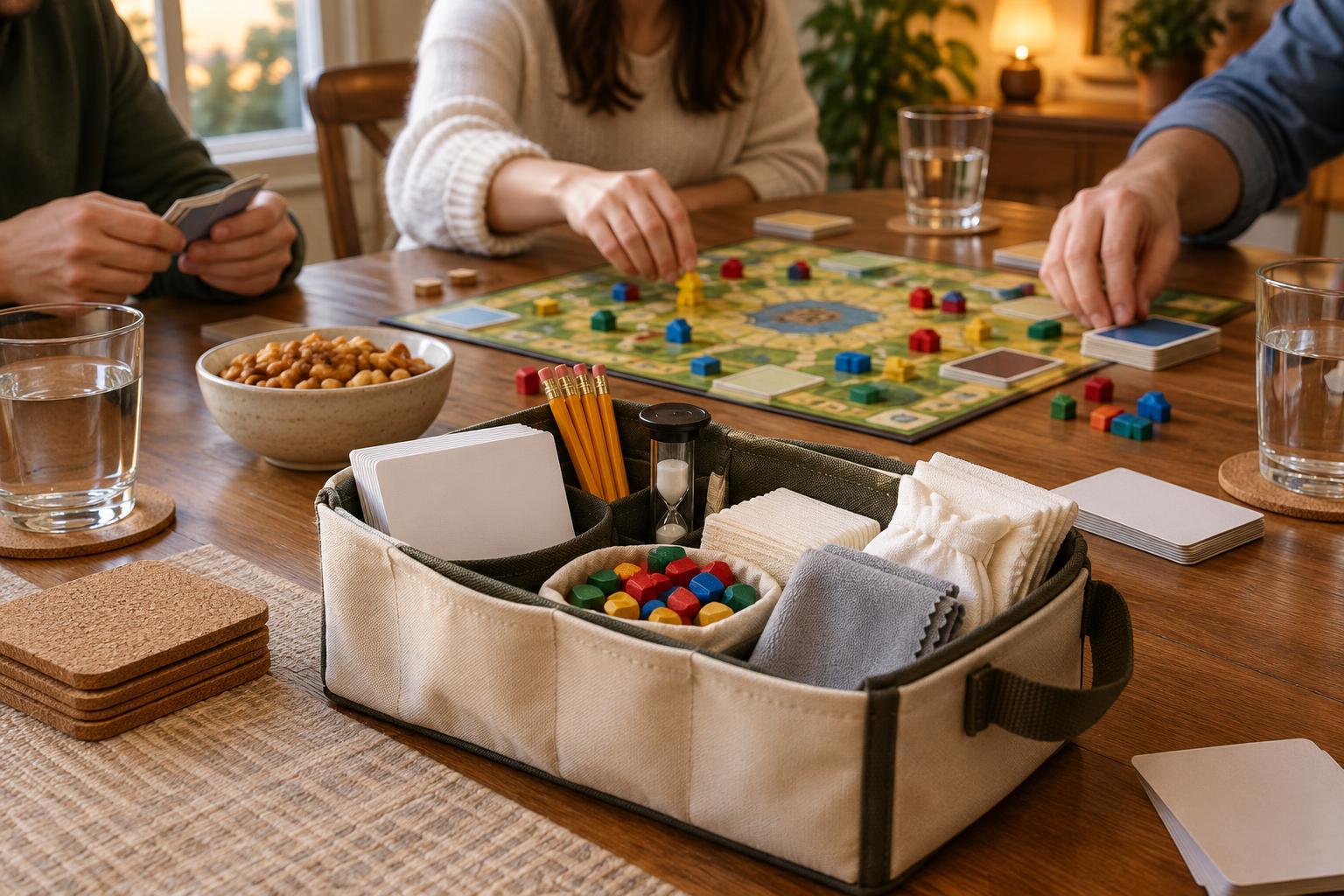
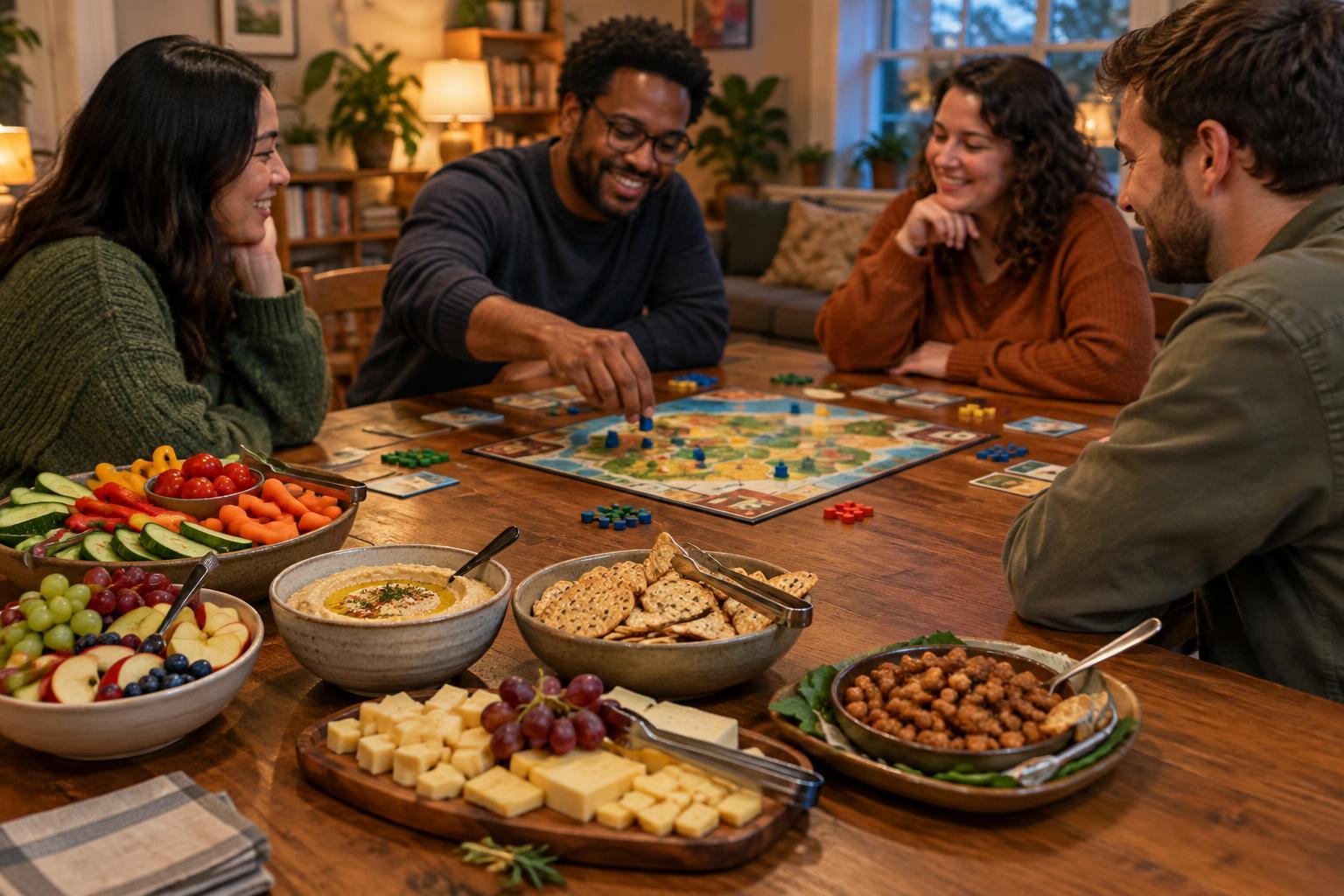
A nearby side table can hold snacks, drinks, rulebooks, and components not yet in use. It reduces competition for space on the main table and helps protect cards and paper from spills. If drinks must stay on the playing table, designate spots away from the board and leave enough room for hands to move past them. Small bowls or trays can keep tokens together without occupying more space than necessary.
Adjust light and sound for the activity
Good lighting makes cards, colors, and fine print easier to distinguish. Look for even light across the whole play area; a bright lamp at one end may leave the other end in shadow or create glare on glossy cards. Test the view from each seat, including any spot where a player faces a window or a strong lamp. A movable lamp can help, provided its cord stays out of walkways.
Consider conversation as part of the layout. If players must call across a long table or compete with a television, rules explanations and turns can become tiring. Move seats closer together where possible, lower background sound, and choose a quieter space for games that involve discussion. For a lively party game, a little more room to stand and move may matter more than having every player seated at the same table.
Make the setup easy to change
An inviting arrangement does not need to be permanent. Keep a few lightweight trays, a side surface, or an extra chair available so you can adjust when a game has more components than expected. If a player cannot comfortably see the board, rotate it, move a shared display, or swap seats before the first turn rather than asking them to work around the problem all night.
Finally, plan a natural place for breaks and transitions. Clear a spot where a finished game can be packed away without mixing its pieces with the next one. Leave guests room to stretch or step away between rounds. The best layout is not the one that fits the most furniture around a table; it is the one that makes it easy for everyone to take part.