Plan for hands that will handle game pieces
The best game-night snack is not necessarily the neatest food in the kitchen. It is the one guests can eat easily between turns without transferring crumbs, grease, sauce, or powder to cards and components. Think about what a snack leaves on fingers after one bite. Cheese dust, sticky glaze, flaky pastry, and heavily seasoned chips can make repeated handling awkward, even if everyone is careful.
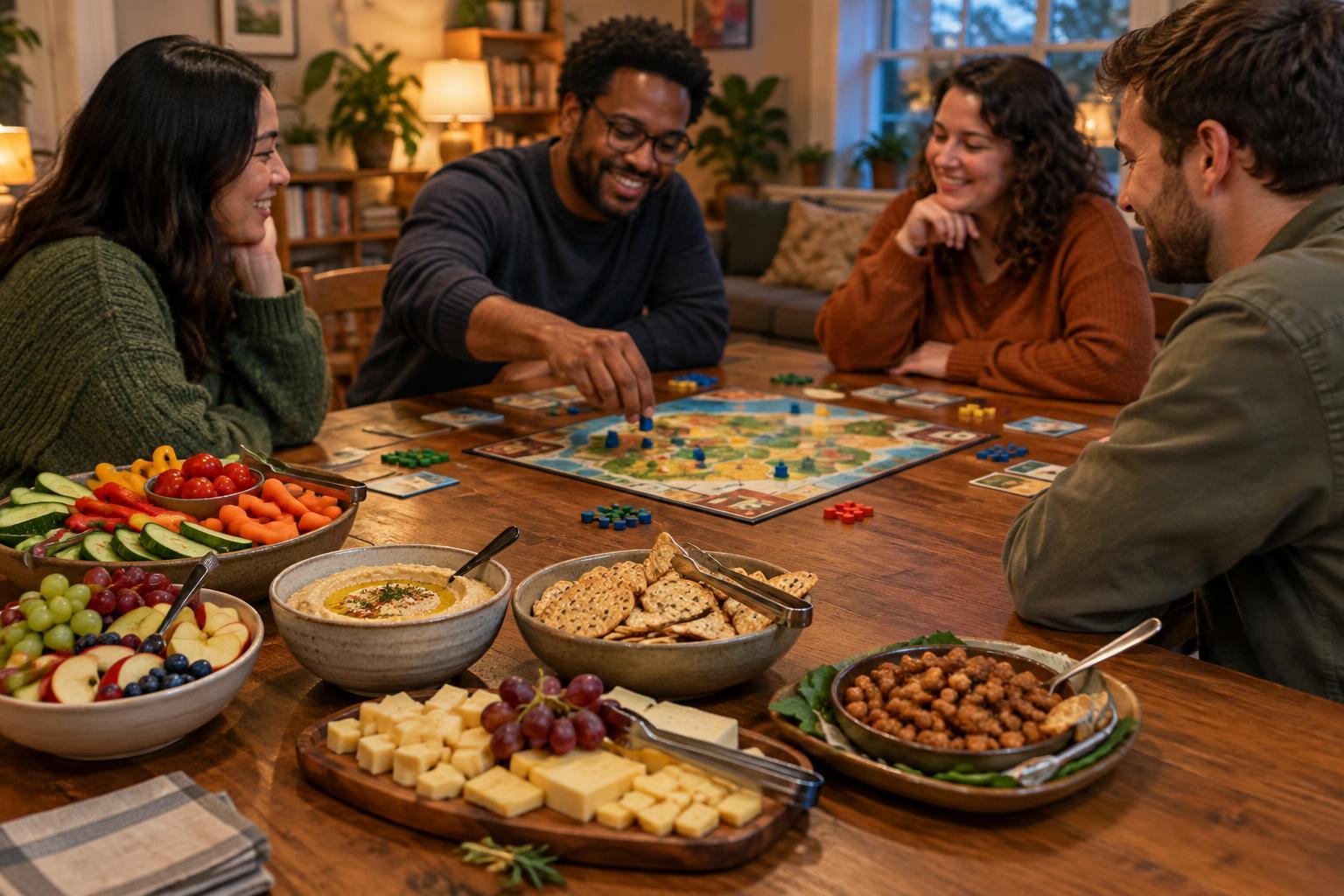
Start with foods that come in tidy portions: small sandwiches with contained fillings, firm fruit, vegetable sticks, or crackers paired with a dip served away from the game. If a food needs a fork, that can be an advantage. A small plate and utensil give guests a natural pause before they return to the table. Put napkins within reach, but remember that a quick wipe may not remove grease or stickiness; make handwashing easy to find.
Give messy favorites their own moment
You do not have to ban pizza, saucy wings, or a favorite homemade dish to protect a board game. Serve messier food before the game begins, during a planned break, or at a separate table. That lets people enjoy it without trying to hold a card in one hand and a dripping slice in the other. For a long session, a short meal break can also give everyone a welcome chance to stand up.
If guests will graze throughout play, offer the lower-mess choices beside the game and keep dips, sauces, and crumbly toppings at the food station. Use serving spoons or tongs so guests do not need to reach into shared bowls. This arrangement is especially useful for games with many small pieces, where a spill can be difficult to clean without disrupting the setup.
Keep drinks stable and away from the board
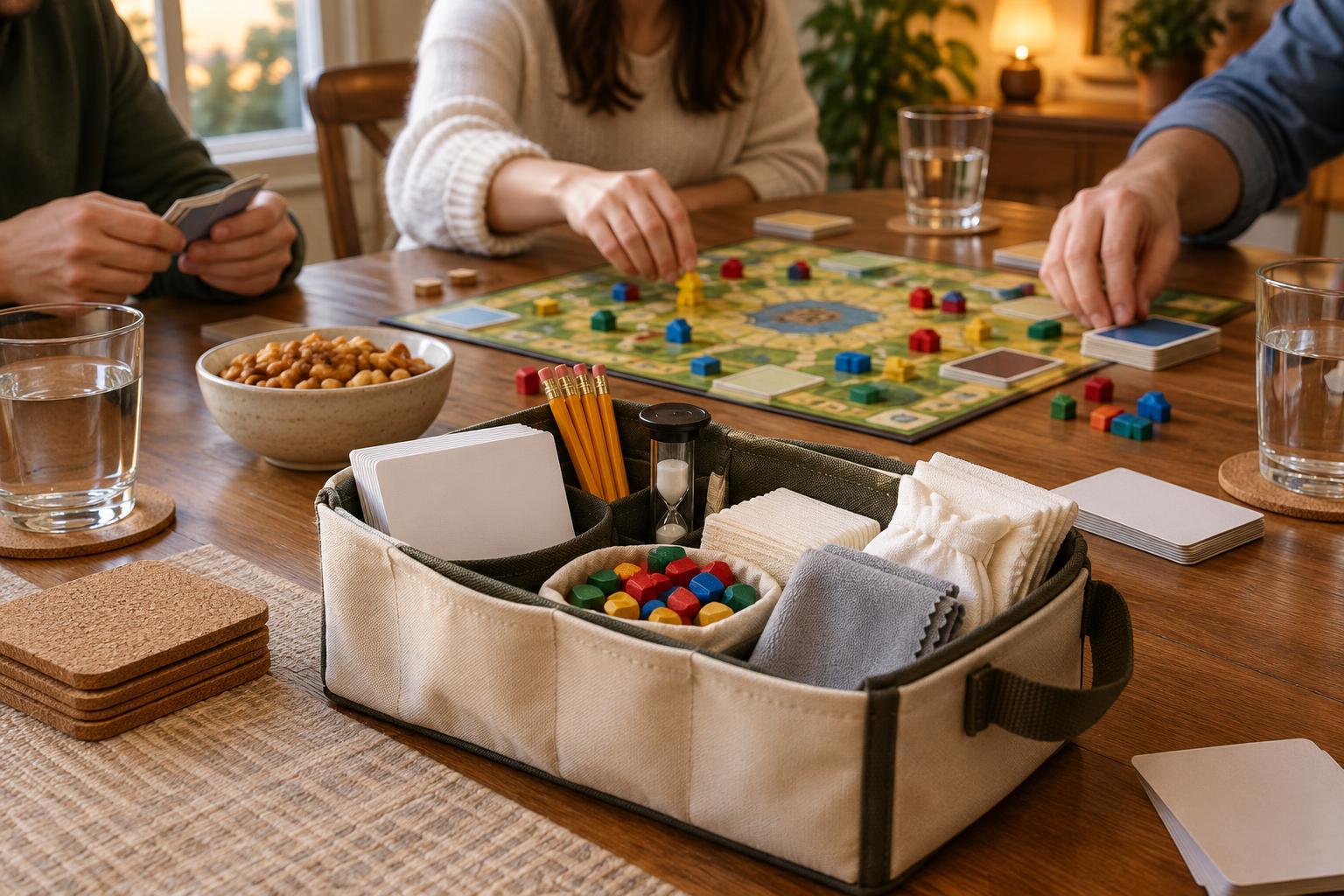
Drinks deserve as much thought as food because a knocked-over cup can affect more than one component at once. Give each player a clear place to put a drink outside the active play area. A side table is ideal; if space is tight, set a consistent edge of the table for cups and leave a gap between that edge and the board. Avoid placing open glasses beside decks, rulebooks, or player sheets.
Choose containers that suit the room. Bottles with secure caps and cups with well-fitting lids can lower the chance of a spill, though neither makes a drink spill-proof. Offer a simple mix of water and other options your guests enjoy, with a way to identify similar-looking cups. For hot drinks, provide a stable spot where players will not reach across the table or brush a mug while moving pieces.
Make the serving area easy to use
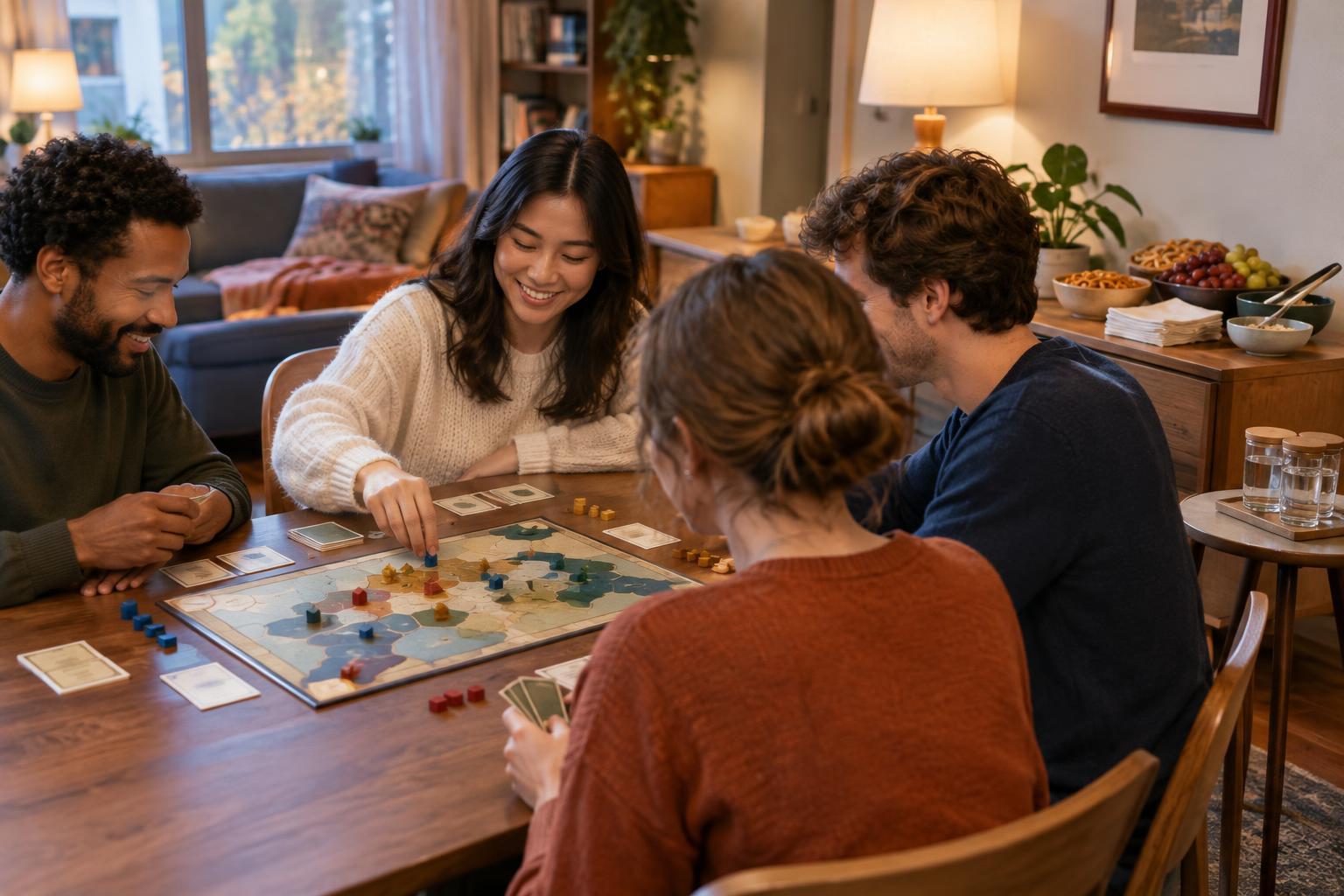
A small snack station can do more for cleanliness than an elaborate menu. Put plates, napkins, utensils, and a bin together so guests can serve themselves and dispose of waste without hunting around the room. Keep food packaging and spare drinks off the game table. If space allows, leave a little counter room for setting down a plate while opening a bottle or choosing a snack.
Ask about dietary needs when you invite people, then label dishes when ingredients may not be obvious. If you provide several choices, separate serving utensils help guests choose what works for them. The aim is not a complicated buffet; it is a comfortable setup where everyone can get food and return to play without juggling too many things.
Build in a quick reset
Before opening the game, make a simple house rule: food stays on plates, drinks stay in their assigned spots, and hands get cleaned before cards or shared pieces are handled. Frame it as a way to keep the game pleasant for everyone, not as a test of anyone’s table manners. Hosts can help by setting the example and keeping spare napkins nearby.
At the end of a snack break, take one minute to clear used plates and check the play surface before continuing. If crumbs have gathered near the board, remove the game components first rather than brushing debris across them. A little separation between eating and playing protects the materials, reduces interruptions, and leaves more attention for the game itself.