Start with a small, portable kit
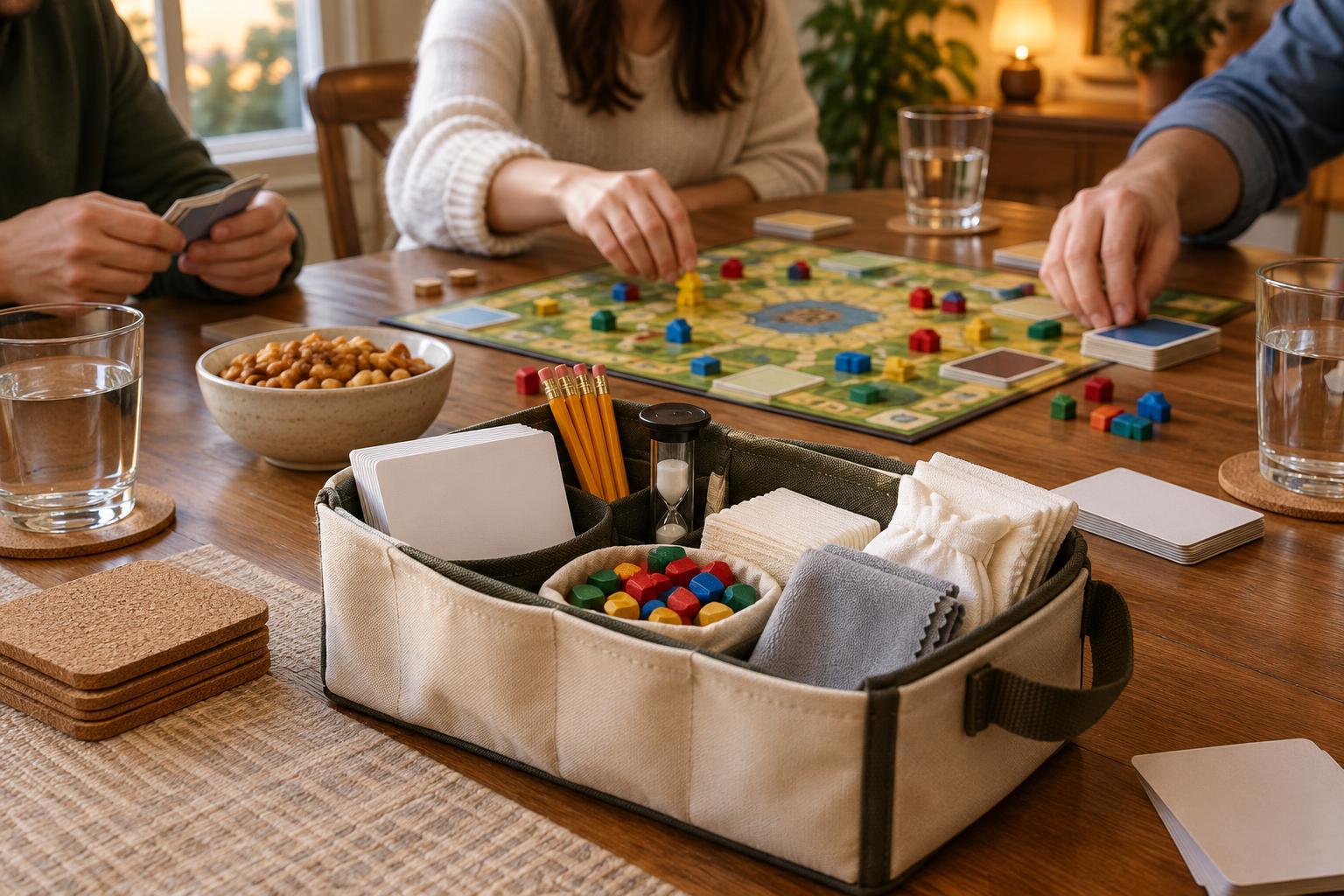
A host kit is a collection of things that solve minor problems before they interrupt play. It does not need to be elaborate. A box, tote or drawer with a few dependable supplies is more useful than a crowded cabinet you have to search whenever someone needs a pencil. Keep it near your games, and check it before guests arrive.
Begin with pencils, an eraser, a notepad and a few index cards. They cover scores, reminders, team names and quick examples of a rule. Add a timer if any of your games use timed turns, plus a few small bowls or trays for shared pieces. If you regularly host at another location, choose containers with lids so components do not scatter in transit.
Let your collection grow in response to real needs. After each gathering, note what you had to leave the table to find. If the same item comes up twice, it may deserve a permanent place in the kit.
Make the table easy to use
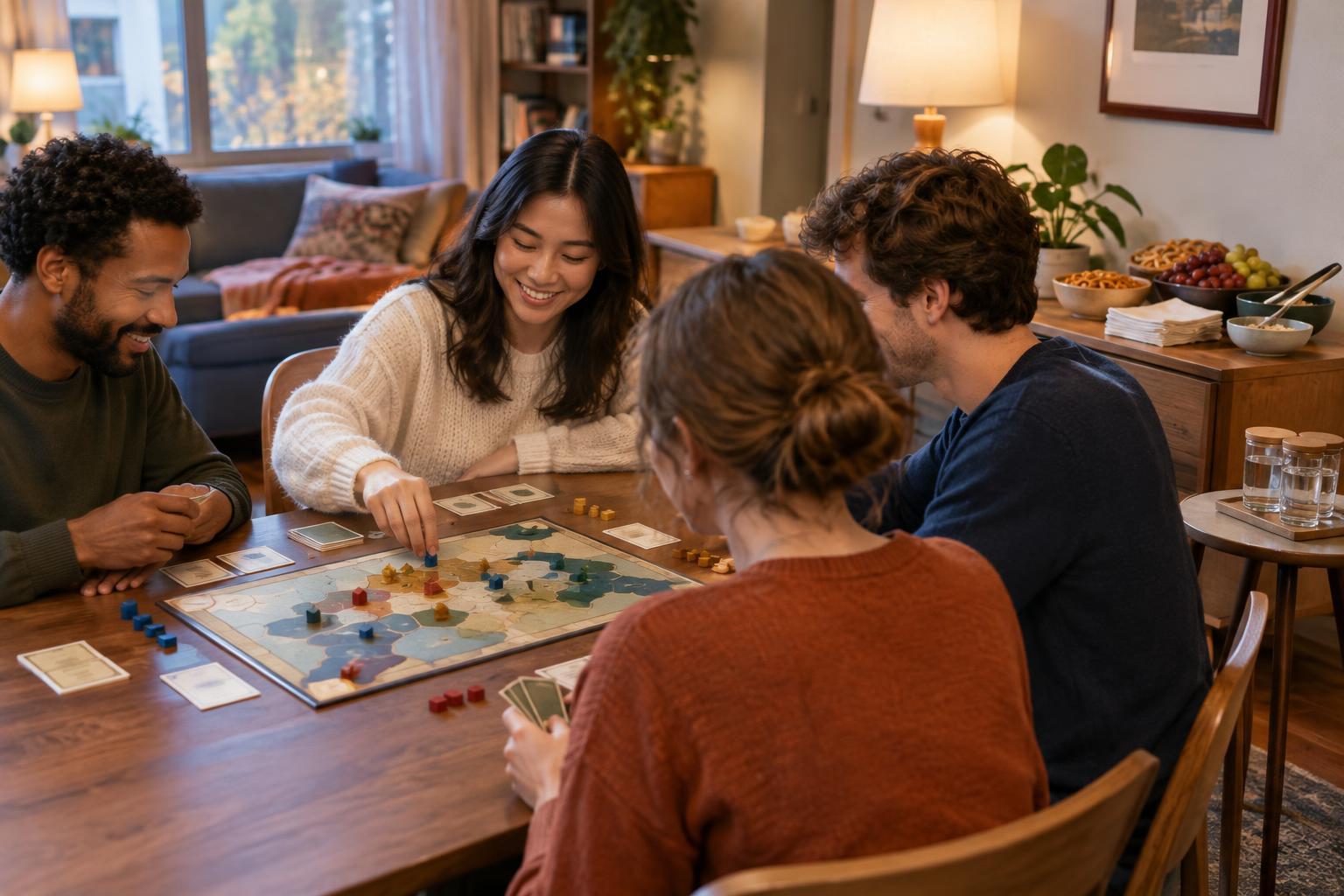
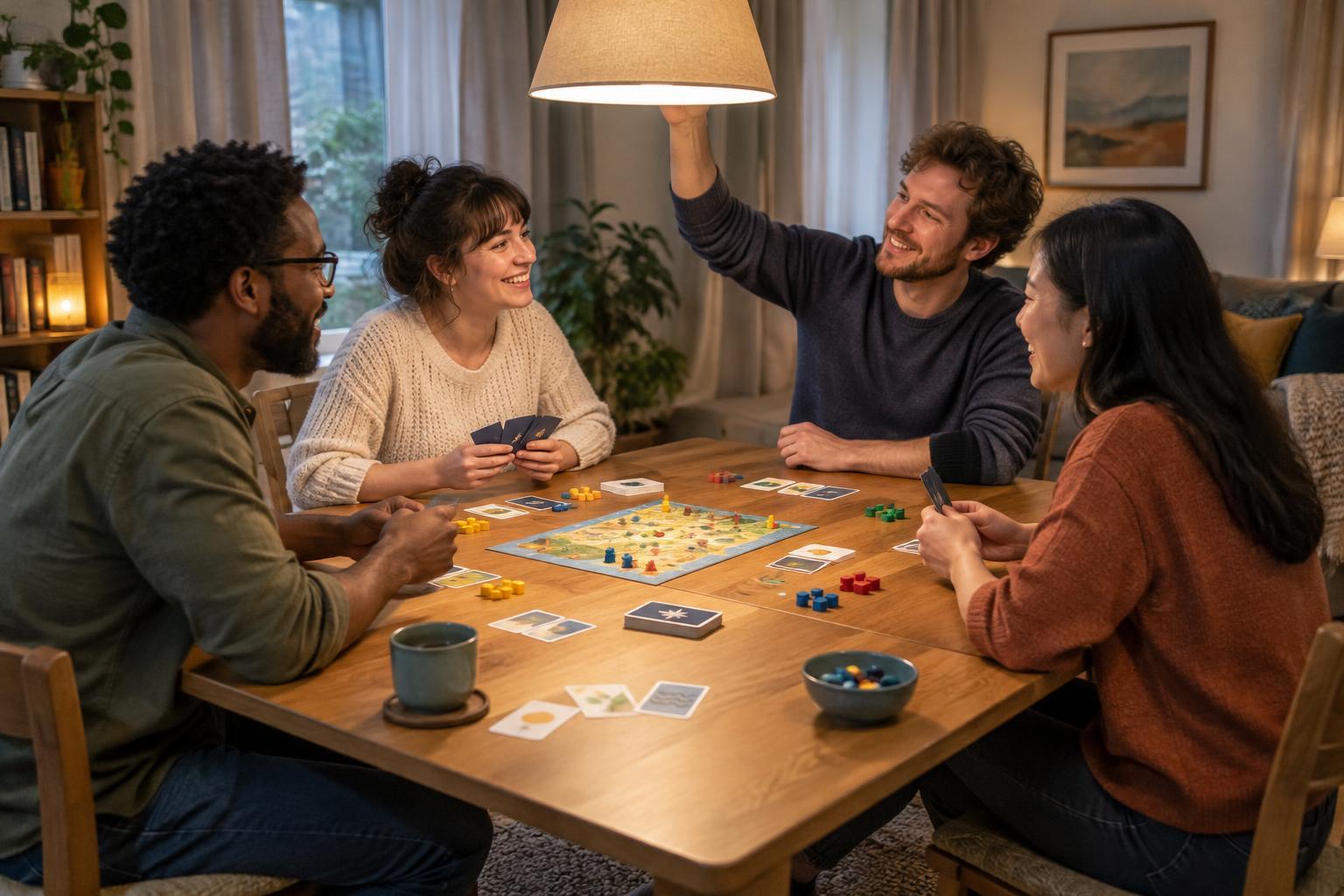
Before setting out a game, leave room for player boards, cards, drinks and elbows. A plain tablecloth or play mat can make small pieces easier to see and pick up, but it should lie flat enough that cards and boards remain steady. Good lighting matters more than decoration: guests should be able to read cards and distinguish similar pieces without leaning across the table.
Keep a few spare containers for sorting. Shallow dishes help people reach shared tokens, while small cups can hold each player’s pieces between rounds. A deck of blank cards or sticky notes can label piles during setup, mark a paused game or stand in for a missing reference card while you locate it. They are best used for reminders, not as permanent replacements for components you can restore later.
A clear space away from the playing area is useful for game boxes and unused supplies. Moving them off the table gives everyone more room and reduces the chance that an open box lid gets mistaken for a discard pile.
Keep rules support within reach
Even familiar games can stall when someone forgets what happens at the end of a turn. Keep each game’s rulebook with its components, and place any included player aids where people can see them. For a game you expect to teach, a short note with the turn sequence and commonly missed steps can help you explain it consistently. Check that note against the rulebook when you make it.
A few index cards can also support guests who prefer a written reminder. Write down the goal, the choices available on a turn and when the game ends. Demonstrating one sample turn with pieces on the table is often clearer than describing every exception at once. Give guests a chance to ask questions, and make it comfortable to consult the rules during play.
Think about visibility and reach as part of teaching. Offer to read small text aloud, pass a card over for a closer look or move a shared supply to a more convenient spot. Ask what would help rather than assuming everyone wants the same adjustment.
Plan for snacks, drinks and small mishaps
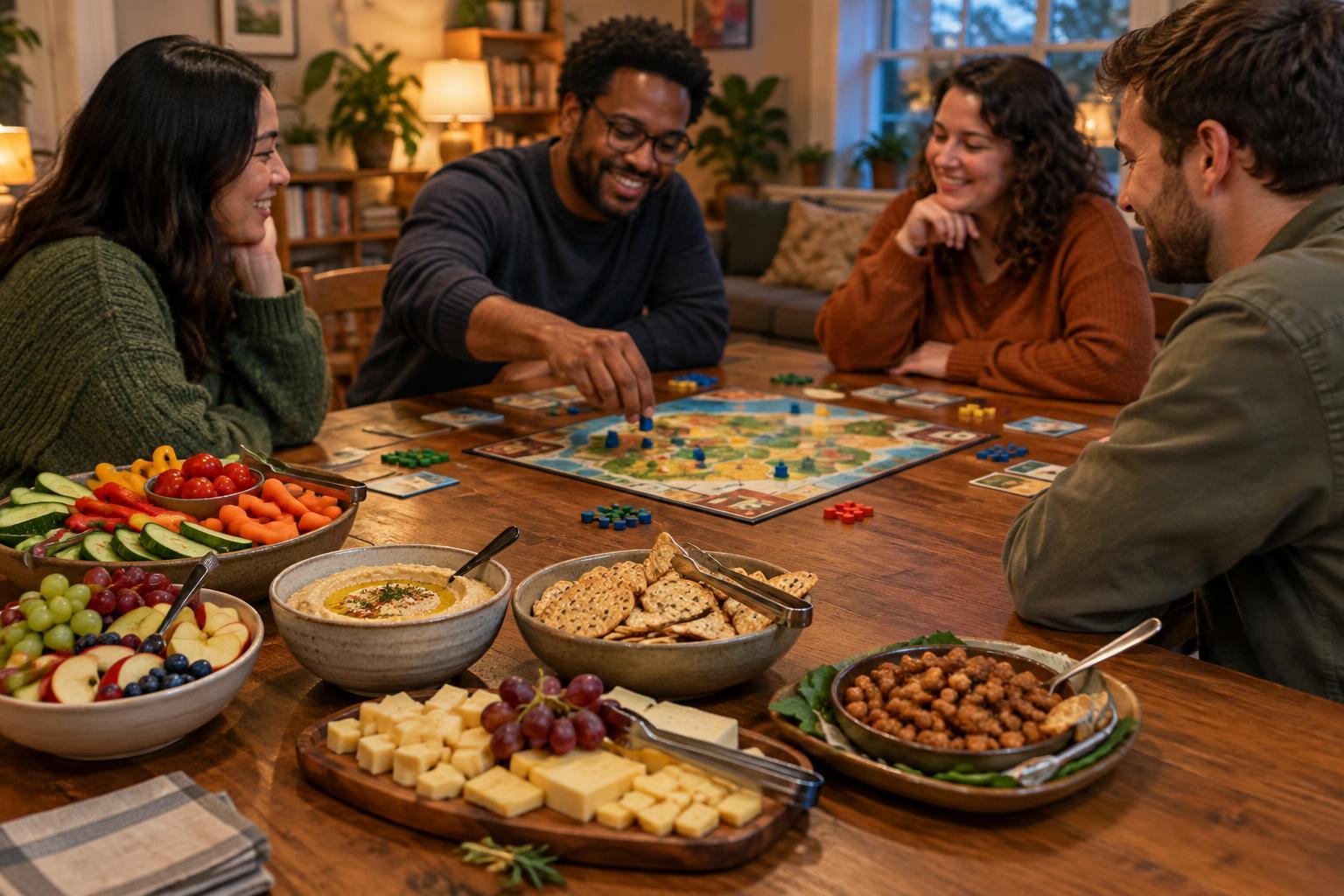
Food is optional; a clear place to put it is not. Set drinks on a side table when possible, and keep coasters or a few stable cup spots available. Choose snacks that are easy to handle without leaving residue on cards and pieces. Napkins, a small rubbish bag and a cloth or paper towels belong in the host kit even when refreshments are simple.
For longer evenings, a water jug and glasses let guests help themselves without stopping a game. If you offer food, ask about dietary needs when planning rather than trying to guess. Make it equally easy for someone to decline a snack or take a break.
If something spills, pause and move nearby components before wiping the surface. A calm response is more useful than a perfect table. Let pieces dry fully before packing them away, and check the game box later so a damp card or token does not get stored unnoticed.
Make closing the game part of the plan
The last useful supply is a simple way to put everything back. Resealable bags, rubber bands for closed boxes and a few labels can keep components separated. Avoid bands around cards, which can bend their edges. Before guests leave, invite everyone to return pieces to trays or bags while the game layout still shows where they came from.
For games with many components, keep a contents list inside the box or take a reference photo of the packed layout for your own use. Neither has to be complicated. The goal is to make the next setup less of a puzzle.
A reliable host kit supports the evening without becoming its focus. Stock the basics, set them where guests can find them, and change the kit as you learn what your group enjoys. The best supplies are the ones that help everyone spend less time looking for things and more time playing together.