Start with the story everyone is playing
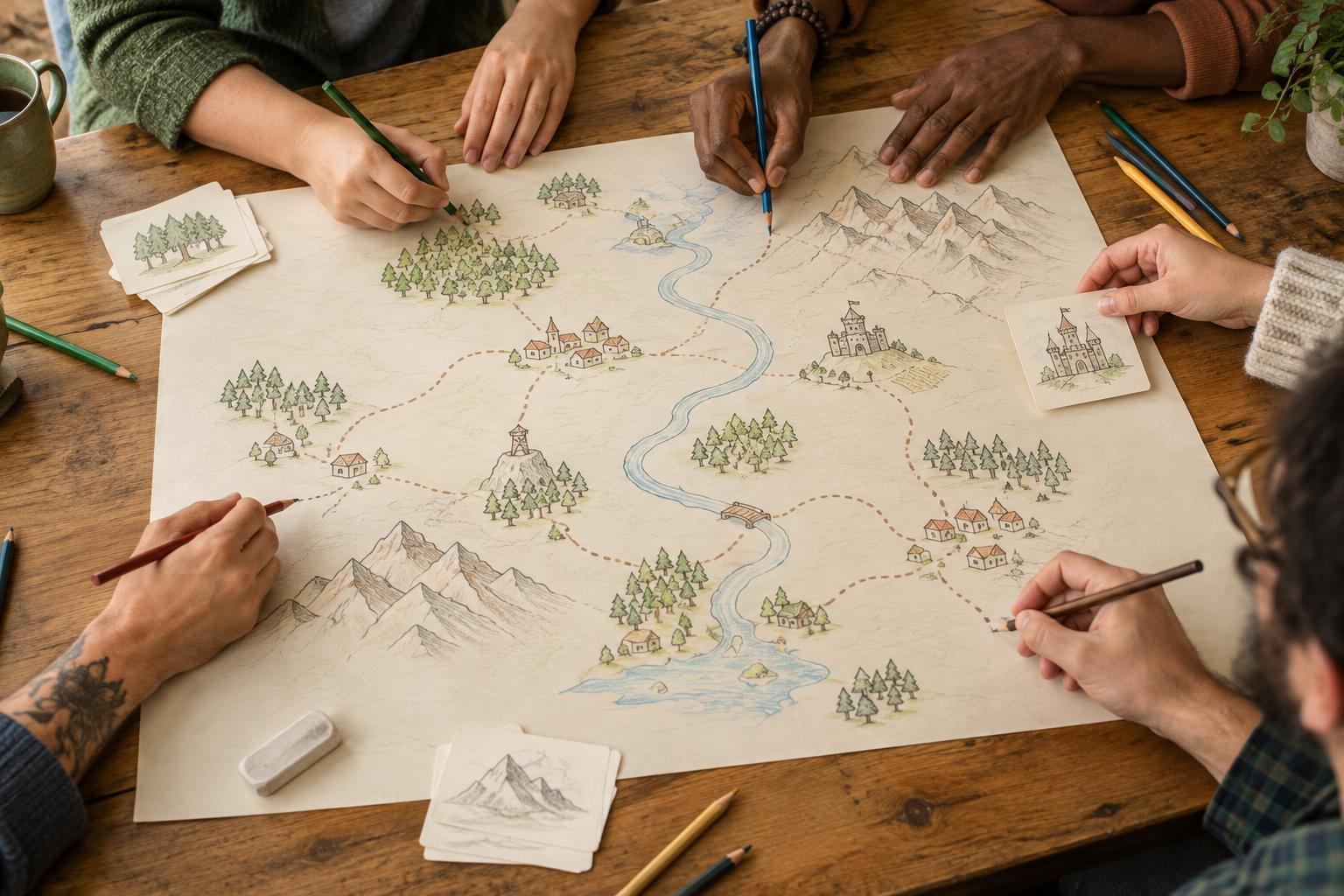
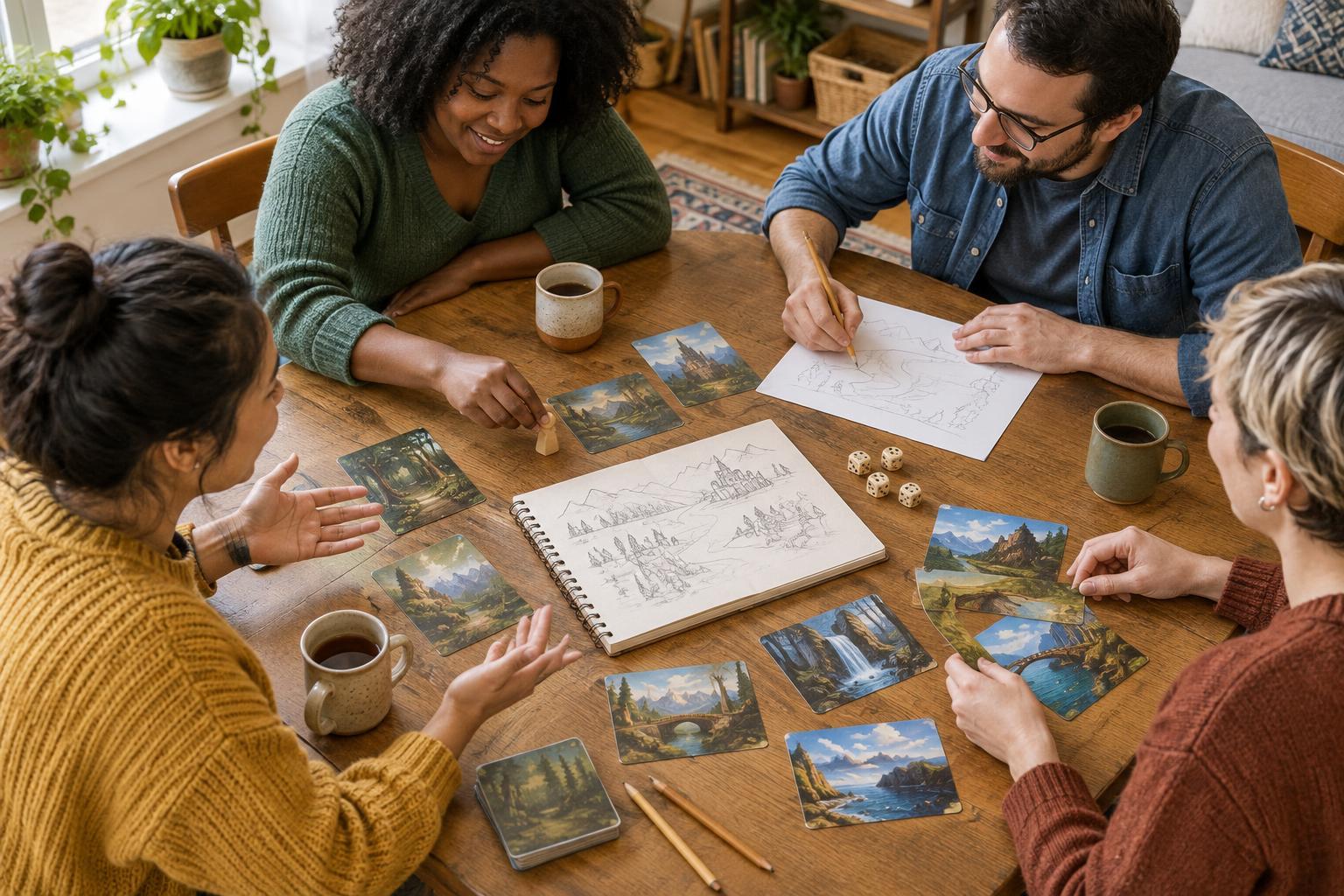
In a one-session story game, character creation is most useful when it gives players something to do right away. A detailed childhood history may be fun to invent, but it can be hard to bring into a short adventure. Begin instead with a shared situation: the group must return a misplaced object, prepare a festival, explore an unfamiliar place, or solve a small mystery. Then ask each player to create someone who has a reason to take part.
Keep the invitation broad enough for different personalities, but clear about the game’s tone. If the plan is a cozy mystery, ask for curious neighbors rather than characters whose main goal is to start a fight. A useful opening prompt is: “Why did you say yes when the group asked for help?” It establishes participation without requiring everyone to agree on every decision.
Choose a motive that can appear tonight
Give each character one immediate want. It should be possible to pursue during the session, even if the outcome remains uncertain. Try: “What are you hoping to find out before the evening ends?” “Who are you trying to impress?” or “What small promise do you intend to keep?” Answers such as “learn why the lighthouse is dark” give a player a direction. A larger ambition, such as becoming famous, can work too if the player names one step they can take tonight.
Next, ask why the want matters personally. A character investigating the lighthouse might be worried about a friend who works there, or might simply hate leaving a puzzle unfinished. Either answer creates a distinct character. Encourage players to use a sentence or two, not a biography. They can discover further details through play.
Build connections that invite conversation
Characters who already know something about one another have an easier time starting scenes. Invite each player to complete one prompt involving another character: “They helped me when…” “We disagree about…” or “I trust their judgment on…” Let both players approve the connection before it becomes part of the story. A disagreement about whether to follow a map can be playful; a feud that prevents the characters from cooperating may slow a short game down.
Connections need not all be close friendships. Perhaps two characters have worked the same event, exchanged letters about a shared hobby, or met once under awkward circumstances. The useful question is: “What can these two talk about in the first scene?” If a connection involves a secret, decide which players know it and whether revealing it would be enjoyable. No one should have to play along with a surprise about their character that they did not agree to.
Pair a useful strength with a gentle complication
A strength gives a player a way to contribute. Ask: “What do people come to you for?” The answer might be reading old signs, calming a crowd, repairing a bicycle, noticing patterns, or remembering names. Choose abilities that fit the shared situation and can create scenes, rather than trying to make every character equally capable at every task. In a game with formal rules, translate these ideas into the available character options.
Then add a complication that encourages choices without repeatedly stopping progress. Try: “What do you tend to overlook?” or “What harmless habit makes teamwork a little harder?” Someone who notices tiny clues might forget to explain their reasoning; a confident organizer might promise help before checking the schedule. Avoid prompts that require a player to undermine the group. A complication is an invitation to play a person, not an obligation to cause trouble.
Finish with a quick introduction and leave room to change
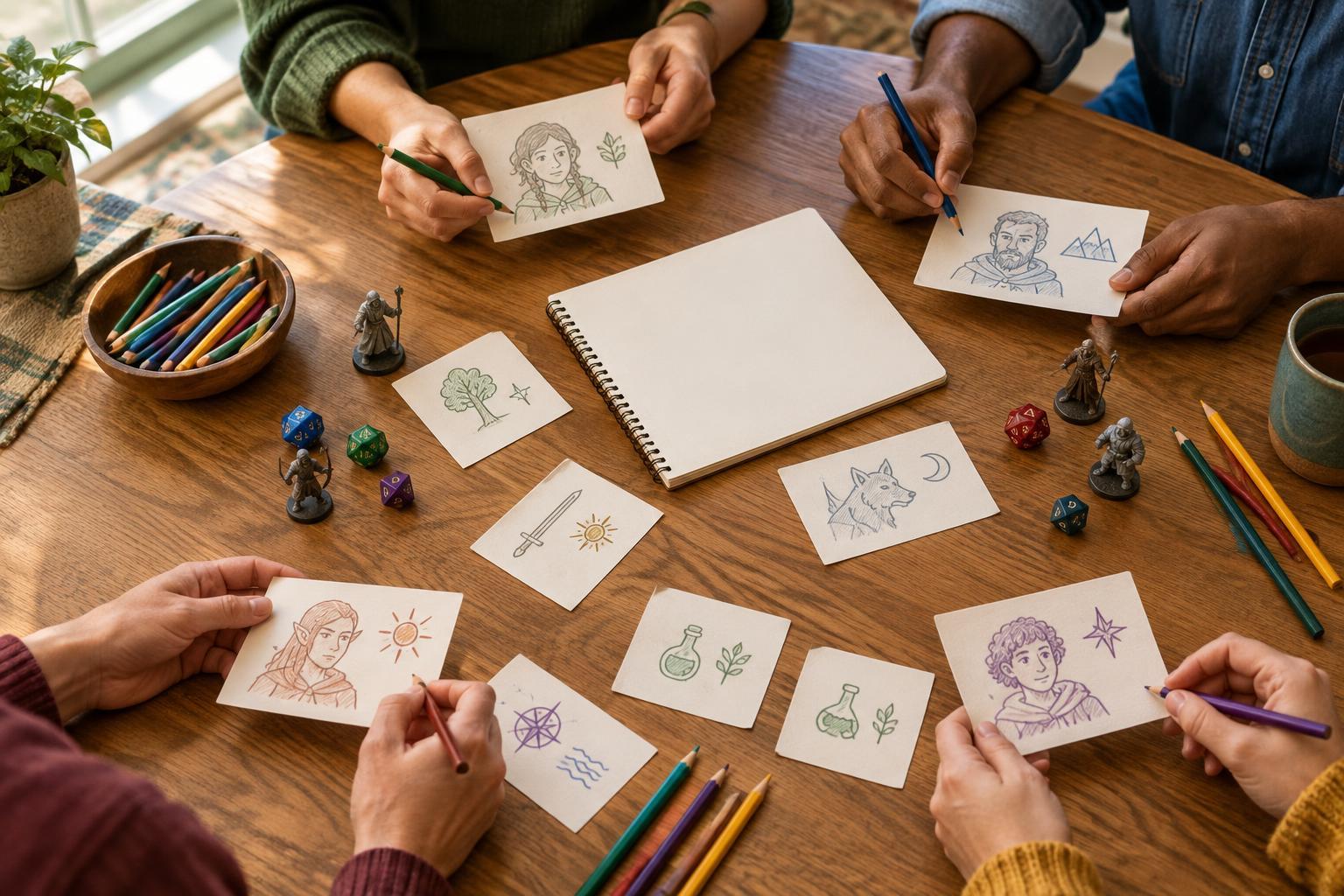
Once everyone has a motive, a connection, a strength, and a complication, ask for a brief introduction: name, a visible detail, and what the character is doing as the opening scene begins. For example, a careful mapmaker might be smoothing a rain-damp page on the meeting table. This gives others something concrete to respond to and gets the story moving.
Treat these answers as starting points, not a test players must pass. If a prompt produces an idea that does not fit, revise it together. Players can also leave a detail open and decide it when it becomes relevant. Before play, make space for anyone to name themes they would rather avoid. A short game has little time to recover from an unwanted turn, while a welcoming starting point makes it easier for everyone to take creative risks.