Start with a small piece of the world
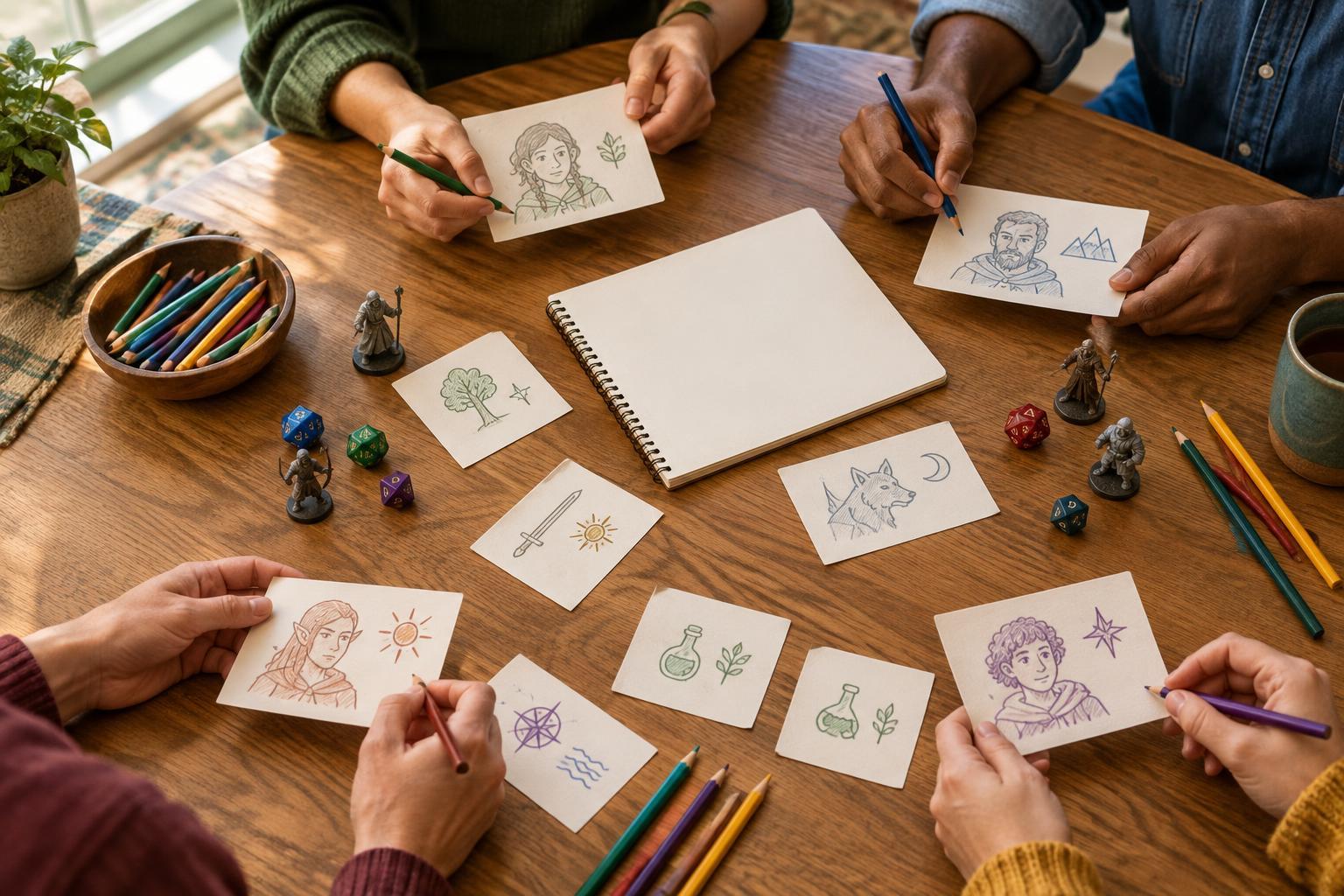
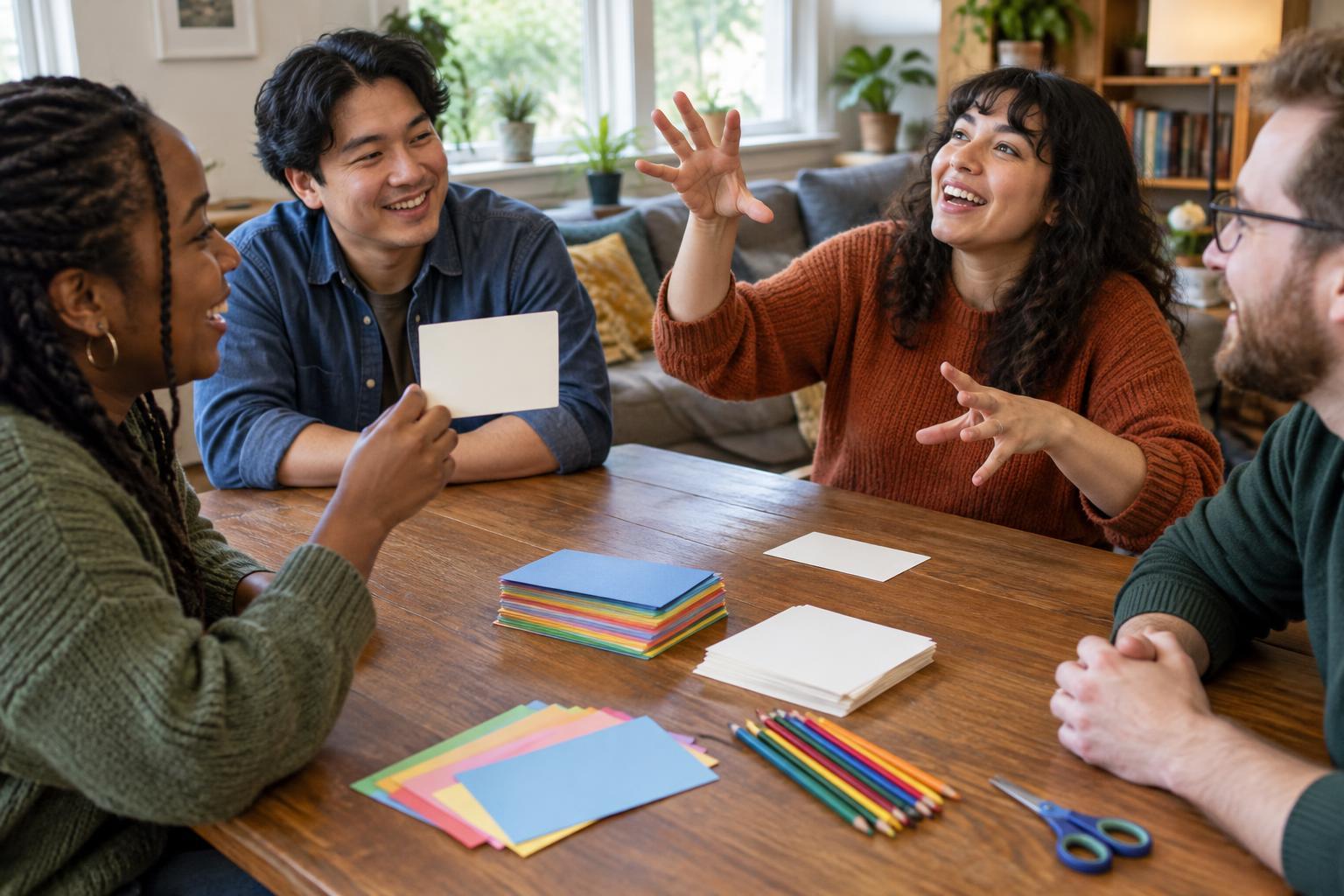
A shared fictional map begins with a place, not a complete world. Gather a sheet of paper or an editable digital canvas, something to draw with and a few people willing to invent details together. No one needs to be good at drawing: a circle can be a town, a wavy line can be a river and a label can do most of the work.
Agree on a modest frame before anyone adds a landmark. Is this a single neighborhood, a valley or a chain of islands? What tone sounds fun: cozy, mysterious, adventurous or gently strange? Choose a scale that leaves room for discovery. A map of one valley gives each new bridge or orchard a clearer relationship to what is already there than a map of an entire planet.
It also helps to settle a few comfort boundaries. Participants can name themes they would rather leave out, and anyone can suggest a lighter alternative when an idea changes the mood of the activity. Keep these agreements brief; their purpose is to make improvising easier for everyone.
Give each turn a simple shape
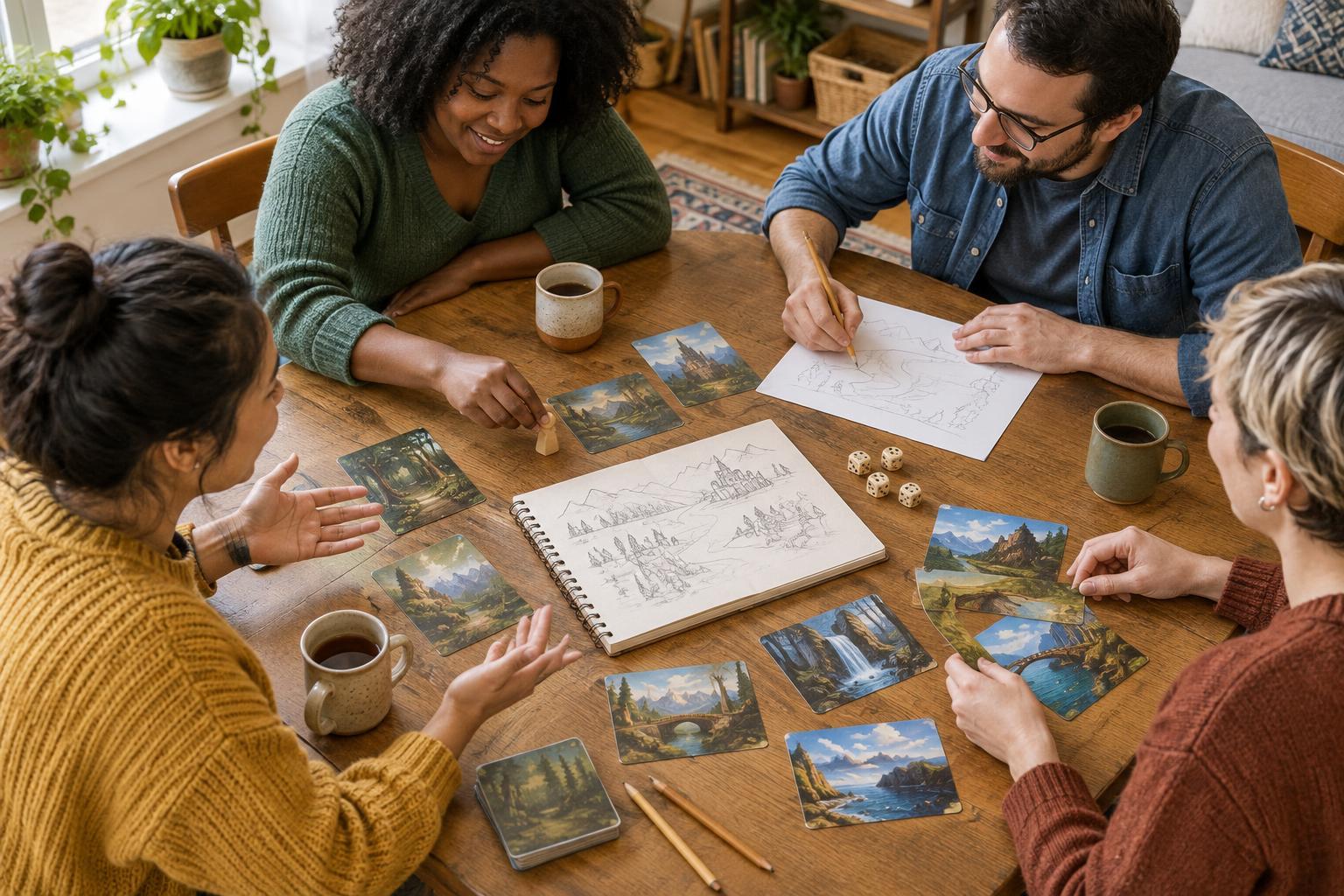
Take turns adding one location. On a turn, a player draws or places a mark, names the location and says one sentence about why it matters. “The Lantern Orchard grows fruit that glows after rain” is enough. The next player can add a nearby place, draw a route between existing places or choose a distant corner of the page. The group does not need to settle every detail immediately.
After each addition, invite one question from someone else. Ask who uses the place, what visitors notice first or how people get there. The creator answers briefly, then the turn moves on. Questions help turn separate inventions into a shared setting, but they should open possibilities rather than test whether an idea is realistic.
If someone wants a little structure, offer a rotating prompt: add a place to gather, a place to avoid, a route, a resource or a mystery. Players can ignore a prompt that does not spark anything. The aim is to give hesitant participants a starting point, not to make the activity a competition.
Connect places without controlling the story
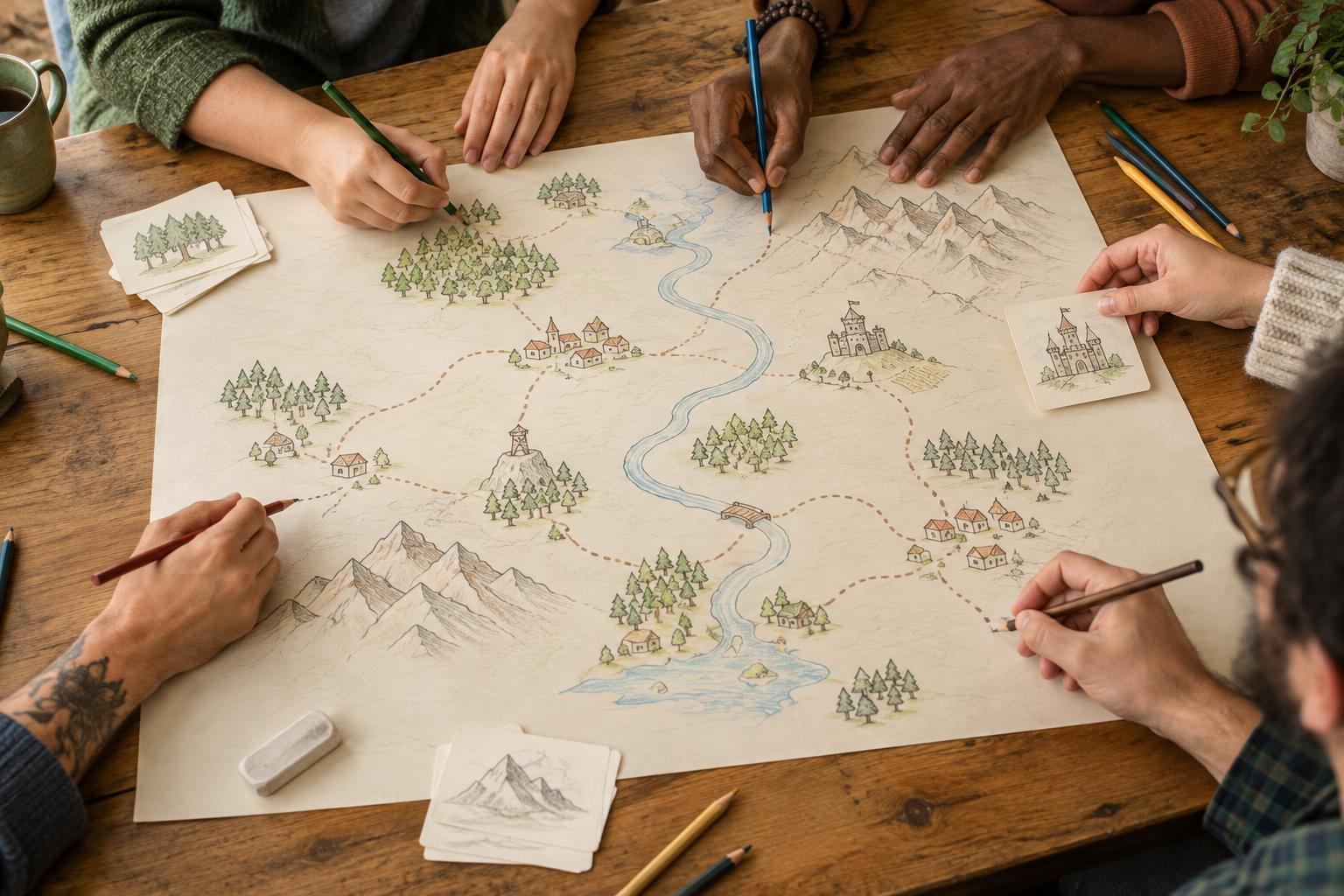
A map becomes more interesting when locations affect one another. Suppose the group has drawn a hilltop observatory and a busy ferry landing. Someone might add a footpath between them and explain that ferry crews use the observatory lights to find their way home. That single connection makes both places feel more lived in, while leaving plenty of room for future additions.
Encourage players to build on established details rather than overwrite them. A new idea can complicate a location without declaring an earlier contribution wrong. If the map already has a quiet market, for example, another player could add a noisy festival held there once a year. When two ideas genuinely clash, ask their creators whether the contrast is interesting or whether one detail should change. A quick, friendly decision is usually better than a long debate.
Use a small key to keep the page readable. Different symbols can distinguish settlements, natural features, routes and unanswered mysteries. Write short names on the map and keep longer notes on a separate sheet. Leaving open spaces and a few unexplained marks is useful: the map is a tool for further play, not a test of completeness.
Make room for different kinds of contribution
Drawing is only one way to participate. One person might name places, another might ask revealing questions and another might organize the notes. A player who prefers to think before speaking can jot down an idea and share it on a later turn. If several people reach for the pen at once, pass it around in a predictable order so quieter voices are not crowded out.
Players can also contribute through everyday details rather than grand landmarks. Where do residents meet when it rains? Which shortcut do children know? What is carried along the road at dawn? These questions give a fictional place texture without requiring anyone to invent a kingdom or an elaborate history. A modest bakery beside an unusual crossing may inspire more group conversation than another distant mountain.
Finish with a map you can return to
Stop while there is still space for another session. Before putting the map away, read through its locations together and give everyone a chance to clarify a name or connection. Record any open questions in the margin: who maintains the old bridge, what lies beyond the marsh or why the watchtower is empty. These are invitations for next time, not problems that must be solved now.
You can use the finished page as a backdrop for storytelling, as a prompt for drawing scenes or simply as a record of a pleasant afternoon. On a later visit, add one location per person before exploring an older corner in more detail. Because each addition is small and visible, the world grows through shared decisions rather than one person having to plan it all.