Start with a small, shared premise
In a game-master-free story game, no single person prepares the plot or decides what happens next. Players create characters and take turns adding places, problems and surprises. The aim is not to tell a perfectly polished tale. It is to give each person enough structure to contribute without having to invent everything at once.
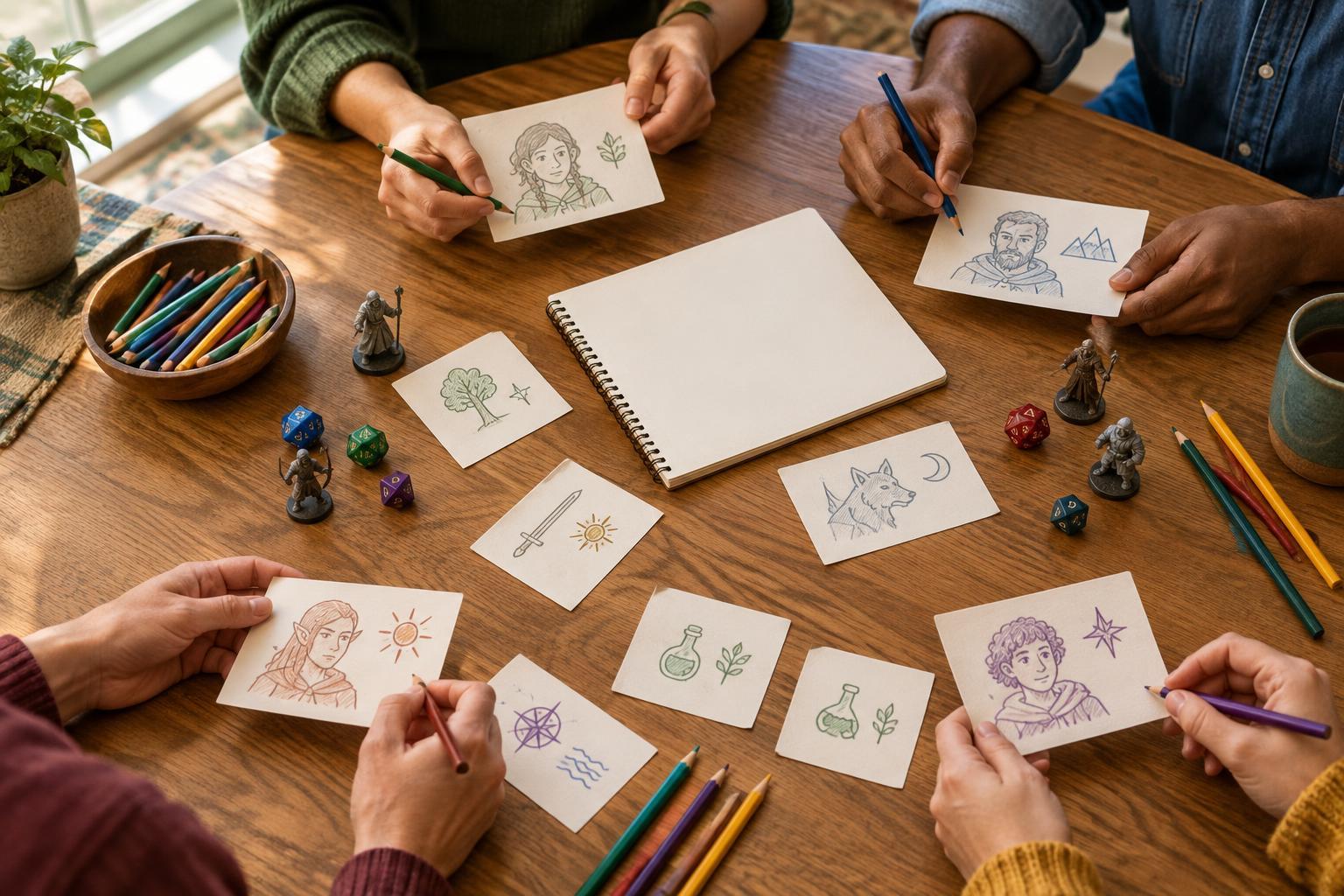
Begin with a premise everyone can grasp in one sentence: a crew is repairing a stranded airship, neighbors are planning an impossible festival, or explorers have found a library that rearranges itself. Together, answer three questions: What do the characters want? What stands in their way? What sort of tone are we after? Keep the answers visible on a sheet of paper. A narrow premise makes the first scene easier to start, while leaving room for discoveries.
Agree on boundaries and a simple turn order
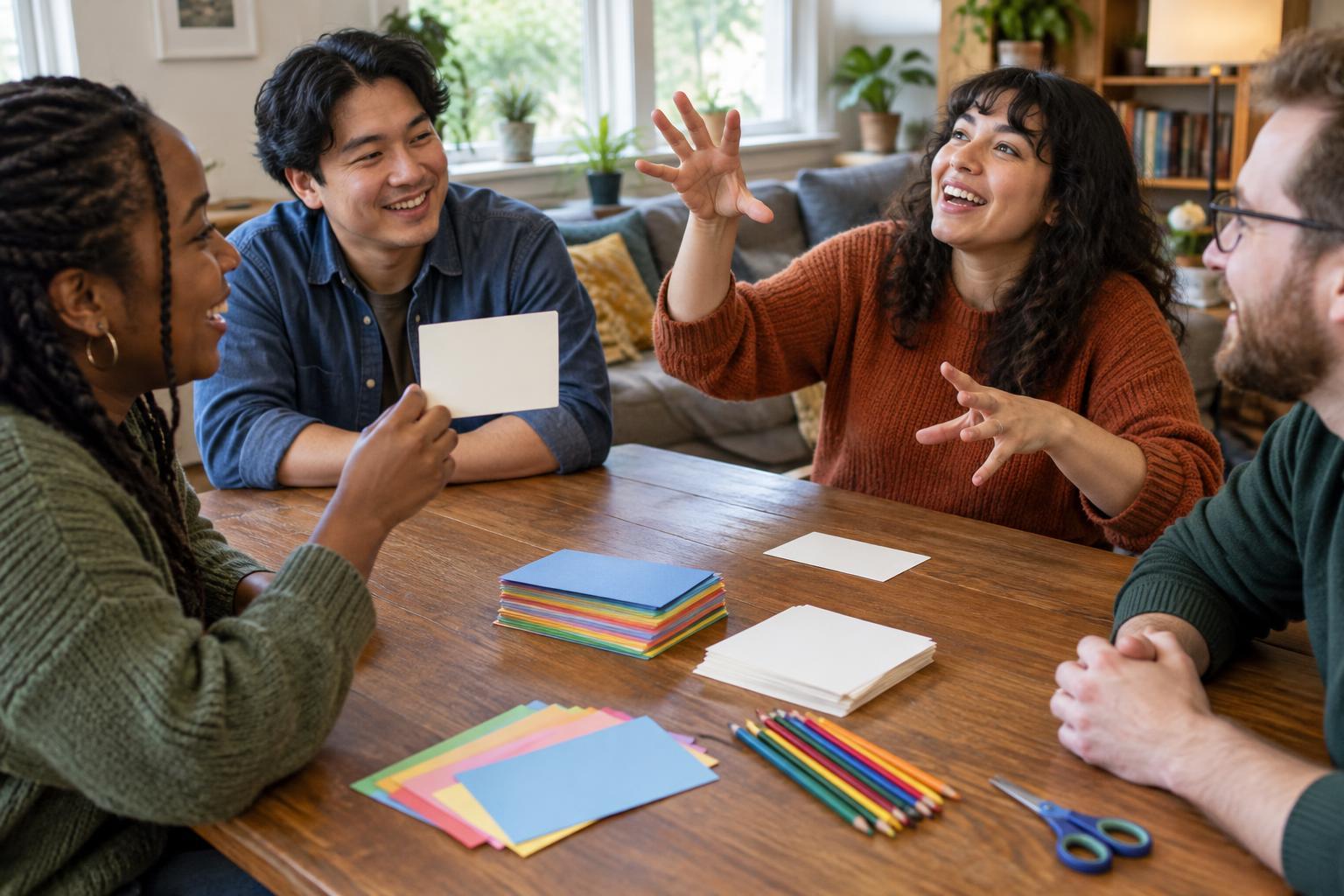
Before play, invite everyone to name subjects they would rather leave out and anything they would prefer to keep offstage. You do not need a lengthy discussion; a quick check-in gives people a chance to make the game comfortable for them. Agree that anyone may pause, rewind or redirect a scene without having to justify the request. This works best when the group treats a change of direction as ordinary collaboration, not a disruption.
Then choose a turn order. On their turn, a player opens a scene by naming its location, which characters are present and one immediate question. For example: “At the airship’s workshop, can we fix the engine before the storm arrives?” Other players portray their characters and add details as the scene unfolds. The scene opener does not own the outcome. Once the question has an answer or the situation changes, move to the next player.
Share authority through clear, small jobs
It helps to separate introducing a problem from solving it. The scene opener frames the situation. The player to their left can portray a supporting character or describe the surroundings. Everyone else decides what their own character attempts. Rotate these jobs with each scene so that nobody becomes the unofficial game master. If there are only two players, alternate between framing scenes and adding complications.
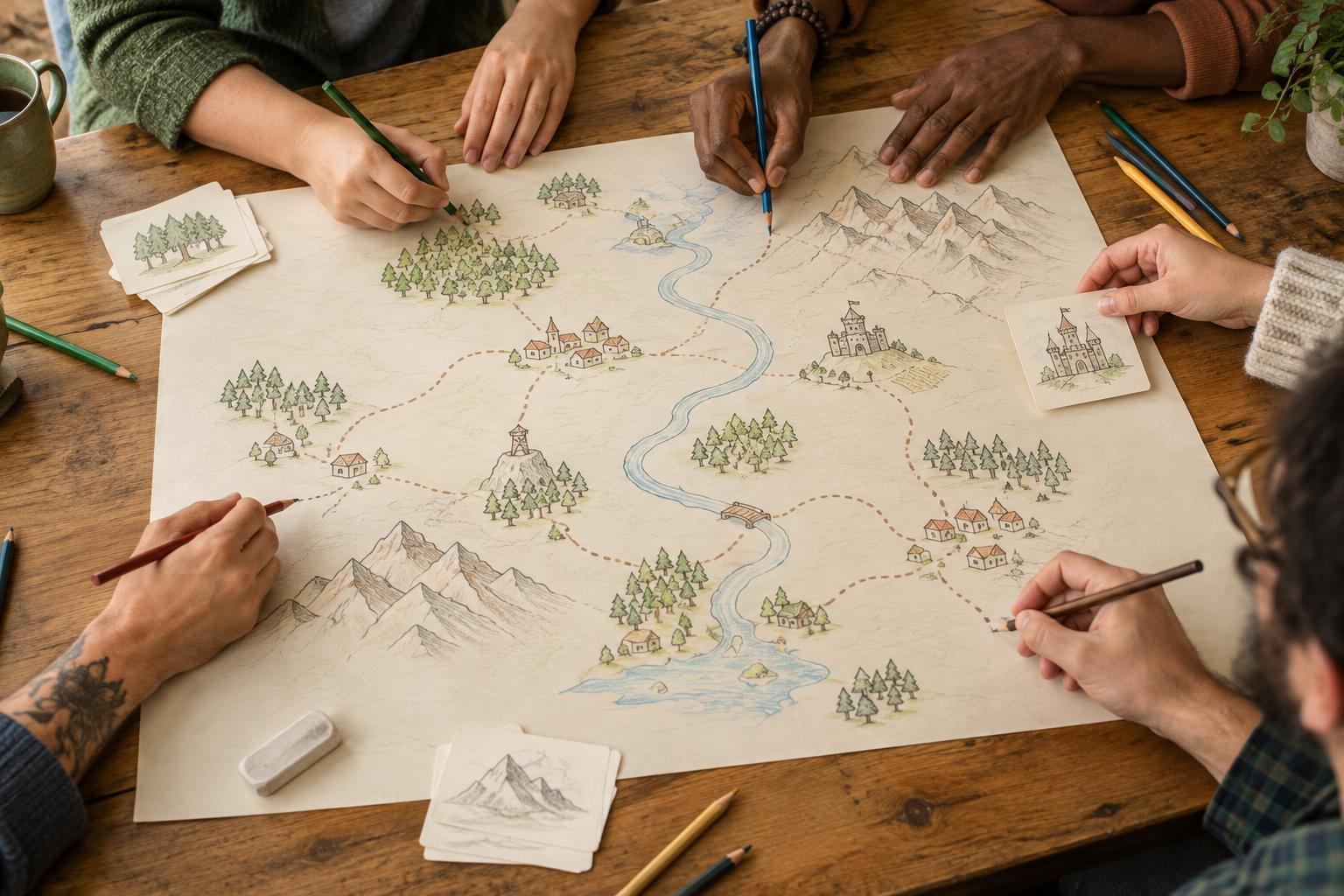
Use a few shared notes to keep inventions consistent. Write down important names, places, promises and unanswered questions as they appear. Anyone can point to the notes when an old detail might make a new scene more interesting. Avoid filling every gap in advance: “What is behind the locked door?” is more useful as an open question than as a fact someone must remember.
Resolve uncertainty without a referee
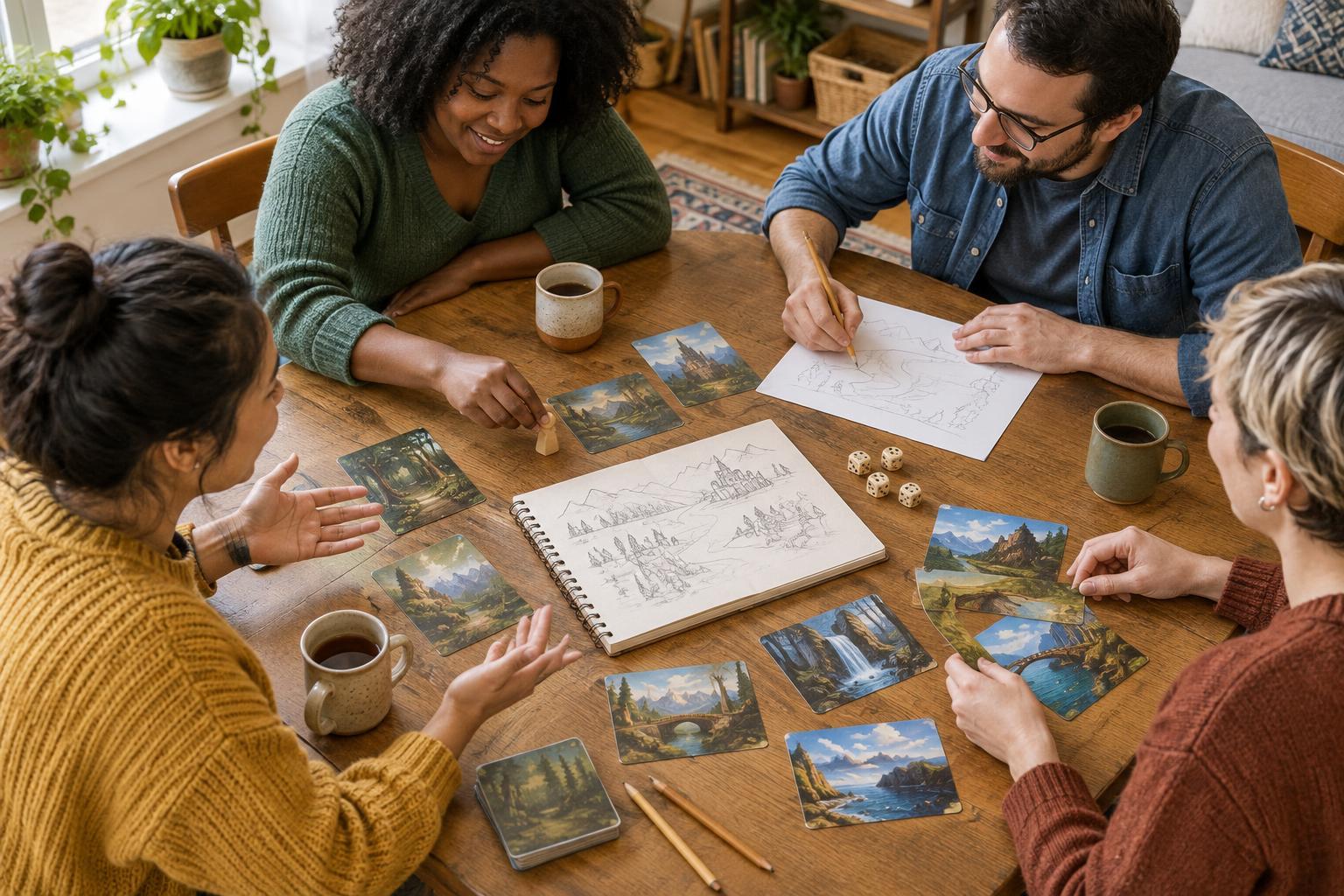
Many moments need no rule. If a character asks a friendly neighbor for directions, the neighbor can simply answer. Save a resolution method for attempts where success and failure would both move the story somewhere interesting. One easy option is to roll a single die: a low result means the attempt works but introduces a complication, a middle result means it works at a cost, and a high result means it works cleanly. Decide the ranges before the game starts, or use a deck with three roughly equal groups of cards instead.
Before rolling, the acting player says what their character hopes to achieve. Another player suggests a plausible cost or complication; the group can adjust it until it fits the agreed tone. After the result, build on it rather than arguing over who had the “right” answer. A failed repair might reveal a different route home, for instance. The rule’s job is to create a prompt for the next choice, not to settle every fictional detail.
Give the story an ending it can reach
Without a planned finale, a shared story can keep producing new threads. Set a modest limit at the start, such as two scenes per player, then reserve one final round for conclusions. As that round approaches, revisit the premise’s central question. Each player can choose one thread to resolve and one detail to leave as a hint of life beyond the game.
End by giving every character a brief closing moment. It might show what they gained, what changed between them and another character, or where they go next. If the group enjoyed the setting, keep the notes for another session; if not, the story still has a complete shape. The most useful habit is to make offers that others can build on, then leave them room to surprise you.