Start with the table, not the mood
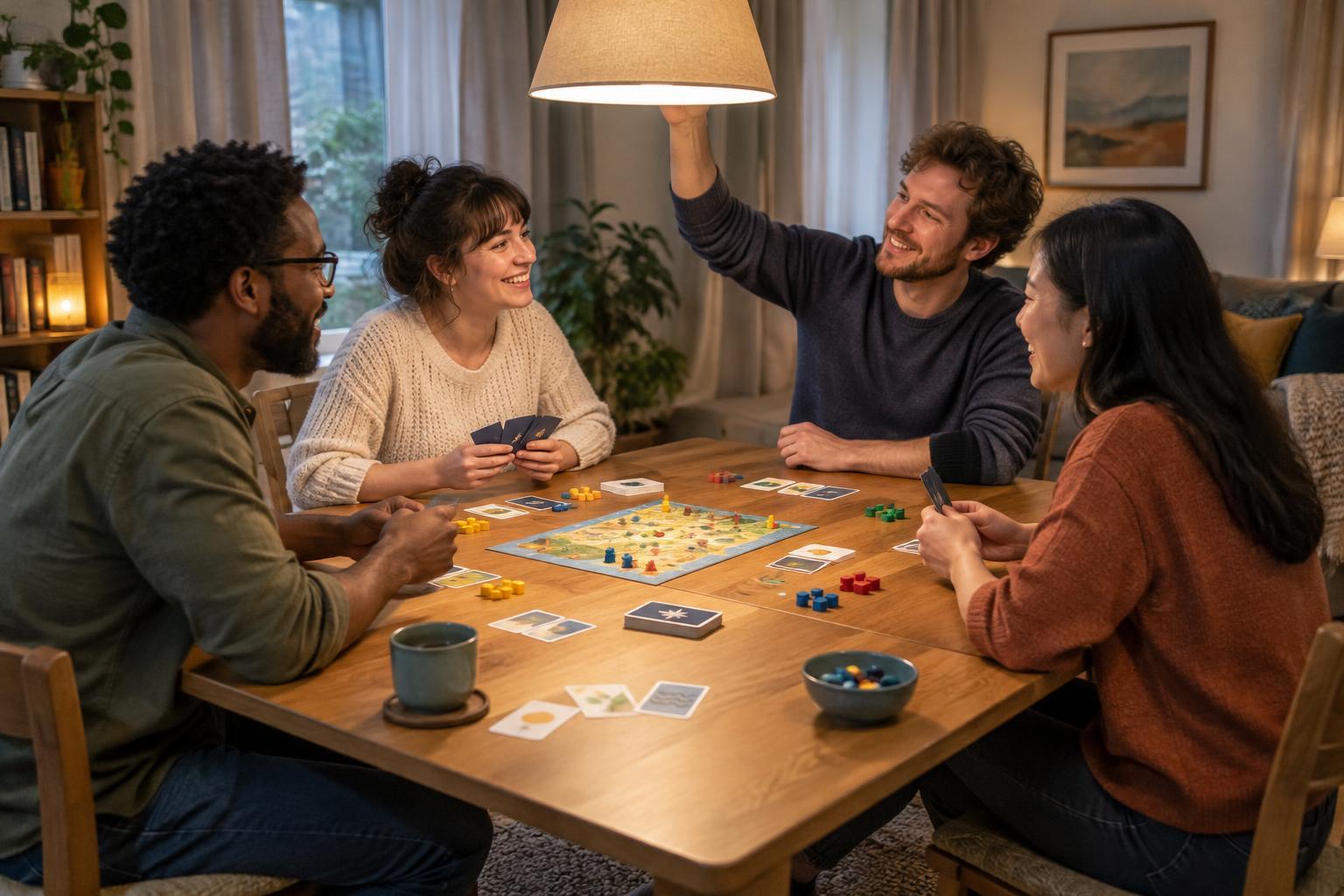
Soft lighting can make a room feel inviting, but a game table has a job to do. Players need to distinguish colors, read small text, find tokens and see one another’s expressions. Before guests arrive, sit in each seat and try to read a card or rulebook where it would normally rest. Check the corners of the table as well as the center; a bright spot overhead may still leave someone’s hand in shadow.
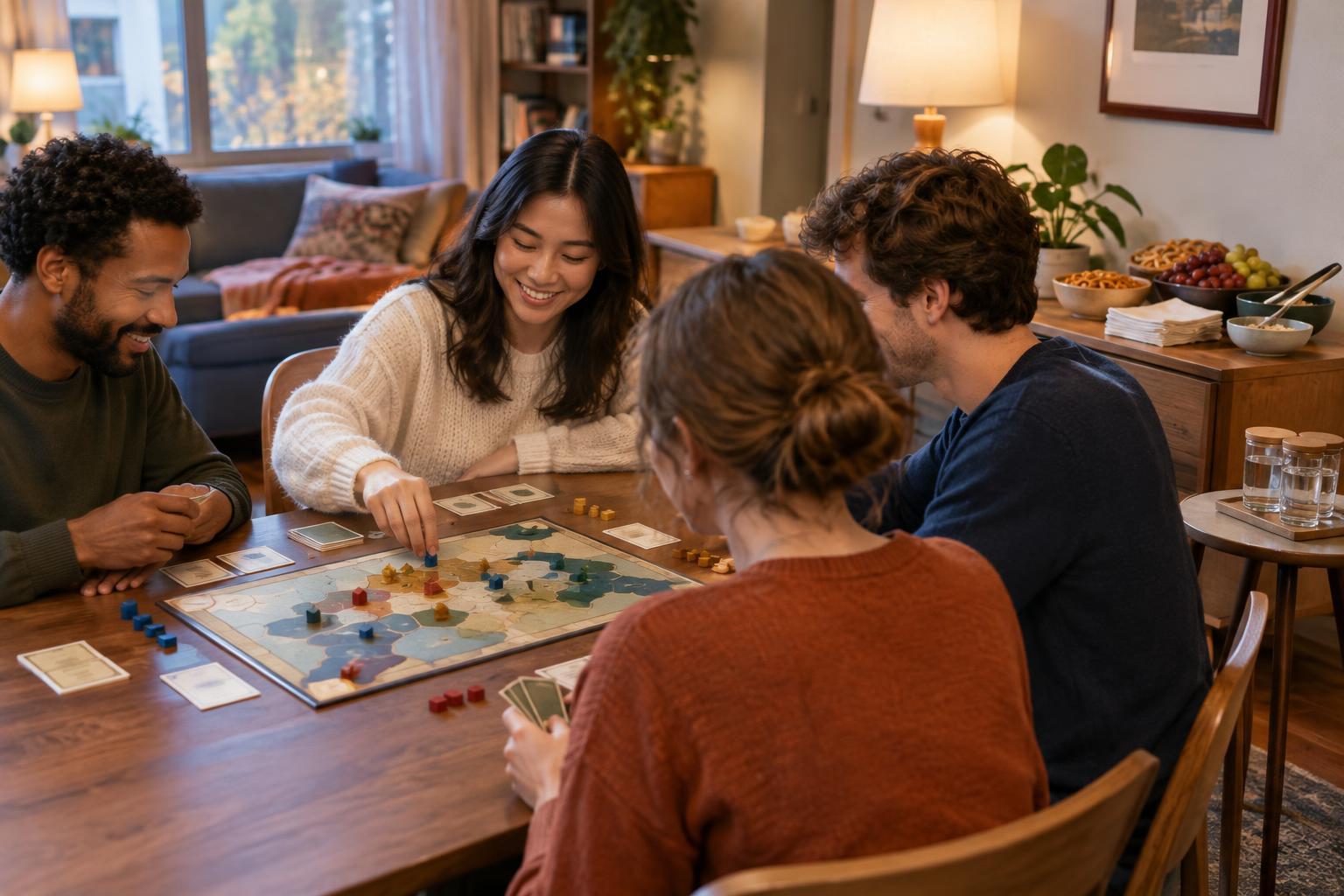
Aim for even light across the playing area. A ceiling fixture may be enough, or a nearby lamp may fill a dim corner. If a lamp creates a hard reflection on glossy cards or a shiny board, move it to the side or change its angle. Keep candles and decorative lights away from the main play surface so they do not compete with the pieces for space or visibility.
Give players control where you can
One lighting level rarely suits every part of the evening. Brighter light helps during setup, rules explanations and games with detailed components. A gentler setting may feel better during a snack break or a conversation between rounds. If your room allows it, use separate lamps or adjustable lights rather than relying on one fixture for everything.
Ask guests whether they can read comfortably instead of assuming that a pleasant-looking room works for everyone. A player who struggles to see a card should be able to move closer to a lamp or swap seats without making it an event. For games that rely heavily on color, good light helps, but it does not solve every distinction problem. Naming a piece by its symbol or position as well as its color can make shared instructions clearer.
Treat background sound as optional
Music can help mark the start of an evening, yet it can also make rules harder to follow. Begin at a volume that sits beneath ordinary conversation. If people repeat questions, lean across the table to hear, or stop talking when a track grows louder, turn it down or switch it off. Lyrics can be especially distracting during a game that asks players to read, remember clues or negotiate.
Consider where sound comes from, too. A speaker beside one chair can feel much louder to that player than to everyone else. Place it away from the table if possible, and avoid putting a player between the speaker and a noisy appliance. For a lively party game, background audio may add little; the group will create plenty of sound on its own.
Make the room easy to hear in
Noise is not only a question of volume. Several conversations at once, clattering dishes and a television in the next room can make a quiet explanation difficult to catch. Before teaching a new game, pause other audio and wait until everyone is at the table. Give the overview first, then explain details as they become relevant. A player can ask for a repeat more easily when there is one clear conversation to rejoin.
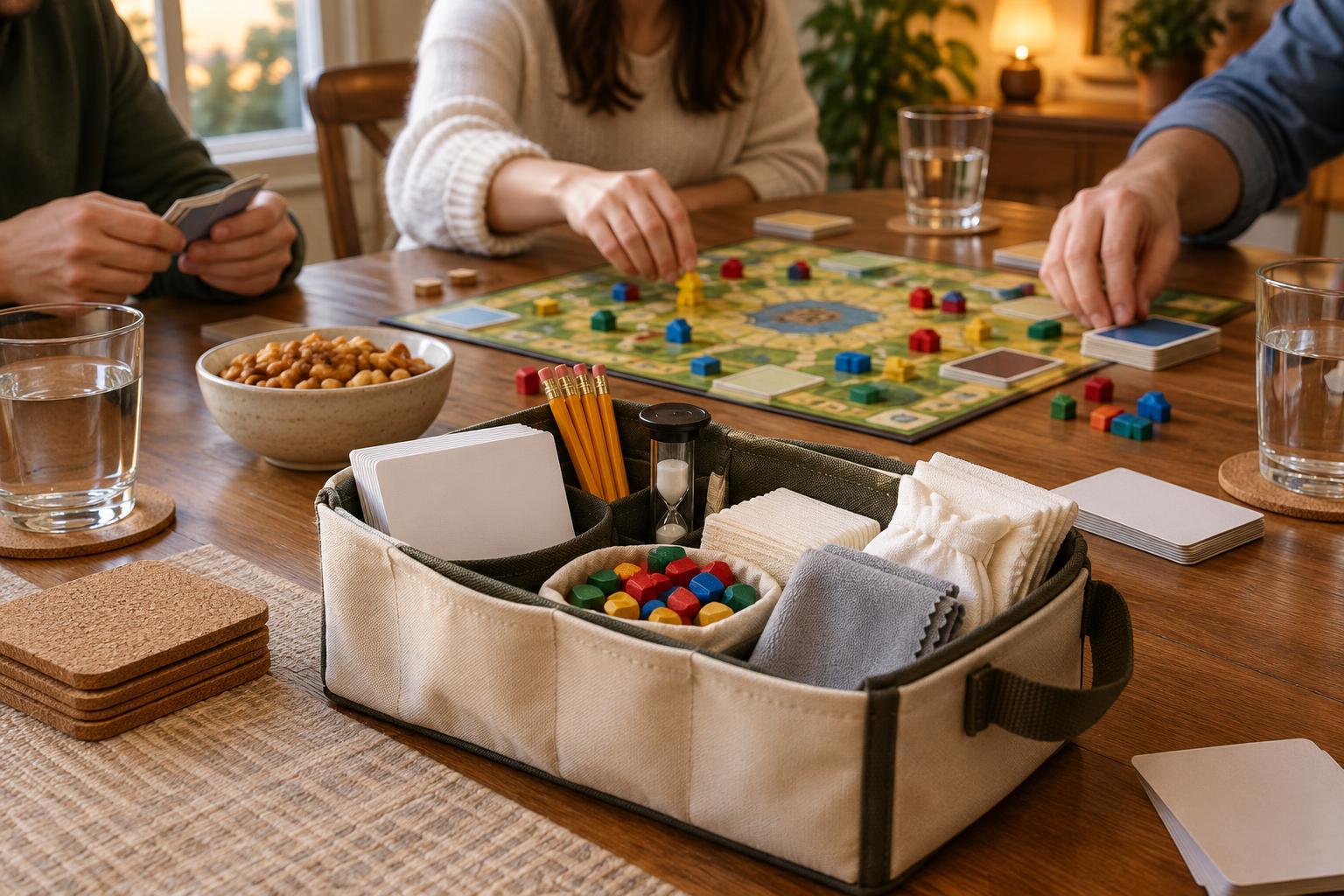
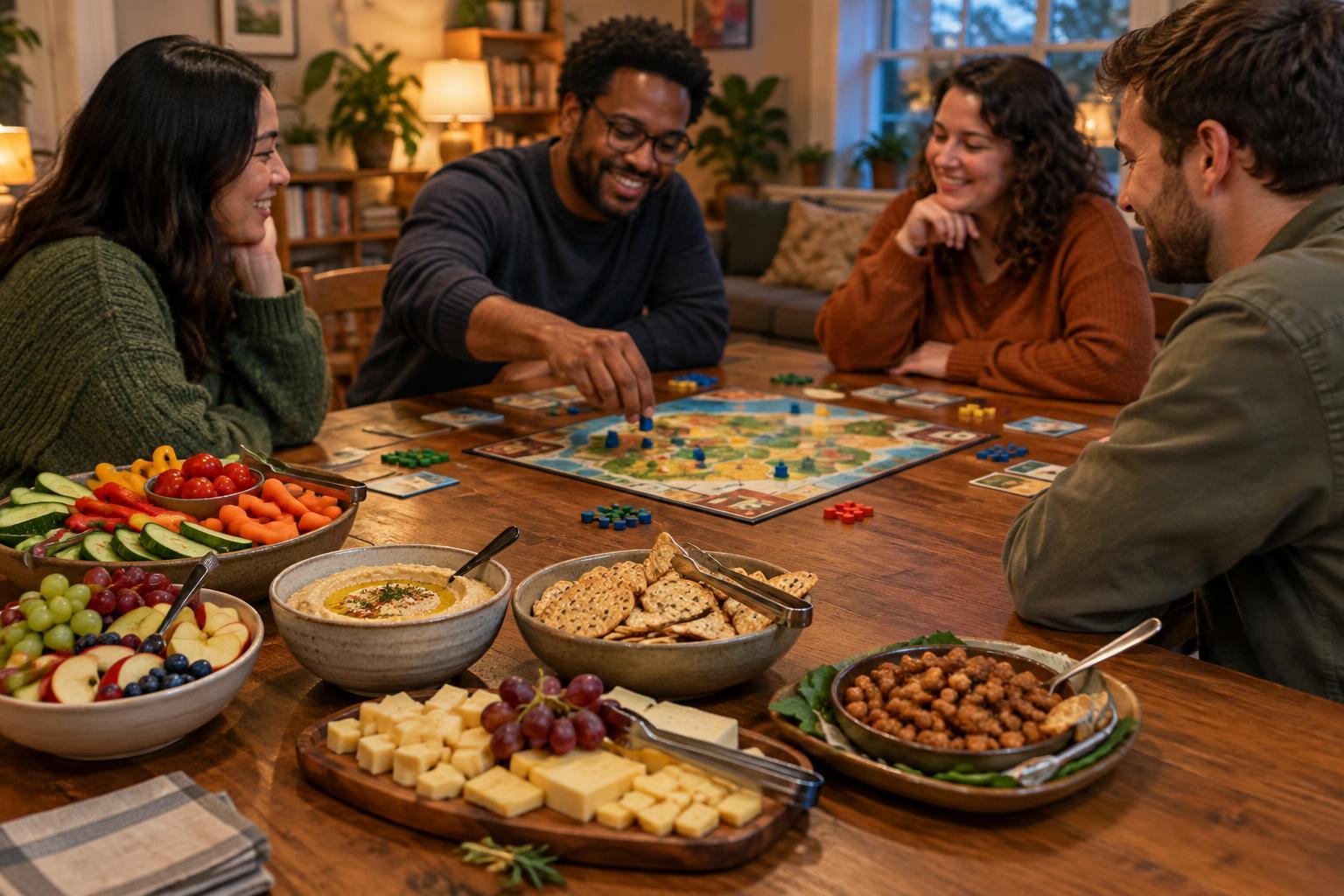
Small hosting choices can reduce interruptions. Set out snacks that do not require constant trips to the kitchen, and put a place for used plates away from the board. If guests are playing at more than one table, leave a little distance between groups when the room permits it. In a small space, taking turns with rules explanations may work better than trying to teach two games at once.
Do a quick reset after the first round
The best setup may change once play begins. Players lean forward, cards spread beyond the board, and conversation gets more animated. After the first round, take a moment to notice whether anyone is squinting at components or missing spoken information. A lamp adjustment, a lower music volume or a seat swap is easier than asking everyone to put up with a problem for the rest of the night.
You do not need a perfect room to host a comfortable game night. A clear view of the table, voices that carry without competing with background sound, and permission to make small adjustments will do more for the evening than an elaborate atmosphere. When players can focus on the game and one another, the room is doing its job.