Choose a project with a clear finish line
The easiest first miniature project is not necessarily the simplest model in the shop. It is one you want to finish. Pick a single character, creature, vehicle, or small group that appeals to you, then decide what “done” will mean. For a first attempt, that might be an assembled model with a base coat, a few distinct details, and a tidy base. You can learn more on the next project without making this one an endless experiment.
Consider how you plan to use the miniature. A display piece gives you freedom to choose almost anything. A model for a board game or tabletop game may need to fit a particular base size or match pieces you already own. If you have a game in mind, check its component or model requirements before buying. If you do not, choose one self-contained project rather than a large set that creates an instant backlog.
Let the model determine the shopping list
Look at the model’s material and assembly requirements before adding supplies to a basket. Some miniatures arrive in one piece; others need parts removed from a frame and joined together. A preassembled model lets you concentrate on painting. A multipart kit adds an enjoyable building step, but it may also call for clippers, an appropriate adhesive, and a little more workspace.
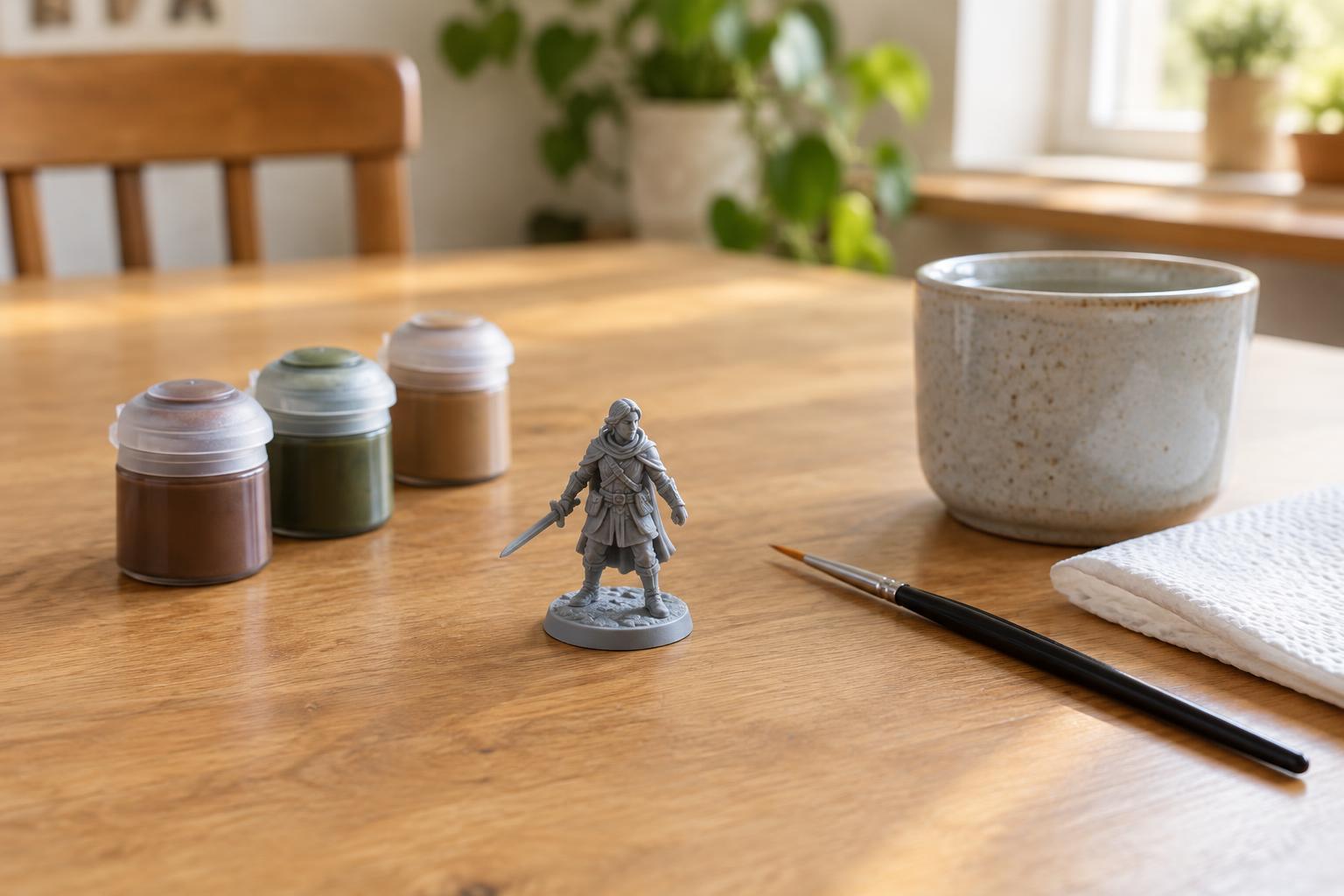
For a basic painting project, start with a suitable miniature, primer if the surface calls for it, a small selection of paints, one or two brushes, water for rinsing water-based paint, and something to protect your table. If assembly is required, add only the tools needed for that kit. Read product labels for material compatibility and safe use, particularly for adhesives, sprays, and cleaners. Work in a well-ventilated area when the product instructions require it, and handle sharp tools carefully.
Build a small color plan
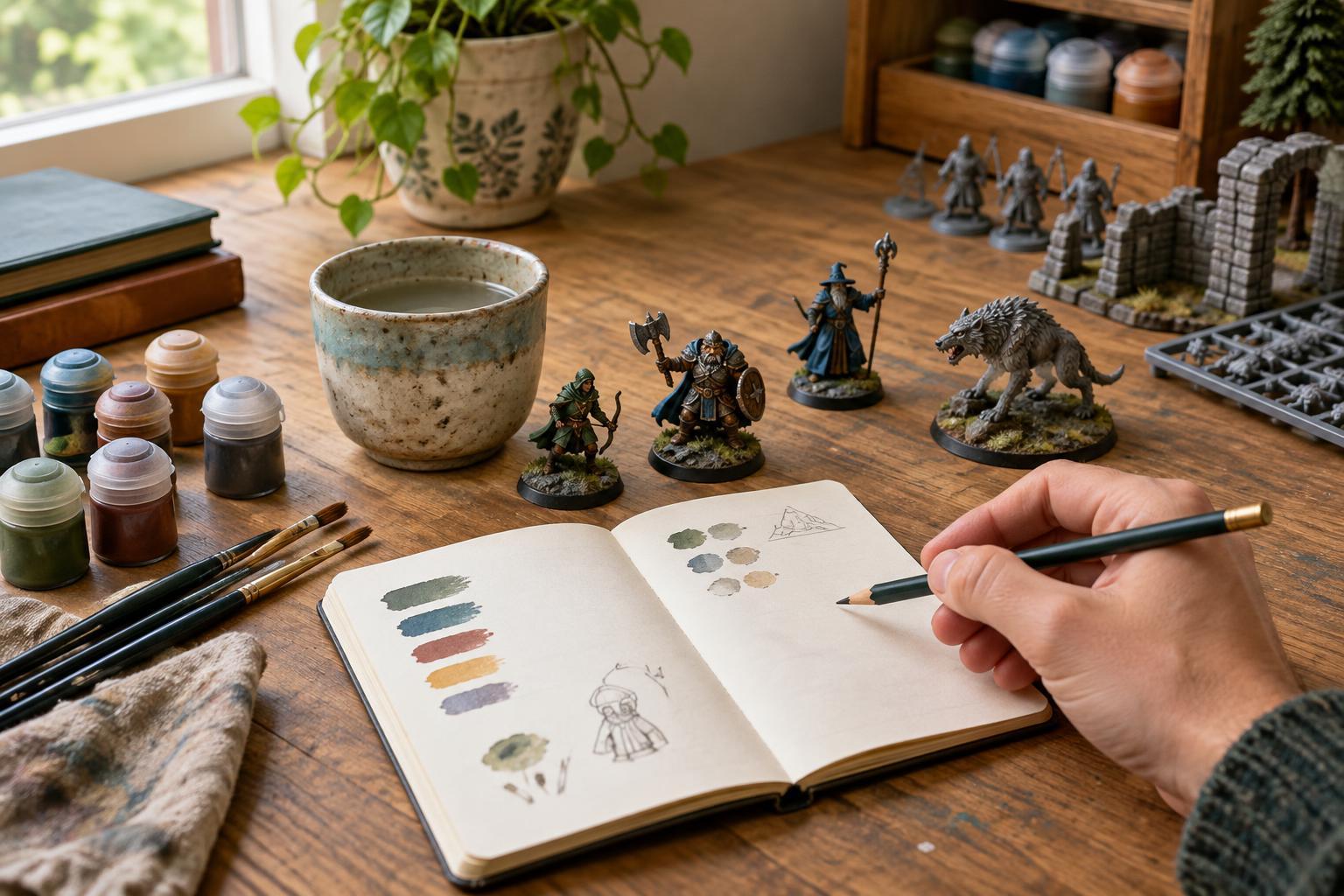
A shelf of paint is not a prerequisite for a good-looking first miniature. Before shopping, identify its main surfaces: perhaps clothing, skin, metal, and a base. Choose a few colors that make those areas easy to tell apart. A light and dark version of every color can wait. You can often create useful variation by mixing paints you already have or applying an additional thin layer where you want a stronger color.
Think in terms of readable shapes rather than tiny details. A contrasting face, weapon, or piece of equipment can give the model a clear focal point. If you are unsure which colors you will enjoy using, plan one simple scheme and buy for that scheme alone. Save specialty finishes, large paint sets, and elaborate basing materials until a project gives you a specific reason to use them.
Match the project to your time and workspace
A manageable first project fits into the space you actually have. You do not need a permanent hobby desk, but you do need enough room to keep small parts from getting lost and to let paint or adhesive dry undisturbed. A tray or shallow box can hold the model and supplies between sessions. Good lighting helps you see where one surface ends and another begins; a comfortable chair helps you stay patient with careful work.
Break the project into sessions you can complete without rushing: prepare the model, assemble it if needed, prime it where appropriate, paint the large areas, add a few details, and tidy the base. Drying and curing times vary by product, so follow the instructions rather than treating a session plan as a deadline. If your available time is limited, one miniature is a better test of the hobby than a whole collection.
Buy for the next step, not the imagined hobby
It is easy to shop for the painter you hope to become instead of the project in front of you. Before each purchase, ask which step it enables and whether something you own can do the job. You can set a spending limit for the first model and keep optional upgrades on a separate list. That makes it easier to distinguish a missing essential from an interesting tool you may not use yet.
Finish the first miniature before deciding what to buy next. Notice what slowed you down: a brush that could not reach a detail, a missing color, or a model that was harder to assemble than expected. Your completed project will give you a more useful shopping list than guesses made before you started. It will also give you something to put on the table, even if the paint job is not perfect.