Choose a game you can teach comfortably
A game can be enjoyable and still be the wrong one to introduce when everyone is tired or eager to start. Before guests arrive, consider how many people will play, how long a first session might take, and whether the rules can be explained without a lengthy demonstration. If you are learning the game too, read the instructions beforehand and try a sample turn. That preparation is more useful than attempting to memorize every exception.
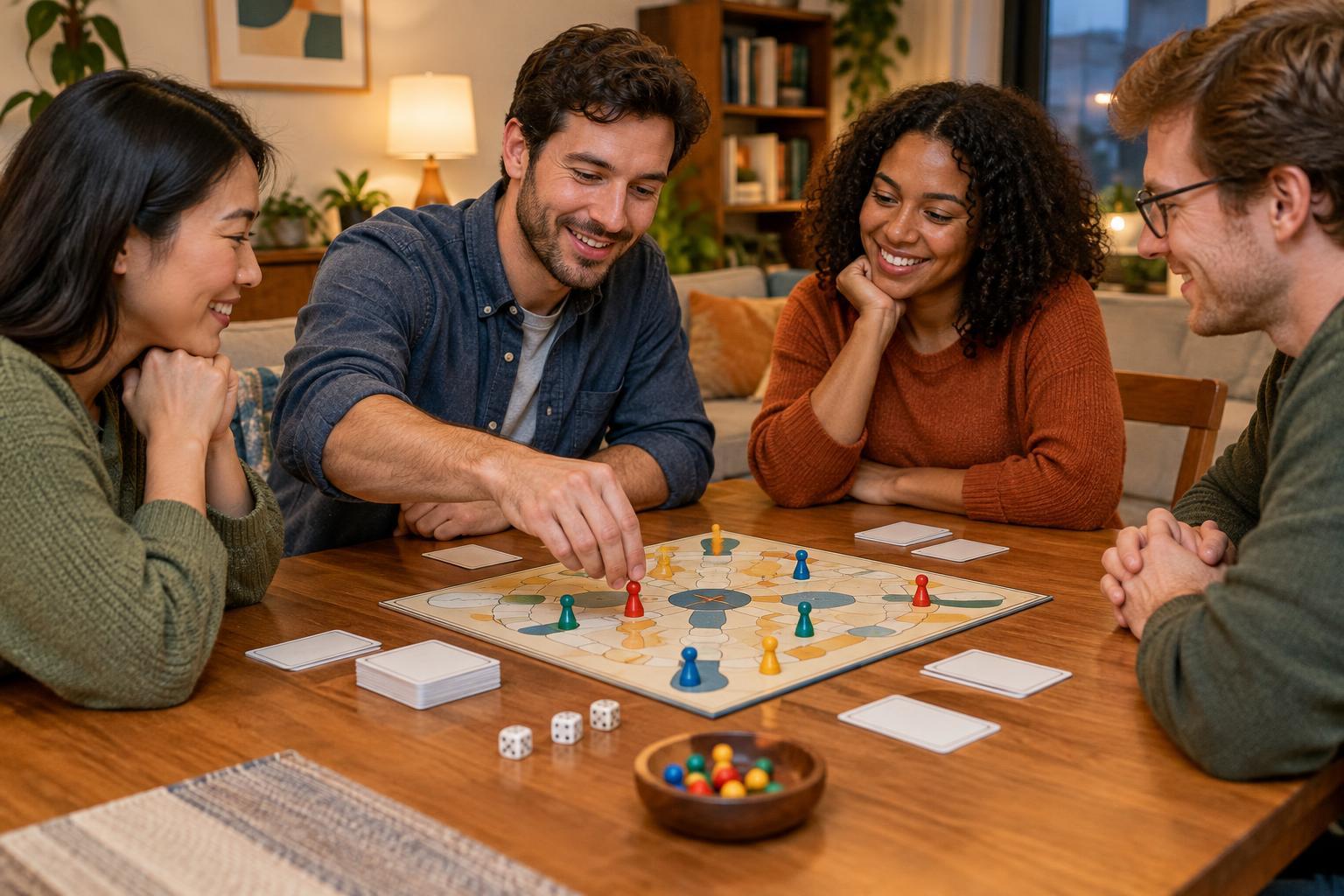
Set out the board, cards, and player materials before the explanation begins. Check that everyone can see shared information from their seat. Keep the rulebook within reach, but decide in advance which parts players need to know before their first turn. If the game is new to the whole group, say so. Guests may feel more comfortable asking questions when no one is expected to play perfectly.
Start with the goal, then show a turn
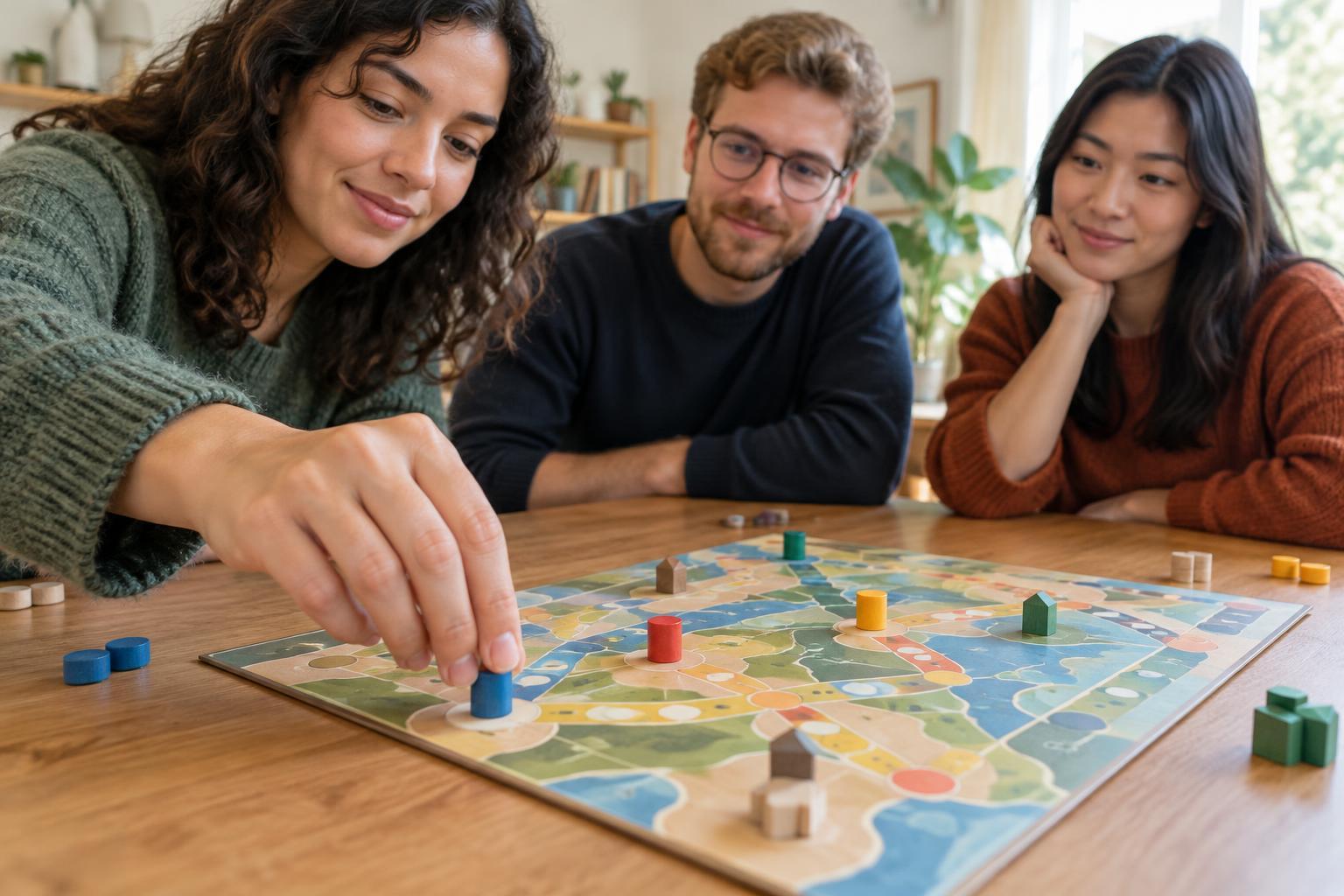
Begin by telling players what they are trying to accomplish and how the game ends. A simple description of the goal gives meaning to the actions you explain next. Point to the actual pieces as you speak: show where players draw cards, place tokens, track progress, or find the information needed to make a choice. Avoid introducing terms before guests can see what those terms describe.
Next, walk through the shape of a typical turn. Explain what a player may do, what happens after their turn, and when the next person acts. A brief example is often clearer than a list of options. You can place a piece or reveal a sample card, then reset it before play begins. Once everyone understands the basic loop, add the most important restriction or unusual rule. Save rare exceptions until they become relevant.
Give players a way to follow along
Long explanations are difficult to hold in memory, especially when guests are meeting a game for the first time. If the box includes player aids, put one where each person can reach it. Otherwise, repeat a short verbal checklist such as “choose an action, resolve its effect, then pass the turn.” Keep shared supplies organized so players can match each step to something on the table.
Before starting, ask what needs clarifying rather than asking whether everyone understands everything. A guest may not know what they have missed until they make a decision. It can help to name one thing players can safely ignore for now. For example, if a special card matters only near the end, point it out and promise to explain it when it appears. This keeps the introduction focused without pretending those rules do not exist.
Use the first round as practice
The first few turns are part of learning, not a test. Invite players to think aloud if they want help, and remind them of available actions without choosing for them. If someone asks a question that affects the whole table, answer it so everyone can hear. If it concerns only that player’s private information, move closer and respond quietly when the game allows it.
Decide how you will handle early mistakes before one happens. For a casual game, the table might allow simple take-backs until the next player acts or new information is revealed. Whatever approach you choose, apply it consistently. If a rulebook question takes longer than expected, make a quick note of the issue and look it up together. A pause is usually less frustrating when players know what is being checked and why.
Adjust the explanation to the room
Not every group wants the same amount of detail. Some guests prefer to hear all the rules before playing; others learn best through a guided turn. Offer a choice when practical, especially for a game with several moving parts. You can also let an experienced player help answer routine questions, provided that person leaves room for newcomers to make their own decisions.
Watch for signs that the explanation has run longer than the group expected. If guests are ready to try a turn, begin and fill in details as needed. If they still look uncertain, demonstrate one more choice instead of repeating the entire rules summary. The aim is not a flawless opening round. It is a table where people understand enough to participate, can ask for help without embarrassment, and have time to enjoy the game itself.