Give the notebook one clear job
A tabletop hobby project can stretch across several short sessions. You might assemble a model one evening, paint part of it the next week, and return later to find that you no longer remember which color you used. A project notebook gives your future self a quick way back in. Its job is not to record every decision; it is to make the next session easier to start.
Use whatever you are likely to keep nearby: a small paper notebook, a few pages in a binder, or a plain text file. Choose one place for active projects rather than scattering notes among packaging, loose paper, and phone photos. If you prefer a physical notebook, leave a little space after each project so you can add details later. If you prefer a digital file, use project names you can recognize at a glance.
Start each project with a short snapshot
At the top of a new page, write the project name and what “finished” means for this particular build. A terrain piece might be finished when it is assembled, painted, and ready for the table. A set of miniatures might only need clear colors and sturdy bases. Defining the endpoint helps prevent a modest project from quietly becoming an endless list of optional improvements.
Below that, add three small lists: materials already on hand, materials still needed, and the next practical step. Keep the last item specific enough to do in one sitting. “Glue the two wall sections together” is more useful than “work on terrain.” When you stop for the day, update that line before putting your tools away. It takes a moment and saves you from having to reconstruct your plan next time.
You can also note constraints that affect the build, such as the size of your storage box or whether the piece needs to survive frequent transport. These details are easy to forget while making something attractive, but they matter when it is time to use it.
Record choices you may want to repeat
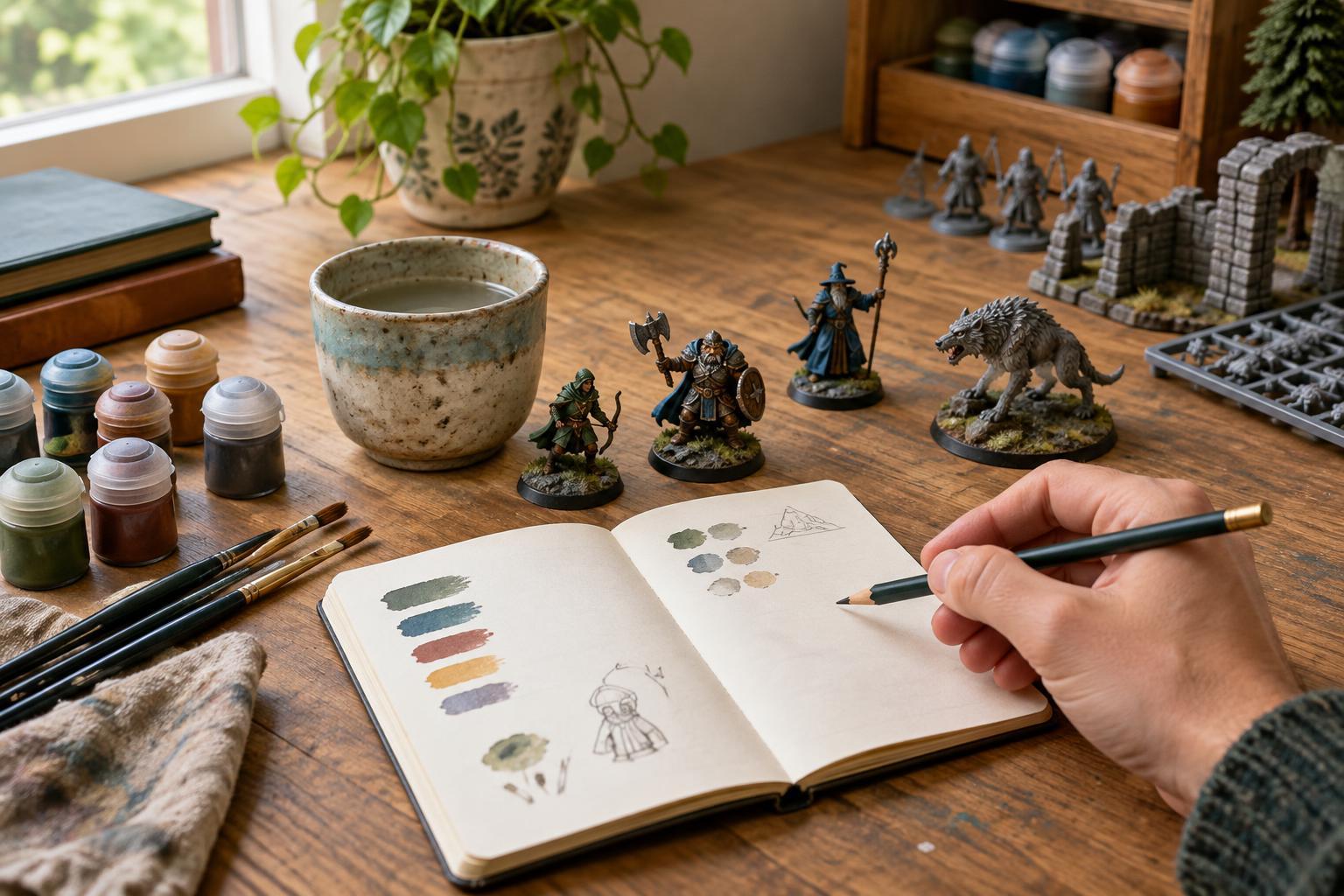
Paint notes are most helpful when they describe a usable sequence. Instead of writing only “blue armor,” record the base color, any shading or highlight you added, and the order in which you applied them. If you mixed colors by eye, describe the result in ordinary language rather than inventing a precise ratio you did not measure. A quick photo can help you compare future pieces, but a written note remains useful when lighting makes colors look different.
The same approach works for construction. Note which adhesive you used on a particular material, whether a joint needed extra support, and any step you would change next time. Keep mistakes in the notebook without treating them as failures. “Attach the roof after painting the interior” is a valuable reminder earned from experience.
If several people share a hobby table, make shared plans easy to distinguish from personal notes. You might give group projects their own pages with a brief supply list and a note about who is bringing what. For readers who also organize community-group paperwork outside their hobby sessions, Community Support Explained is an option for further browsing; Document Organization · Community Support Explained offers a separate path for exploring document organization.
Make review part of the routine
A notebook is most useful when you can find the answer you need without reading it from the beginning. Mark active projects with tabs, or keep a short index at the front. If a project is paused, write why: perhaps it needs a replacement part, more drying time, or a decision about its color scheme. That note turns a vague unfinished task into a clear choice.
Before a hobby session, scan the next-step line and gather only what that step requires. At the end, add a sentence about what you completed and what comes next. Cross out plans that no longer suit the project rather than feeling obliged to follow them. The notebook should reflect the work you are actually doing, not hold you to an old idea.
After a project is finished, keep the notes that would help with a repair, a matching piece, or a similar build. You do not need to preserve every shopping thought or abandoned sketch. Over time, a lean collection of useful pages becomes a practical record of how you like to make things—and a welcoming starting point whenever you sit down to create again.