Mistake 1: Explaining the theme before the goal
A homemade game may begin with a vivid setting: players are explorers, gardeners or inventors. That can make the game inviting, but a long introduction should not delay the information players need most. Early in the rules, say what players are trying to accomplish and what ends the game. A reader should be able to answer two questions quickly: “What am I working toward?” and “How will we know who won?”
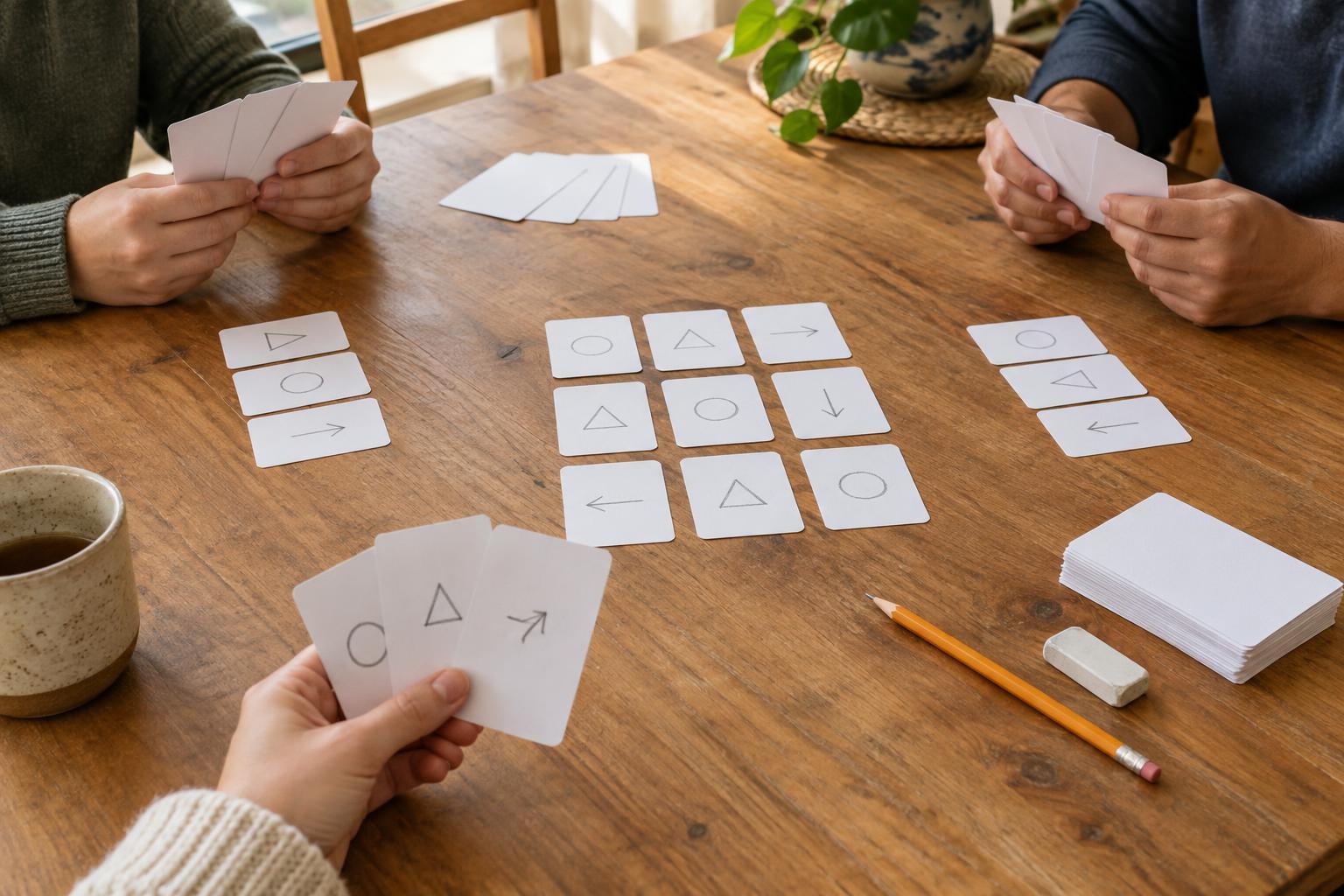
Keep the first explanation simple. For example: “Players collect sets of three matching cards. The game ends when the draw pile is empty, and the player with the most complete sets wins.” Details about special cards can come later. If your game is cooperative or has no winner, state its shared objective and ending just as clearly.
Mistake 2: Leaving setup and turn order to guesswork
Designers often know their own game so well that they skip small steps. They may forget to say how many cards each player receives, whether used pieces return to a supply, or who takes the first turn. New players cannot fill those gaps reliably. Write setup as a sequence that someone can follow while arranging the game, then describe a complete ordinary turn from beginning to end.
Use a consistent order for actions. If a turn involves drawing, choosing an action and discarding, list those steps in that order. Say whether an action is required or optional and whether a player may repeat it. A short example turn can help when choices interact, but it should illustrate the rule rather than replace it.
Mistake 3: Using familiar words with unclear meanings
Words such as “round,” “turn,” “play,” and “discard” may sound obvious, yet players can interpret them differently. A turn might belong to one player, while a round ends only after everyone has acted. If both terms appear in your rules, define them before they affect a decision. Give the same action the same name throughout; changing from “trade” to “swap” halfway through can make readers wonder whether you mean two different actions.
Be especially careful with quantities and timing. “Take a card when you score” raises questions: one card per point or one per scoring action? Before or after checking the end condition? A more precise sentence might be: “After resolving a scoring action, draw one card, then check whether the game has ended.” Clarity need not make the rules formal or lengthy; it helps players spend less time debating the text.
Mistake 4: Ignoring predictable edge cases
You do not need a rule for every imaginable situation, but common interruptions deserve answers. What happens if the draw pile runs out during a turn? Can a player take an action without enough pieces to pay its cost? What if two players tie? These questions are easiest to handle while writing the relevant section, rather than in a distant list of exceptions.
Aim for rules that work together. If a player must draw but no cards remain, decide whether they skip the draw, reshuffle a discard pile or trigger the end of the game. Then check whether that choice conflicts with your stated ending. When an unusual situation has a simple governing principle, explain the principle once instead of adding several nearly identical exceptions.
Mistake 5: Testing the game but not the written rules
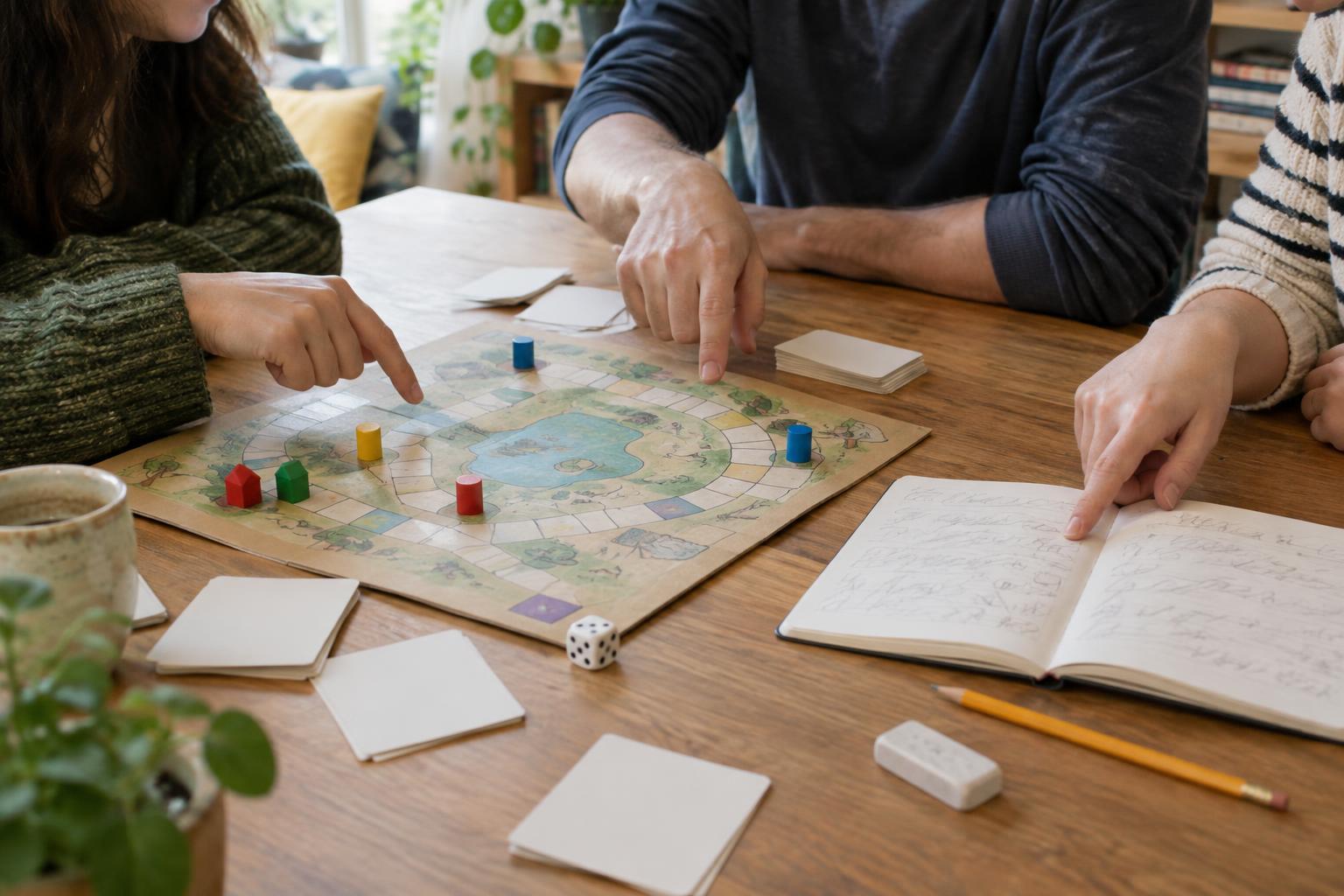
A fun playtest does not always prove that the instructions work. If the designer teaches the game aloud, players may never need to read the draft. For a clearer test, give the rules and materials to people who have not played before. Let them set up and begin without coaching, then note where they pause, disagree or ask a question. Their confusion is useful feedback, not a failure on their part.
Revise the rules after each test, starting with problems that prevent play. Put essential instructions where readers need them, and remove explanations that repeat the same point without adding clarity. Finally, read through the revised draft while pretending you know nothing about the game. If it tells you how to set up, take a turn and recognize the ending without relying on the designer, it is ready for another table.