Start with one decision players will enjoy making
Before writing dozens of cards, decide what players will do on a typical turn. Will they choose which card to play now and which to save? Combine cards to build something? Guess what another player is planning? A clear central decision gives the game its shape. Write it in one sentence, such as: “Players choose whether to use a card for its immediate effect or keep it to complete a set.”
Next, give the game a simple objective. Players might collect a certain number of symbols, complete shared challenges, or earn points over a fixed number of rounds. Choose a theme if it helps you invent actions, but do not let the theme hide unclear rules. At this stage, “collect supplies for a garden” is enough; you do not need names and illustrations for every plant.
Make a small, readable first deck
Index cards are useful because you can write on them, cross things out, and replace them quickly. Cut them in half if you want cards that are easier to hold, and keep the pieces roughly the same size so players cannot identify them from their backs. Pencil is especially handy while the rules are changing. Number the cards in a corner so you can refer to specific ones in your notes.
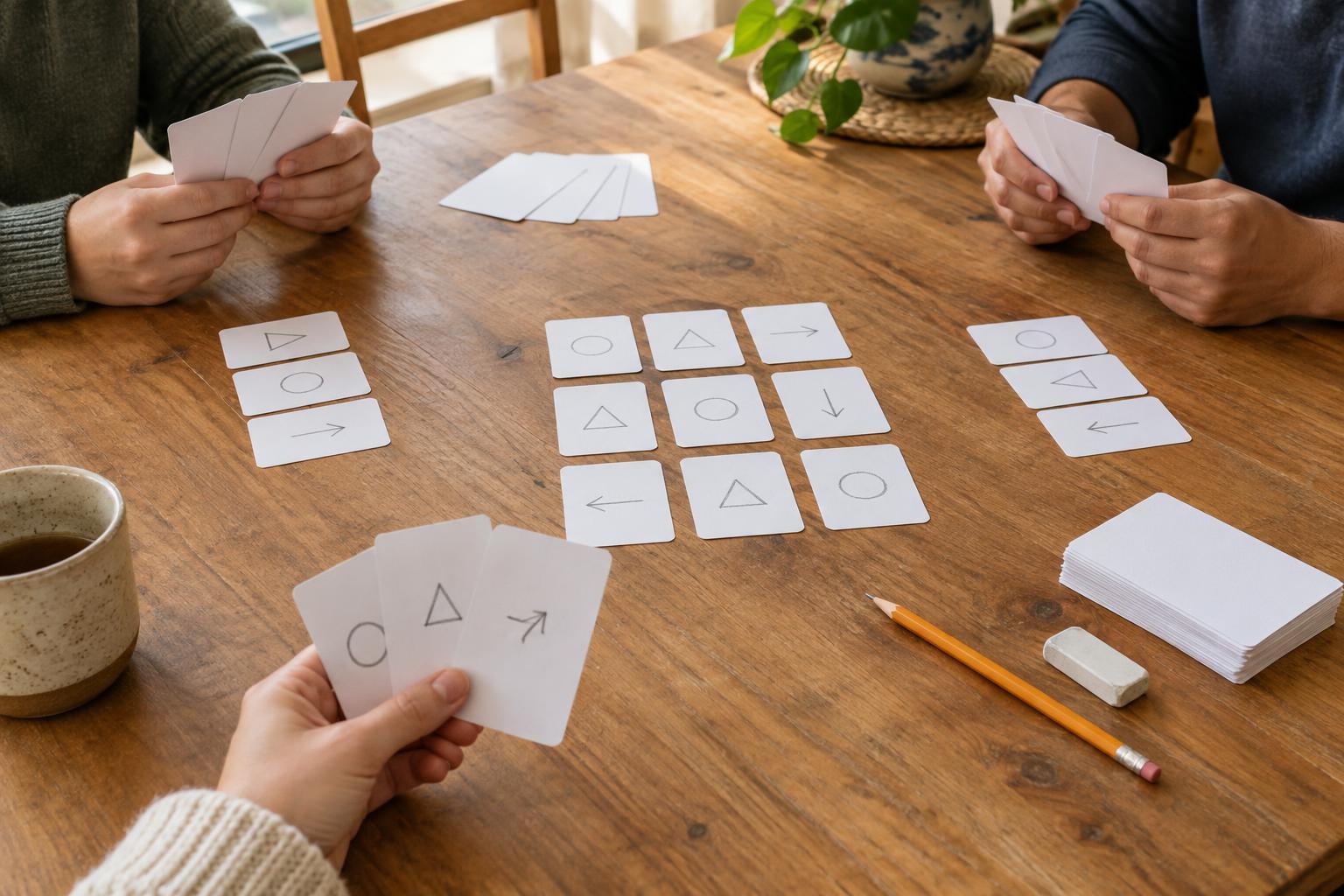
Begin with a modest deck containing only a few kinds of cards. For example, a set-collection game could use three types of resource card and one type of action card. Give each type a large label or symbol at the top, then put any effect in a short sentence beneath it. Consistent wording matters more than attractive lettering: if two cards perform the same action, describe that action the same way on both.
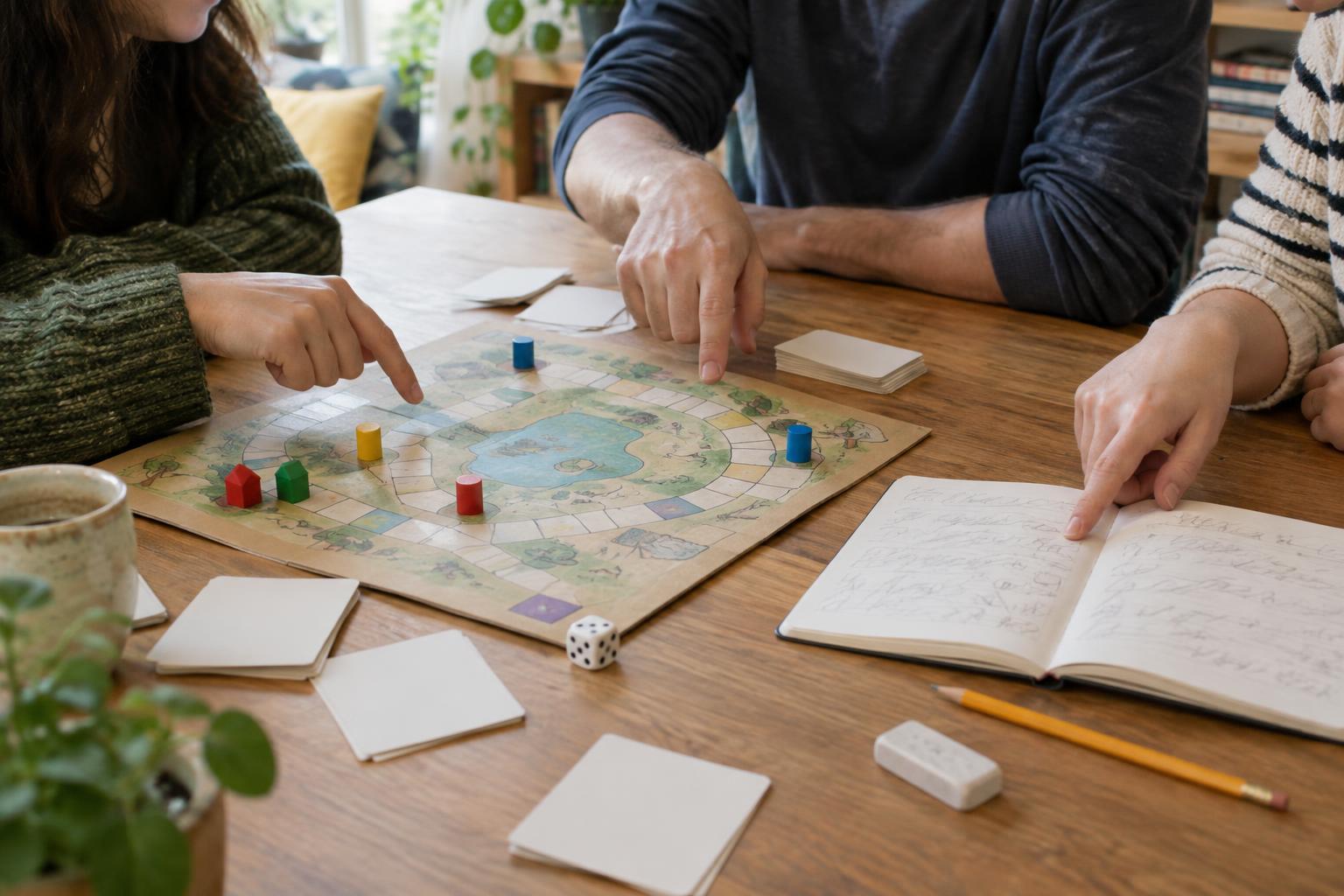
Make only enough cards to complete a short game. You can add variety later, once you know whether the central decision is interesting. If your design also needs a discard pile, score track, or shared objective, label spare index cards for those jobs. Household objects can stand in for tokens, but write down what each object represents.
Write the minimum rules needed to begin
A prototype needs a playable loop, not a comprehensive rulebook. On one index card, record how to set up, what a player does on a turn, when a round ends, and how someone wins. Specify practical details that are easy to overlook: starting hand size, whether players draw before or after playing, how many cards they may play, and what happens when the deck runs out.
Try to make the first turn possible without an explanation from the designer. If a card says “trade a card,” clarify who chooses the cards and whether trading is optional. If a rule has an exception, ask whether the game would work without it for now. Fewer exceptions make early tests easier to interpret. They also leave more room for players to notice the choice you actually want to test.
Test the game, not your ability to explain it
Play a complete round by yourself first, taking turns for every player. This will not tell you whether the game is fun socially, but it can reveal impossible turns, missing information, and endings that never arrive. Then invite a few people to try it. Give them the written rules and resist explaining a confusing card immediately. Their questions show where the prototype needs clearer language.
During play, watch for moments when players pause, repeat the same safe move, or have no meaningful options. Notice whether the game reaches its ending before its main idea has time to matter—or continues after the interesting choices are over. Ask specific questions afterward: “Which turn gave you a difficult choice?” and “Was there a card you never wanted to use?” These are easier to act on than a general verdict about whether the game was good.
Revise one problem at a time
After each test, write down what happened before rewriting the deck. Separate a rules problem from a balance problem: players may ignore a card because its wording is unclear, not because its effect is weak. Pick the issue that most disrupted play and change only a small part of the design. You might shorten a turn, adjust how often a card appears, or make the winning condition easier to track.
Keep old versions in an envelope rather than erasing every card. Mark each new version with a simple label so you know which rules were used in a particular test. Once repeated plays produce understandable turns and interesting choices, you can experiment with more card types, theme details, or artwork. The index-card prototype has done its job when you can explain what makes the game enjoyable—and can see that idea working at the table.