Choose one thing to learn
A playtest is not a performance or a final exam. It is a way to find out what happens when other people encounter your game. Before inviting anyone, write down one or two questions you want the session to answer. For example: Can players take a first turn without help? Do they have interesting choices near the end? Does a round fit the time available for your game night? Specific questions give you something more useful to look for than a general verdict of “good” or “bad.”
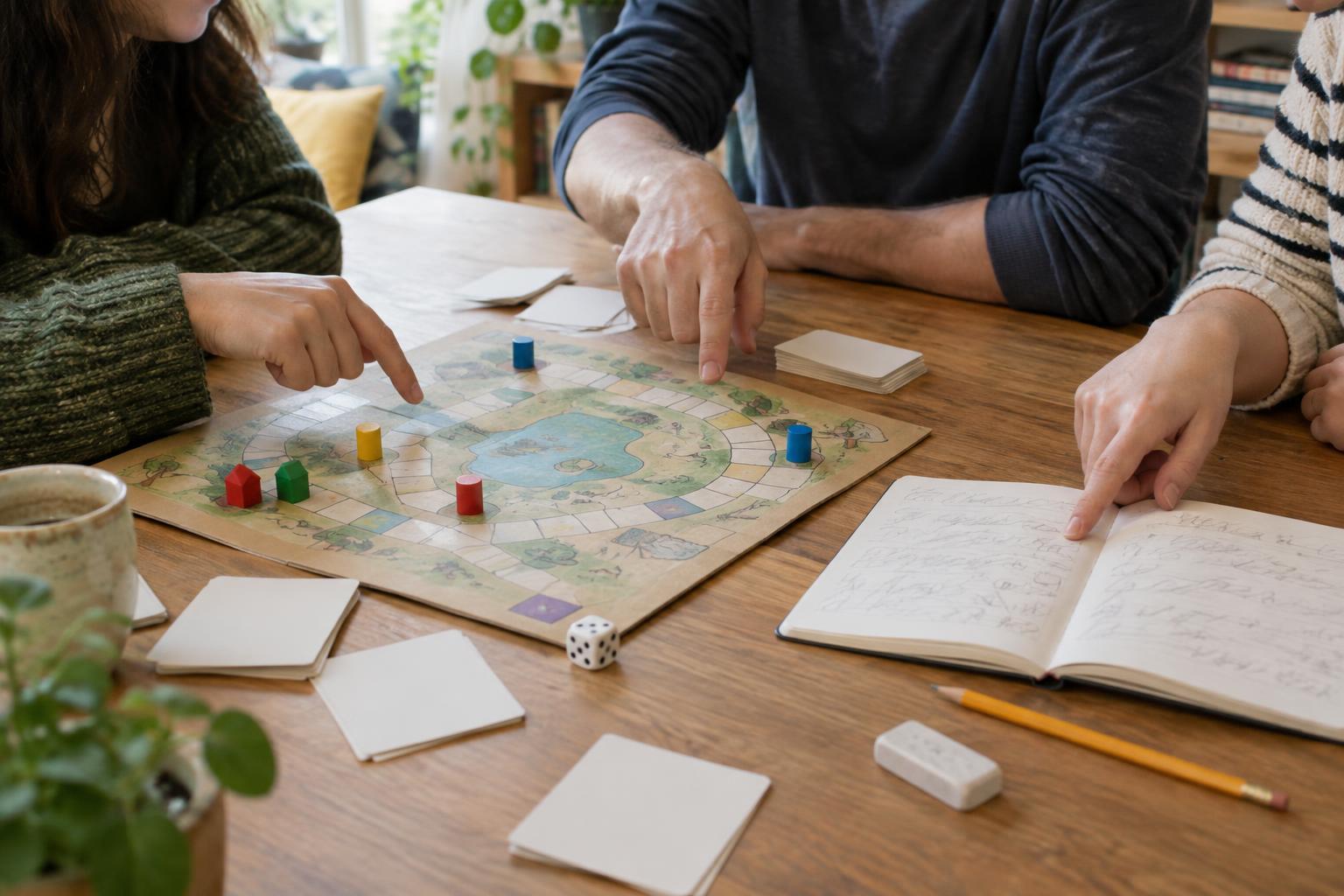
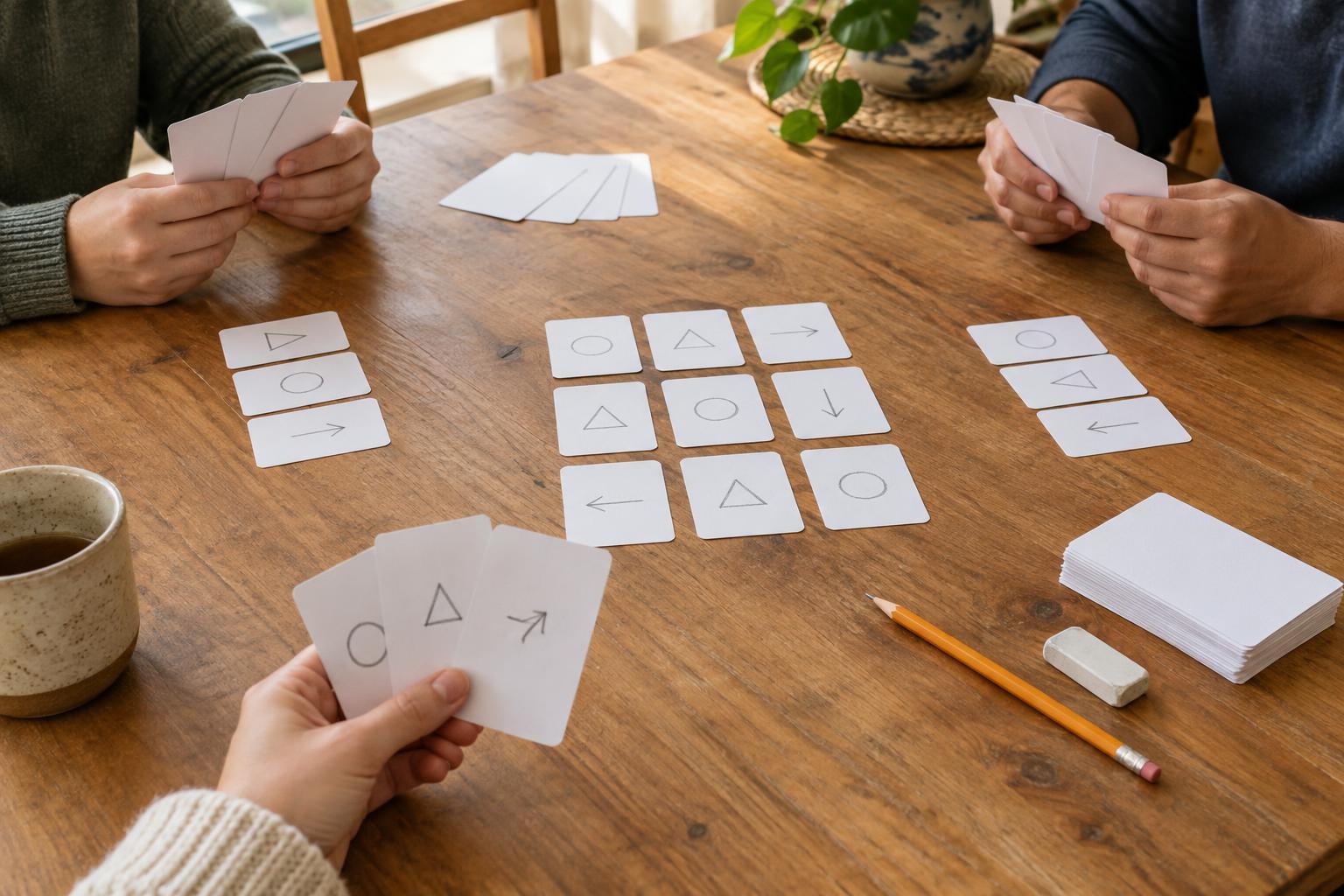
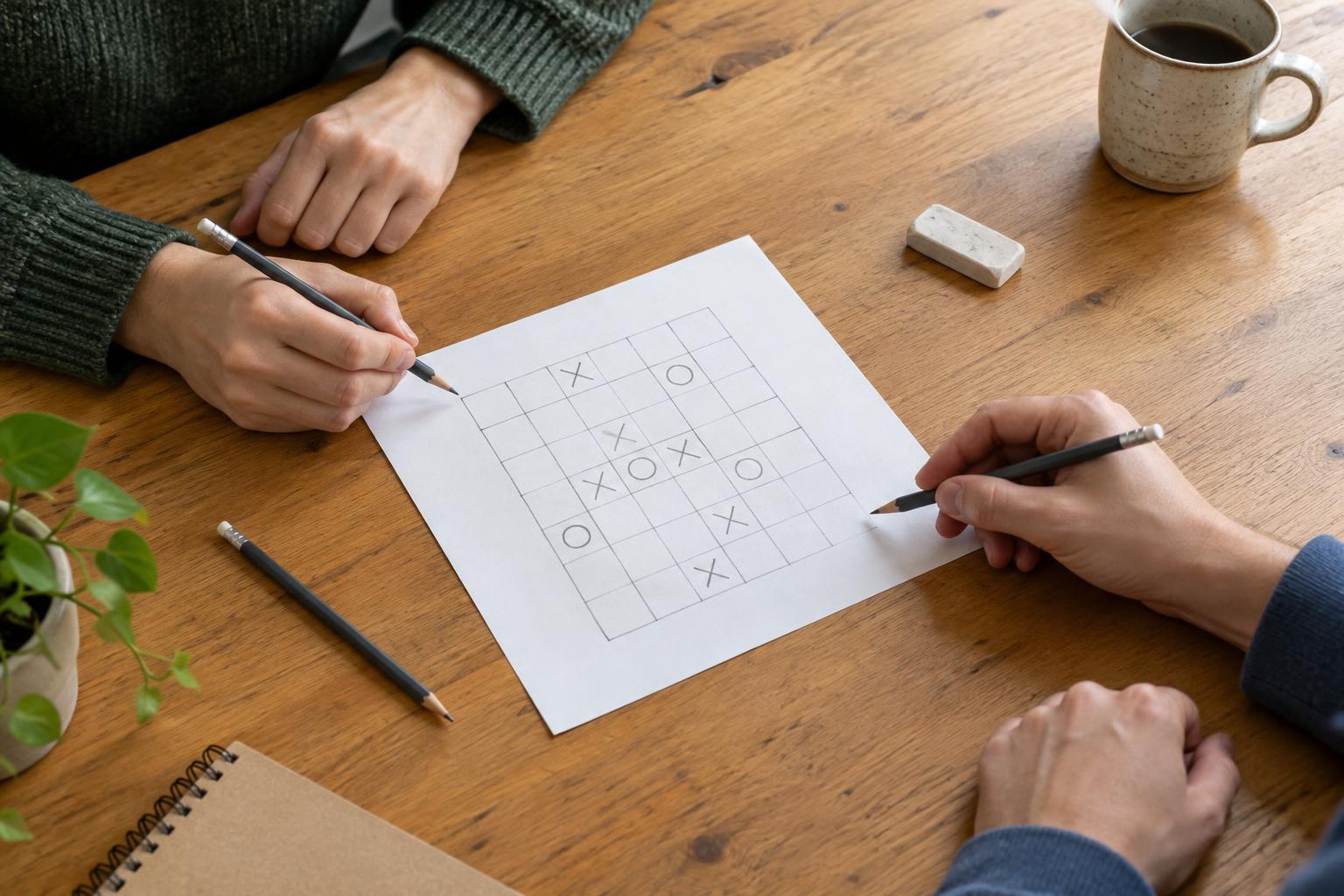
Make the simplest version that can test those questions. Handwritten cards, paper tokens, and a rough board are enough if players can tell the pieces apart. Check that you have all the materials needed to finish a game, including any reminder cards or scoring sheet. If you already know a rule is temporary, mark it in your own notes, but avoid apologizing for every unfinished detail. A rough prototype helps players focus on what they do, not how polished the game looks.
Set up a test that resembles real play
Choose testers who are willing to try an unfinished game. Friends can be helpful, especially for early tests, but familiarity with your ideas may make them unusually good at guessing what you mean. If possible, try the game with someone who has not heard you describe it before. Tell everyone that you are testing the game, not their skill, and that confusion is useful information.
Give players the materials and the same introduction you would want a new group to receive. For an early test, you may need to teach the rules aloud. Later, try handing over a short rules sheet and watching where players get stuck. Either approach is useful, but note which one you used: a game that works with its creator at the table may still need clearer written instructions. If the game is long, decide in advance whether you are testing a full session or a particular phase.
Observe without steering every decision
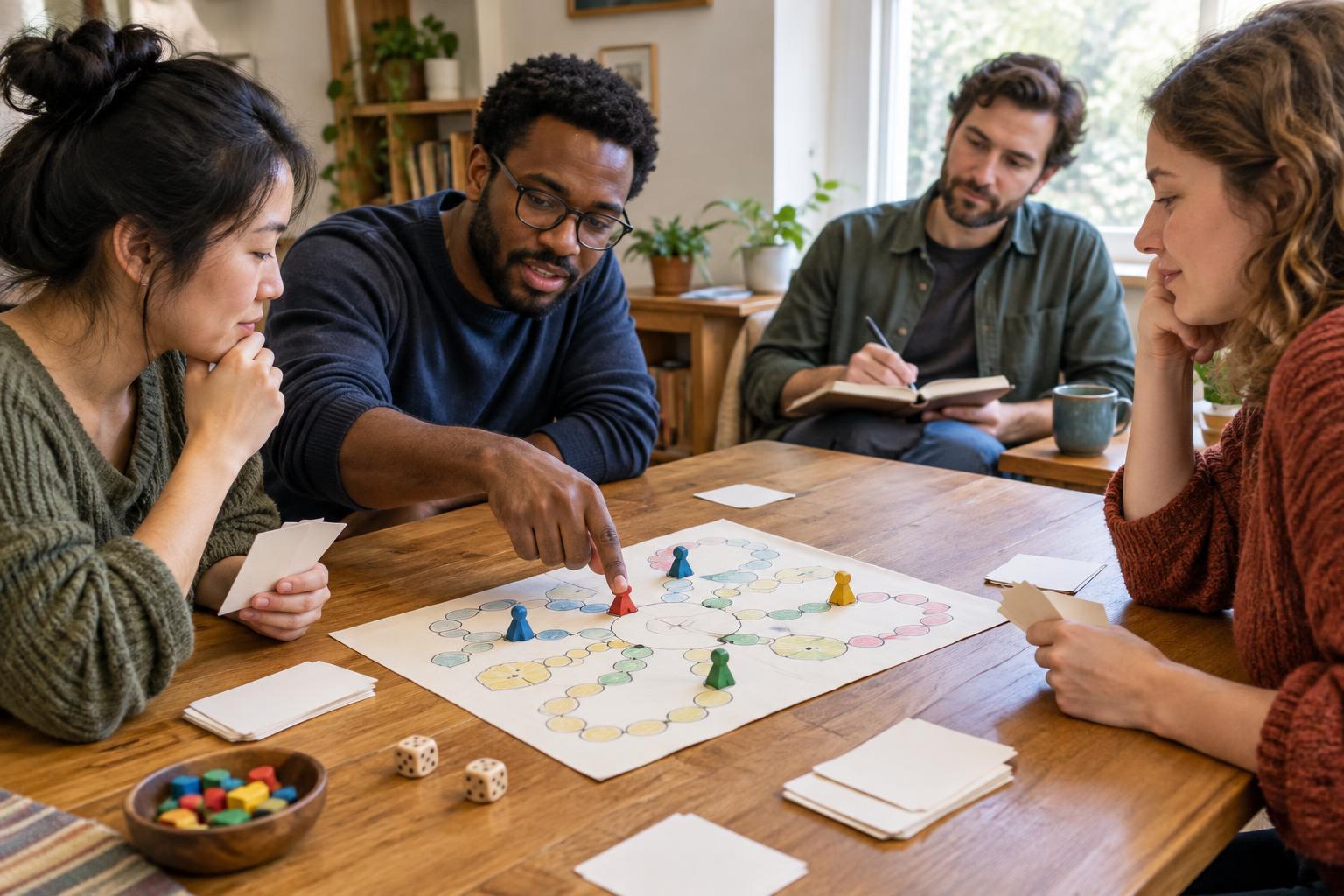
During play, record actions and questions rather than immediately interpreting them. “Two players asked when they could draw a card” is a more useful note than “the draw rule is terrible.” Watch for pauses, repeated rule checks, unexpected strategies, and moments when players seem eager for their next turn. Also note what works. A rule that produces lively decisions may be worth keeping even if other parts need revision.
It can be tempting to explain the intention behind each rule or suggest a better move. Resist unless a player cannot continue. When you do step in, note why. Your assistance may be part of what made the session run smoothly. If a rule breaks the game or causes a long stall, it is fine to make a temporary ruling so play can continue. Say what the ruling is and record it separately from the printed rules. This lets you learn from the rest of the session without pretending the problem did not occur.
Ask for examples, not just ratings
After the game, let players describe their experience before explaining your design goals. Start with open questions: What felt clear? Where did you hesitate? Which decision was most interesting? Was there a point when you felt you had little to do? Ask what happened in a particular turn if a comment is vague. A player may suggest a new rule when the underlying issue is actually an unclear goal or a slow opening.
Thank testers for candid reactions, including feedback you disagree with. You do not have to accept every proposed fix. Players are well placed to describe what they experienced, but different players may prefer different kinds of games. Write down their comments in their own terms where you can, and keep them separate from your ideas for solutions. This makes it easier to spot a recurring problem without committing to the first remedy suggested.
Turn notes into the next version
Soon after the session, sort your notes into three groups: problems that stopped play, issues that weakened the experience, and details to revisit later. Pick a small number of changes for the next prototype. If turns dragged, for instance, you might shorten a phase or reduce the number of options available at once. Changing both the turn structure and the win condition in the same revision makes it harder to tell what helped.
Keep a brief change log with the rule you altered and the reason you altered it. Then test again, paying particular attention to whether the original problem improved and whether the change created a new one. You can also leave a surprising player strategy alone for a round: it may reveal a more interesting game than the one you planned. Playtesting is a cycle of making, observing, and adjusting. The aim is not to remove every disagreement, but to make the experience you want players to have easier to find.