Why a stuck grid invites mistakes
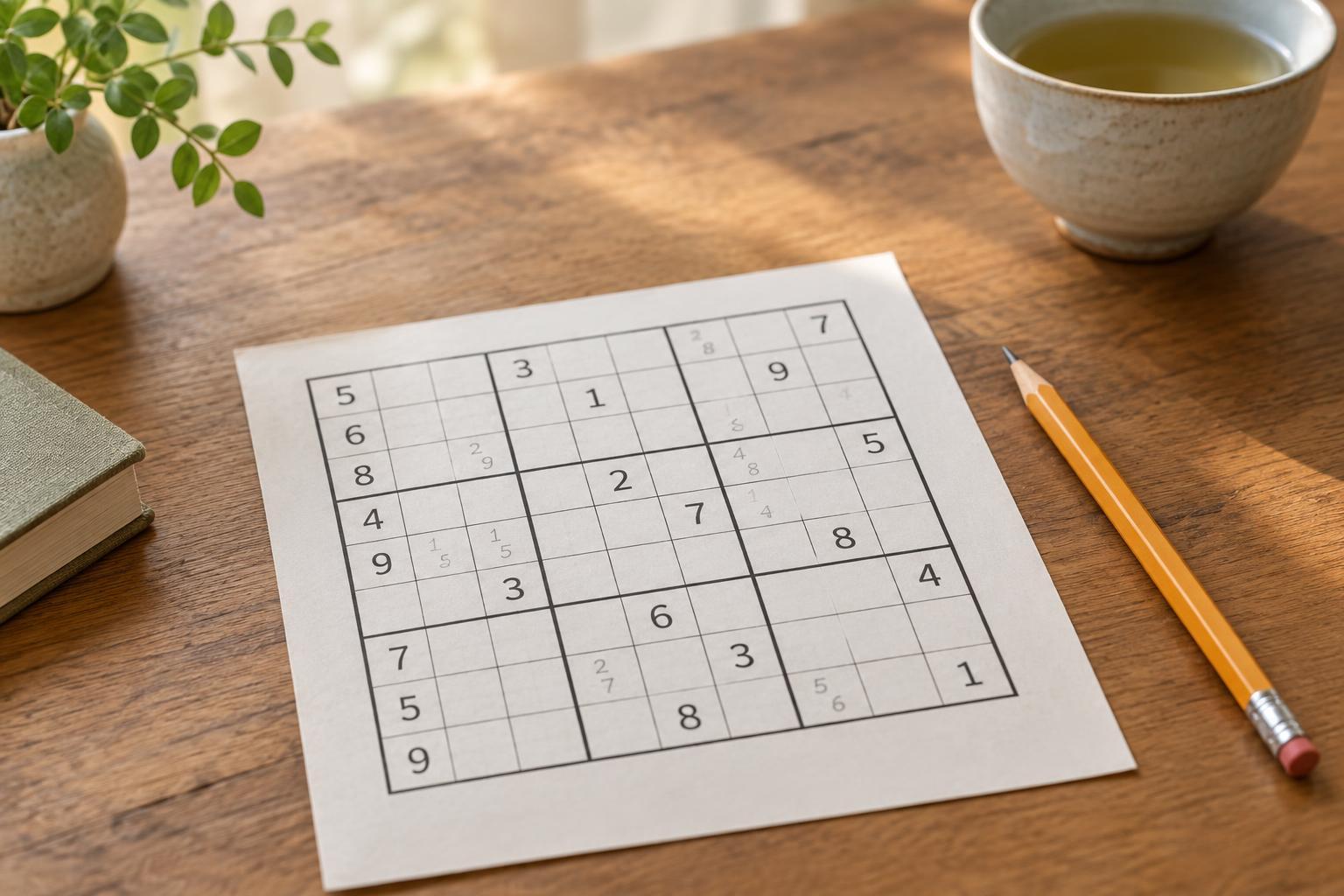
A Sudoku puzzle asks you to place the digits 1 through 9 so that each appears once in every row, column and 3-by-3 box. Early moves often feel obvious: a nearly full row has one empty cell, or a box has only one place left for a digit. Later, the grid may look unchanged after several scans. That is when two habits can cause trouble: trying a number without enough reason and overlooking a number that is still possible.
A candidate is a digit that has not been ruled out for an empty cell by its row, column or box. Candidates are possibilities, not promises. Treating one as an answer can lead to a contradiction much later; failing to record one can hide the next logical move. A slower, consistent check is often more useful than a faster search for an exciting move.
Mistake one: guessing before checking all three constraints
Suppose a cell could contain either 4 or 7. Choosing 4 because it looks more likely is a guess unless another relationship in the grid supports it. Even if the choice happens to be right, it does not show you why it is right. If it is wrong, several later entries may depend on it, making the original mistake hard to find.
Before filling a cell, check its row, its column and its box. Ask two separate questions: What digits could go in this cell? Where else could this particular digit go in the row, column or box? The first question may reveal a cell with only one candidate, often called a naked single. The second may reveal a digit with only one available location in a unit, often called a hidden single. In a hidden single, the cell may still show several candidates, but the digit has nowhere else to go in that row, column or box.
When neither check produces a certain entry, leave the cell empty. You have not failed to make progress; you have established what is not yet known. Shift to another part of the grid or review your notes rather than turning a possibility into a placement.
Mistake two: missing or losing candidates
A missing candidate can be as disruptive as an incorrect filled digit. Imagine overlooking 6 as a possibility in one cell of a box. If you then see 6 marked in only one other cell, you might place it there as a supposed hidden single. The move seems logical, but its starting list was incomplete.
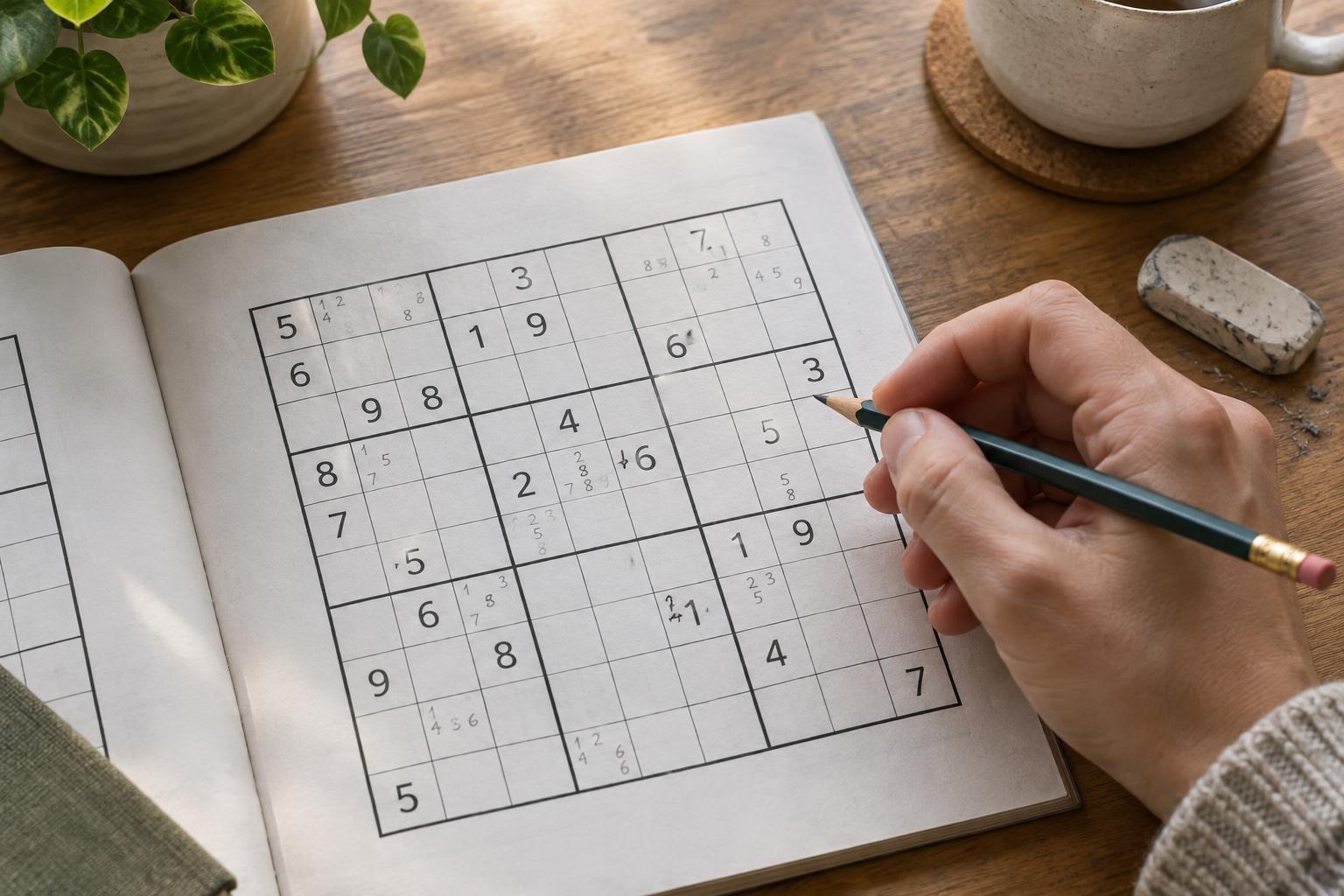
Build candidate lists systematically. For each empty cell, identify the missing digits in its row, then cross out any that already appear in its column or box. If you prefer fewer pencil marks, you can instead track one digit at a time across each box, noting every available location. Either method can work; the important part is using the same method throughout the puzzle.
After placing a digit, update affected cells in the same row, column and box. Do not erase that digit from unrelated cells. An outdated mark creates visual clutter, while an accidentally erased mark can suggest a false conclusion. If you use a paper puzzle, light pencil marks leave room for corrections; in a digital grid, take care to distinguish notes from final entries.
Use a repeatable scan when progress stops
A useful reset begins with the areas containing the most filled cells. Scan each row, column and box for missing digits, then check whether any empty cell has only one candidate. Next, take each missing digit in turn and look for a unit where it has only one possible location. These two passes catch many opportunities that are easy to miss when your eyes jump randomly around the grid.
If you still find no entry, compare candidates within a single unit. For example, if two cells in one row can contain only 2 and 8, those digits must occupy those two cells in some order. You can remove 2 and 8 from the other empty cells in that row. This does not tell you which of the pair is which, but it may uncover a single elsewhere. Check that both cells truly have no other candidates before using the deduction.
Pause after each confirmed placement and scan the affected row, column and box again. One entry can change several candidate lists. A short cycle of placing, updating and rescanning is easier to verify than filling multiple cells from memory.
Recover calmly from a contradiction
If a row contains the same digit twice, or an empty cell has no possible candidates, stop adding numbers. The contradiction tells you something is wrong, but it may not identify the exact step. First check recent final entries against their rows, columns and boxes. Then inspect the candidate notes that justified those entries, especially any claimed hidden single.
For a difficult puzzle, you may eventually choose to test an assumption. Keep it separate from confirmed entries, record the cell and candidate you are testing, and be prepared to undo every move that follows from it. That makes the experiment traceable rather than a chain of unmarked guesses. For everyday solving, the better first move is usually to audit your candidates: a small missed possibility can be the reason the whole grid appears stuck.