What makes play creative?
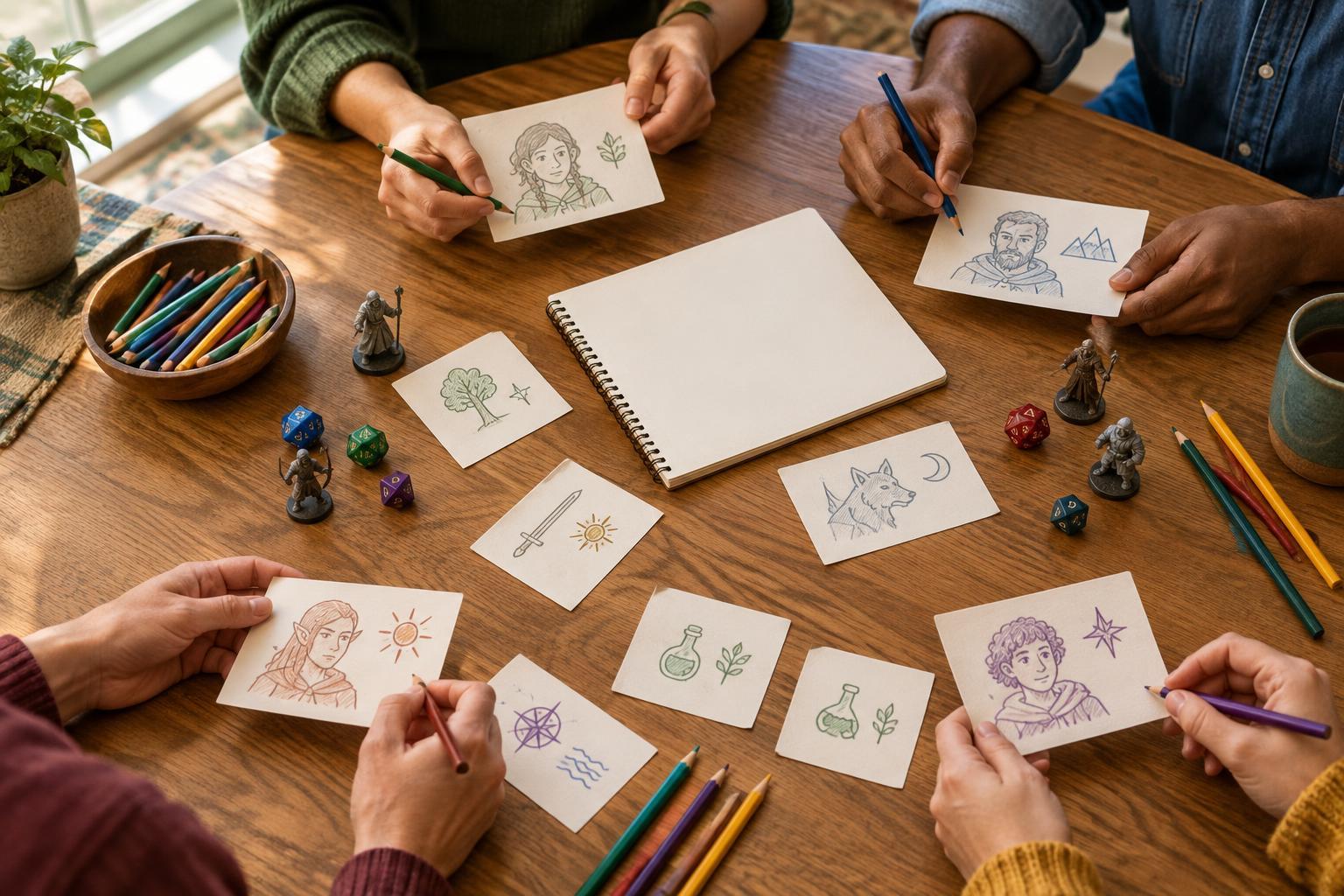
Creative play begins when participants make something up as they go: a character, a strange invention, a story, a drawing or a new use for familiar objects. The goal is not to produce a polished result. It is to respond to an idea and see where the next choice leads. A few sheets of paper and a pencil can be enough, though cards, household objects or game pieces can also provide inspiration.
This freedom can feel daunting at first. A useful starting point is a small constraint, such as “invent a tool for a tiny explorer” or “describe a shop that opens only at night.” The prompt gives everyone a place to begin without deciding what the finished creation must look like. Answers can be funny, thoughtful, messy or all three.
Use prompts that invite more than one answer
A good beginner prompt is specific enough to spark an image and open enough to allow different responses. Try pairing two familiar things in an unexpected way: a library and a garden, a backpack and a weather forecast, or a board game and a museum. Ask participants to name the combination, explain one feature and add a small problem it might solve. There is no need to fill in every detail.
Questions can keep an idea moving when someone gets stuck. What would a visitor notice first? Who uses this object? What goes wrong on a busy day? Offer one question at a time rather than asking for a complete backstory. If a prompt falls flat, replace it without treating that as a failure. The activity is working when people have something they want to add, not when they follow the original idea exactly.
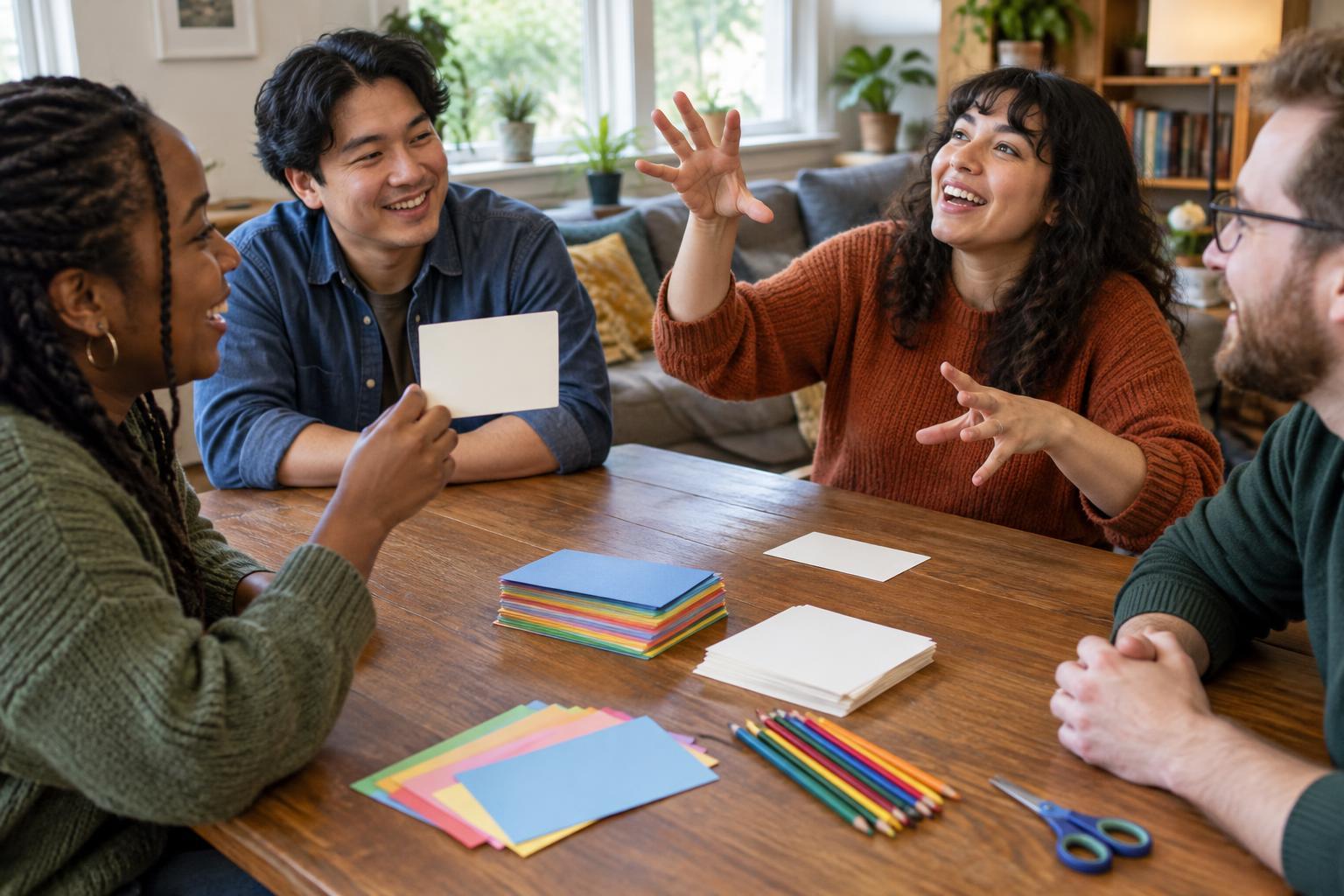
For a group, write several prompts on slips of paper and let each person choose one or combine two. For solo play, set a short timer and record whatever comes to mind before editing. In either case, leaving a few details unexplained gives the next person—or your future self—room to contribute.
Keep the rules light and clear
Rules can help creative play feel safe and approachable. Agree on a turn order if people are building one shared idea, and decide whether a contribution may change something already established. A beginner-friendly rule is “add before you revise”: respond to the previous idea with a new detail before suggesting a change. This keeps the activity moving while still allowing the group to shape its direction.
Set boundaries as well as mechanics. Let participants pass on a turn, choose a different prompt or say that a topic is off-limits. If people have different comfort levels with drawing or speaking aloud, offer several ways to take part. Someone might sketch a setting, write a sentence, arrange objects on the table or simply name a character. These choices make the session more welcoming without requiring everyone to contribute in the same way.
Avoid scoring the results unless the group genuinely wants a playful challenge. A timer or a limit of three sentences can create momentum, but it should be easy to relax that limit when an idea becomes interesting. The rules are tools for getting started, not tests to pass.
Try three open-ended activities
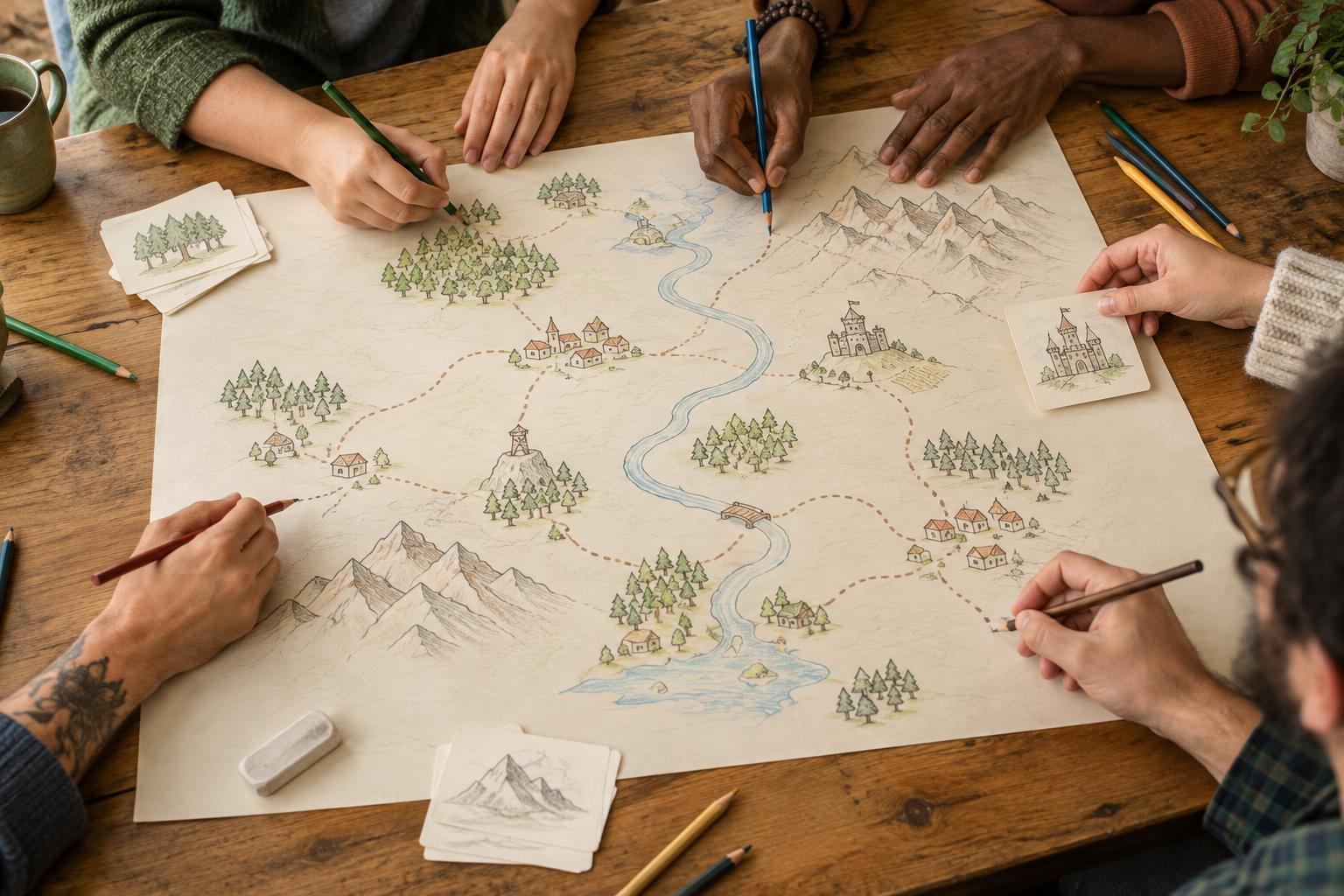
In a shared map, draw a rough outline of an imaginary place. Each person adds one location and a short description: a bridge that hums, a bakery beside a lighthouse or a path that disappears in the rain. On later turns, connect two locations with a route or invent a reason someone might travel between them. Stop whenever the map has enough detail to suggest a story.
For an object exchange, place a few ordinary items or pictures in the middle of the table. Each participant chooses one and gives it an unexpected purpose in an invented setting. The next person adds a user, a drawback or a surprising instruction. A spoon might become a musical key; a button might mark the entrance to a miniature town. The aim is to build on possibilities, not to guess an intended answer.
For a story relay, begin with a simple situation: “A parcel arrives with no name on it.” Players take turns adding one or two sentences. Before starting, agree on a tone, such as cozy mystery or gentle comedy, so contributions fit together more easily. If the story wanders, pause and ask what the characters want next. There is no need to force an ending; an intriguing scene can be a satisfying stopping point.
Make room for the next idea
End a session by inviting each person to share a detail they enjoyed, rather than judging whose contribution was best. You can save a map, photograph an arrangement of objects or jot down a favorite prompt for another day. You can also let the creations disappear when play is over. Keeping a record is optional, not a measure of success.
Creative play becomes easier with practice because participants learn that an unfinished idea is an invitation. Start small, use a prompt to get moving and adjust the rules to suit the people at the table. The most useful question is often simply, “What could happen next?”