Start with the win condition
Before learning how to score, find out what winning means in the particular game. Some games end when a player reaches a target number of points. Others finish after a set number of rounds, when a supply runs out, or when someone completes an objective. The winner might be the player with the highest score at that point, but a game can instead reward the first person to meet a condition. The rulebook’s victory section is the best place to settle this question.
Next, identify what players are trying to do during a turn. A game may award points for collecting sets, placing pieces in certain patterns, completing tasks, or controlling areas. These actions can look similar at the table while having different scoring rules. For example, collecting three matching tiles might earn a fixed bonus, while connecting three tiles might score according to the size of the completed shape. Knowing the exact trigger helps players make meaningful choices.
Recognize the main types of points
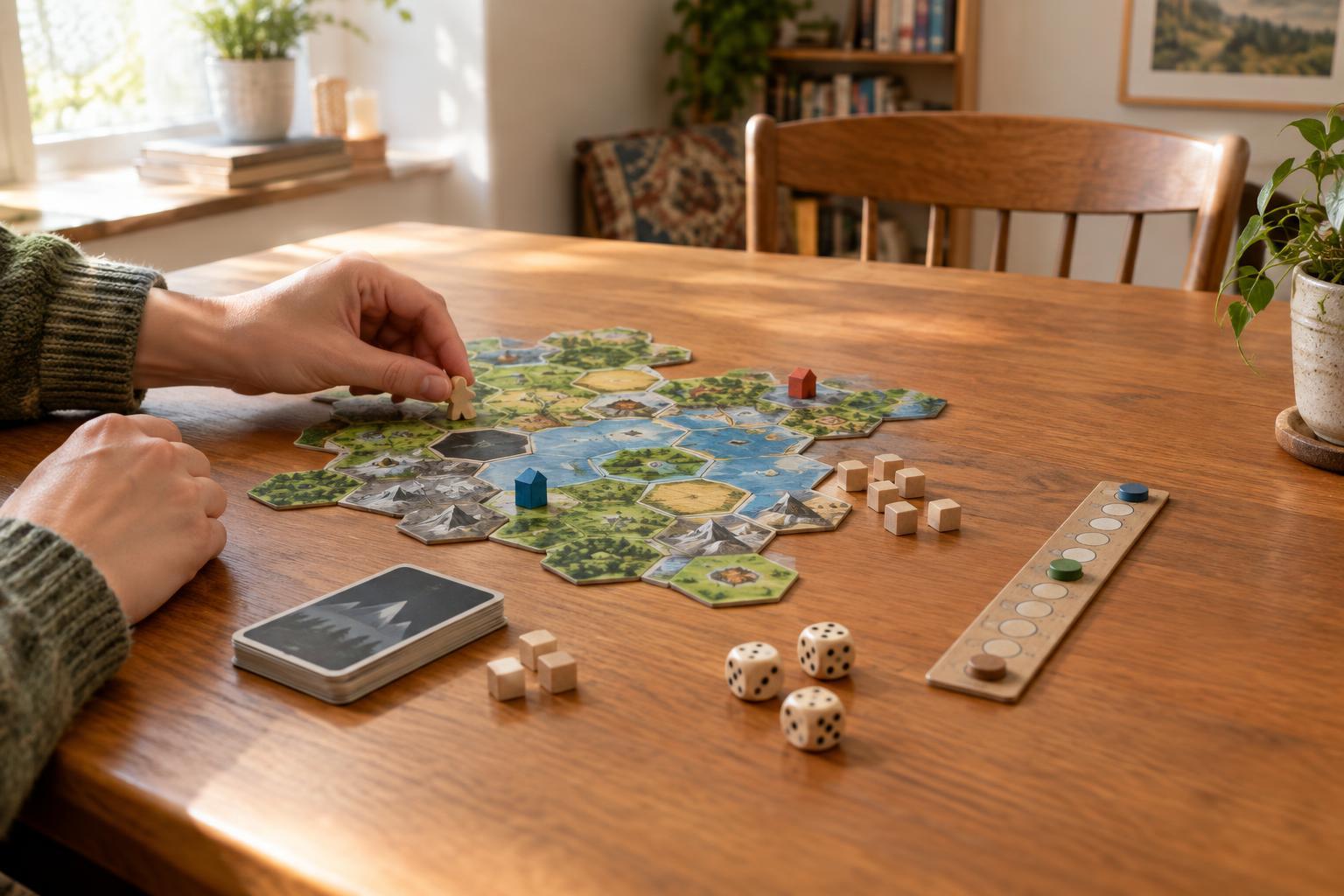
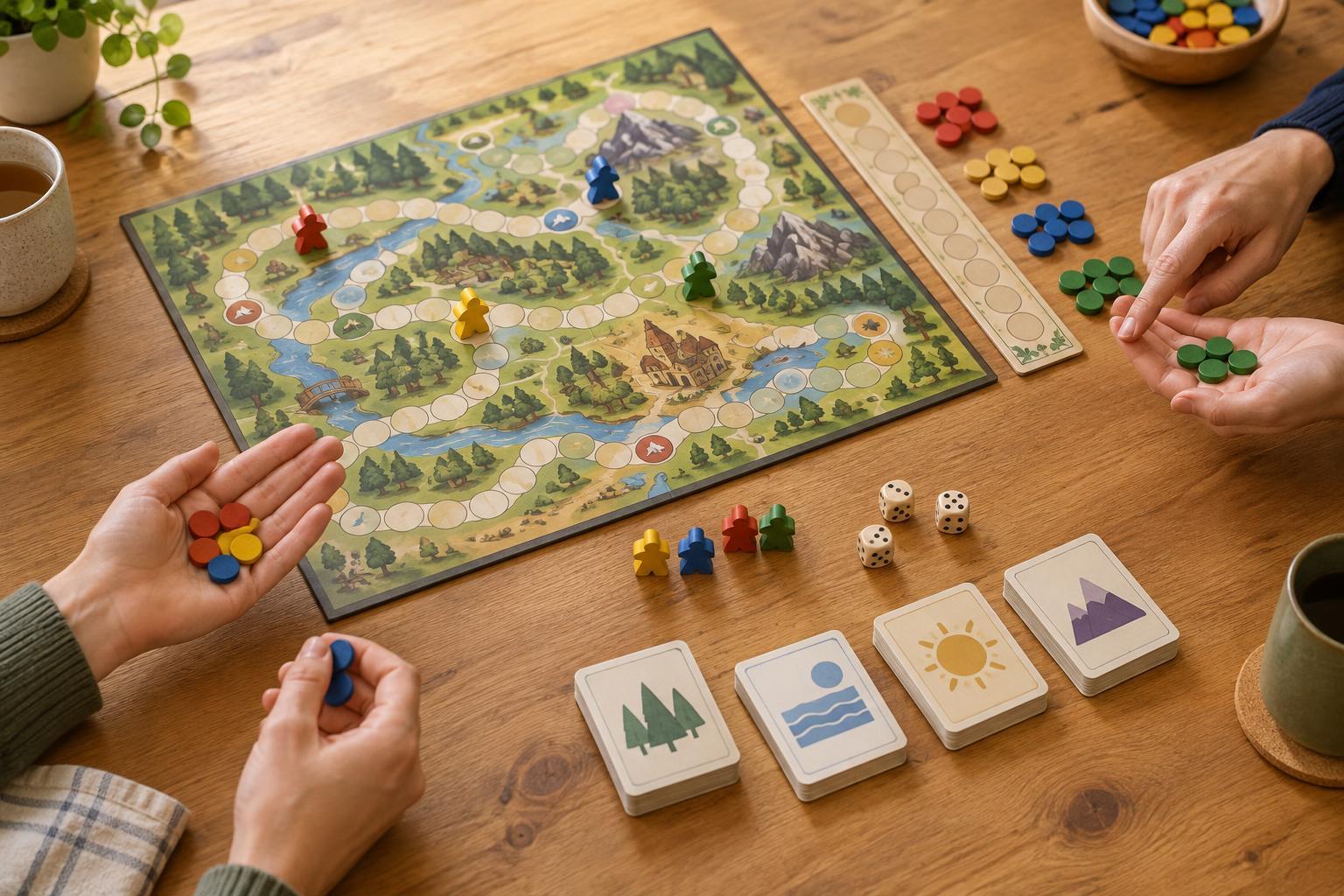
Immediate points are awarded as soon as a scoring action happens. Players may move a marker on a score track or record the amount on a sheet. This makes progress visible, but it may not show who is truly ahead if other points remain hidden or uncounted. When teaching a game, demonstrate one scoring action and say exactly when the points are recorded.
End-game points are counted only after play stops. They often come from collections, remaining resources, completed patterns, or bonuses listed on player boards. Objectives add another layer: they may be shared goals available to everyone, or private goals that each player pursues separately. Check whether an objective can score once or repeatedly, and whether players must claim it during play. Those small distinctions can change how a turn is planned.
Not everything valuable is worth points. A resource may help a player take stronger actions later without scoring directly. Conversely, some games subtract points for unfinished tasks or certain leftover pieces. A useful summary is to sort each item into one of three groups: scores now, scores at the end, or helps you do something else. If an item fits more than one group, note each effect separately.
Pay attention to timing and counting limits
Scoring rules often depend on when a condition is checked. A pattern might score the moment it is built, at the end of a round, or only during final scoring. If pieces can move or disappear, this timing matters: a completed pattern may stop qualifying before it is counted. Look for phrases such as “immediately,” “at the end of each round,” and “at the end of the game” in the rules.
Also check whether the same piece can contribute to multiple scores. Some games allow overlapping sets; others require each card or tile to be assigned to just one. A bonus may apply to every qualifying group or only to the largest one. When a rule seems unclear, make a small sample arrangement and work through it together before play starts. Keeping that example nearby can prevent repeated pauses during the game.
Understand what tiebreakers do
A tiebreaker is an extra rule used when players finish with the same result under the main win condition. It might compare a particular resource, the number of objectives completed, or another achievement. Some games list several tiebreakers in order; others allow a shared victory. Do not assume that the player who acted first or has more pieces wins a tie unless the rules say so.
Tiebreakers are usually easiest to check after all ordinary points and penalties have been counted. Read the full sequence before starting, especially if it asks players to track something that would otherwise be put away. If a game has no stated tiebreaker, agreeing in advance to accept a shared win is often simpler than inventing a rule at the end.
Teach scoring with one complete example
A short example can make a scoring explanation more useful than a long list of exceptions. Imagine a game in which players earn two points immediately for each completed route, one point per unused token at the end, and a four-point bonus for completing a shared objective. A player who completes three routes, keeps two tokens, and meets the objective would finish with twelve points: six from routes, two from tokens, and four from the objective. The example shows both the arithmetic and when each part is counted.
Before the first turn, give players a compact scoring overview: what earns points now, what waits until the end, what can lose points, and how ties are resolved. Then point to the relevant reference card or rulebook page so people can check details later. During play, announce scoring triggers consistently without suggesting which move someone should make. That keeps the rules clear while leaving the decisions—and the discoveries—to the players.