Start with the people who will actually play
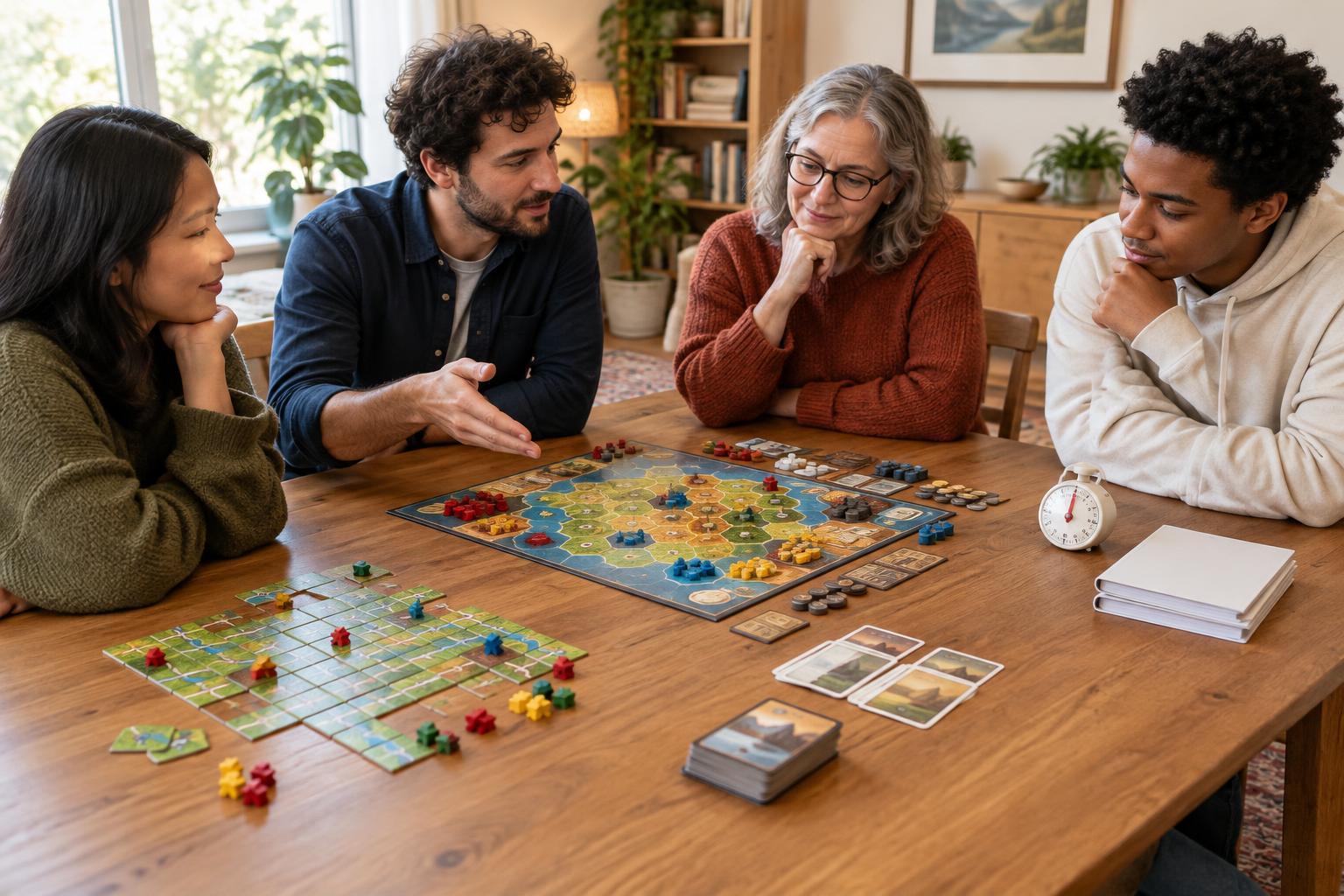
The best game for a gathering is not necessarily the one with the most appealing theme or the prettiest box. It is the one that gives the people present something enjoyable to do for an amount of time they can comfortably share. Before browsing titles, ask three questions: How many people are playing? How long do they want to spend? How much effort do they want to put into learning?
Treat the answers as a filter, not a rigid formula. A group may be happy to learn a detailed game on a quiet afternoon but prefer something immediately playable after dinner. If you are hosting, ask about energy as well as experience. Someone who regularly plays board games may still want an easygoing evening. Choosing for the occasion prevents a game from feeling like homework.
Look beyond the player-count range
A box might say that a game supports two to six players, but that does not tell you how each count feels. With two players, turns may come quickly and decisions may feel more direct. At six, there may be more conversation and surprises, but also more waiting. Consider whether everyone takes part throughout the game or mostly watches while one person acts.
For larger groups, look for simultaneous decisions, short turns, or shared discussion. For two people, check that the game offers meaningful choices without requiring rules intended chiefly for a crowd. If your guest list may change, a game that works well across several counts is useful. Otherwise, choosing one that shines at your most likely count is often more satisfying than prioritizing flexibility.
Count willing players rather than everyone in the room. A guest who would rather chat should not have to join just to make the numbers work. If people are likely to arrive late or leave early, a short game that can be restarted between rounds may be easier to manage than one that requires everyone to stay until the end.
Budget time for the whole experience
Playtime is more than the number printed on the box. Include setup, explaining the rules, a practice turn if needed, and packing away. First plays can take longer because players are learning what their options mean. A game that fits neatly into an hour once familiar may feel rushed if that hour is all you have on the first night.
Ask whether your group wants one main event or several shorter games. A longer game can be rewarding when everyone wants to settle in and see a strategy develop. Short games are easier to fit around food, conversation, or an uncertain end time. Neither is automatically more social: a brief game can demand intense attention, while a long one can leave room to talk.
If time is limited, leave a buffer rather than planning to finish at the exact moment people need to go. Check whether the game has a clear stopping point and whether the final round is likely to move quickly. If you are unsure, choose the shorter option or agree in advance when you will stop. Ending while everyone is still enjoying themselves is better than hurrying through the last turns.
Match complexity to the learning mood
Complexity can mean several different things. A game may have many rules to explain, simple rules with difficult decisions, or lots of details that players must remember between turns. Think about which kind of effort your group enjoys. People who like solving a tricky puzzle may welcome tough choices but dislike a long rules lesson. Others may enjoy learning a new system together.
When judging a game, imagine teaching its first turn. Can you explain the goal, the actions available, and how a turn ends without covering every exception? Games that let players begin with a basic understanding can be welcoming to mixed-experience groups. If the rules require several concepts before anyone can make a move, save the game for a night when everyone has time and patience.
Avoid using experience labels as judgments about people. A newcomer may enjoy a demanding game with a patient teacher, and a veteran may prefer something light. The useful question is not whether the group is capable of learning the game, but whether learning it sounds like part of the fun tonight.
Make the final choice with one practical check
Once you have narrowed the options, consider the interaction each game asks for. Some players enjoy negotiation, direct competition, or being interrupted by an opponent’s move. Others prefer building something of their own, cooperating, or having time to think. A game can fit the count, clock, and complexity perfectly yet miss the mood if its style of interaction is unwelcome.
Keep two candidates ready when you can: one that suits the expected group and a shorter or simpler alternative. You do not need to plan every minute of game night. A quick check-in before opening the box—who is playing, how much time is available, and how much everyone wants to learn—will usually make the choice clear. The right board game is the one your group is glad to start and still happy to discuss when it is put away.