Start with the work you want to do
A wall of tiny brushes can make miniature painting seem more complicated than it is. For most tabletop figures, a small working set is enough: a medium round brush for general painting, a smaller round brush for controlled details, and an older or inexpensive brush for rough tasks. Add a drybrush if you enjoy that technique. This gives you room to experiment without buying a separate tool for every buckle, shield, and patch of fabric.
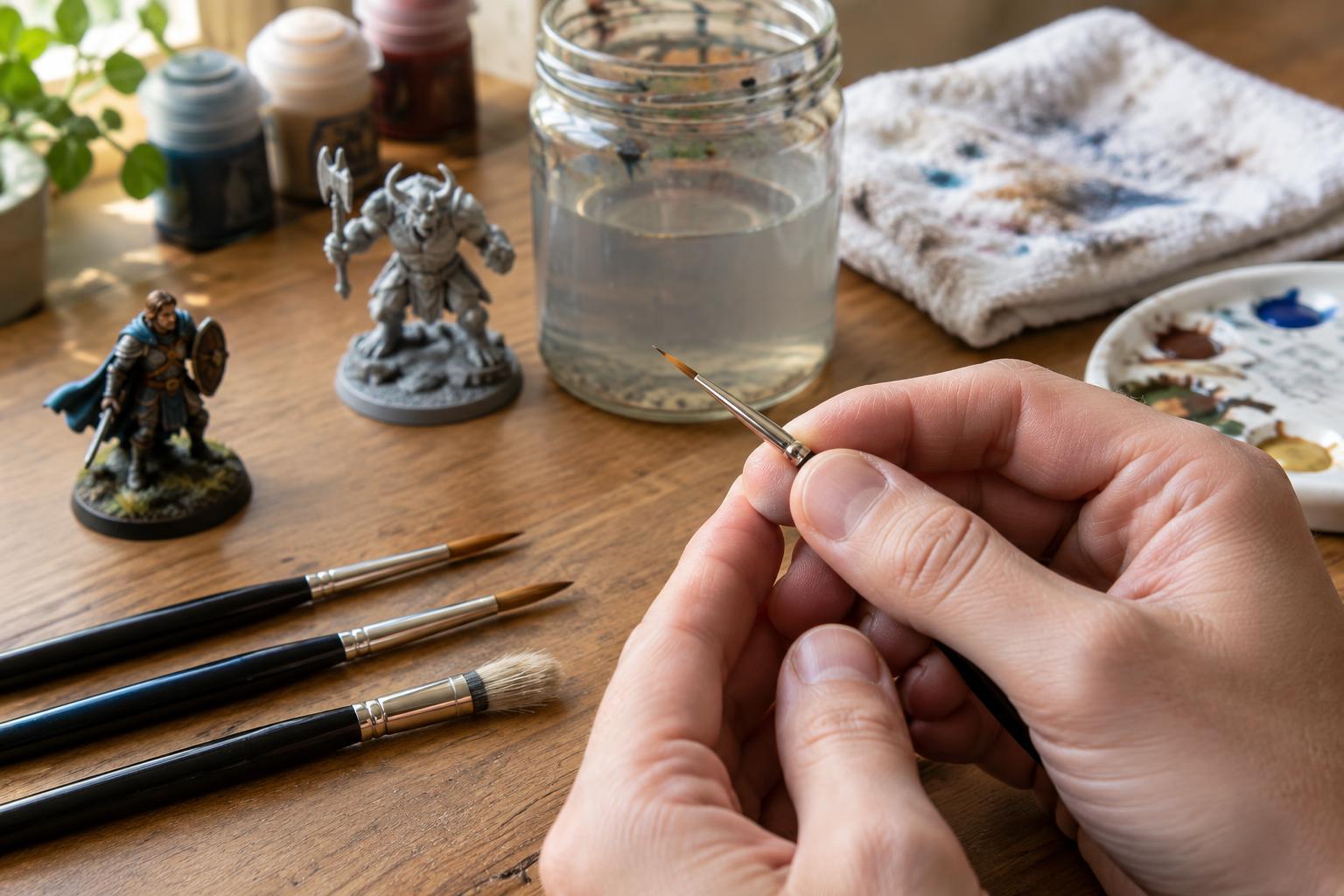
Match the brush to the area rather than assuming the smallest brush is always the most precise. A round brush with a fine point and a reasonably full body can carry paint longer than an extremely tiny one. That makes it useful for neat edges as well as broader areas. A tiny brush still has its place for hard-to-reach details, but paint may dry on its bristles before it reaches the miniature.
Look at shape, point, and feel
Brush size numbers are a starting point, not a universal measurement. Two brushes marked with the same number can differ in bristle length, fullness, and tip shape. When you can inspect a brush, look for bristles that come together evenly and a handle that feels comfortable in your hand. Avoid relying on a perfect-looking dry point alone: how the brush gathers into a point when damp is more useful for painting.
Round brushes do most miniature painting jobs. A flat brush can cover larger surfaces, while a short, firm brush is handy for drybrushing raised texture. Synthetic brushes are widely useful and can be a sensible choice for learning, mixing paint, and applying textured or metallic paints. Some painters prefer natural-hair rounds for their feel and paint capacity. Neither material replaces good control or regular cleaning, so choose according to your budget and the way you like to paint.
Keep paint out of the ferrule
The ferrule is the metal sleeve holding the bristles to the handle. Try not to load paint all the way into it, especially when using a brush you want to keep pointed. Paint left near the base of the bristles can dry there and make them splay. Dip only part of the bristle length into paint, then use a palette to adjust the load before touching the miniature.
Rinse the brush often while you work with water-based acrylics, even when you are staying with one color. Swish it gently in clean water and wipe it on a cloth or paper towel without twisting or pulling hard on the tip. Refresh murky rinse water when it stops cleaning effectively. A little attention between colors takes less time than trying to rescue a brush after paint has dried deep in the bristles.
Use the right brush for messy techniques
Drybrushing, stippling, and scrubbing can bend or wear bristles because they push a brush against the miniature rather than drawing it lightly across a surface. Reserve a sturdy brush for those techniques instead of using your finest detail round. The same goes for stirring paint and lifting it from a pot: an older brush or another suitable tool can do the job without risking a carefully shaped tip.
Paint consistency also affects how a brush behaves. If paint is so thick that you have to press hard to move it, try working a small amount on a palette and adjusting it gradually with water or an appropriate medium. If it is so thin that it floods recesses, remove some from the brush before painting. A controlled paint load helps the bristles keep their shape and makes details easier to handle.
Clean, reshape, and store after painting
At the end of a session, rinse away visible paint and gently wash brushes used with water-based acrylics using a brush cleaner or mild soap. Work the cleaner through the bristles with your fingers, then rinse thoroughly. Do not leave brushes standing tip-down in a water cup; prolonged pressure can bend the bristles. Follow the paint maker’s cleaning guidance if you use products other than water-based acrylics.
After cleaning, draw the bristles into their natural shape with your fingers and let the brush dry where the tip will not be pressed against anything. Store clean, dry brushes so the bristles cannot be crushed in a crowded drawer or kit. If a brush eventually loses its point, it can still be useful for base coats or rough texture. Caring for brushes is not about keeping every tool pristine forever; it is about saving the best point for the jobs that need it.