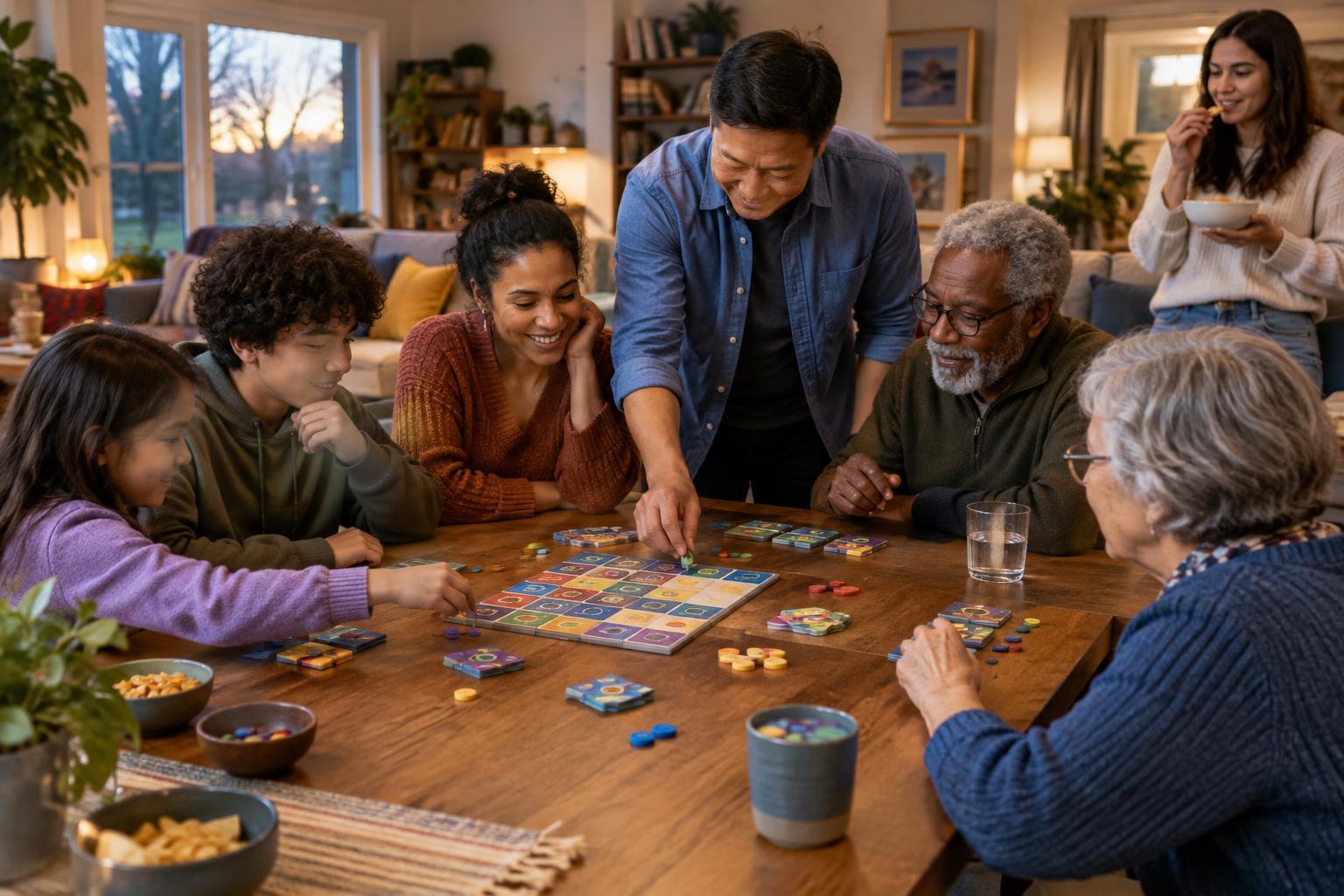
Start with the evening, not the game list
When everyone offers to bring a favorite game, it is tempting to say yes to every box. That enthusiasm is welcome, but it does not mean every game needs a turn. Before collecting suggestions, decide what kind of evening you are hosting. Is it a relaxed dinner with one game afterward, or a longer session where playing is the main event? A clear expectation helps guests choose what to bring and keeps the gathering from feeling like a schedule to complete.
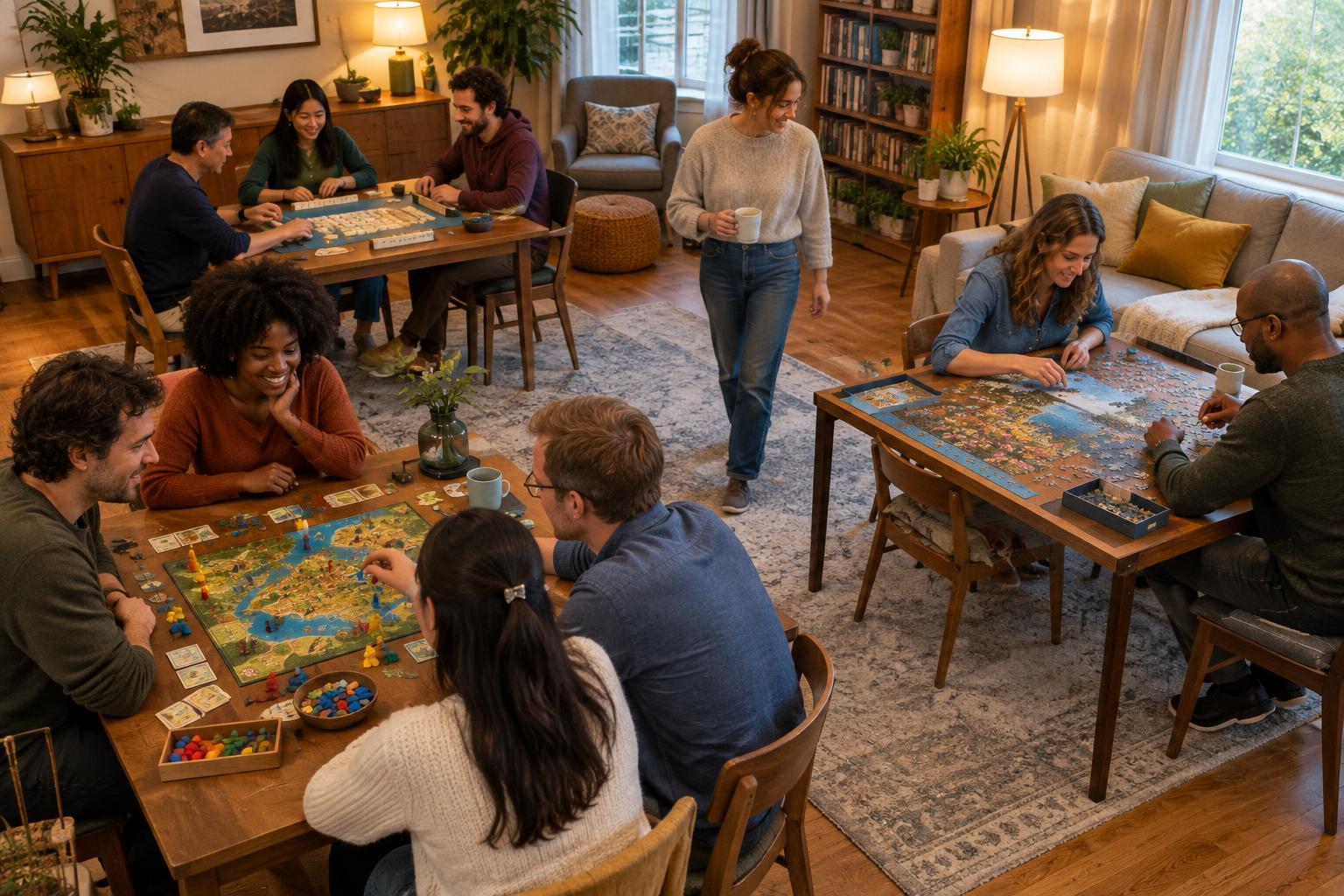
Think about the time available, the number of players, and how comfortable the group is with learning rules. A game that works beautifully with four people may not suit a group of seven unless some guests are happy to split into smaller tables. A lengthy game may be a poor fit if people will arrive at different times. You do not need a minute-by-minute plan; a rough outline is enough to guide the choices.
Ask for a short, useful description
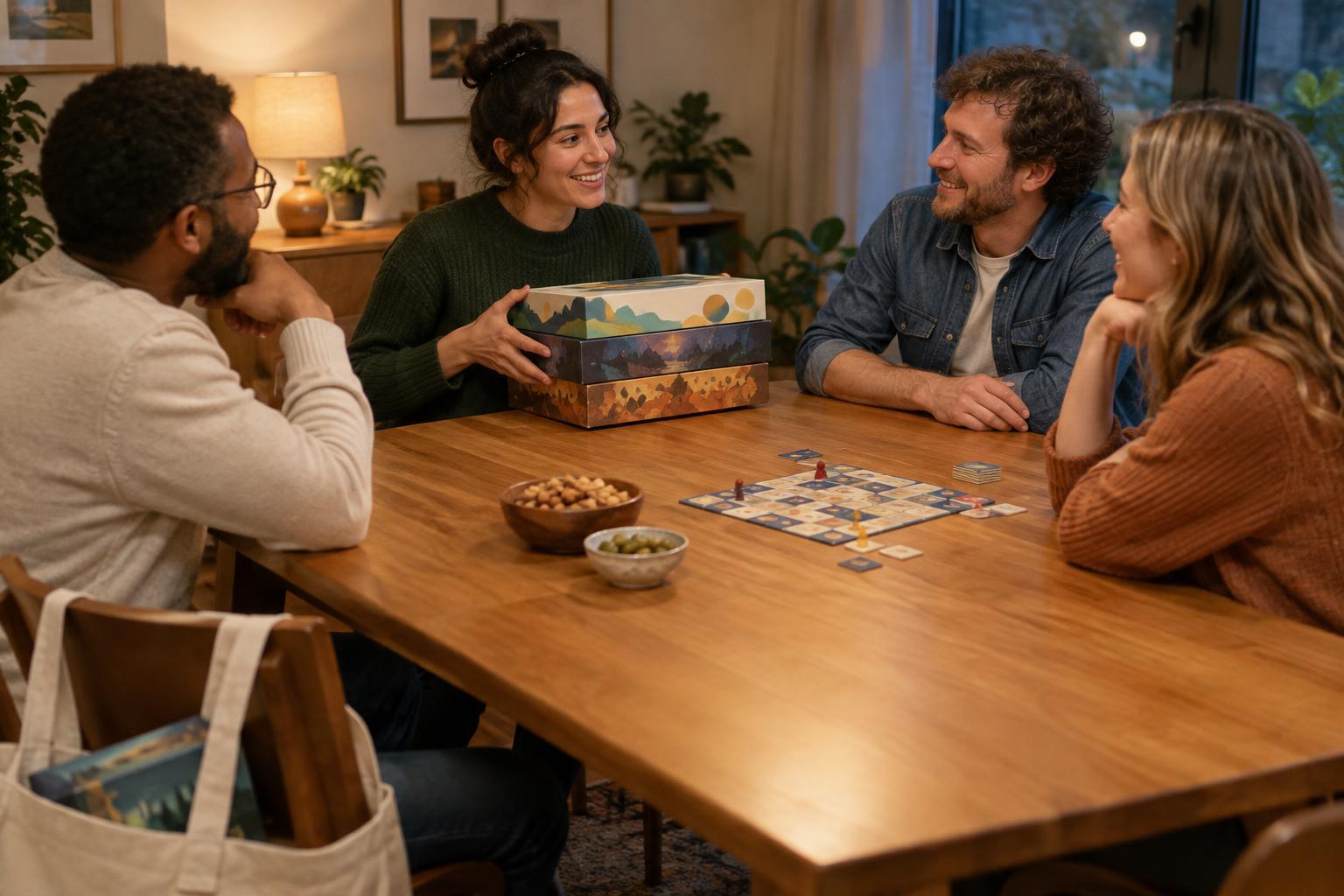
Rather than asking guests to bring “whatever you like,” invite each person to suggest one game and share a few basics: player count, approximate play time, how long it takes to teach, and whether anyone needs to know the rules in advance. Ask about table space or small pieces if those could affect your setup. These details are more useful than a long pitch about why a game is great.
You can also ask what role the guest wants the game to play. Is it a quick opener, the main activity, or a backup if there is extra time? Someone who loves a game may be delighted to teach it, but it is worth checking instead of assuming. If no one feels ready to explain the rules, choose something else for this gathering or set aside time to learn together.
Make it clear that suggestions are not promises. A simple message such as “Bring one if it is easy to carry; we will pick what fits when everyone arrives” protects guests from feeling that their contribution has been rejected if their game stays in its box.
Build a small menu with different jobs
A useful selection offers options rather than duplicates. For a typical evening, you might aim for a short game people can join after arriving, one substantial game suited to the expected group, and a flexible backup. The backup could be a familiar game that needs little setup, or something that accommodates a different player count. This is a menu, not a checklist: playing one game well may be more satisfying than rushing through three.
If several guests propose similar games, tell them which one seems most likely to fit and invite the others to leave their copies at home. Likewise, avoid asking someone to carry a large box “just in case” when a smaller option would serve the same purpose. Keeping the selection modest frees up table space and makes the choice less intimidating when it is time to play.
Consider the group’s energy as well as the clock. A challenging strategy game may be appealing at the start of the evening but harder to begin after a long meal. A short cooperative or conversational game can help people settle in, provided everyone is interested. You can keep those possibilities in mind without assigning every part of the night to a different activity.
Choose together without holding a long vote
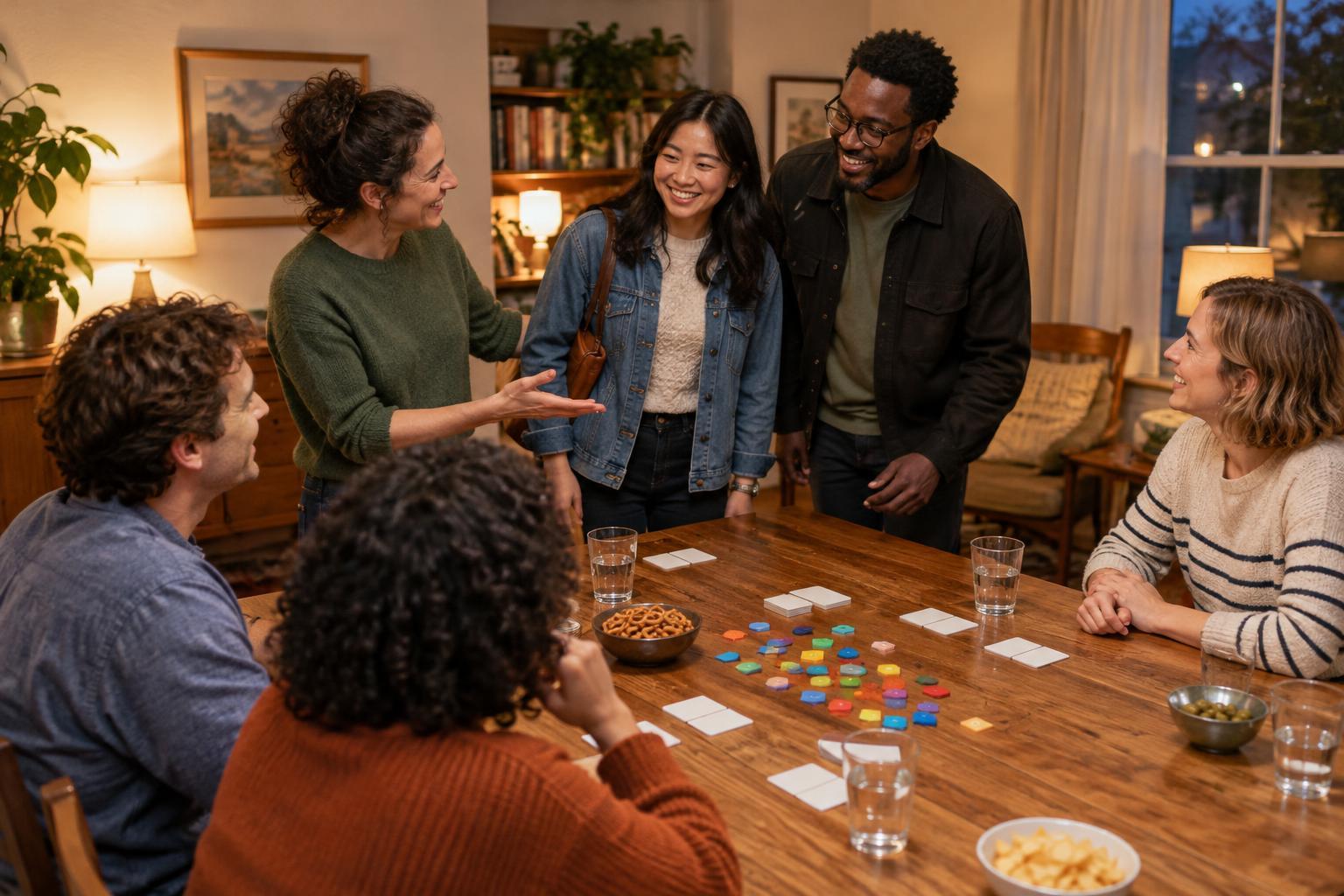
Once guests have arrived, briefly introduce the available games in practical terms: how many people can play, roughly how long each takes, and what kind of experience it offers. Let people express preferences, then make a decision. An open-ended debate about every box can consume the time and enthusiasm you hoped to spend playing.
Give particular weight to constraints. If a guest needs to leave early, a shorter game may allow them to take part. If one option excludes several people, consider whether splitting into groups would be enjoyable or whether a more inclusive choice is better. Guests should feel free to sit out a round, but they should not be surprised to find that the only planned activity has no place for them.
It helps to name a stopping point before starting a longer game. You might agree to finish one round or reassess after a natural break. That makes it easier to keep the evening comfortable without pressuring players to race through turns.
Leave room for the night you actually have
A good hosting plan can change. Conversation may run longer than expected, someone may arrive late, or the group may want a second play of the same game rather than a new set of rules. Treat the shortlist as a tool for making choices, not a commitment to use everything guests brought.
At the end of the night, thank people for offering games whether or not their boxes were opened. If an unplayed suggestion sounds promising, mention it as an idea for another gathering without turning that into an obligation. The goal is not to maximize the number of games on the table. It is to make choosing, teaching, and playing feel easy enough that everyone enjoys spending the evening together.