Make the invitation do some of the welcoming
When guests do not know one another, uncertainty often starts before they arrive. A short invitation can answer the questions people might hesitate to ask: when to come, how long you expect to play, whether food is involved and whether they need to know any rules. Mention that beginners are welcome and that you will teach the games. If guests can arrive any time within a window, say so; otherwise, a clear start time helps everyone settle in together.
You can also give a brief sense of the group without turning introductions into advance homework. “A few friends from different parts of my life are coming” sets expectations. Let guests know they do not need to bring a game, though they can suggest one if you are open to it. The aim is not to plan every interaction. It is to remove small worries so people can walk through the door ready to enjoy themselves.
Start with a welcome, not a seating decision
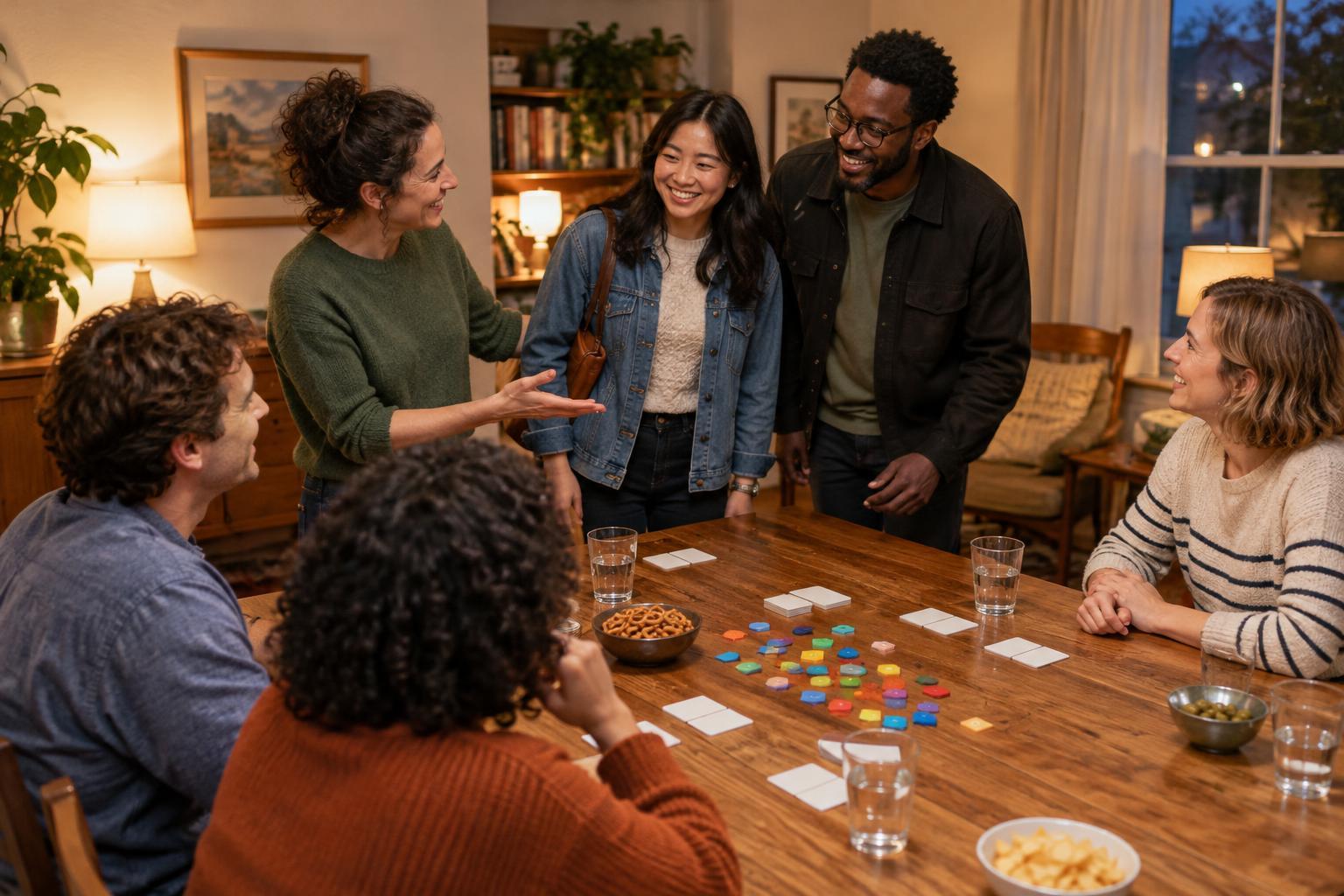
Greet each person when they arrive and help them get oriented: show them where to put a coat, where drinks are and where they can sit. If someone arrives while you are busy, briefly bring them into the conversation rather than leaving them to find an opening alone. A useful introduction connects people through something ordinary: “Sam, this is Priya; you both enjoy cooperative games.” Keep it light and let them choose where the conversation goes.
Avoid asking a newcomer to tell the whole room an interesting fact about themselves. Even friendly icebreakers can feel like a performance. Instead, offer a shared task that allows conversation to happen naturally, such as choosing a snack, looking at a few game boxes or helping arrange the play area. You can ask an easy question like “Do you prefer word games or visual puzzles?” without treating the answer as a permanent label.
Choose a first game that leaves room to learn
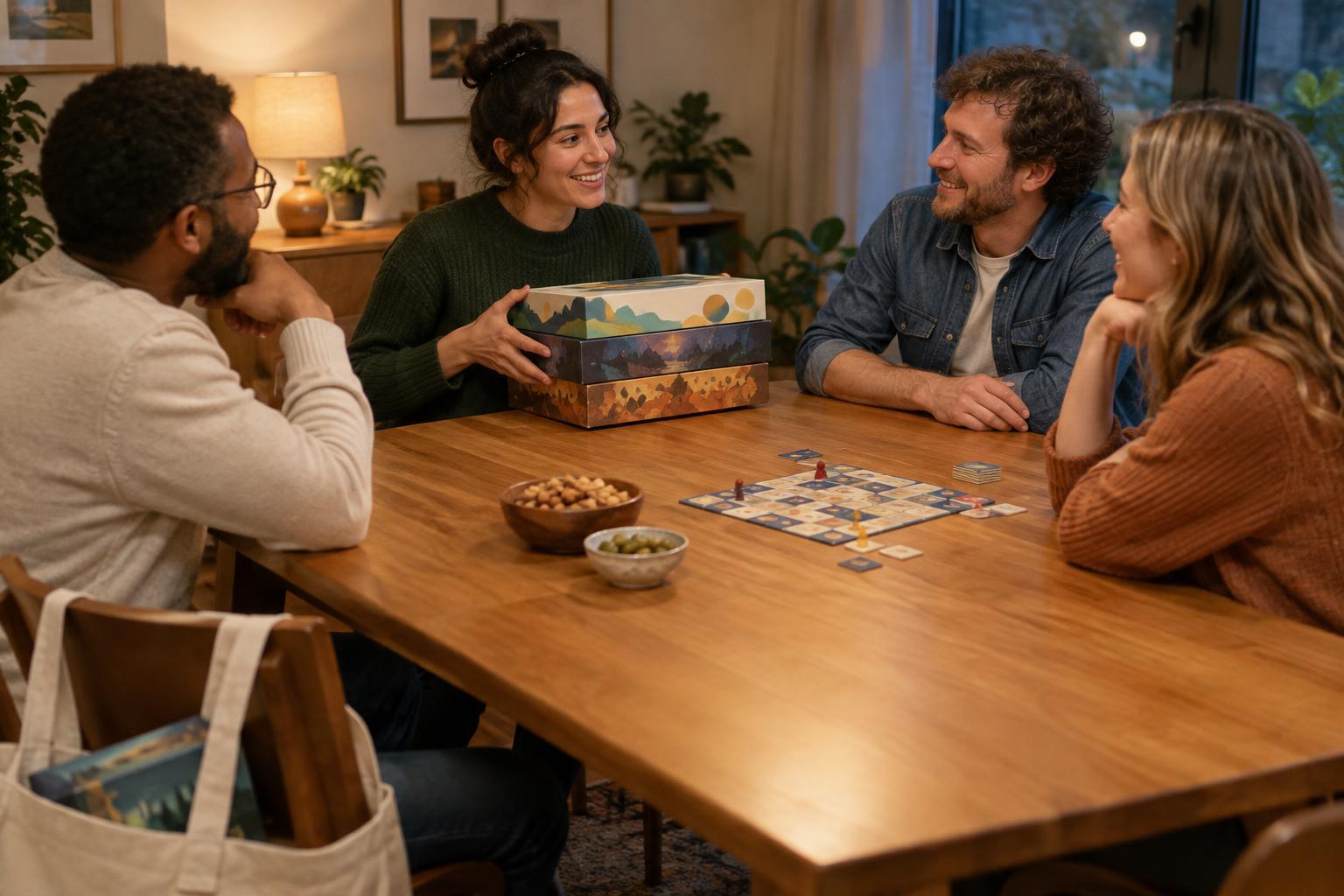
The opening game sets the tone. Choose something with a short explanation, visible turns and little waiting between turns. A cooperative puzzle, a gentle team game or a simple drawing or word activity can give strangers something to discuss besides themselves. The best choice depends on your group: some people enjoy lively guessing, while others would rather think quietly before speaking. Have two options ready and describe each in a sentence so guests can help choose.
Teach only what people need for the first round, then explain exceptions when they become relevant. A practice round can be especially helpful if choices are unfamiliar or points are involved. Make it clear that mistakes are normal, and avoid calling attention to who is learning fastest. If you are playing too, keep an eye on whether the game is creating conversation or shutting it down. It is fine to switch to a different activity after a round; finishing every game matters less than making the table comfortable.
Help everyone take part without forcing it
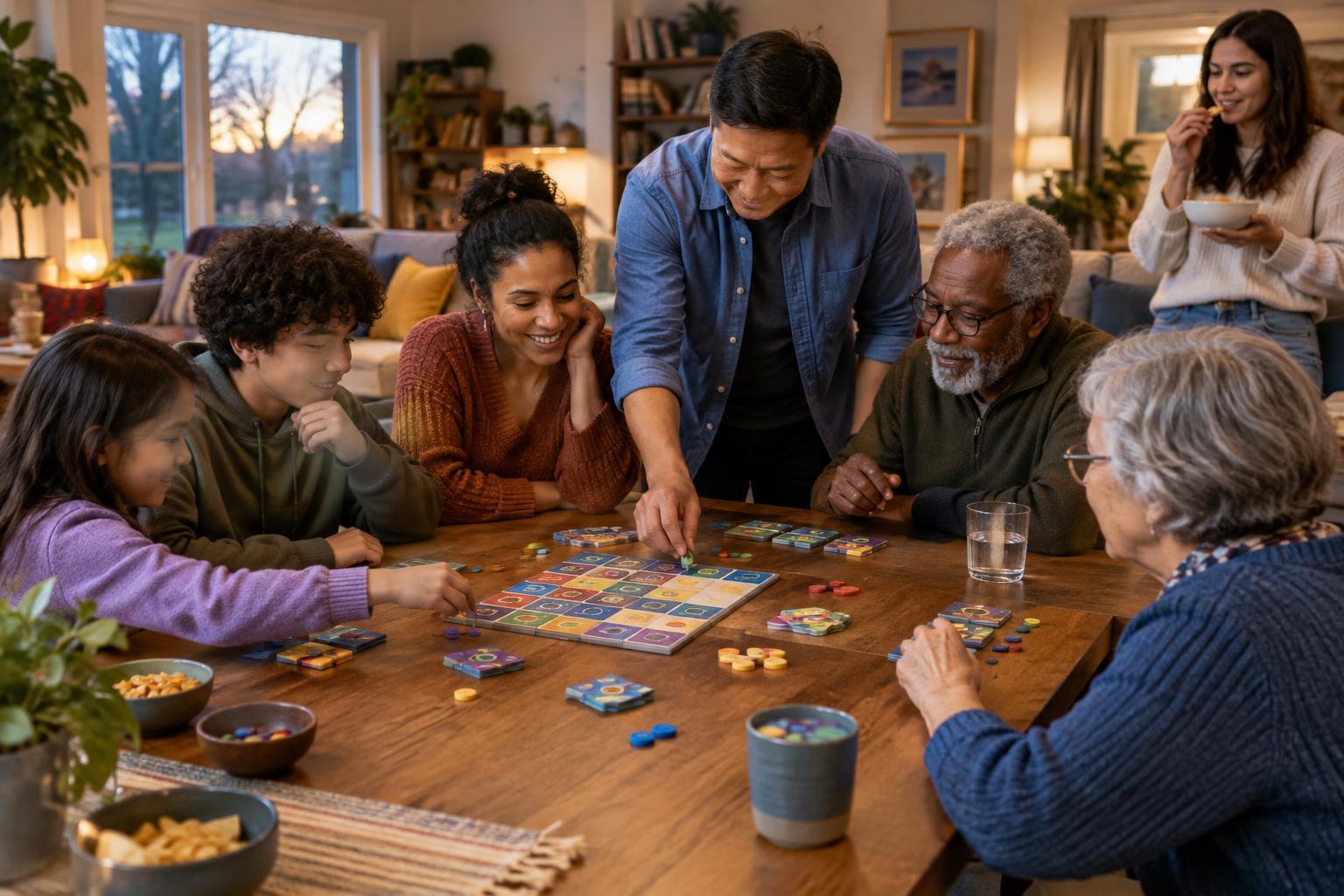
A welcoming table does not require everyone to speak the same amount. Some guests warm up by watching a round, and others enjoy talking through their choices. Give people room to participate in their own way while making sure nobody is repeatedly overlooked. If a quick-moving conversation keeps passing someone by, pause at a natural point and ask whether they have an idea. An invitation is better than a demand: they should be free to pass.
Watch for habits that can make a new group feel uneven. A confident player may answer every rules question or steer every cooperative decision, even with good intentions. As host, you can thank them for helping, then turn the question back to the person whose turn it is. Put rules summaries within reach so guests can check details without interrupting. If teams are needed, mix people gently rather than announcing that strangers must pair up to “get to know each other.”
Give the evening a comfortable rhythm
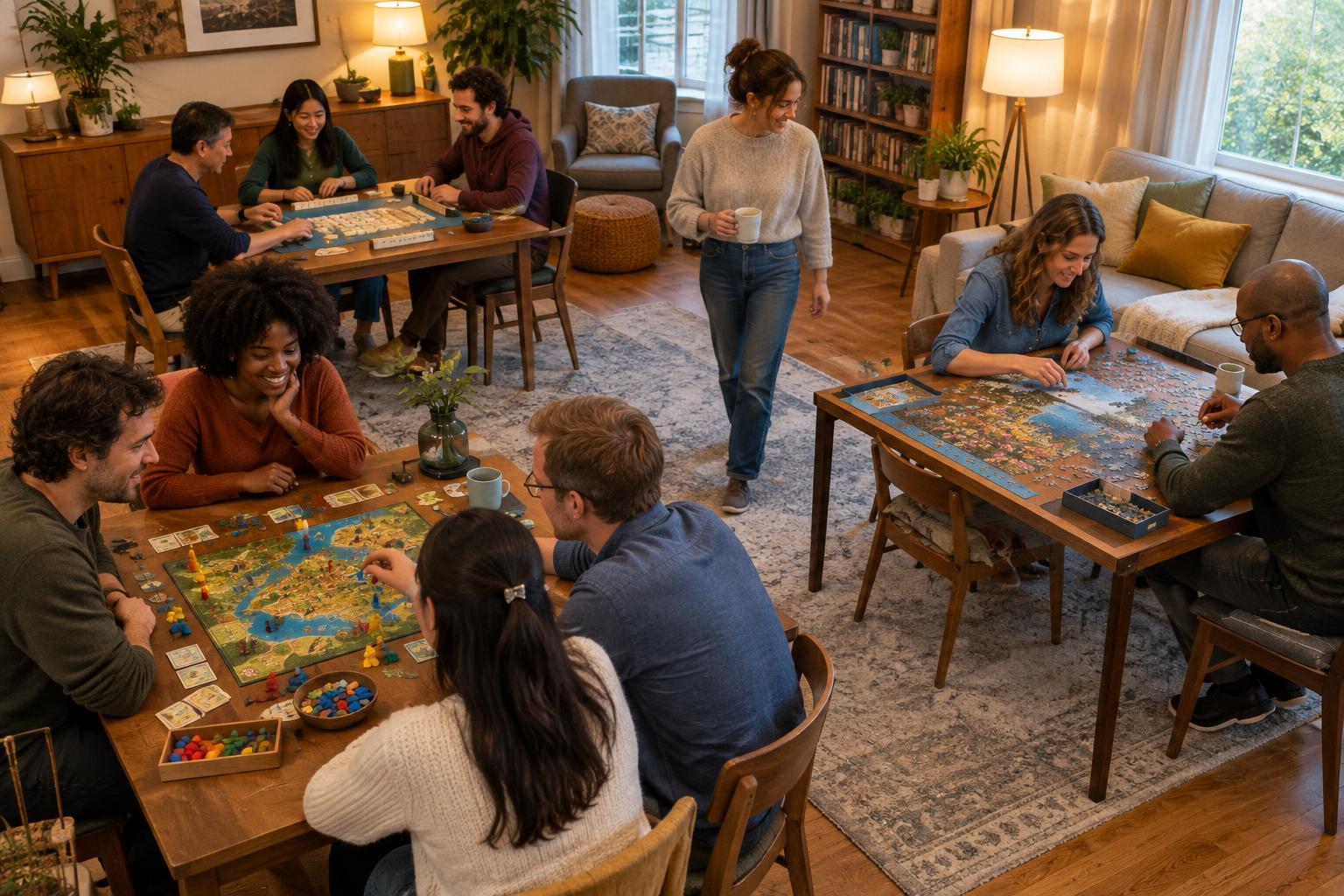
Plan for pauses between games. A short break lets guests get a drink, change seats or start a conversation without feeling they are holding up play. Before opening another box, ask whether people want one more round, a different game or a few minutes away from the table. Offering a choice helps you notice when the group has had enough, even if everyone is being polite.
End as thoughtfully as you began. Leave time to put pieces away and let conversations wind down rather than announcing an abrupt stop. Thank guests for coming without ranking their play or insisting that everyone immediately commit to another night. If the group enjoyed itself, you can invite suggestions for a future game. A successful first gathering need not turn strangers into close friends in one evening. It gives them an easy shared experience and a reason to feel welcome if they meet again.