Plan for participation, not perfect attendance
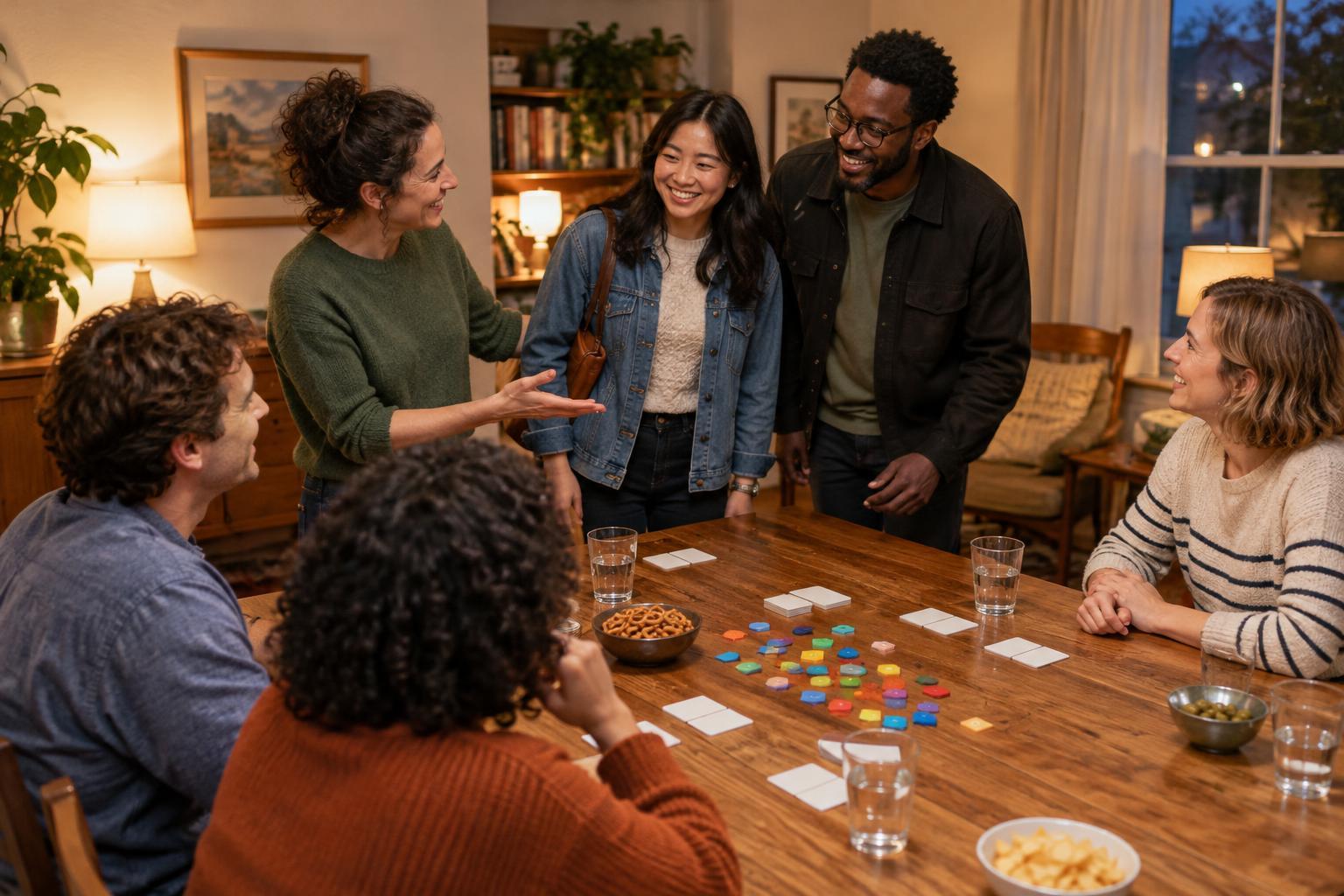
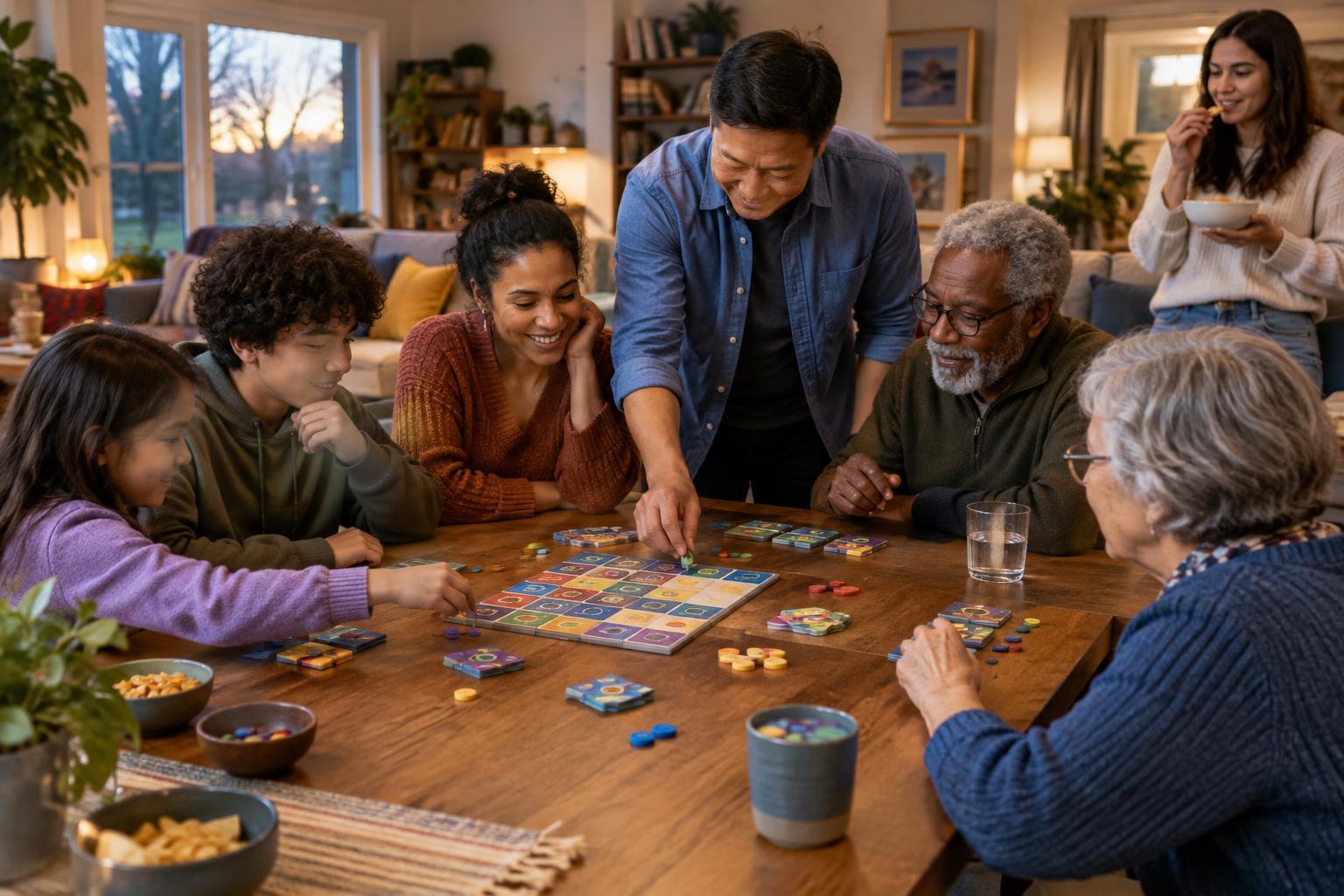
A game night with children, teens, and adults rarely follows one steady rhythm. Some guests want to think through a long turn; others would rather make a quick choice and move on. The goal is not to find one game that holds everyone’s attention all evening. It is to create several easy ways to take part, including the option to pause, watch, or switch activities.
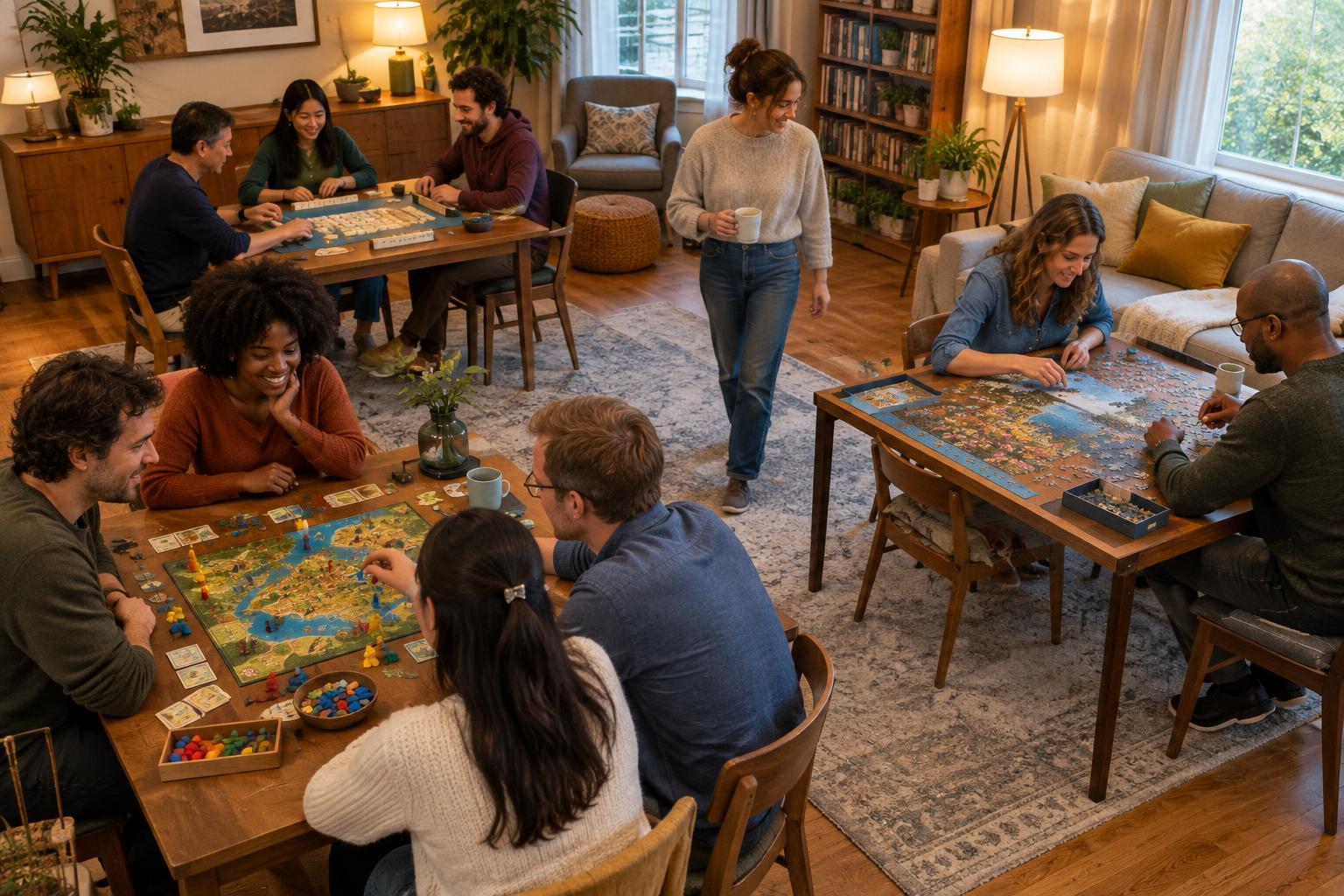
Before choosing games, consider how many people may play at once, whether anyone prefers to avoid reading aloud, and how much table space is available. If you can, set out one main play area and one quieter spot for a puzzle, drawing activity, or solo game. That second spot is not a waiting room: it gives guests a comfortable place to reset without leaving the gathering.
Choose games that can bend without breaking
Start with games that have short turns, visible choices, and rounds with a clear ending. Simple matching, pattern-making, cooperative challenges, and light team games can work well because a newcomer can often understand what is happening by watching. A familiar game is useful, too: guests spend less time learning and more time playing together.
Prepare two or three options rather than a packed schedule. One might be a quick opening game that welcomes late arrivals. Another can offer a little more depth for guests who want to settle in. Keep a puzzle or creative tabletop activity available for people who prefer to dip in and out. Check the suggested age range and any small pieces when children are present, but also judge whether the actual rules and pace suit your group.
Team play can help bridge experience levels when teammates make decisions together rather than letting one person take over. Consider pairing guests for discussion while allowing each person a meaningful choice. If a game cannot accommodate the whole group, say how many seats are available and offer a natural point to rotate in after a round.
Explain only what players need to begin
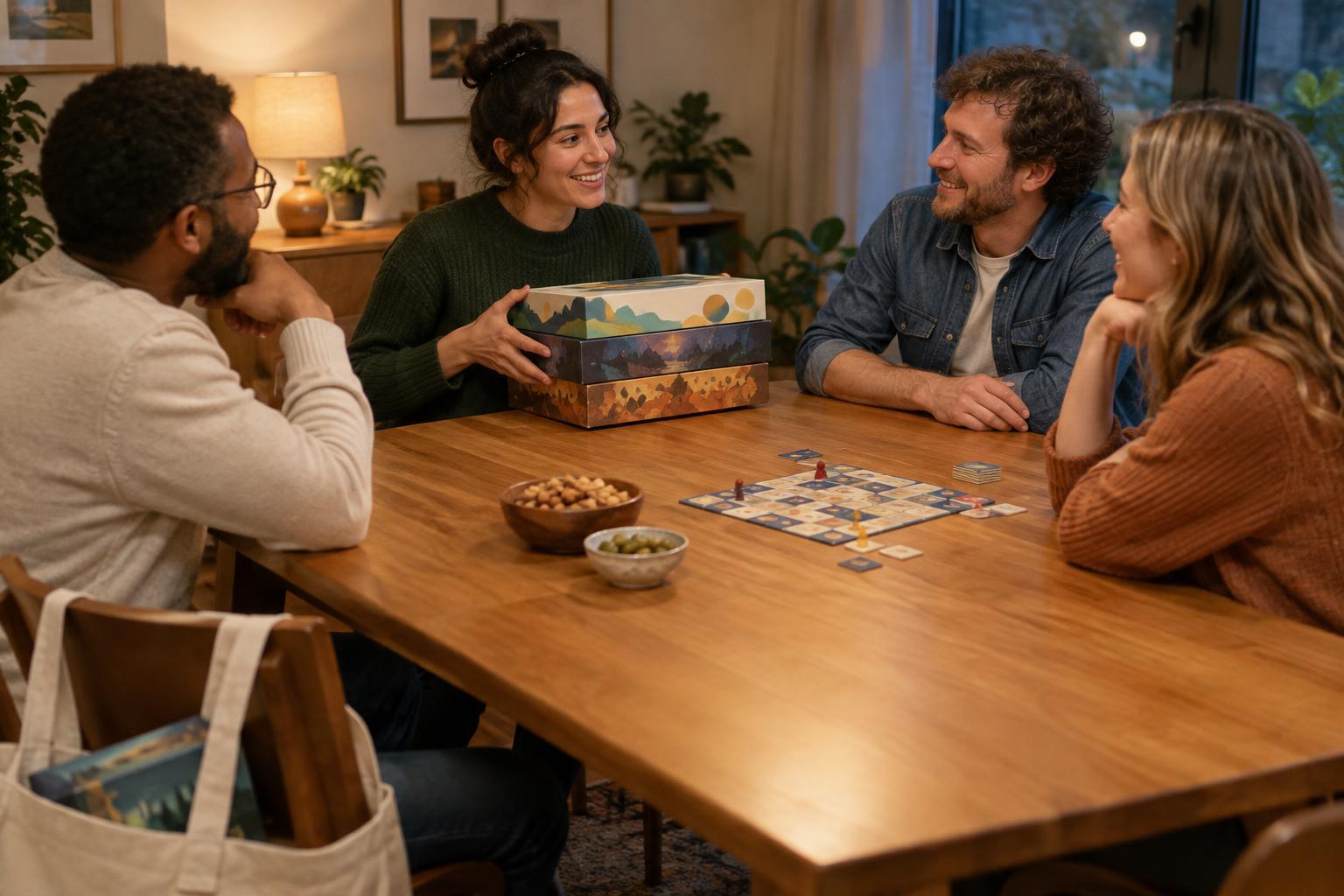
Long rule readings can lose a mixed group before the first turn. Give a brief overview instead: what players are trying to do, what happens on a turn, and when the round ends. Show a sample move with the pieces on the table. Then invite a practice round where questions are welcome and mistakes do not count.
Keep a rules reference nearby rather than trying to cover every exception in advance. When an unusual situation appears, pause, check the rule, and make sure everyone understands the answer. For younger players or anyone joining late, a seat beside a patient player can make the first few turns easier. Avoid asking one guest to teach continuously; that can prevent them from enjoying the game themselves.
Clear communication also helps guests who process information at different speeds. Speak at a comfortable pace, leave the objective visible in a short written note if useful, and allow a moment to think before prompting someone to move. A relaxed table does not need a timer unless the group actively enjoys one.
Build breaks and changes into the evening
Use rounds as natural stopping points. After one finishes, ask whether the group wants another, a different game, or a short break. This is less disruptive than asking people to leave halfway through a game with a long, continuous arc. Snacks and drinks can sit away from pieces and cards, with a clear place for guests to step aside.
A loose plan might begin with a ten-minute welcome activity, move to a main game, and end with an optional puzzle or quick rematch. Treat that as a guide, not a promise. If a game is working, let it continue; if attention is fading, finish the round and change course. Guests should feel free to watch for a while or rejoin at the next opening without having to explain why.
Make the table welcoming from start to finish
Set expectations before play begins: everyone gets a chance to speak, questions are fine, and opting out of a game is fine too. Choose games with age-appropriate themes for the people present. If competition gets tense, shift toward a cooperative option or a low-stakes activity where the fun comes from making or solving something together.
Pay attention to who is participating, not just who is winning. Invite a quiet guest to choose between two games, give an interested child a genuine role in setup, and make room for experienced players to enjoy a challenge without controlling every move. At the end, put pieces away together and ask which activities people would like to revisit. That feedback is a simple way to make the next game night fit the group even better.