Start with the room, not the game list
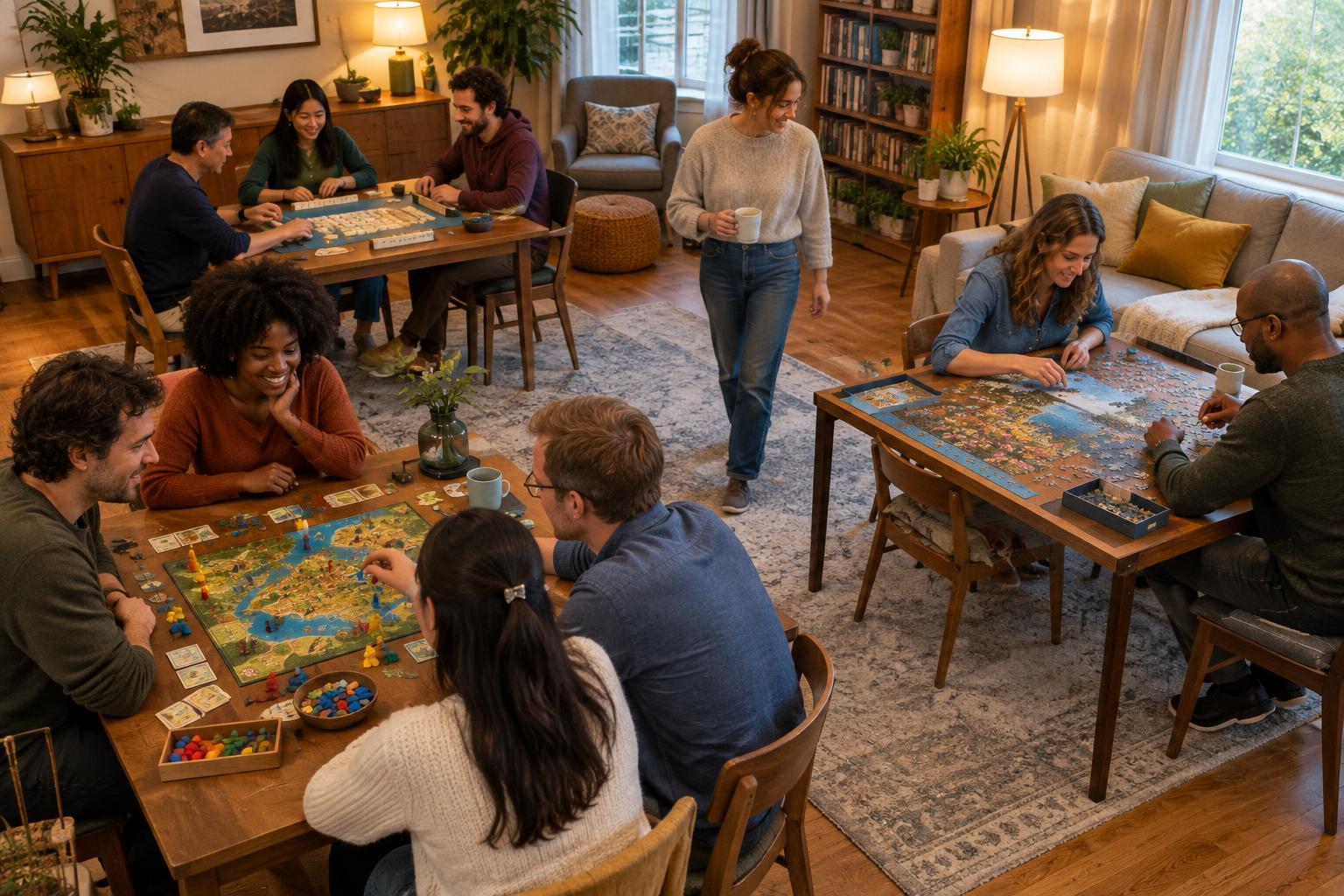
Before choosing games, walk through the room as a guest would. Where will people enter, leave coats, get a drink and reach the bathroom? Keep those routes clear rather than fitting in one more table. Allow enough space for chairs to move without bumping the next group, and put snacks somewhere people can visit without leaning over game pieces.
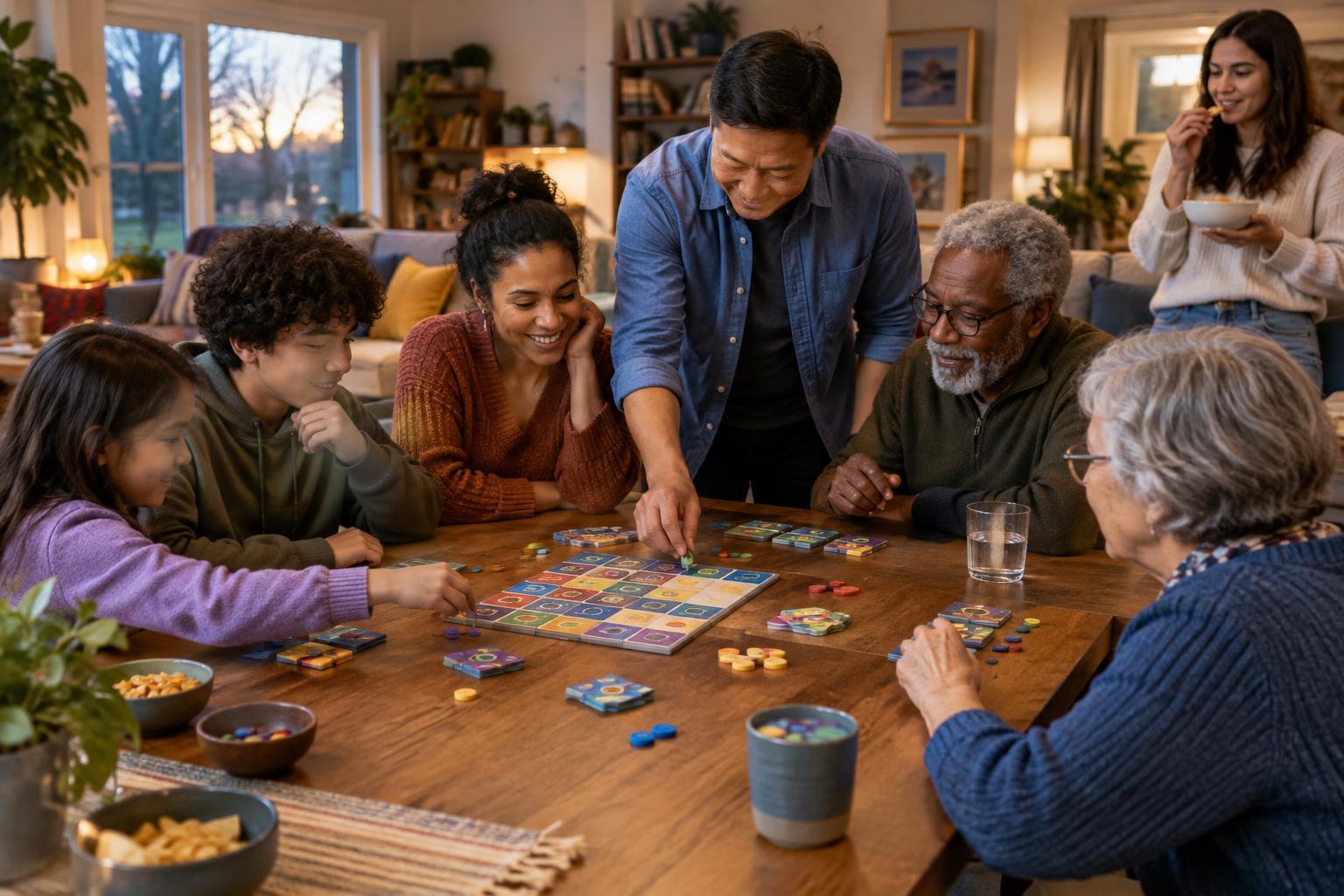
Think of each table as a small activity zone. A game with frequent discussion can sit away from a quieter puzzle or strategy game. If the room is compact, face the noisiest tables away from each other and leave a modest gap between them. Check lighting, too: players should be able to read cards and distinguish pieces without relying on a phone flashlight. A separate shelf or side table for boxes gives active players more elbow room.
Give every table an easy-to-understand purpose
A mix of games works better when guests can tell their options at a glance. You might offer a quick-play table, a longer-game table and an open table for a puzzle or a game chosen by the group. For each planned game, write a small sign with its name, approximate play time, comfortable player count and whether someone can join between rounds. Treat those times as estimates, not a promise that everyone must finish on schedule.
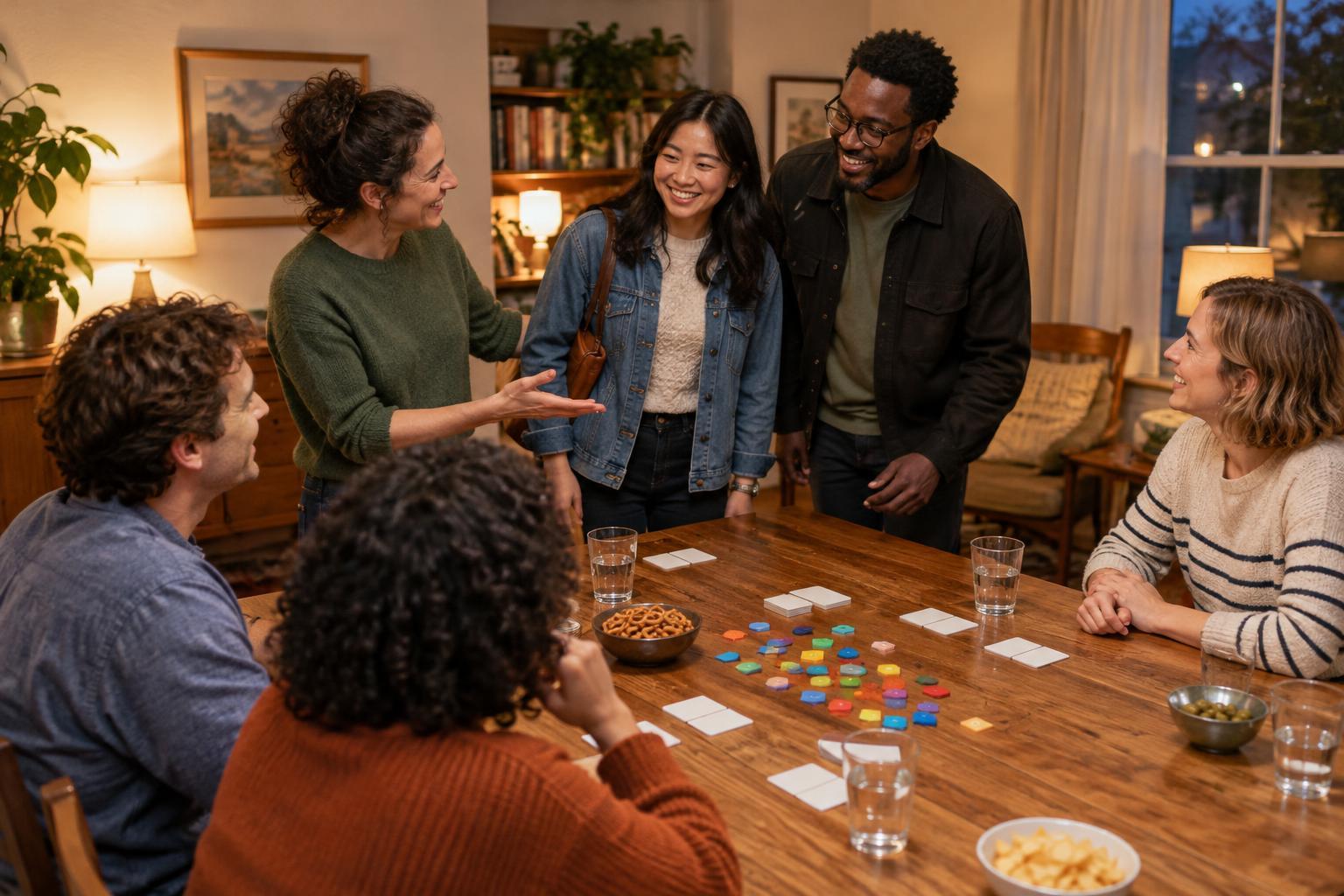
Avoid filling every seat in advance. An open seat gives a late arrival or someone taking a break a place to land. If a game has a narrow player count, keep a backup choice nearby for a different-sized group. It also helps to choose games whose components are easy to keep separate; several decks and piles of similar tokens can become confusing when tables are close together.
Use start times as invitations, not deadlines
Multiple tables rarely finish at the same moment. Instead of trying to synchronize them, announce a few natural joining points: an opening round, a likely reset after shorter games and an optional final round. Let guests know that they can watch, chat or visit the open table while waiting. No one should have to interrupt a game already underway to find a place.
A visible note near each table can show whether it is starting, in progress or looking for players. If you are hosting, check these notes between rounds rather than calling across the room. For longer games, confirm that the players want to commit the time before they begin. For shorter games, leave a brief pause between plays so people can change tables without feeling as though they are abandoning a group.
Keep rules, volume and supplies manageable
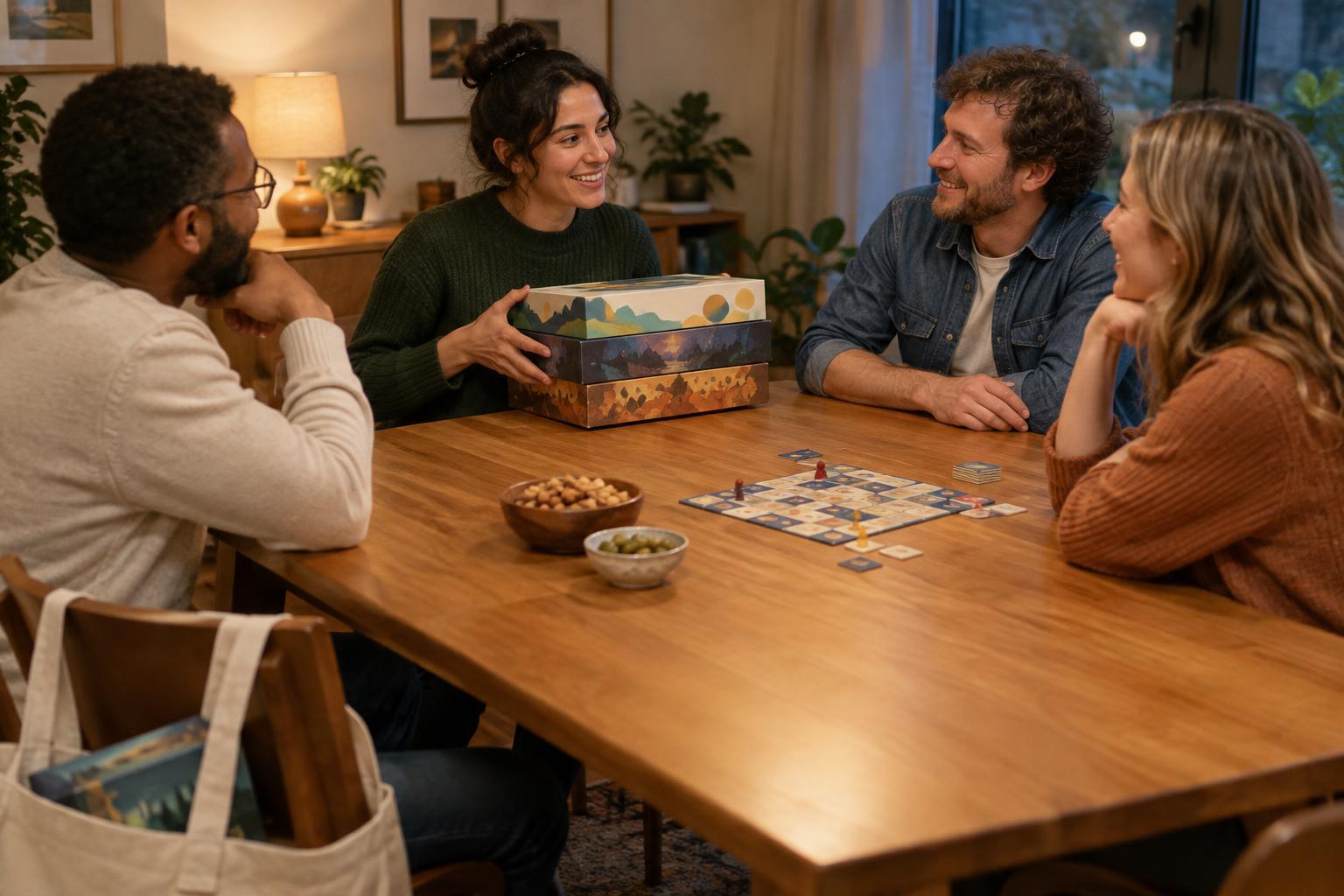
Put the rules sheet and all required pieces on each table before guests arrive. A short explanation should cover the goal, what a turn looks like and when the game ends; finer points can be checked as they arise. If nobody knows a game well, pick one with rules the group is happy to learn together. Teaching every table yourself can leave players waiting, so invite a willing player at each table to handle questions or read the rules aloud.
Set a friendly expectation about room volume early: animated conversation is welcome, but groups should be able to hear their own table. When one game becomes especially lively, a quiet reminder usually works better than asking everyone to hush. Keep pencils, scrap paper and spare bags for loose pieces within easy reach. Drinks placed off the play surface reduce the chance of spills during a crowded turn.
Make switching tables feel comfortable
The best multi-table plan leaves room for different energy levels. A guest may want a focused game, a brief round or a pause to observe. Point out the available choices when people arrive, then let them decide. If someone is new to a game, help them find a table that welcomes learners rather than assuming they want the simplest option.
Between games, ask whether anyone wants to switch before setting up the next round. Keep pathways and seating accessible, and avoid placing a guest’s belongings where they block a chair or doorway. At the end of the night, have each table check its pieces and return its game to its own box. That small shared task makes cleanup quicker and leaves the room ready for another gathering.