Make a small collection of shapes
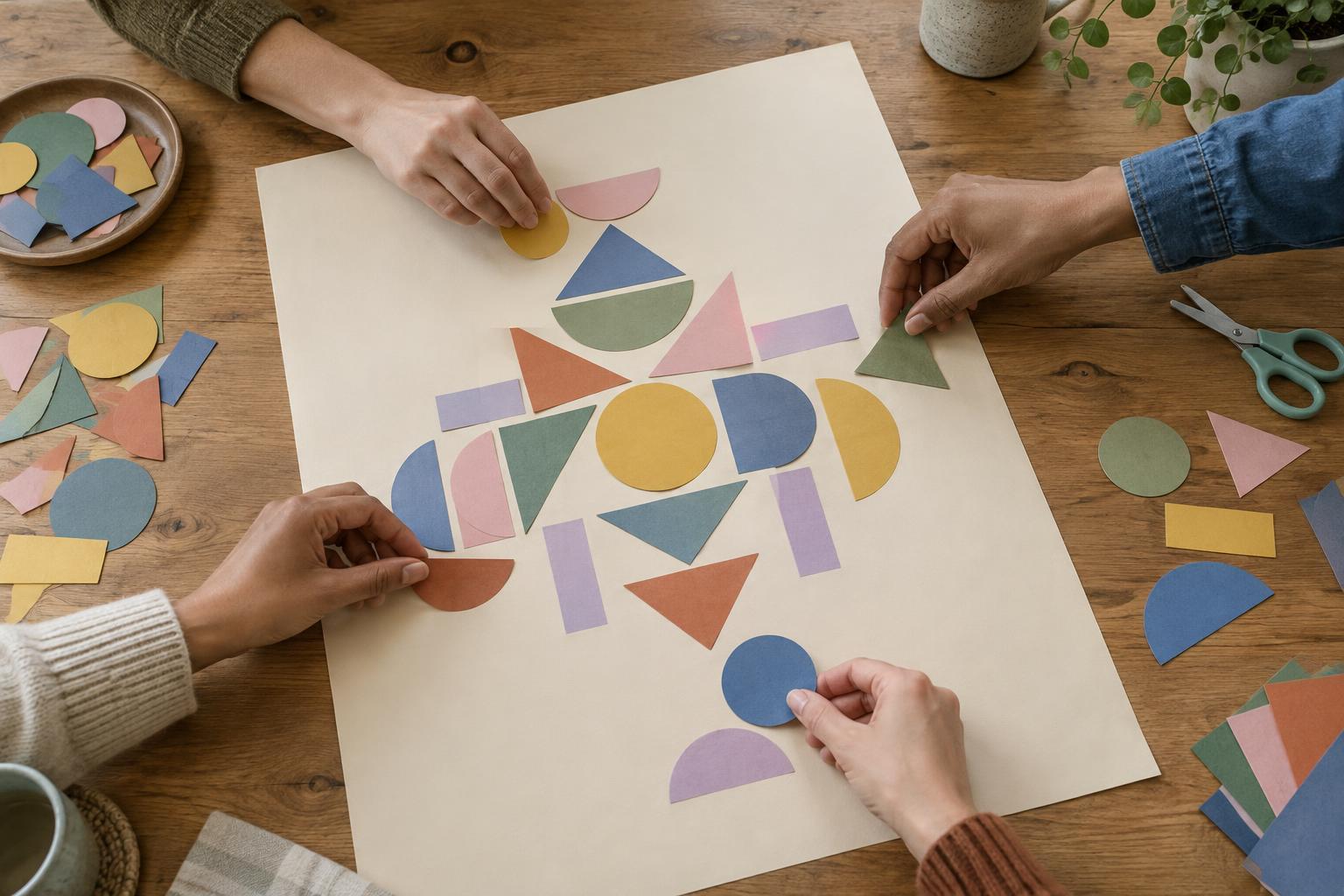
You need scrap paper, scissors and a clear table. Cut out roughly 30 shapes for a group of three or four: circles, squares, triangles and a few irregular pieces are enough. Make some large and some small. If you have colored paper, use it, but pencil marks on plain paper work just as well. There is no need to make the pieces identical or measure them precisely.
Place the shapes in a shared pile where everyone can reach them. Leave an open space in the middle of the table for the pattern. The aim is to create one design together, not to claim a section of the table for each person. Players can build a border, repeat a shape or arrange pieces around an imagined center. The pattern does not have to represent anything recognizable.
Start with a simple turn rule
Choose a starting player. On a turn, that player adds one shape to the shared design, then briefly says what they noticed or hoped to add. For example, they might say, “I repeated the triangle on the other side,” or “I left a gap for something small.” The next player adds a shape in response. Continue around the table until everyone has taken several turns.
The main rule is that a new piece must connect to the existing design in some way. It can touch another piece, line up with an edge, repeat a color or continue a visible rhythm. Players may interpret “connect” loosely, but they should be able to point to the relationship they saw. This gives each turn a useful starting point without requiring the group to agree on a plan in advance.
Let the design change direction
A player may see a different pattern from the one the previous player intended. That is part of the activity. A row of circles might become a winding path; a balanced arrangement might develop an uneven branch. Instead of correcting the new direction, look for a way to incorporate it. The shared design becomes more interesting when players can respond to what is on the table rather than protect an idea they had at the start.
For a gentler round, allow players to talk freely between turns. For a more surprising round, keep conversation to the brief comment made after placing each piece. Neither version should become a guessing test: players do not need to identify someone else’s secret intention. If the group gets stuck, invite the next player to add a shape beside an overlooked gap or to echo a detail from the opposite side.
Add one challenge at a time
Once the basic game feels comfortable, try a single constraint. You might ask the group to use every triangle, create a path that crosses the table, or leave an empty space in the center. A constraint gives players a shared problem to explore, but too many at once can turn a relaxed activity into a rules exercise. Start with one and see what kinds of choices it encourages.
You can also change how pieces enter play. Give each player a small hand of shapes and let them choose what to contribute on their turn. Or place the shapes face down and have players draw one at random. Choosing offers more control; drawing can prompt unexpected solutions. If a random piece seems impossible to place, let the player exchange it rather than forcing an awkward move.
Find a satisfying stopping point
Before starting, agree on a modest finish line, such as two turns per player or using half the pile. When you reach it, pause and look at the whole design. The group can stop there or take one final round to fill gaps and strengthen details. Avoid treating this as a vote on whose pieces worked best. Each addition helped shape what later players could do.
For a final conversation, ask what changed during the game. Did a repeated shape emerge? Did an accidental gap become a feature? Players can give the pattern a name if they want, or simply clear the table and try again with a different starting piece. Because the shapes can be reused, a second round offers a quick way to see how much a shared design can change when the first few choices change.