Start with the goal, not the whole strategy
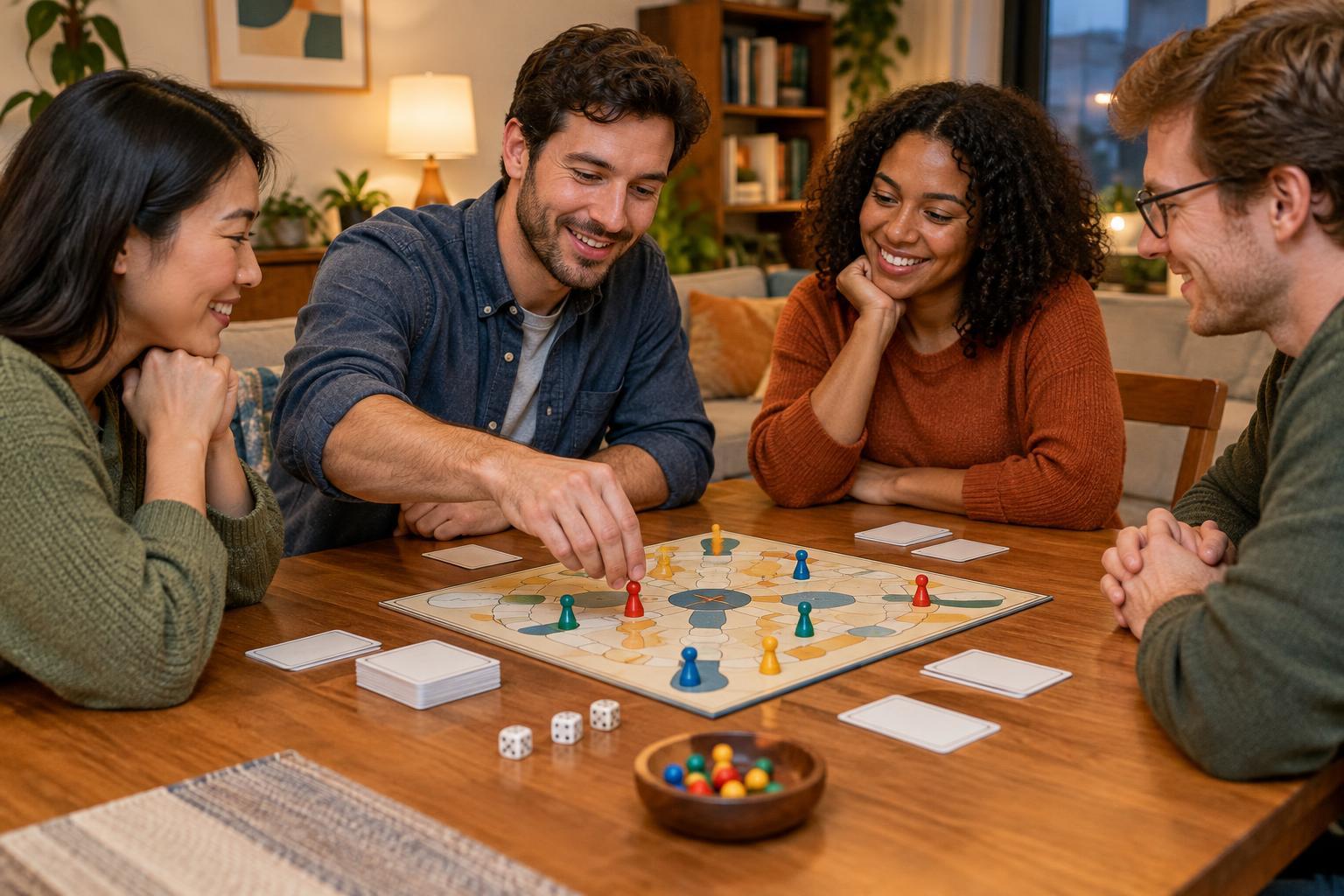
When a new board game begins, it is easy to stare at every available action and try to predict the entire game. You usually do not need to. First, identify what you are trying to achieve: collect points, complete objectives, reach a destination, or help the group meet a shared goal. Then ask which opening actions make progress toward that goal or give you more options later. This does not guarantee a strong start, but it gives your choice a purpose.
Look at any information the game gives you at the outset. A starting card, personal objective, player board, or limited supply of pieces may suggest an immediate priority. Separate that clue from an obligation: a bonus for collecting a certain item does not always mean you should take the first one available. If you are unsure, pick a move whose benefit you can explain in one sentence, such as “This gives me a resource I can use next turn.”
Check what is scarce and what can wait
Some opportunities may disappear before your next turn. A shared space might fit only one piece, a face-up card might be taken, or a useful route might become blocked. Other actions, such as drawing from an ample supply, may still be available later. Before choosing, ask: “What changes if I wait one round?” This question helps you notice timing without requiring you to calculate every opponent’s move.
Scarcity is not a reason to grab anything that looks limited. A rare option is useful only if it fits your aims or prevents a meaningful problem. Compare it with what you would give up. Spending your only resource on an early bonus, for example, may leave you unable to take a more useful action soon. If the trade-off is unclear, keeping a little flexibility is often a reasonable choice for a first play.
Prefer a move that teaches you something
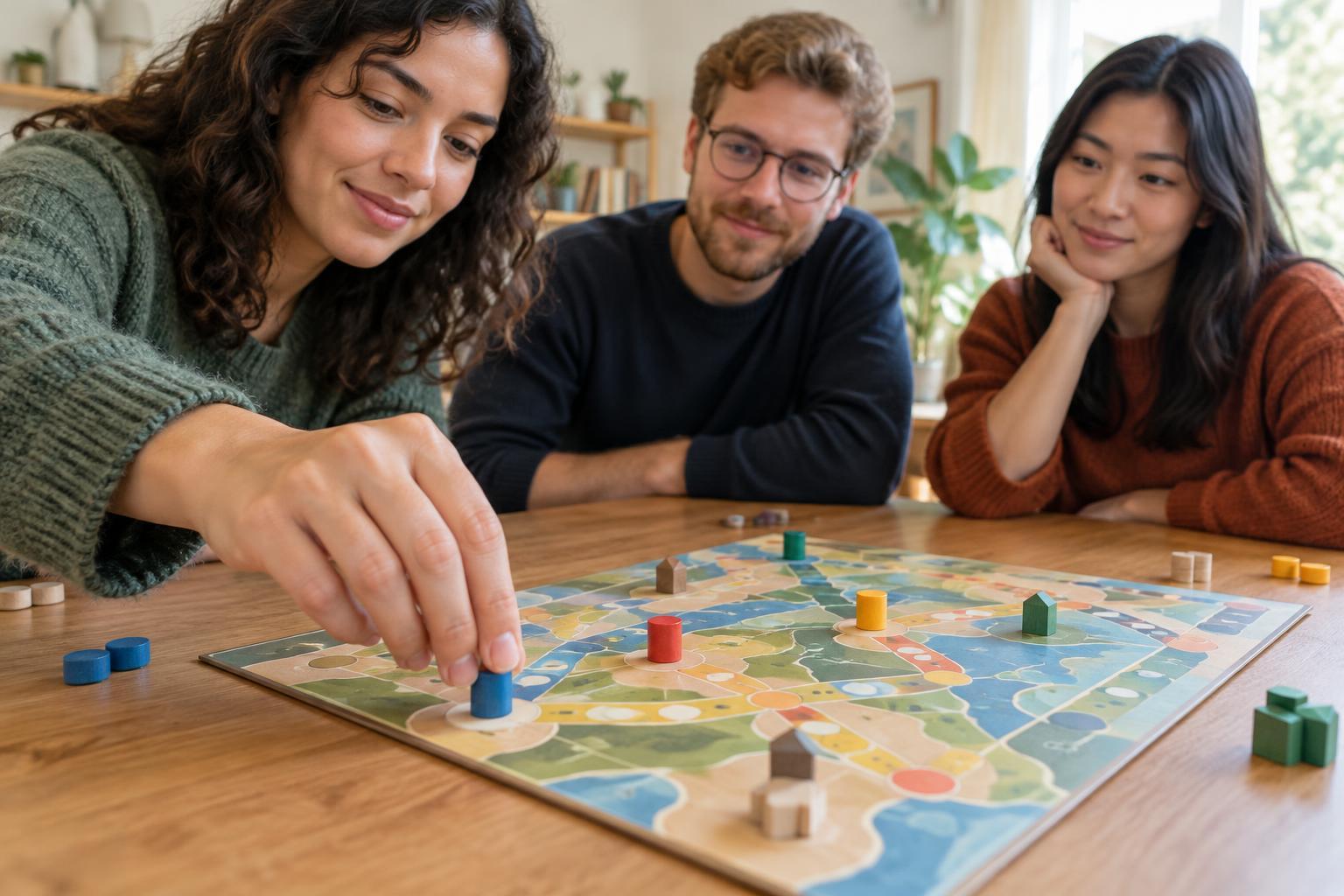
Your first game is partly an opportunity to learn how its choices connect. An opening action that produces a visible result can be easier to understand than one that depends on a long chain of future events. You might take a modest resource, try a basic action, or move toward an objective to see what the next turn offers. Such a move may not be optimal, but it gives you feedback you can use.
Before committing, check the immediate cost and consequence. Does the action consume a piece permanently? Can you undo or change direction later? Does it trigger a new phase or end your turn? These are good questions to ask at the table, especially when a rule is easy to miss. Keep the question specific so play can continue: “If I place here, can I move this piece later?” is more helpful than asking someone else to plan your whole turn.
Make a small plan, then stay adaptable
A useful first-turn plan can be as short as two steps: take this action now, then look for that opportunity next turn. It gives you direction without locking you into a strategy you barely know. After the other players act, check whether the opportunity still exists and whether a new one has appeared. Changing your mind in response to the board is part of playing, not evidence that your opening was wrong.
If several moves seem equally sensible, choose one and move on. Early uncertainty is normal, and a game night rarely improves when every opening choice becomes a lengthy debate. You can say what you were hoping the move would do, notice what actually happened, and adjust. Over a full game, that habit will teach you more than waiting for a perfect first move that you cannot yet recognize.