What miniature scale labels tell you
A scale ratio such as 1:48 describes a model relative to the object it represents: one unit on the model stands for 48 of the same units at full size. A millimeter label, such as 28 mm or 32 mm, usually describes the intended height of a human-sized figure. The two labels are not interchangeable. A ratio applies to every dimension, while a millimeter label is a figure-size convention that can vary between makers.
Even figures carrying the same millimeter label may differ. One maker might measure to a figure’s eyes, another to the top of its head. A crouching pose, tall boots, or an elaborate helmet complicates the comparison further. Figures described as “heroic” often have enlarged hands, heads, or weapons to make details easier to see and paint. Those proportions can matter more than a small height difference when you place figures side by side.
Choose an anchor before you compare
Start with the models that will appear most often in your project and treat them as your reference. If you are building a game board, that may be the player characters or standard troops. If you are making a display, it may be one central figure. Measure an ordinary standing model from the bottom of its feet to its eyes or head, and note which point you used. Then compare new figures using the same method.
Look beyond height. Do the heads, hands, shoulders, and equipment seem to belong in the same world? A taller figure can read naturally as a tall person, but a nearby figure with hands twice the size may look as though it came from a different visual style. When possible, place models next to each other before committing to a purchase or a paint scheme. Product photos can help, but camera angles and bases make exact comparisons difficult.
Check terrain by how figures use it
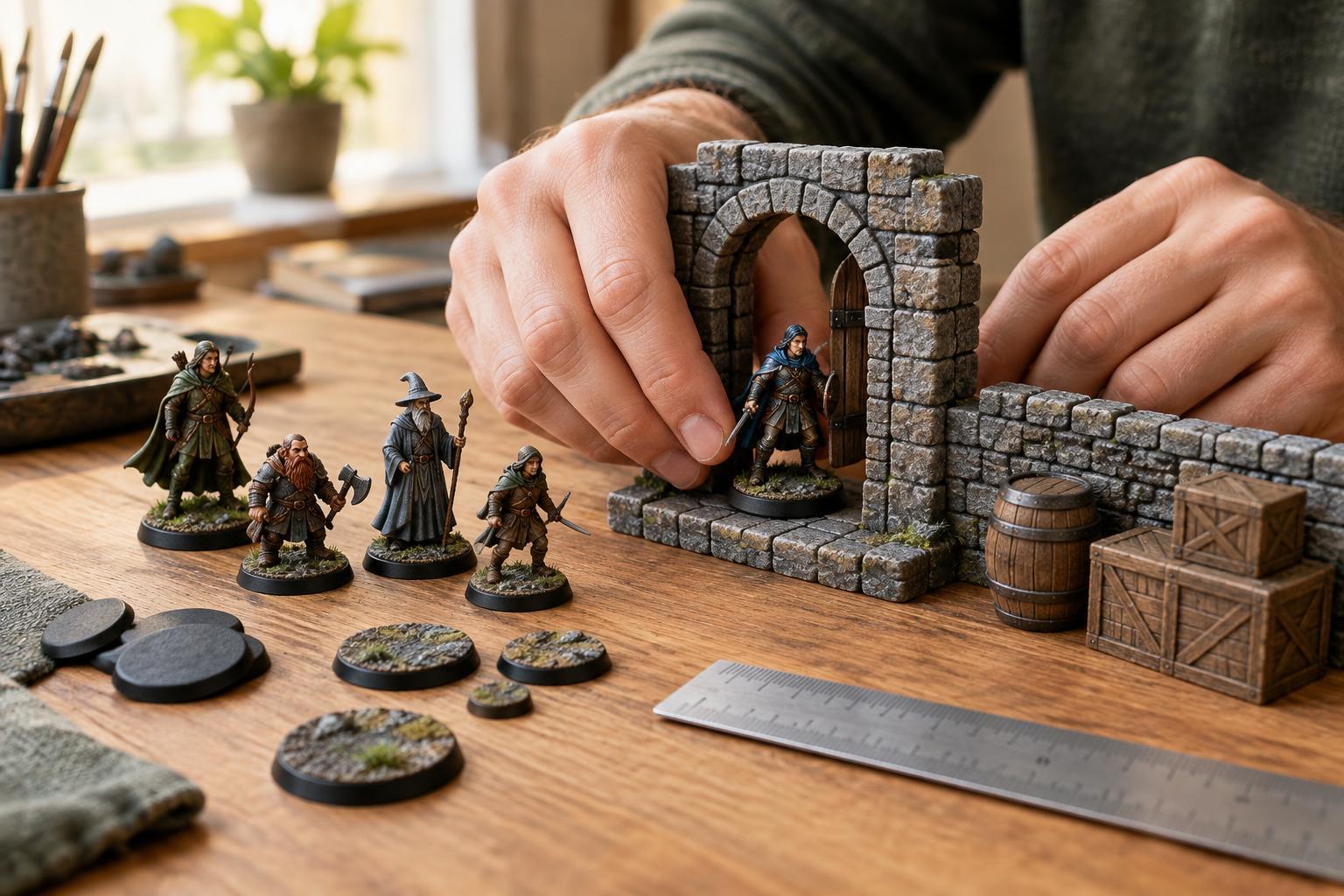
Terrain does not need to be mathematically exact to look convincing. Its most useful test is whether figures can interact with it. Stand a model beside a doorway: does the opening look passable once you account for the base and any weapon or backpack? Set it next to a table: would its hands plausibly reach the surface? Compare a window to the figure’s eye line and a chair to the length of its legs.
Gameplay adds another constraint. A doorway that looks right may still be too narrow for a model’s round base. Stairs may need broad treads so figures can stand securely, and walls may need room for hands to move pieces without knocking scenery over. Decide whether a feature is primarily scenic or needs to function during play. You can often preserve the appearance of a small building while making its removable roof, openings, or interior floor more usable.
Match accessories without chasing perfect ratios
Small objects can reveal a scale mismatch quickly. A barrel that reaches a figure’s chest, a mug as large as its head, or a tool too thick to grip may draw attention even if the surrounding building looks fine. Compare accessories to the relevant body part rather than relying only on a label. For items intended to be held, hands and weapon grips are especially useful references.
Some variation helps a scene feel lived in. Crates come in different sizes, furniture need not match, and fantasy equipment can be deliberately oversized. Aim for a consistent visual language instead of strict uniformity. If several pieces feel slightly too large, using them together in one area may look more intentional than scattering them among finely proportioned pieces. Paint and placement can also help: shared colors, wear, and basing materials tie different components together.
Make a quick fit test before building the whole scene
Create a small sample arrangement with one reference figure, a second figure, a doorway, a piece of furniture, and a handheld accessory. View it from the height and distance at which you normally play or display your models. Check the silhouettes first, then test practical details: can bases fit where they need to go, can figures stand without leaning, and can you reach them during play?
If something feels off, identify the specific problem before replacing it. A tall base may be making one figure seem oversized; a low doorway may be the only terrain feature that needs adjustment. Keep a note of the measurements and makers that work well together. Scale labels will narrow your search, but a reference model and a simple tabletop test will give you a more reliable answer for your own collection.