Read the setup instructions before unpacking everything
It is tempting to empty the box and start sorting by appearance. Instead, open the rulebook to its contents list and setup pages first. These usually tell you which pieces are used, where they go, and whether the arrangement changes with player count. Some games include extra components for variants or expansions; finding them in the box does not necessarily mean they belong in tonight’s game.
Before moving pieces onto the table, identify the version you intend to play. Check whether the game has a beginner arrangement, a recommended first game, or separate instructions for two players. If an expansion is mixed into the box, set its components aside unless everyone has agreed to use it. This small decision keeps you from building a table layout that the chosen rules do not support.
Count by type, then sort by purpose
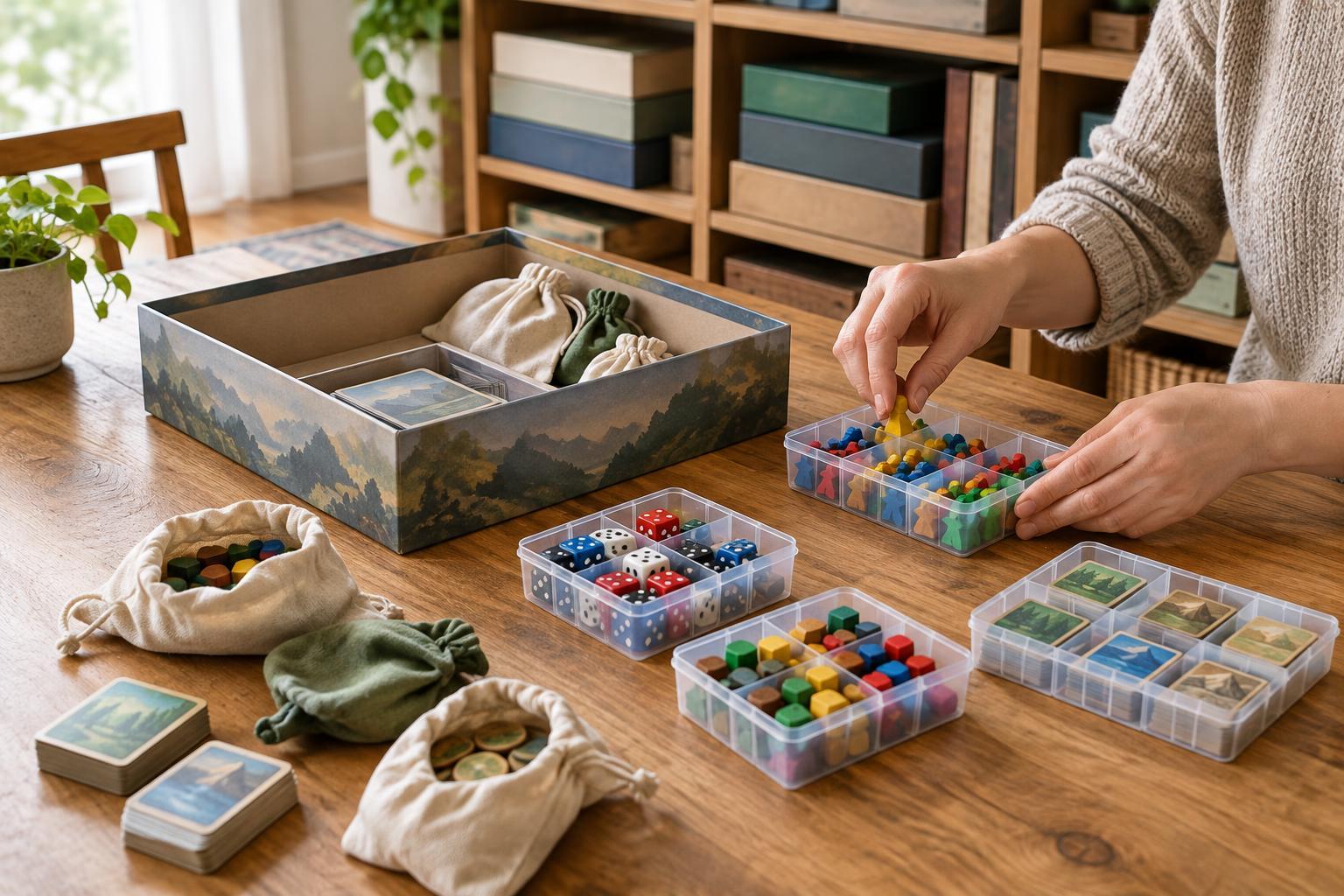
Use the component list as a checklist rather than counting every piece from memory. Group cards, boards, tokens, dice, and player pieces separately. For large piles of identical tokens, a quick count in small stacks may be enough to spot an obvious shortage. Pay closer attention to unique items, such as a starting-player marker or a special deck: one missing piece may matter more than a spare-looking token.
If something appears to be absent, check the box insert, under the board, inside card sleeves, and among pieces with similar artwork. Then consult the rules to see whether that item is used at your player count. If it really is missing, decide whether a clearly labeled household substitute will work. A coin can stand in for a marker, for example, but a missing card with unique text may affect play in a way a substitute cannot easily fix.
Build the table in the order the rules describe
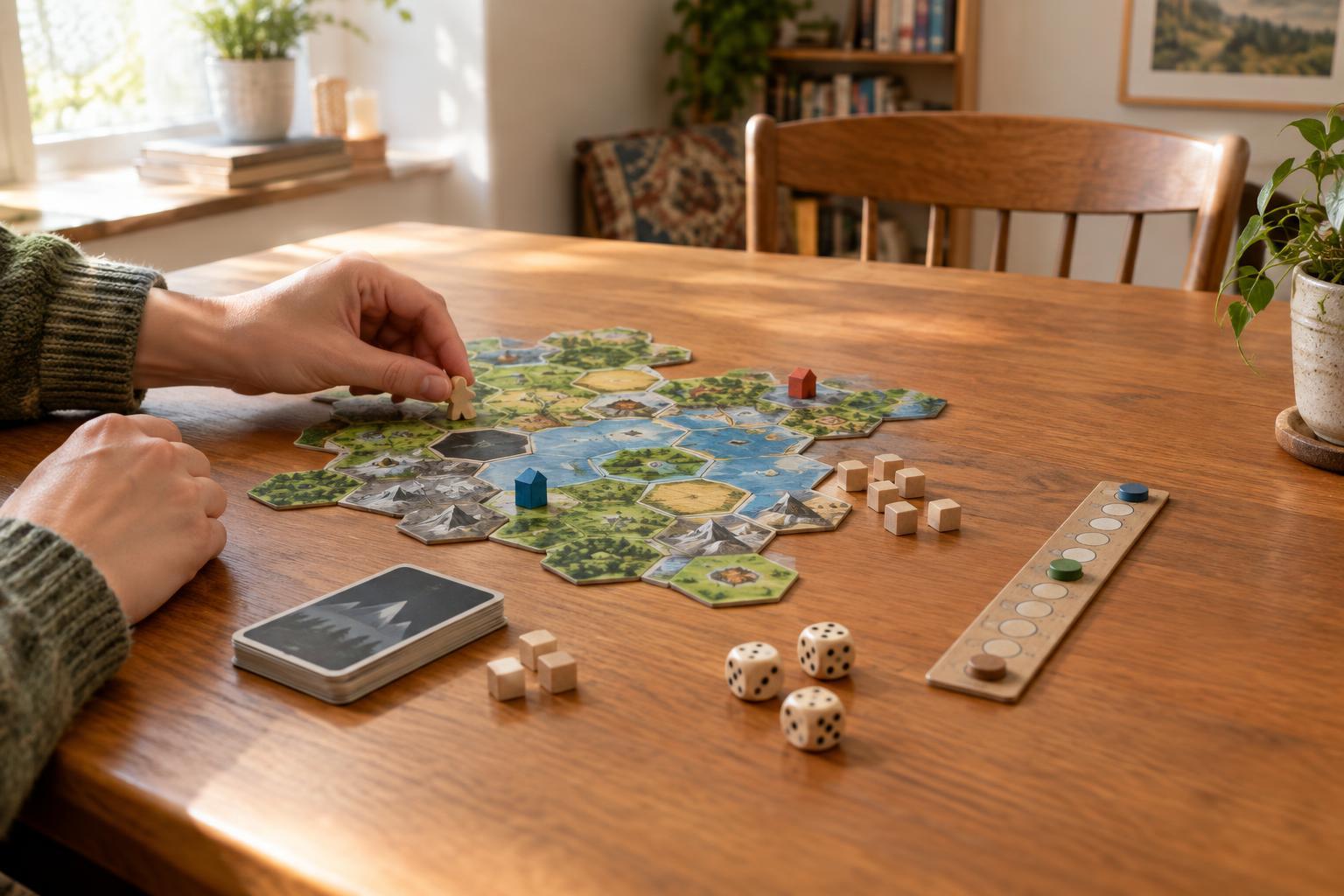
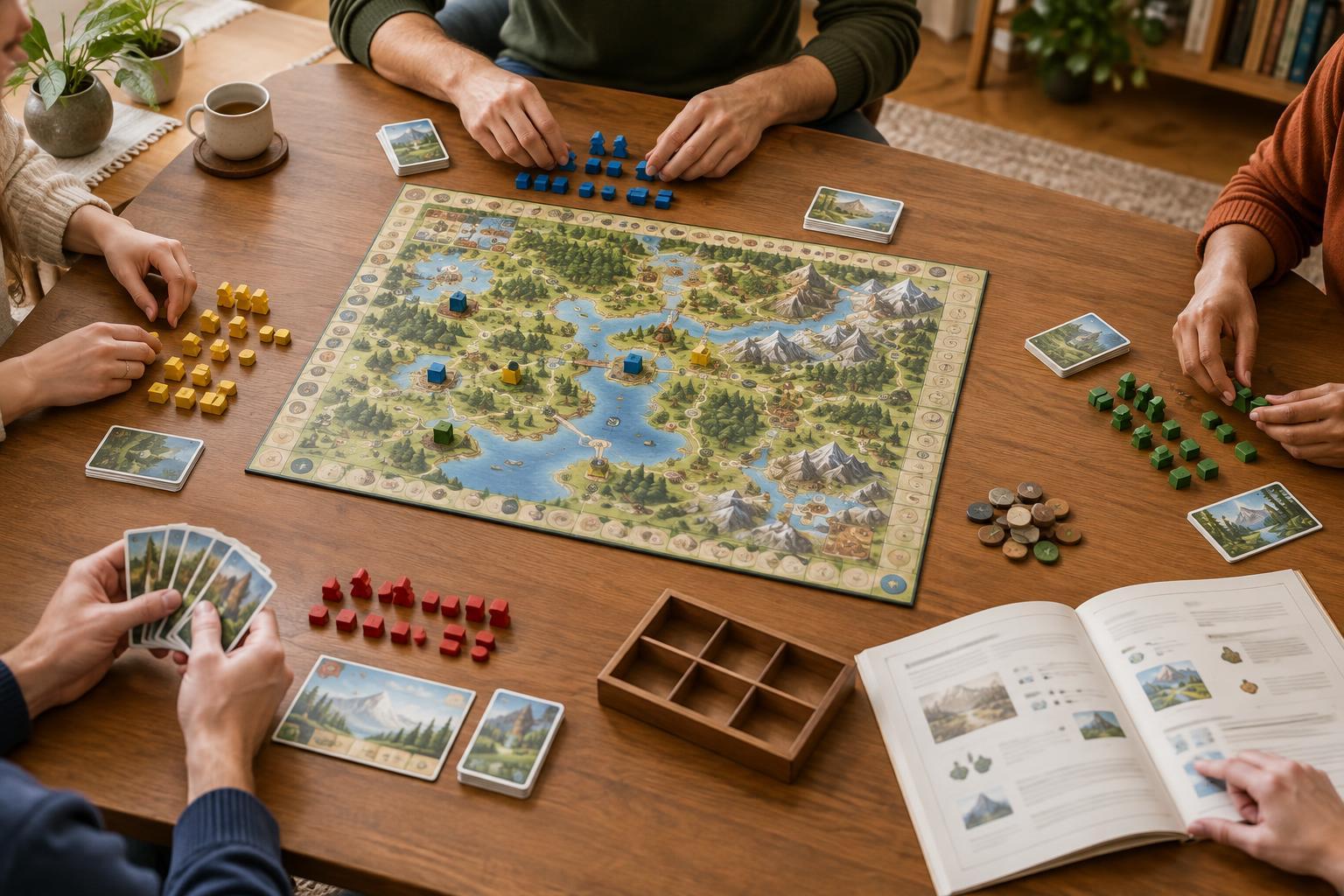
Set up the shared area first: place the board where everyone can see it, then add decks, supplies, and any pieces assigned to printed spaces. Shuffle only the decks the rules tell you to shuffle, and keep different card types separate. If a deck has a designated draw pile and discard area, leave room for both. A little empty space around the board makes later turns easier than a tightly packed display.
Next, prepare each player’s area. Give everyone the correct board, cards, currency, or pieces for their color or role, checking whether starting resources differ. Put unused pieces back in the box or in a separate container so they cannot be mistaken for available supplies. Before proceeding, compare the table with the setup diagram, if there is one. Check directions as well as contents: a track marker on the wrong end of a track can change the opening state.
Find the rules that apply before turn one
Setup is not finished when every piece has a place. Look for instructions about choosing a starting player, dealing opening hands, revealing initial cards, placing first units, or making decisions in turn order. Pay attention to wording such as “each player,” “in reverse turn order,” and “before the first round.” These details can be easy to miss when they appear in a sidebar or at the end of the setup page.
Also locate the first-round rules and any exceptions to normal turns. Some games begin with a shortened round or restrict an action at the start. You do not need to teach the entire rulebook before play, but the group should know what happens first. If an instruction is unclear, read the relevant passage together before anyone makes an opening choice.
Give the group a final, playable overview
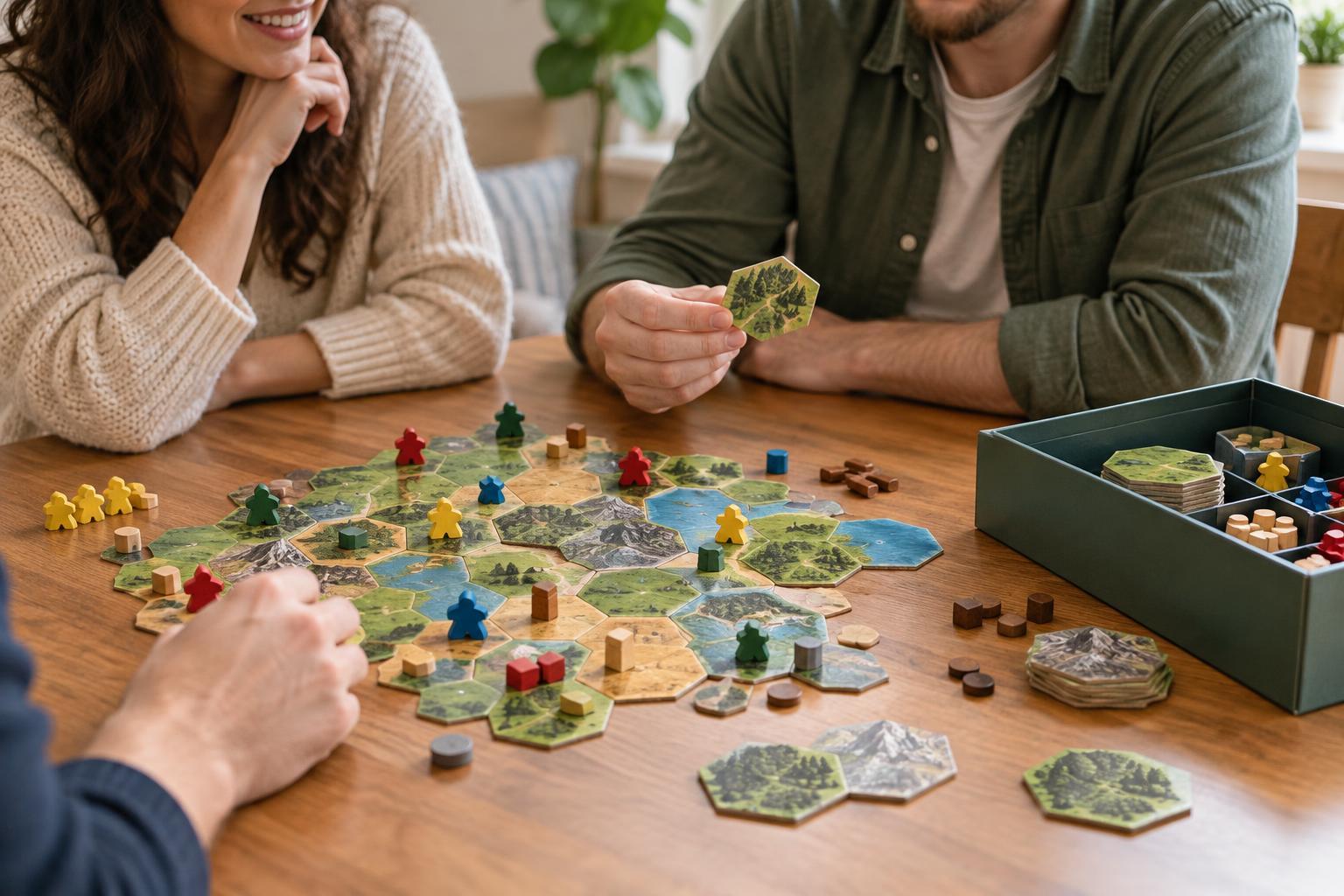
Once the table is ready, explain the goal in a sentence or two, show where players can find shared supplies, and walk through a typical turn. Point out any information players should keep private. Then name the starting player and describe the first action they can take. This orientation helps everyone connect the pieces in front of them to what they are about to do.
Keep the rulebook nearby and make one last scan: correct player-count setup, all required starting pieces distributed, decks in the right places, opening effects resolved, and turn order agreed upon. You can keep this short checklist with the game for next time. The aim is not a perfect ceremony; it is a clear starting position that lets the group spend less time untangling setup and more time playing.