Start with a stable, clear surface
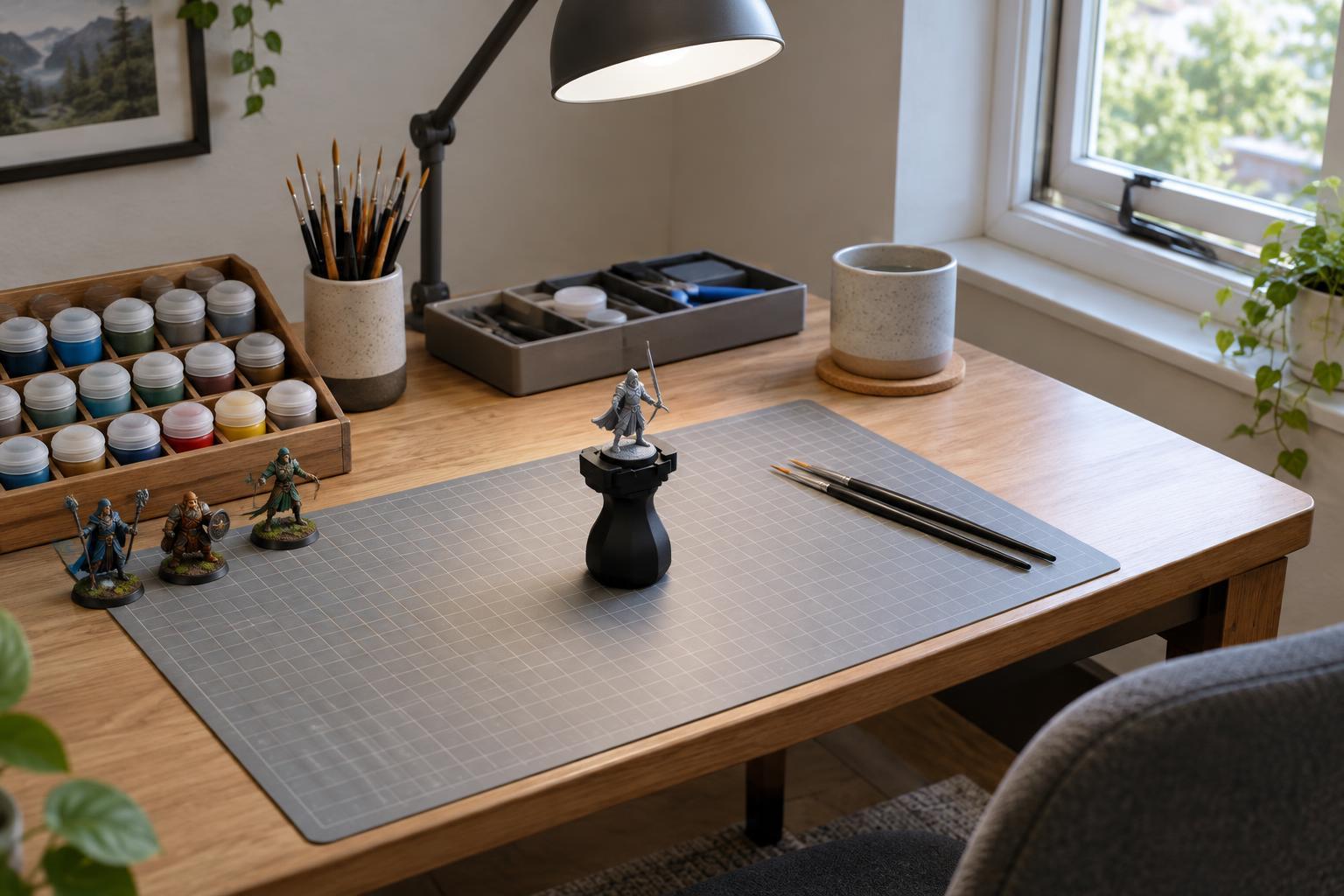
A miniature painting workspace can fit on a desk, a kitchen table or a portable tray. The important starting point is a stable surface with enough room to rest your hands without knocking into paint pots. Clear away unrelated objects before each session, then put down a washable mat or another protective covering. A cutting mat is useful when you also assemble miniatures, but keep cutting and painting tasks separate so loose parts and sharp tools do not get mixed together.
Place the miniature and palette in front of you, with water, brushes and paints within easy reach. Leave a clear strip of table where you can set down the model while changing colors. If you share the space, a shallow tray can hold the current project and make it easier to move everything without carrying open pots one at a time.
Make the details easy to see
Good lighting helps you distinguish edges, see where paint has pooled and work without leaning too close to the model. Daylight can be pleasant, but it changes as the day goes on. An adjustable desk lamp gives you a more dependable option. Position it so your hands do not cast a strong shadow across the area you are painting, and move it if glare on glossy paint makes details hard to judge.
Comfort matters as much as brightness. Sit with your feet supported and your shoulders relaxed, and bring the miniature toward your eyes rather than bending over it for long stretches. You can brace your painting hand against the table or rest both elbows on the work surface for steadier brushwork. Try a short session, notice where you feel strained, and adjust the chair, lamp or model height before settling in for longer.
Keep air, paint and tools under control
For ordinary brush painting, check the labels on the paints and other products you use and follow their handling instructions. Keep lids closed when a color is not in use, and open a window or otherwise provide fresh air if the room feels stuffy. Sprays, airbrushing, solvents and sanding can introduce different airborne exposures; do not assume that a setup suitable for brush painting is suitable for those activities. Follow product instructions and use an appropriate location and precautions for each task.
Set hobby knives, snips and files in a designated spot away from the edge of the desk. Cut on a suitable surface, direct the blade away from your hands and put sharp tools away as soon as you finish using them. If children or pets can enter the room, store blades, small parts and paints where they cannot reach them. Keep food and drinks away from the active work area so spills and mix-ups are less likely.
Organize for the way you actually paint
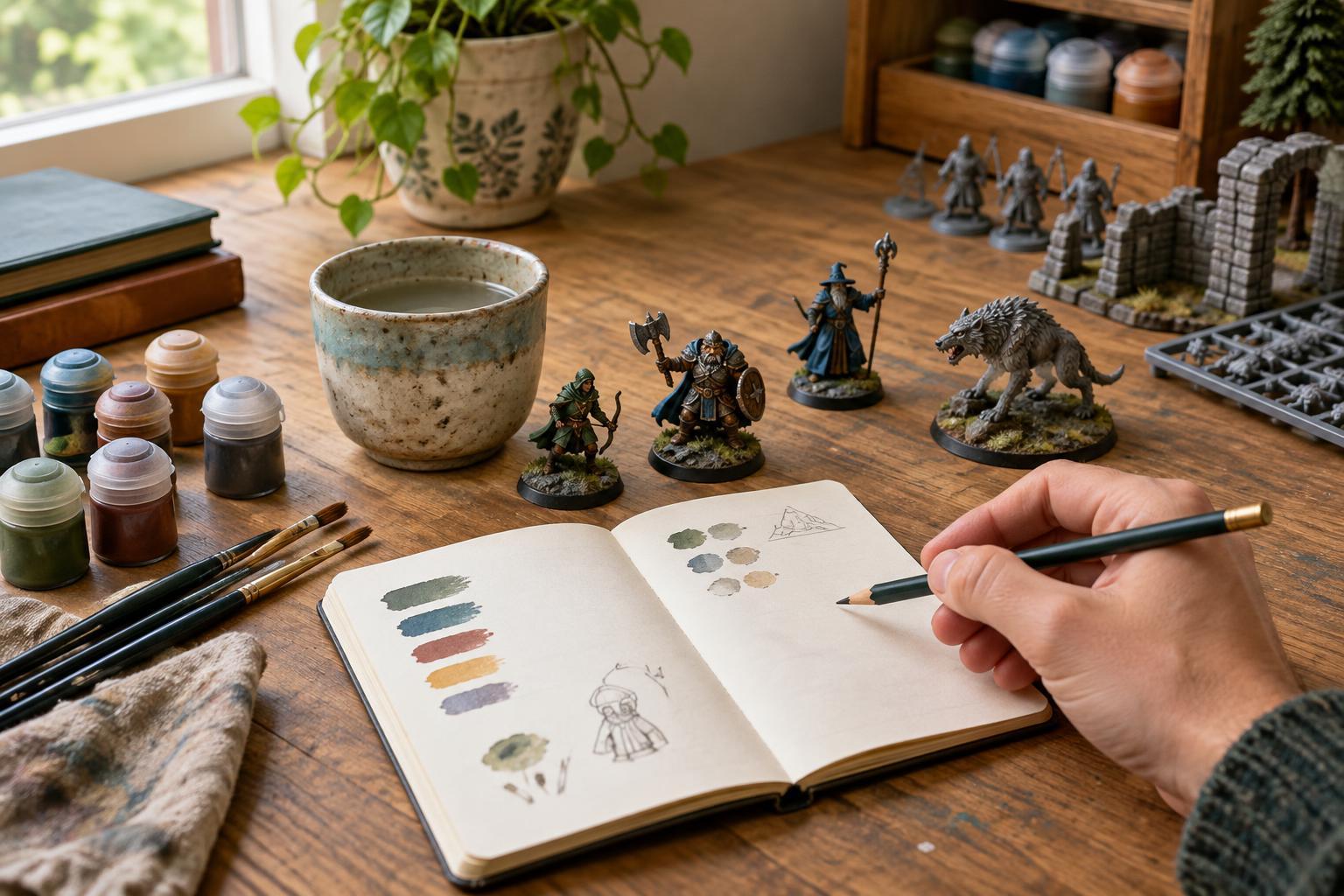
A useful layout follows the order of your work. Keep the paints you are using in one small group, brushes in a holder that will not tip easily, and unpainted pieces in a separate container from finished ones. A palette gives you a place to thin or mix paint without leaving multiple pots open. If you use a water cup, choose one that looks different from your drinking cups and put it where your arm will not catch it.
You do not need to buy a rack for every supply. Small boxes, dividers or a portable caddy can keep tools visible and make setup quicker. Label containers if similar-looking pieces belong to different projects. Leave a safe spot for miniatures to dry where they will not be brushed by a sleeve, bumped by a chair or investigated by a pet.
Build a simple end-of-session routine
A few minutes of cleanup can make the next painting session more inviting. Close paint containers, rinse brushes according to the paint maker’s directions and reshape their tips gently before storing them. Wipe up spills while they are easy to remove, and let painted miniatures dry undisturbed before packing them away. Dispose of leftover paint, cleaning liquids and used materials according to their labels and any local requirements rather than assuming every product belongs down a drain.
Finally, check that blades are covered or stored, lamps are off and the surface is clear enough for its next use. If setting up and packing away feels cumbersome, simplify the kit to the tools you reach for most often. The best workspace is not the most elaborate one: it is a place where you can find what you need, paint comfortably and leave everything ready for another session.