Set up a space you can keep using
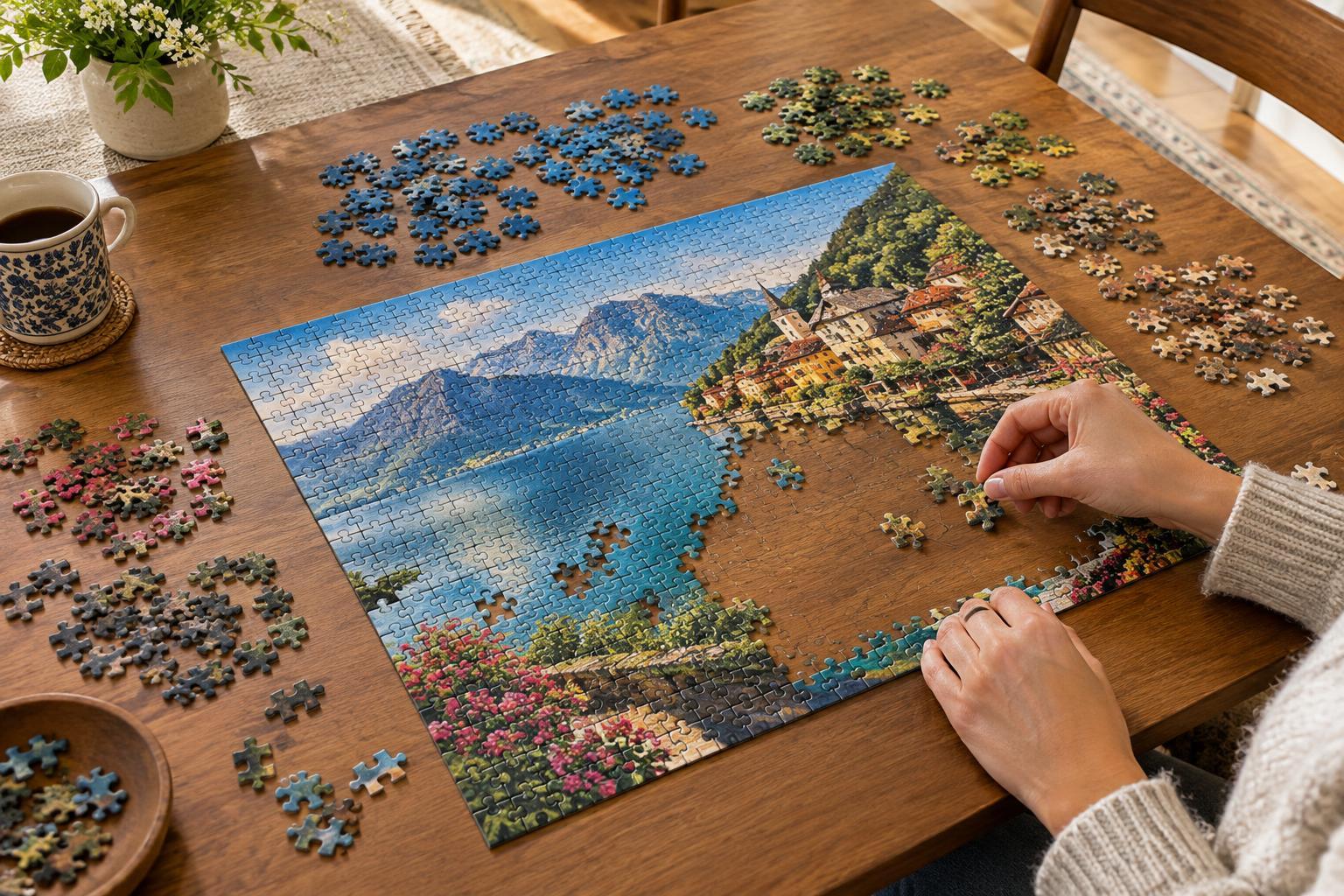
Before opening the box, choose a surface large enough for the finished puzzle and several groups of loose pieces. Check the completed dimensions on the box, then leave extra room around the edges. Good light makes subtle color differences easier to see; a lamp you can reposition may help when daylight changes. If the table needs to be cleared between sessions, use a puzzle board, a large sheet of sturdy cardboard, or trays that can be moved without mixing the pieces.
Empty the box carefully and keep it nearby for the reference image. Turn every piece picture-side up before sorting. This simple step takes time at first, but it saves you from repeatedly flipping through piles later. Put any damaged or unusual-looking pieces to one side rather than trying to force them into place. If other people or pets share the space, decide where loose pieces will be stored when you take a break.
Sort by what you can recognize
Start with a small number of categories rather than making a separate pile for every color. Pull out pieces with a straight edge, then look for obvious features such as text, faces, buildings, bold patterns, or strong color blocks. Broad areas like sky, water, or grass can have their own trays. Keep one mixed group for pieces that do not yet belong anywhere; an uncertain piece does not need an immediate answer.
Sort according to the picture in front of you, not a fixed system. A puzzle with large areas of similar color may be easier to divide by texture or by the shapes of its pieces. A busy illustration may call for groups based on small objects. Shallow bowls, trays, or sheets of paper help keep groups visible and separate. Avoid stacking pieces too deeply: sorting is most useful when you can scan a group at a glance.
Build an outline, then choose an anchor
Many puzzlers begin with the border because straight sides give them a clear place to start. Separate the four corner pieces if you can find them, and compare border colors with the box image as you join sections. Do not worry if the outline remains incomplete. Some pieces that appear to have a straight edge may not belong on the outside, and some puzzles have irregular boundaries. Set doubtful pieces aside and return to them when you have more context.
Next, choose a distinctive part of the image as an anchor. A sign, a bright flower, or a sharply outlined object can be easier to assemble than a large background area. Gather its likely pieces and work on that section within the border or separately on a tray. Once an anchor is complete, nearby pieces become easier to identify because you know what colors and lines should continue beyond it.
Use the picture and the piece shape together
Look for lines that cross from one piece to the next: a roof edge, a branch, a stripe, or a change in color. The reference image can tell you roughly where a feature belongs, while the tabs and openings help narrow the possible joins. Rotate a candidate piece before rejecting it. A piece that seems wrong in one direction may make sense after a quarter turn.
A correct fit should sit comfortably and make visual sense. If a join needs pressure, leave it out; forcing pieces can damage them and create a misleading section. When several pieces share nearly the same color, arrange them face up and compare their shapes. You can also sort that group by subtle differences, such as lighter and darker tones or the direction of a printed texture. Test a few likely pieces, then move on if none fit.
Keep progress steady when you get stuck
As sections grow, move completed groups close to their probable positions and connect them when the intervening pieces become clear. Keep unused pieces spread out and occasionally revisit the mixed group. A piece that looked featureless at the start may become recognizable once much of the image is assembled. If several people are working together, each person can take a tray or image area, then compare sections without crowding the same part of the table.
When progress slows, change tasks rather than searching the same gap indefinitely. Try a different color group, examine the border again, or take a short break and return with fresh eyes. Before packing up, put loose pieces in containers that will not tip and protect completed sections from sliding. There is no required order or pace: a good method is one that helps you see new connections while leaving room to enjoy the puzzle.