Start with what you can confirm
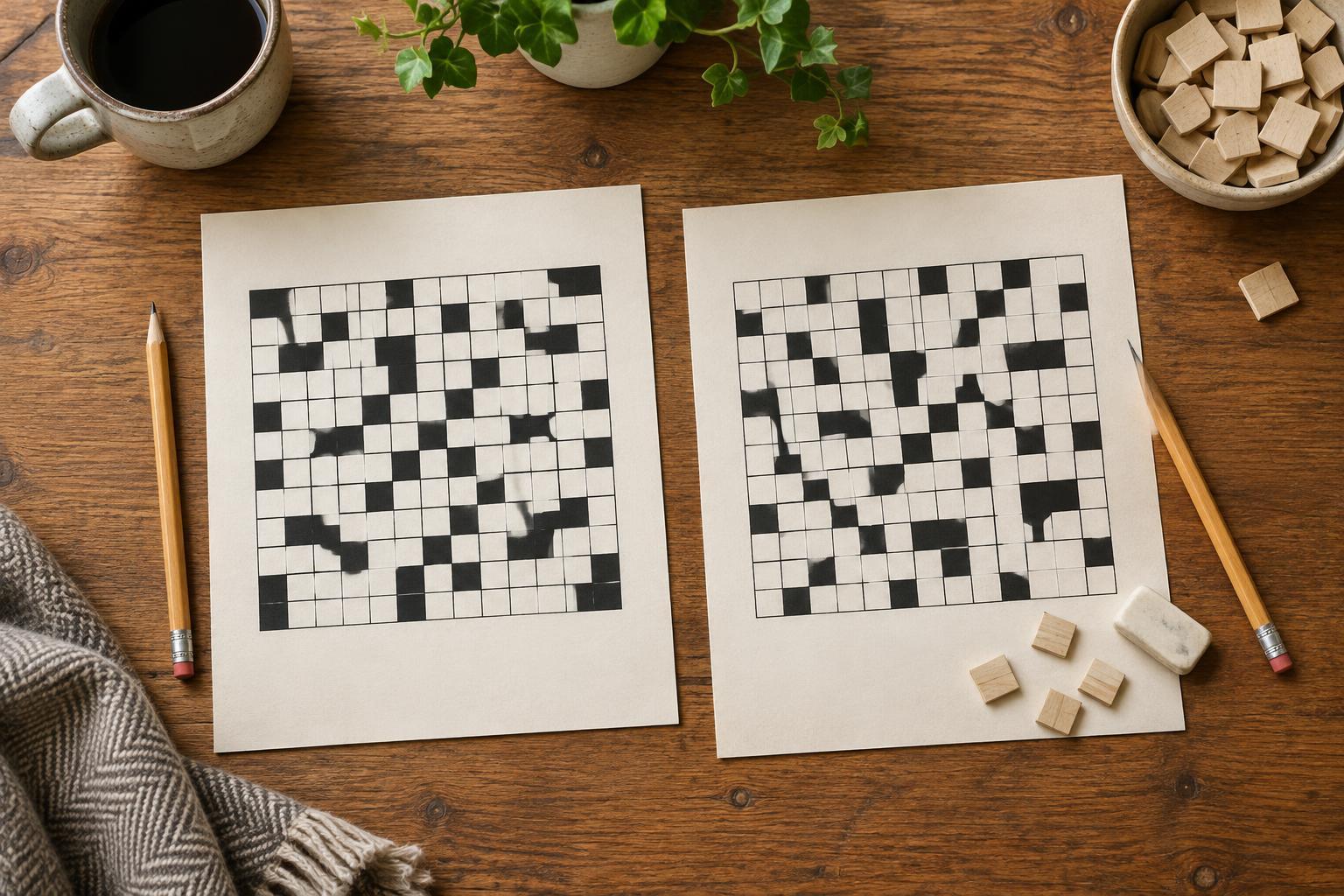
You do not need to know the first answer in a crossword, or even the first ten. Scan the entire clue list before settling into one corner of the grid. Fill in answers that come to mind quickly and fit the number of squares. Names, familiar phrases, simple definitions and clues with unusually specific wording may give you useful starting points. Leave anything you only half-recognize for a second pass.
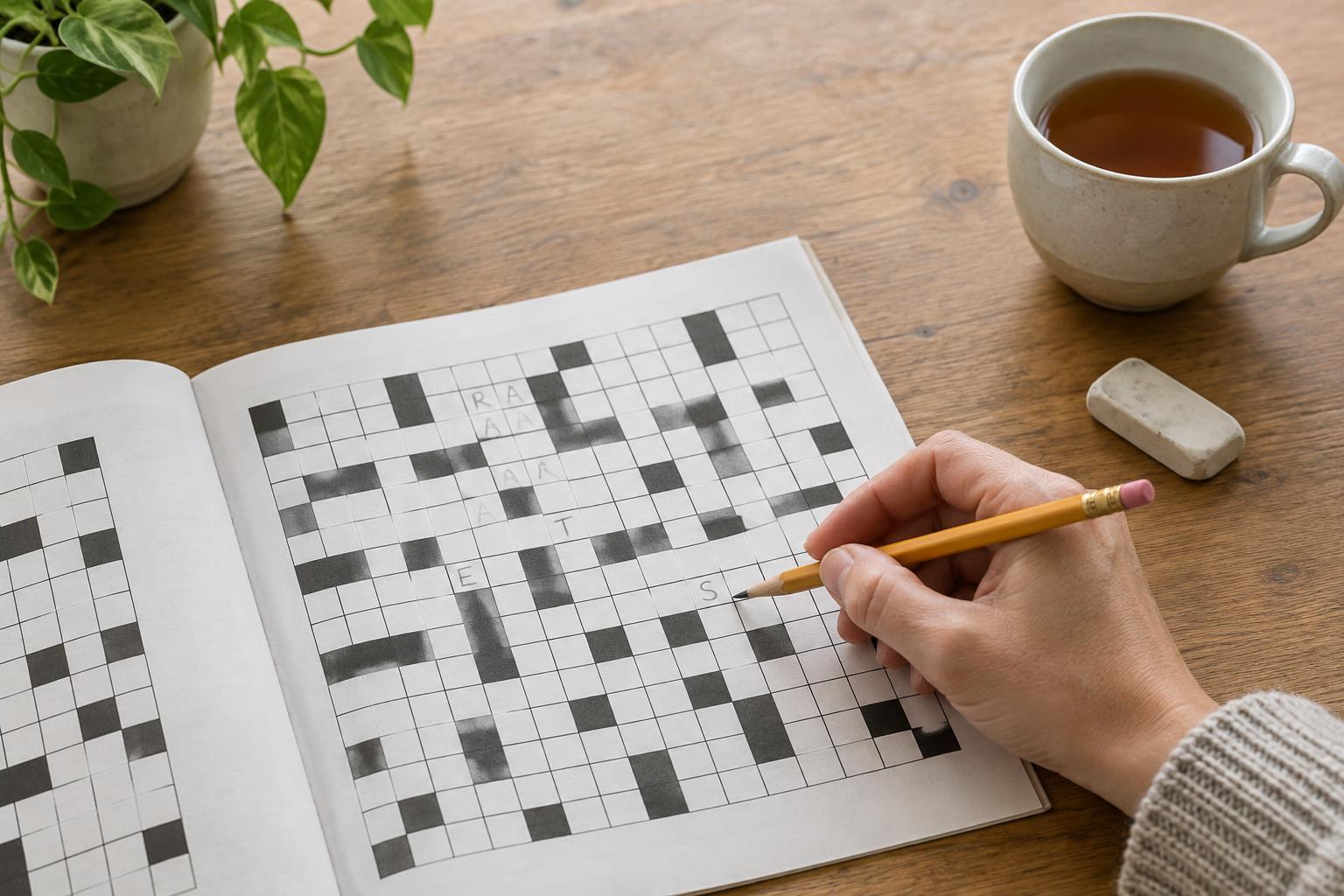
As you enter an answer, check whether its crossing clues still look possible. A word that fits its own clue can still be wrong if it makes several intersecting entries awkward. If you are solving on paper, write uncertain letters lightly; in an app, use a pencil or draft mode if one is available. Treat a tentative answer as a question to test, not a commitment to defend.
Use the grid to narrow your choices
Each confirmed letter makes another clue more manageable. Suppose you have a five-letter answer with its second and fourth letters filled. Instead of searching your memory for every word that might match the clue, look for words that fit both the meaning and that pattern. If several options remain, work on their crossings before choosing one. A single reliable crossing can be more helpful than several speculative guesses.
Short answers are often worth checking early because they connect to multiple entries in a small space. They can also be ambiguous: a brief clue may have several reasonable solutions. Use those entries to gather possibilities, then let longer crossing answers confirm them. When a whole area stays blank, move elsewhere. Progress in another part of the grid may eventually give you the letters you need.
Read clues for form as well as meaning
A clue gives hints about how its answer is written. A plural clue often calls for a plural answer, while a clue in the past tense may point to a past-tense verb. Abbreviated clues may signal abbreviated answers. These patterns are useful checks, though crossings should still have the final say. Pay attention to small words such as “perhaps” or “for one,” which can suggest that the clue is giving an example rather than a direct definition.
Also consider that ordinary words may be used in less familiar ways. “Spring” could refer to a season, a coil, a leap or a source of water. If your first interpretation does not fit the grid, try another before deciding the clue is beyond you. Read the clue aloud, look at its part of speech, and ask what kind of answer would complete it naturally. That small change of perspective can open a stubborn entry.
Build momentum without filling every gap
Once you have a cluster of answers, follow its crossings rather than repeatedly scanning from the top of the clue list. Work outward from letters you trust. If an answer seems close but one crossing disagrees, inspect both clues. The problem could be a misspelling, an alternative word, or an assumption about what one clue means. Erasing one shaky entry may make room for several stronger ones.
It helps to keep three mental categories: confirmed, plausible and unknown. Confirmed answers have clear clue support and sensible crossings. Plausible answers fit but still need checking. Unknown clues can wait. This prevents a chain of guesses from making the grid look fuller while becoming harder to solve. When you feel stuck, take a short break or switch to a different section; returning to a clue with fresh eyes is often more productive than staring at it.
Treat each puzzle as practice
Finishing is satisfying, but it is not the only measure of a good solving session. Notice which clues helped you enter the grid and which assumptions held you back. If you choose to check an answer, first try to understand why it fits the clue and its crossings. That gives you a pattern to recognize next time, rather than just a filled square.
For a relaxed routine, give yourself one pass for obvious answers, another for crossings, and a final pass for clues that need a different interpretation. You can stop at any point and return later. A crossword that begins with only a few known answers is not necessarily out of reach: those few answers are the framework from which the rest of the grid can grow.