Start with the word list, not the grid
Scanning every row can work, but it is easy to overlook a word running upward, backward or diagonally. Before searching, read the word list and note what makes each entry recognizable. An unusual letter, a doubled letter or a distinctive pair such as QU can give you a better starting point than the first letter alone.
Choose one word and pick an anchor: a letter or short sequence that you expect to notice quickly. For a word containing two consecutive E’s, look for that pair rather than hunting every occurrence of its first letter. For a long word, its final few letters may be easier to spot than its beginning. Once you find a possible anchor, check whether the surrounding letters could complete the word in a straight line.
Keep the puzzle’s rules in mind. Many word searches allow horizontal, vertical and diagonal lines in either direction, but not every puzzle uses all of them. Check the printed directions before assuming that a backward diagonal is possible.
Search in directions, not just rows
A useful alternative to row-by-row scanning is to examine a promising letter as the center of a small compass. From that square, look along each allowed direction for the next letter of your target word. If it matches, continue in the same direction. A word search usually keeps each word on one straight path; changing direction halfway through is a sign that the match is accidental.
You can also search by orientation. Look across the grid for a word, then check columns, then diagonals. To inspect diagonals without jumping around, begin at one edge and follow each diagonal to its end. Repeat from the adjacent edge to cover the diagonals you would otherwise miss. This method gives your eyes a route through the grid rather than asking them to notice everything at once.
Backward words become less awkward if you reverse the target in your head or on a scrap of paper. Looking for the reversed sequence turns a backward match into a familiar left-to-right or top-to-bottom reading task. You do not need to reverse the entire word list; try it when a particular word is proving elusive.
Use the shape of the word to narrow the search
Word length is a clue. A long entry needs enough room between its starting square and the grid’s edge. If a ten-letter word might run to the right, there is no need to test starting squares in the last few columns. The same idea applies to words running down or diagonally. Ruling out positions that cannot fit the word reduces the number of paths you need to check.
For shorter words, focus on their less common sequences. A three-letter word made of common letters may appear by chance in several places, while a particular three-letter sequence within a longer word may be easier to identify. If you find what looks like the middle of a target, count backward and forward along the same line to see whether the full entry fits.
Themes can help you remember which words remain, but they should not override the letters on the page. If you expect a word to appear near a related word, you may spend too long searching the wrong area. Treat each candidate as a letter-by-letter check.
Mark progress without hiding useful letters
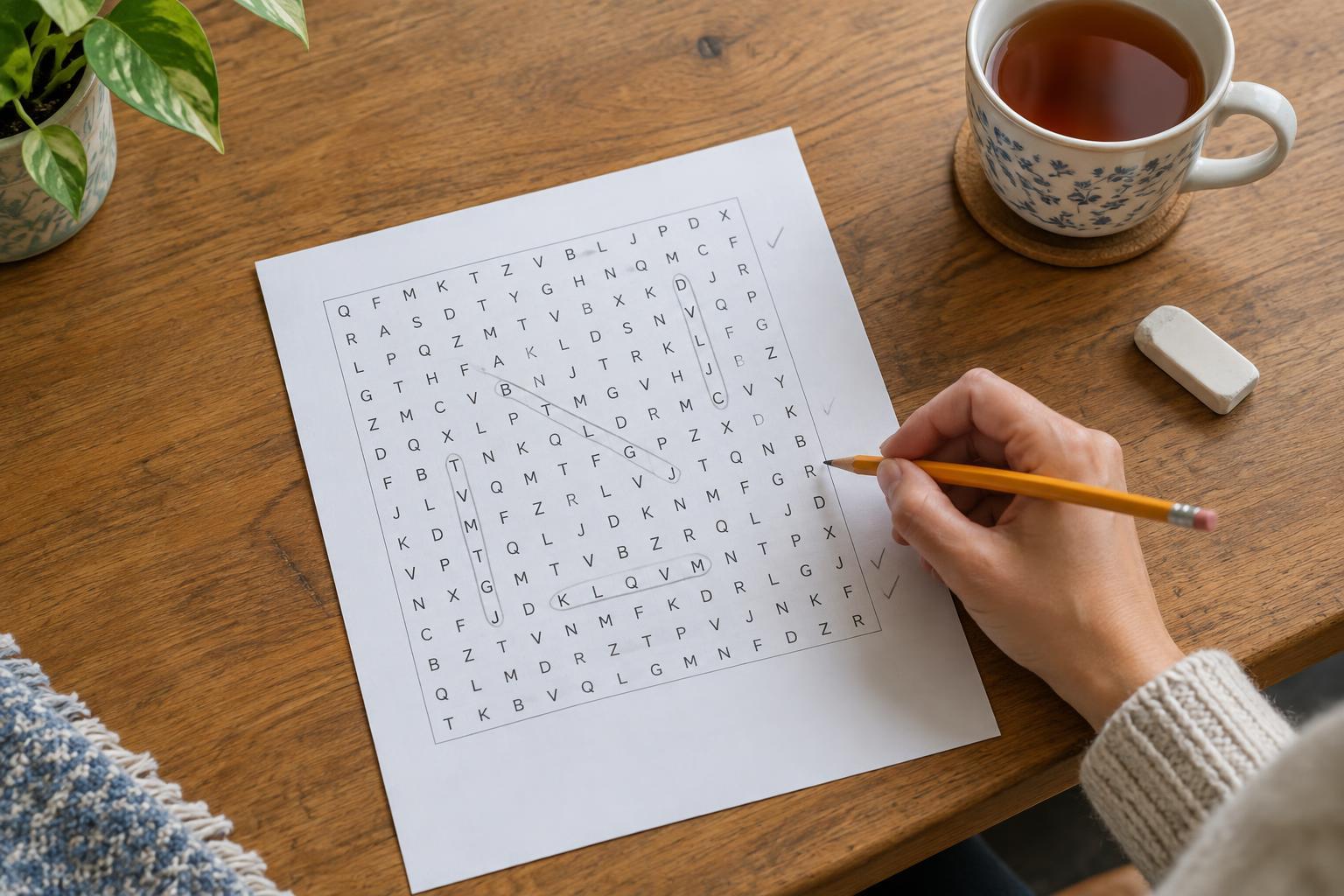
A marking system matters most when words overlap. Circle or draw a light line through each confirmed word, then cross it off the list. Use marks that leave the letters legible: a square already used in one word might also belong to another. Heavy shading can make a nearly finished puzzle harder, not easier.
When you find a possible match, verify its spelling and length before marking it. A tempting run of letters may omit a repeated letter or stop one square early. Following the line from first letter to last is usually quicker than erasing an incorrect mark later.
If you get stuck, change what you are looking for rather than restarting the same scan. Switch from first letters to endings, from rows to diagonals, or from short words to the longest remaining entry. A brief pause can also help when your eyes keep returning to the same familiar patterns.
Build a repeatable routine
For a fresh puzzle, try this sequence: check the allowed directions, identify an anchor in one target word, scan for that anchor, and test each candidate in straight lines. Mark a confirmed match and move to another word with a different-looking pattern. After an initial pass, inspect columns and diagonals deliberately before revisiting stubborn entries.
The goal is not to turn a relaxing puzzle into a race. A routine simply gives you something to do when random scanning stops being productive. Whether you prefer a pencil on paper or a digital grid, the same habits apply: look for distinctive patterns, test complete paths and keep track of what you have already found.