Start with a storage routine you can repeat
Good hobby storage does not require a dedicated room or an elaborate organizer. It needs to answer three questions: What must be cleaned before it is put away? What needs protection from damage? Where will you look for it next time? A few small containers with clear purposes are often more useful than one large box where paint bottles, tools, and fragile models can knock against each other.
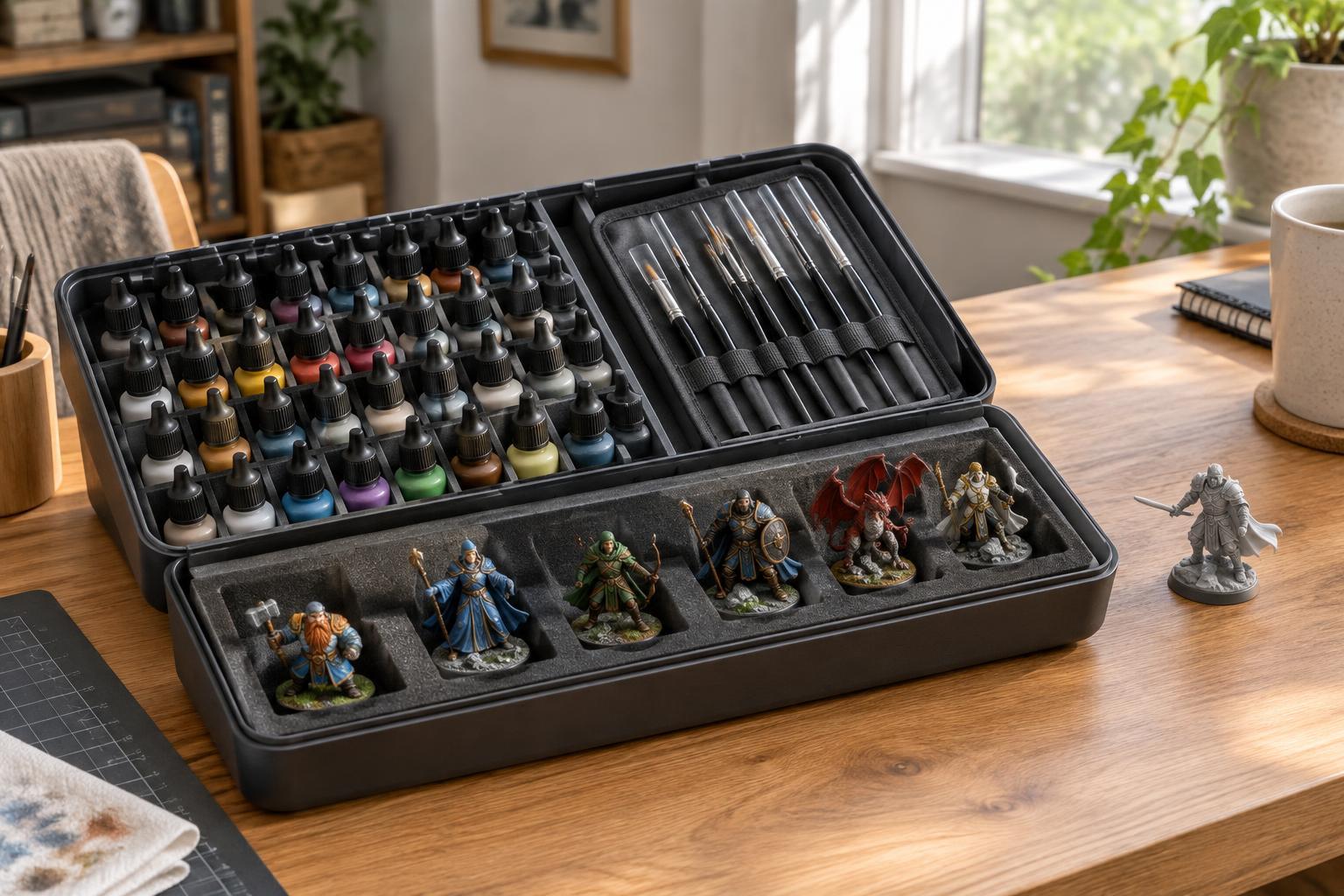
Set aside a place for paints, a separate case for clean brushes and tools, and a protected space for miniatures. If you share a table, use a tray to gather the supplies for your current project. At the end of a session, you can move the tray without having to sort every item immediately. Keep wet paint and uncured work off the tray until they are ready to store.
Keep paints closed, upright, and easy to find
Before putting paint away, wipe residue from bottle rims and close lids firmly. A clean seal helps prevent leaks and makes containers easier to open later. Store bottles upright in a box, drawer insert, or rack that stops them from tipping. Grouping paints by type or color family can speed up setup; choose whichever arrangement makes sense when you are looking for a specific bottle.
Most hobby paints are easier to manage when kept away from direct sunlight and temperature extremes, but storage needs vary by product. Check the label for any special directions, particularly for sprays, solvents, or other products that need different handling from water-based acrylics. Avoid leaving paint in a hot vehicle or a place where it may freeze. If you transfer paint to another container, label it so you do not have to guess what is inside months later.
Clean brushes before protecting their tips
Do not store a brush with paint drying in its bristles. Clean it using a method suitable for the paint you used, then gently reshape the tip. Try not to work paint up into the metal ferrule, where it is harder to remove. Follow the product directions when cleaning brushes used with solvents, and handle leftover cleaning liquids as directed on their labels rather than assuming they can go down a drain.
Let brushes dry before closing them in an airtight case. Once dry, place them where the tips cannot be crushed: a divided case, a brush roll, or a cup that will not tip over can all work. Protective caps are useful if they fit without bending the bristles. Keep sharp tools, files, and loose miniature parts in another compartment so a quick cleanup does not become a damaged-brush surprise at the next session.
Give miniatures room to stay intact
A miniature may look ready to pack before its paint, glue, or finish has fully set. Give recently worked-on pieces time to dry or cure according to the products used, then check that bases and protruding parts will not rub against the container. For short-term storage, a lidded box with dividers can keep models separate. For transport, use padding or a purpose-made case that holds each miniature securely without pressing hard on delicate details.
If you use a magnetic storage system, make sure each model is firmly attached to its base and test the fit before carrying the box. Magnets and small hobby parts can be hazardous if accessible to children or pets, so store them securely. Whatever system you choose, lift models by their bases when possible and avoid stacking loose miniatures. A little empty space around a sword, antenna, or banner is usually better than a tightly packed box.
Make the next session easy to begin
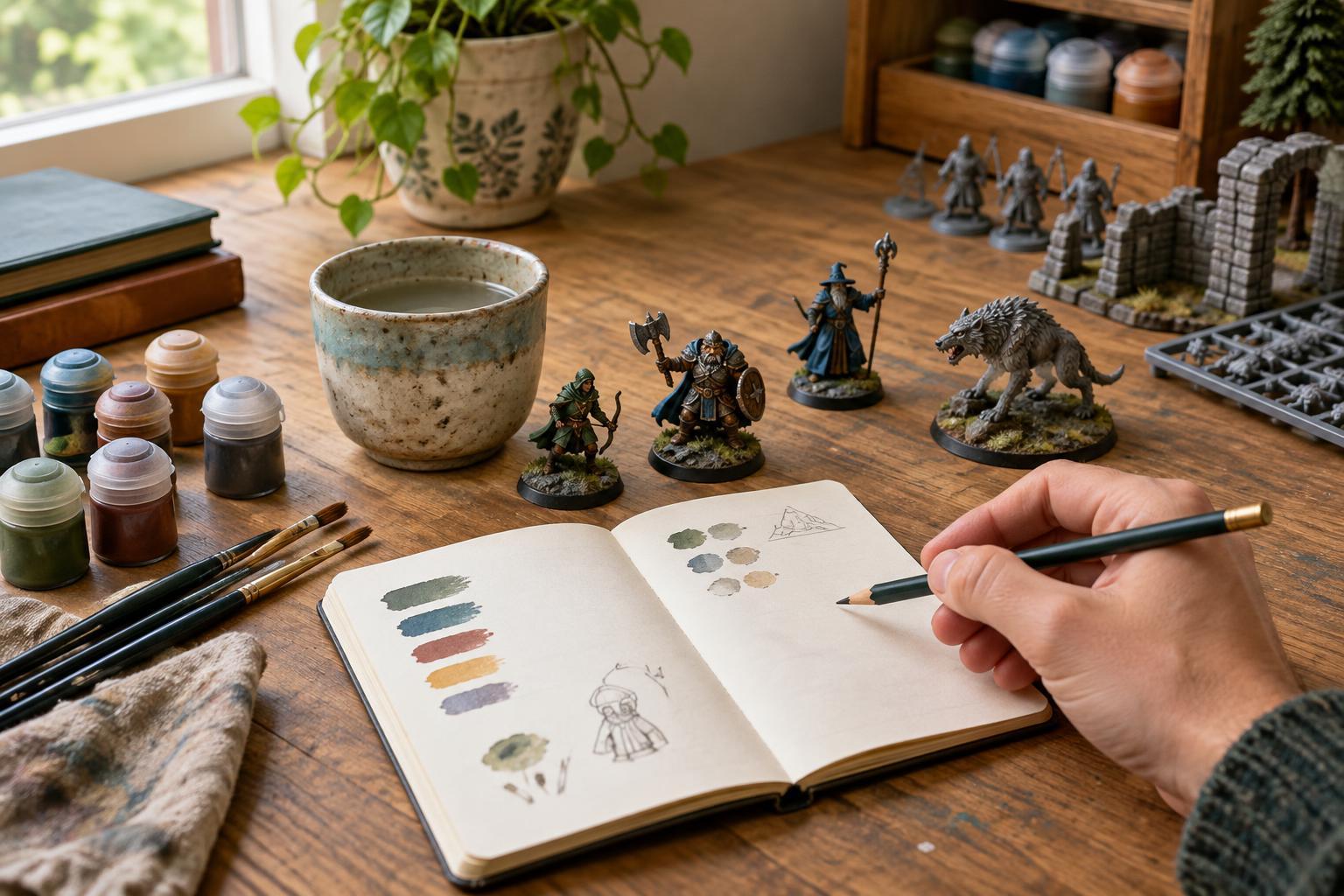
Works in progress benefit from a designated spot of their own. Keep each project’s models and a brief note together: the colors you used, the next step, or which pieces still need assembly. The note does not need to be detailed. Its purpose is to spare you from reconstructing your plan when you return. Store tiny components in a labeled compartment rather than leaving them loose on the work surface.
Finish with a short reset: close paints, clean brushes, check that models are dry enough to move, and clear your cutting or painting area. If a full cleanup feels daunting, prioritize anything that could dry out, spill, or break; the remaining sorting can wait. A dependable five-minute routine protects your supplies and makes it much easier to sit down and enjoy the next hobby session.