What a wet palette does
Miniature painting often involves small amounts of paint spread across a long session. On a dry palette, those drops can thicken before you finish a figure, especially when you are mixing a custom color. A wet palette slows that process. It places paint on a sheet of moisture-permeable paper above a damp layer, helping water-based acrylic paint stay workable for longer.
The palette does not keep paint fresh indefinitely, and it does not slow drying once paint is on the miniature. Its main advantage is giving you more time to blend, adjust, and reuse colors on the palette. It is particularly handy when painting several figures with the same scheme or building highlights from a base color.
Set up the layers
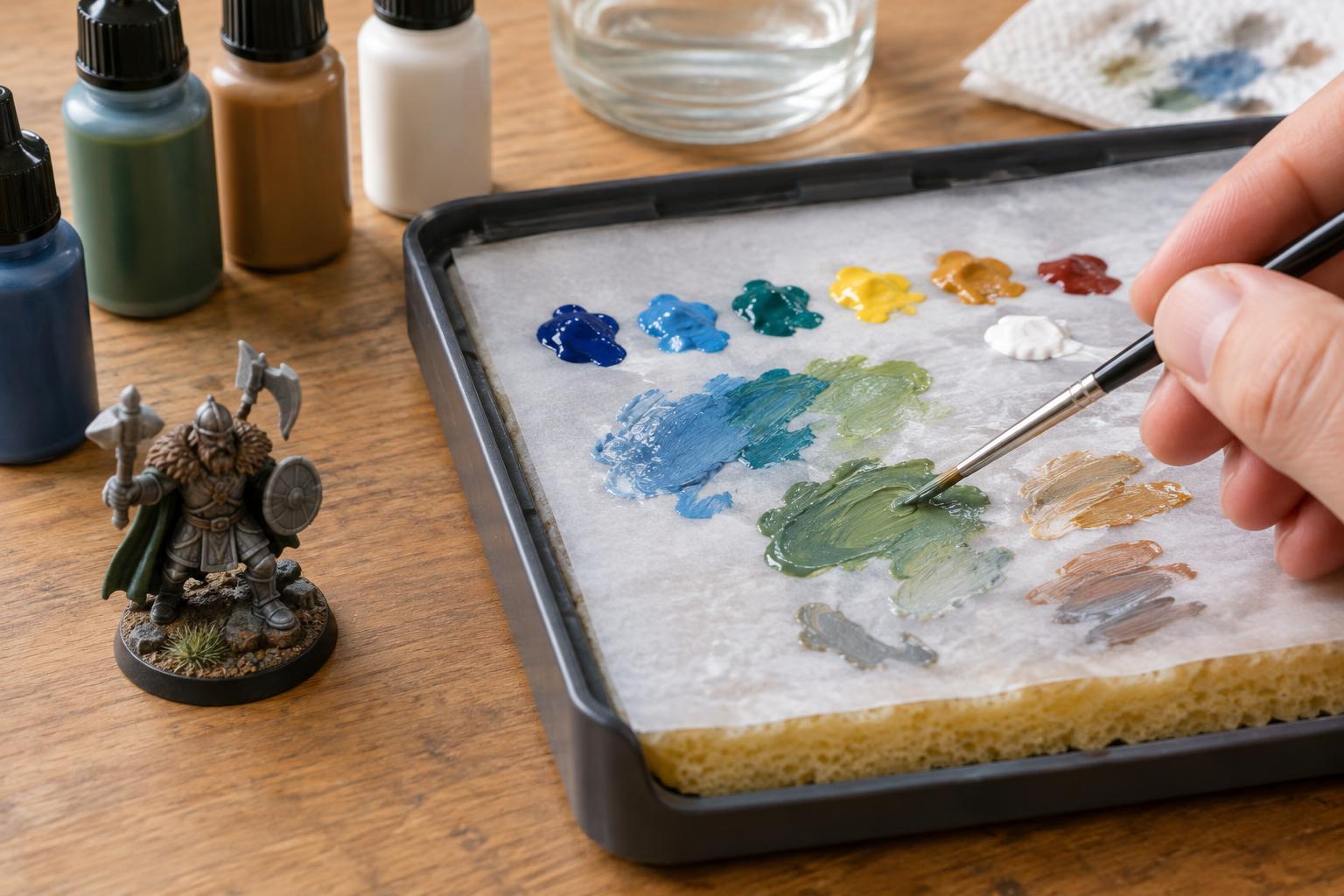
You can buy a wet palette or make a simple one from a shallow container with a lid. Put a clean sponge or several layers of absorbent paper towel in the bottom. Add water until the layer is evenly damp, then pour away any water that pools. The goal is steady moisture beneath the painting surface, not a sheet of paint floating in water.
Place wet-palette paper over the damp layer, following its package directions if it needs soaking first. For a homemade setup, plain, unwaxed baking parchment may work, though papers vary: if paint beads up or water passes through too quickly, try a different sheet. Avoid wax paper, which resists moisture, and ordinary printer paper, which can break down. Smooth the sheet so it lies flat and makes contact with the damp layer.
Add paint and control its consistency
Put small drops of acrylic miniature paint on the paper, leaving room to mix between colors. Start with less than you think you need; you can add more without crowding the palette. Use a clean brush to pull a little paint into an open area for mixing rather than repeatedly dipping a wet brush into the original drop. This keeps your colors easier to control.
A wet palette supplies moisture gradually, but it does not replace deliberate thinning. Test a brushstroke on a spare surface or an unobtrusive part of a primed miniature. If the paint obscures fine details, thin a small portion with a little water or an appropriate acrylic medium. If it runs into recesses when you want an even coat, use less water or let the mix thicken slightly. Several controlled coats often give a smoother result than one heavy coat.
Keep the palette useful during a session
Check the damp layer occasionally. If the paper begins to curl or paint dries quickly, lift a corner and add a little water underneath, then flatten the sheet again. If colors spread into watery puddles, remove excess water from the base and use a fresh part of the paper. A brush loaded with rinse water can also flood a small mix, so blot it before picking up paint.
Keep a rinse cup and a cloth nearby, and give each mixed color enough space to avoid accidental blending. You can close the lid during a short break to reduce evaporation, but reopen it and check the paint before continuing. Some colors may separate or change consistency while sitting. Stir and test them rather than assuming they will behave exactly as they did earlier.
Store briefly and clean up
At the end of a session, you may be able to save usable paint by closing the lid, but how long it lasts depends on the container, paper, paint, and room conditions. Before using stored paint, check its texture and smell. Discard paint that has dried into lumps or shows signs of contamination. A wet palette is a convenience for a painting project, not a place to keep mixed paint indefinitely.
When you are done, throw away the used sheet, empty the container, and wash and dry the base according to its material. Replace absorbent layers that smell musty or no longer clean up well. Use the palette for water-based acrylics rather than assuming it suits every paint type; enamels and oils use different solvents and handling methods. With a clean setup and modest amounts of water, the palette becomes a simple way to spend less time rescuing dried paint and more time painting.