Give each aid a clear job
A player aid is a quick reference for information players need repeatedly: the actions available on a turn, the meaning of symbols, the order of a round, or the steps used to score. It is not a replacement for the full rulebook. Its value lies in helping someone answer a small question without stopping the table for a long search.
Before the first turn, look through the aids that came with the game. Check whether every player gets the same card, whether different roles have different instructions, and whether a card describes the whole round or only an individual turn. Some aids summarize standard actions but omit exceptions. Keep the rulebook nearby for those cases, and tell players which information the aid does and does not cover.
Put information where it will be needed
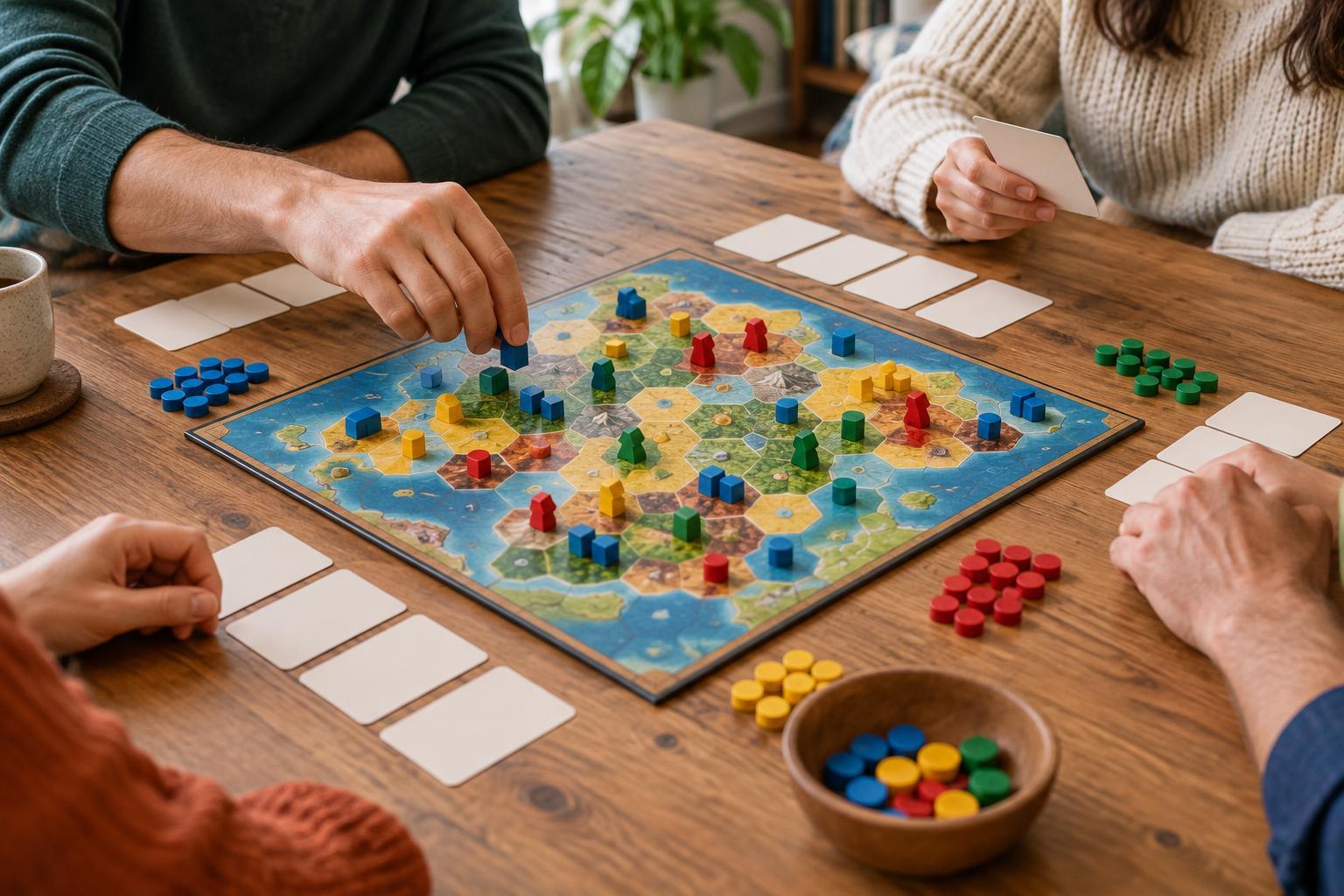
Place a personal reference card beside each player’s own pieces, with the most-used side facing up. If the game has one shared aid, put it where everyone can read it without reaching across the board. A round sequence is often easiest to follow near the area where rounds are tracked; a scoring reminder may be more useful near the score pad. Leave enough space to move pieces without covering the text.
Orientation matters, too. A card turned toward one seat may be difficult for everyone else to read. For a shared aid, invite players to pick it up and pass it around, or briefly read the relevant line aloud when a question affects the group. Avoid filling the table with every possible reference sheet at once. Start with the ones likely to be used, and keep less common information within reach.
Use aids to support decisions, not make them
At the start of play, show the table how to locate the turn sequence, action list, and common symbols. Then let players use the aid during their own turns. A brief glance can help someone remember an available option without another player reciting the entire rules explanation. If a player is still learning, a question such as “Which step are we on?” can be more helpful than announcing what they should do.
When an aid and someone’s memory seem to disagree, pause before moving pieces or ending the turn. Read the relevant line together, then check the full rules if the answer remains unclear. If the group makes a temporary ruling to keep playing, note the question so it can be checked later. For readers interested in shared decisions beyond game night, Civic Ideas Journal offers another place to browse.
Make a simple custom aid when needed
Not every game includes a reference card, and an included card may leave out the detail your group keeps forgetting. A handwritten aid can help. Start with a short turn sequence, followed by any recurring limits or reminders that are easy to overlook. Use the game’s own terms so players can match the note to the rulebook. Keep it brief enough to scan during a turn rather than creating a second rulebook.
Treat your note as a memory prompt, not an authority. Mark any house rule clearly so it cannot be mistaken for a printed rule, and check uncertain wording against the rulebook before sharing copies. After a session, ask which questions repeatedly interrupted play. Add only the answers that would have helped. A useful aid grows from the group’s actual sticking points and becomes easier to use as unnecessary details are removed.