What player interaction means
A board game has player interaction when one person’s choices change the options available to someone else. That can happen through a friendly exchange, competition for a limited space, or an outright attack. These experiences feel different at the table, even when each one is simply part of the rules. Recognizing the difference helps you explain a game, anticipate its mood, and choose one your group will enjoy.
Interaction also varies in intensity. In some games, you mostly build your own position while occasionally noticing what others are doing. In others, every turn invites negotiation or opposition. Neither approach is inherently better. Before playing, it helps to ask whether the group wants conversation and surprises, a quieter strategic contest, or the chance to challenge one another directly.
Trading: interaction through offers and agreements
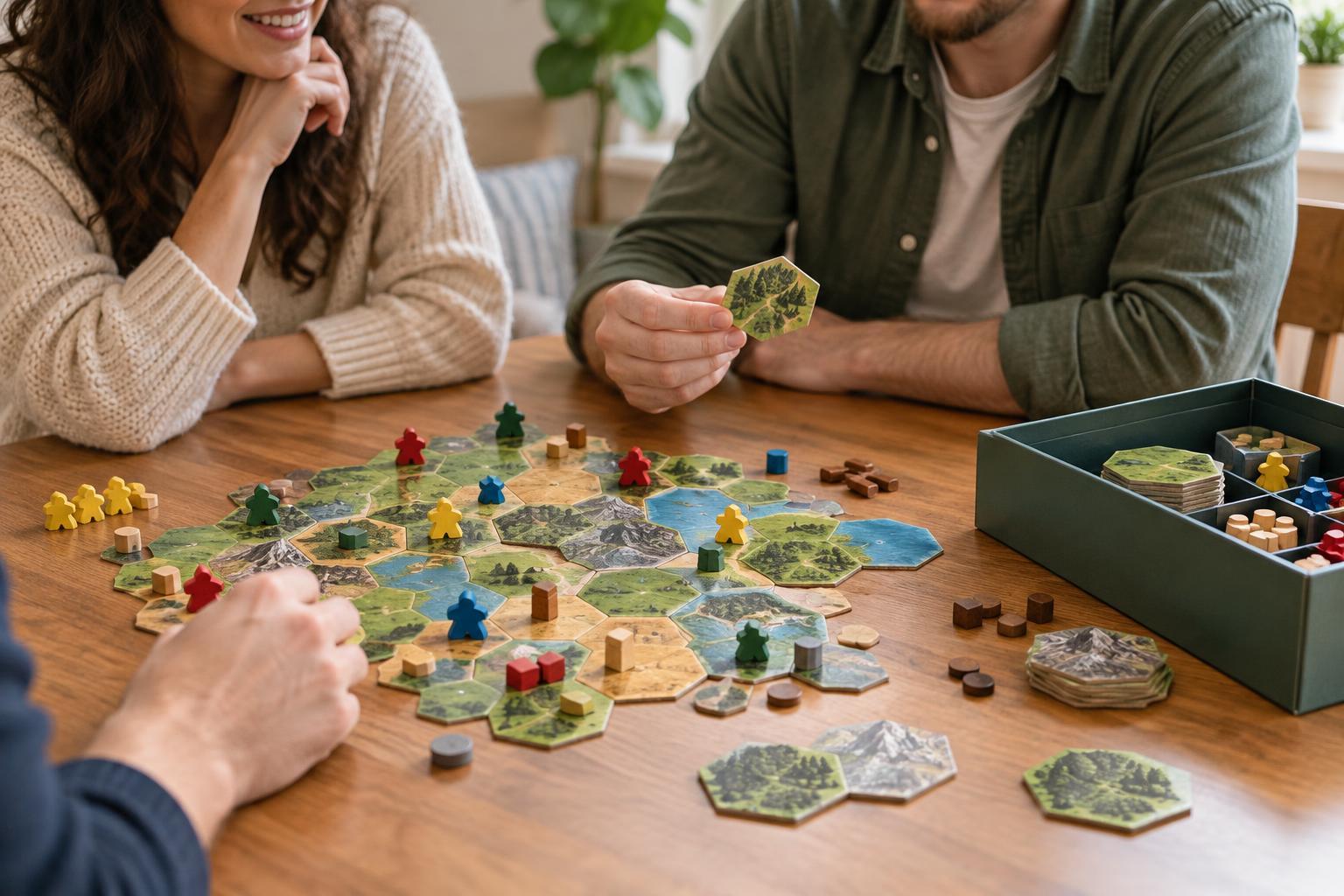
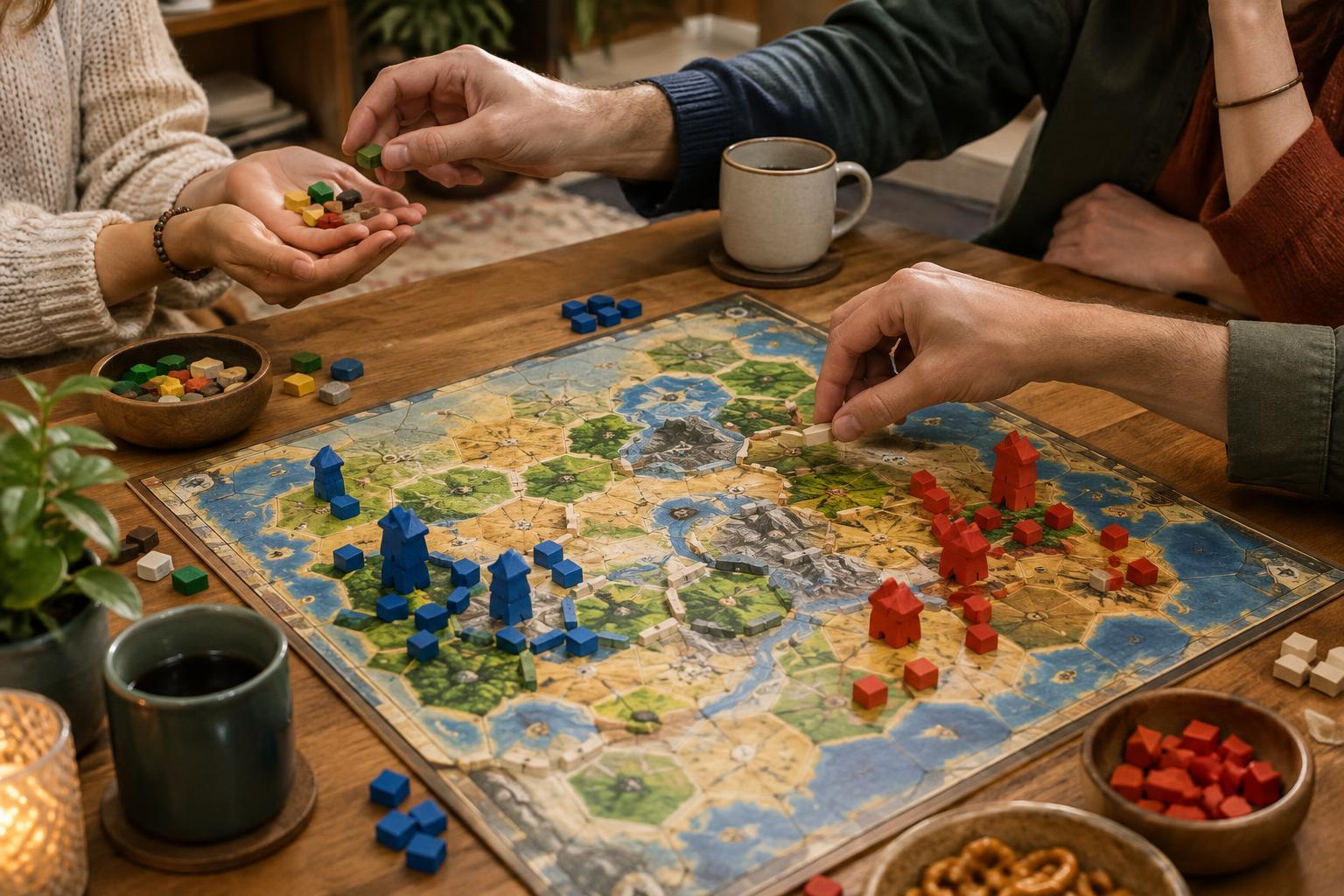
Trading lets players exchange resources, cards, favors, or other benefits when the rules permit it. A trade can solve an immediate problem for both sides: one player gets a material needed to finish a project, while the other receives something more useful for their own plan. The interesting decision is rarely whether an offer is fair in the abstract. It is whether giving an opponent what they want is worth what you gain.
Clear rules make trading easier to enjoy. Some games limit when exchanges can happen, what can be offered, or whether promises about future turns are binding. Check those boundaries before anyone starts negotiating. At the table, state offers plainly and give others room to decline. If open-ended bargaining slows the game, players can agree on a short time for offers, provided that house practice does not conflict with a rule everyone wants to keep.
Trading rewards attention to other players’ needs, but it need not reward the loudest voice. A quieter player can ask for a specific exchange or say, “No thanks,” without explaining their whole strategy. A good deal should be a choice, not a social obligation.
Blocking: competition without an attack
Blocking happens when a player takes or occupies an option another player hoped to use. You might choose a shared action space, claim a route across a map, or select the last tile of a useful type. Your move may advance your own plan and hinder someone else’s at the same time. Unlike direct conflict, blocking often does not remove anything the other player already owns; it changes what they can do next.
This makes timing important. If several people need the same space, acting now may be safer than waiting for a more efficient turn. It also makes backup plans valuable. Before committing to a strategy, look for a second way to get the resource or score the points you need. When explaining a blocking game to new players, point out which choices are limited and whether those choices become available again later. Knowing that a missed opportunity is temporary can make a crowded board less frustrating.
Direct conflict: challenging another player’s position
Direct conflict occurs when a move targets an opponent’s pieces, territory, resources, or progress. It may involve battles, captures, theft within the rules, or effects that undo part of a plan. These mechanisms can create memorable decisions because players must weigh the benefit of an attack against its cost and the possibility of a response.
Conflict feels more manageable when its consequences are clear. Before the first turn, explain what can be targeted, how a challenge is resolved, and what happens to the affected player afterward. In games with uncertain outcomes, distinguish the decision to attack from the method used to determine the result. Players can then judge their options without feeling that a surprise rule changed the stakes.
It is worth separating in-game opposition from personal criticism. A player may target the leading position, protect a vulnerable area, or make a move because it supports their own goal. A brief, neutral explanation can help, but no one needs to defend every tactical choice. If a group dislikes frequent attacks, choose a game with less direct conflict rather than expecting players to ignore a central part of the rules.
Choosing the right mix for your table
Many board games combine all three forms of interaction. A player might trade for supplies, race to claim a shared space, and later defend a piece from capture. When considering a new game, look beyond a broad label such as “competitive.” Ask what players actually do to one another, how often it happens, and whether someone who falls behind still has meaningful choices.
For a game night, describe those expectations before choosing a box. “We can make deals, but spaces can fill up,” gives guests a clearer picture than “It’s strategic.” During play, keep the focus on decisions rather than personalities: negotiate openly, treat a blocked plan as a prompt to adapt, and apply conflict rules consistently. Understanding these forms of interaction will not remove every tense moment, but it can help everyone enjoy the kind of challenge they agreed to play.